Hi folks!
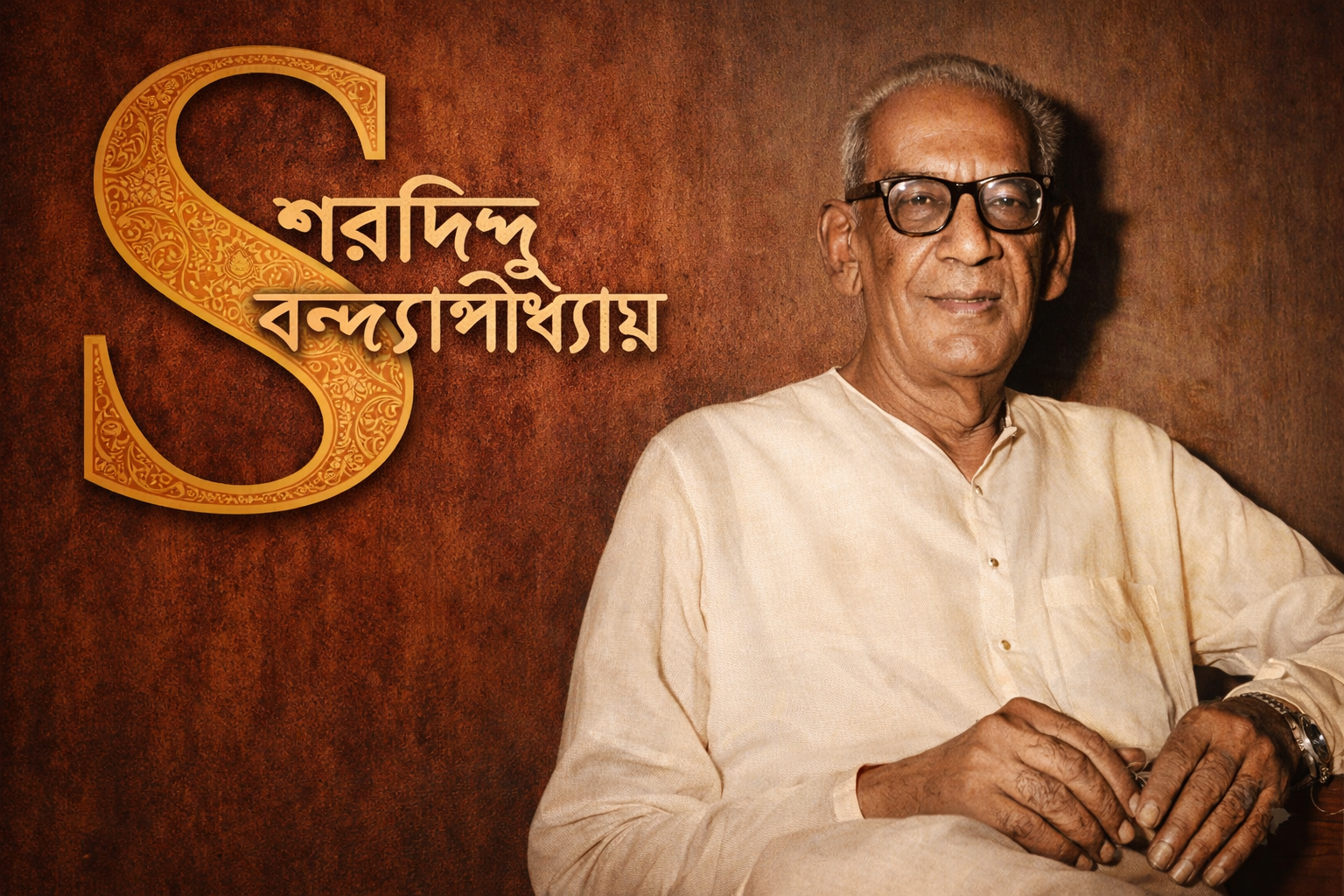
In my post on Hemendra Kumar Roy, I mentioned that I dislike “favourite author” type questions. I still stand by that, but if I absolutely had to make a choice—like if someone held a gun to my head or something—I’d probably have to say Sharadindu Bandopadhyay. Like with much of Bengali literature, my introduction to Sharadindu Bandopadhyay’s works was through my mother’s censored narration. She’d read his books as a prelude to her afternoon nap, and as she’d want me to nap as well, she read them aloud, modifying the bits that were unsuitable for my tender years. It wasn’t too many years later that, as a high-schooler, I was reading them by myself.
Sharadindu Babu was one of the most versatile writers to grace the field of Bengali literature. His works range from historical to detective fiction, from Hindi and Bengali screenplays to paranormal stories, and from children’s fiction to plays and much more. I remember spending three rapturous days one summer vacation devouring two full volumes of his novels. I lay on the sofa, propped up with cushions and pillows, and read, forgetting the world. The only breaks I took were for the most essential functions of life, disappearing back into the pages of his mesmerising storytelling as soon as possible. But I was young then, and read Bengali as fast as I read English. I doubt I’ll ever be able to repeat that feat ever again!
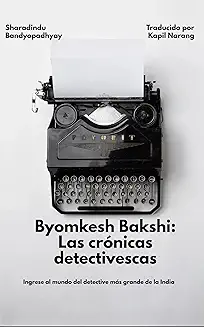
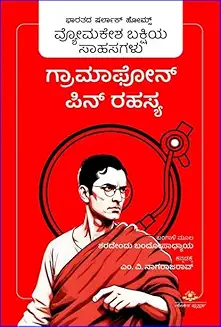
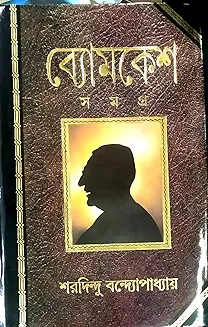
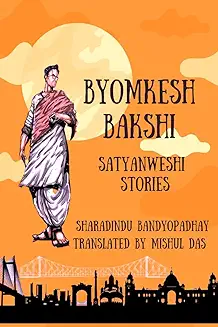
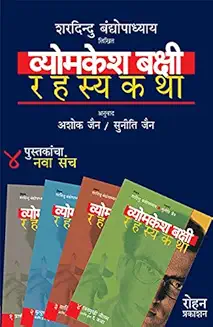
One of his most popular creations—possibly even better-known in mainstream Indian consciousness than his creator—is Satyanweshi Byomkesh Bakshi. Thanks to Shyam Benegal’s immortal adaptation of the stories and novels of this Bengali detective, every lover of crime fiction in India knows his name. Refusing to be called a “detective” or “investigator”, this “seeker of truth” solves the most twisted of mysteries through sharp reasoning, keen observation skills, and his knowledge of forensics. He usually has his reliable chronicler and closest friend, Ajit Bandopadhyay, in tow. Several of the stories also feature his servant Putiram and Inspector Rakhal. Unusually for the genre, Byomkesh gets married to Satyabati and has a son who is only called “Khoka” meaning “Little Boy”.
There have been many adaptations of the 32 stories in Bengali as well as Hindi over a period of almost sixty years! There are more than 20 Byomkesh Bakshi movies, including some only loosely based on the books, including the disastrous Detective Byomkesh Bakshi (Hindi) and Bidaay Byomkesh (Bengali). Beyond this, there are adaptations in several other media as well. The truly international appeal of this homegrown satyanweshi, however, is a reference to it in the hugely popular sitcom Bing Bang Theory, where Sherlock Holmes is called the “English Byomkesh Bakshi”! Talk about the Empire writing back!
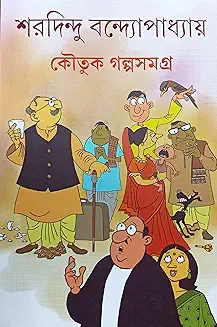
Another of Sharadindu Bandopadhyay’s popular characters is Boroda, a “Bhootanweshi” or ghost-chaser who narrates his encounters with ghosts to his friends. The stories are gripping and atmospheric, with surprising twists at the end. There are 13 Boroda stories that were written between 1915 and 1962. Interestingly, there is a crossover titled Byomkesh O Boroda in which these two popular characters meet.
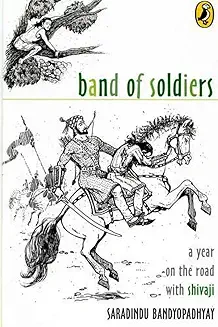
A third series protagonist who is quite popular, though the genre of the books is children’s fiction, is Sadashiv Rao, a young Maratha soldier in the army of Shivaji while he is engaged in reclaiming his birthright and establishing his kingdom by going to war with the Adil Shahi and Mughal dynasties. It is historical fiction but from the point of view of a young boy from an ordinary background, which makes it both relatable and endearing. These stories have been translated into English as Band of Soldiers: A Year on the Road with Shivaji by Sreejata Gupta. I have always loved these books, and reading them a few years ago showed me that my love for the young hero’s wit and courage have not diminished.
Apart from series, Sharadindu Babu also wrote a large number of standalone historical novels and stories sweeping across every period of Indian history from pre-historical times to the Mughal era. Full of intrigue, gripping action, romance, adventure, and fascinating characters, these are perfect examples of masterful storytelling. He also wrote contemporary novels and stories, as well as several screenplays for both Bollywood and the Bengal film scenario.
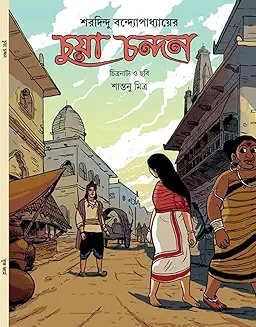
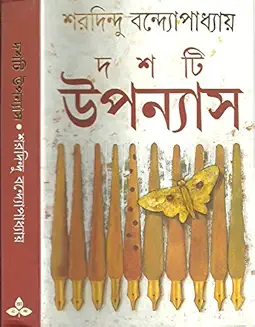
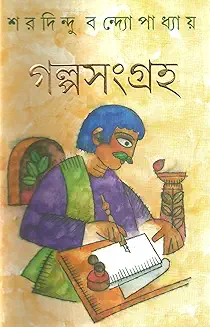
One of the most fascinating things about his life for me was something that I discovered about a decade and a half ago. I realised that I had been unwittingly following in the footsteps of my literary hero, at least, geographically speaking. He had moved from Kolkata to work in Bollywood in 1928. In 1952, he moved to Pune to become a full-fledged writer. Though my own life trajectory hasn’t been exactly the same, I too moved from Kolkata (where, in contrast to Sharadindu Babu, I hadn’t been born or raised) to Mumbai for work and later to Pune, where I now pursue the career of a full-time writer. I managed to find out that in Mumbai he had lived in Malad due to its proximity to Film City, and I was beyond thrilled since I’d lived in the nearby localities of Goregaon and Kandivali. Unfortunately, I have no idea of where in Pune he lived.
His works have not only been a source of great joy for me since childhood, transporting me to worlds and adventures beyond my wildest dreams, but also an inspiration for my own writing. The inspiration is clear to see in the kinds of books I love to read and write. His were some of the earliest non-kid-lit books I ever read and fell in love with. And sometimes it feels as if that me searches for an echo of those books in everything I read and tries to build a tribute to them in everything I write. How successful I am in doing either is something only time will tell!
#AtoZChallenge
#Blogchatter A2Z
#Kolkata
#cityofkaali
#sharadindubandopadhyay
This post is a part of Blogchatter A2Z Challenge 2026



Leave a Reply