Author: Writa Bhattacharjee

  • Z is for Zamindar

    Z is for Zamindar

    Hi folks!

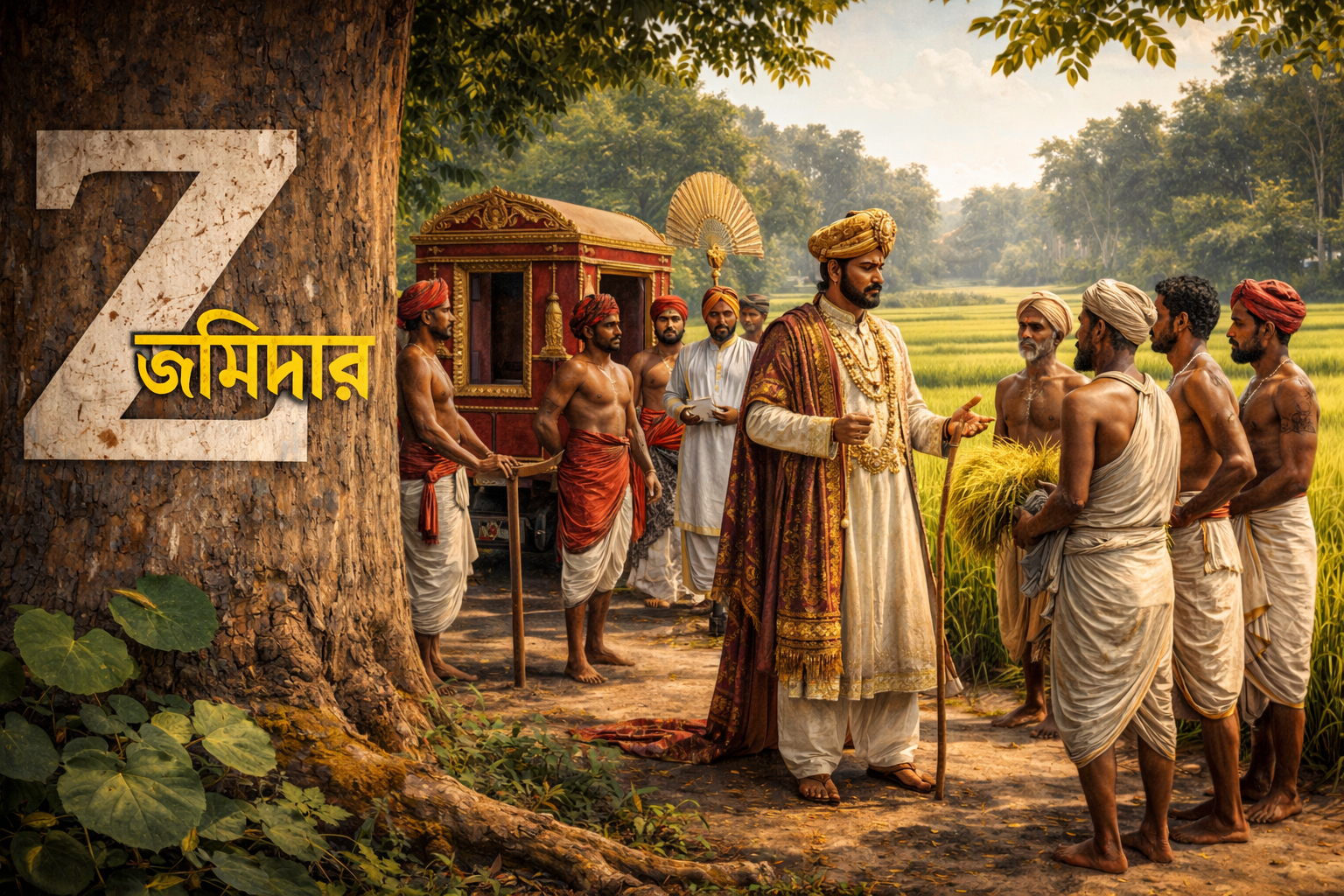
    I can’t believe I’m finally on Z! And this one’s going to be a cracker. Because today I’m going to tell you about zamindars of Bengal. No, not their history or their activities. But some of the juiciest scandals and crimes associated with Bengal’s zamindars that will make you sit up and whistle. And why, you might ask, am I going down this route? For the answer to that, you’ll need to wait till the end.

    Image created using ChatGPT

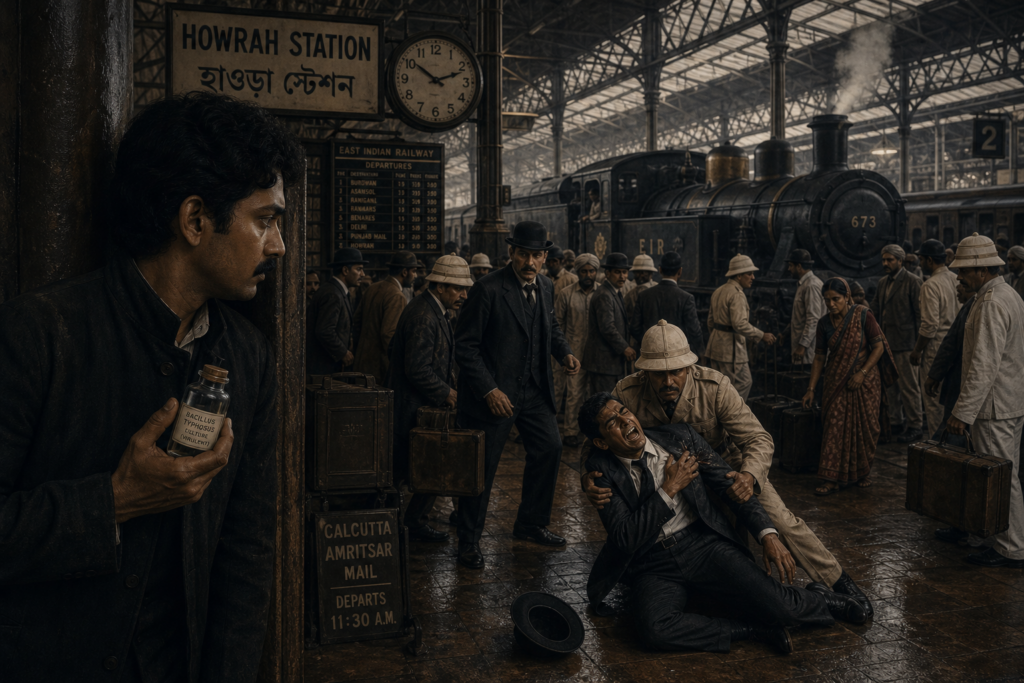
    The Pakur Murder Case – The very first case I want to talk about is the Pakur Murder Case. It is one of the most talked about murders because it was committed using an unbelievable “weapon”. Brothers Amarendra Chandra Pandey and Benoyendra Chandra Pandey were in a bitter rivalry over their father’s zamindari estate in Pakur (then in Bengal, now in Jharkhand). In 1933, when about to board a train at Howrah Station, Amarendra felt a sharp prick in his arm. The deed was done by a stranger, but soon after he fell severely ill and died.

    Posthumous blood tests revealed the presence of the Bubonic Plague Bacteria—which was found only in laboratories—in his bloodstream. Further investigations revealed that Benoyendra had procured this bacteria sample from a lab in Bombay (now Mumbai) by paying off a corrupt doctor. He was later arrested and convicted for the murder of his brother.

    Image created using ChatGPT

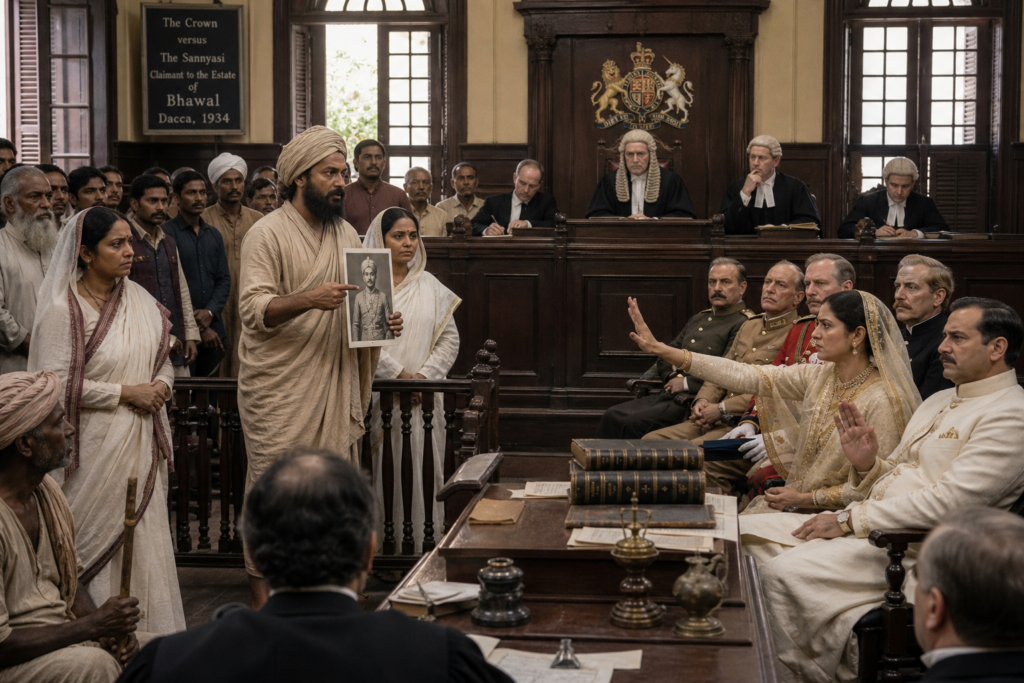
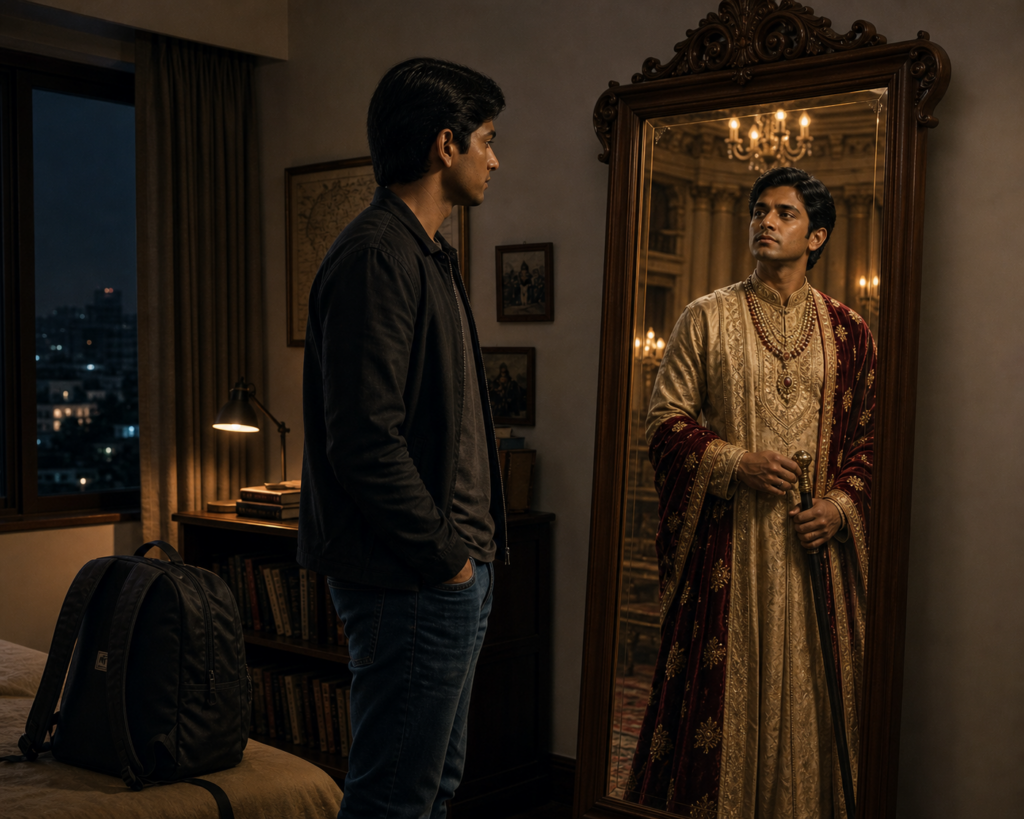
    The Bhawal Sanyasi Case – The Bhawal Sanyasi case is not only well known, but also one of the most bizarre cases. Ramendra Narayan Roy, the second “prince” or Kumar of the estate of Bhawal, was declared dead in 1909 in Darjeeling and supposedly cremated there. Twelve years later, a sanyasi appeared in Dhaka claiming to be the Kumar. Many of the tenants, and even the Kumar’s sisters, accepted him as Ramendra Narayan Roy. The Kumar’s wife and the Court of Wards, which had taken over the property after the Kumar was declared dead intestate, claimed that he was an impostor.

    He filed a case to prove his identity. He also accused his brother-in-law of conspiring against him with the family doctor. He claimed that he had been saved and revived by a Naga sanyasi at the cremation grounds after those who had gone to cremate him had run away due to a severe storm, following which he had become a Naga sanyasi himself.  In a long-drawn-out case, where 1584 witnesses appeared and 2000 exhibits were presented to the courts through multiple appeals and countersuits, the courts finally ruled in his favour. Unfortunately, he died very shortly after, and there were rumours that the cause of death had not been natural.

    Image created using ChatGPT

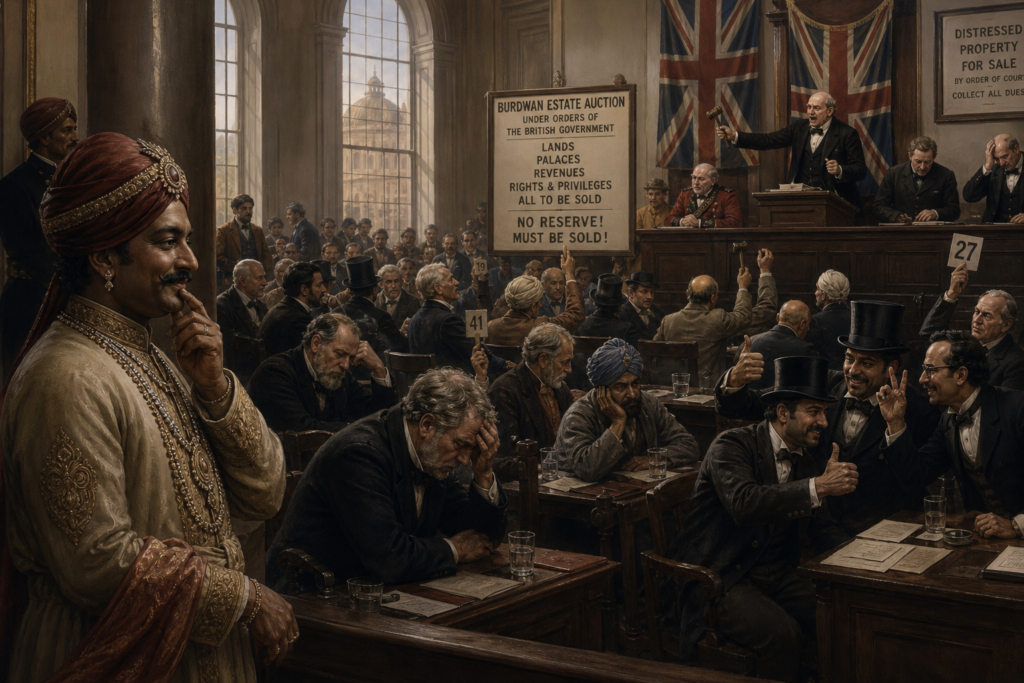
    The Burdwan Raj – Not all crime and scandal cases related to Bengal’s zamindars were murders. In 1797, in a move worthy of the best heist/con movies, the Maharaja of Burdwan turned the tables on the British using their own legal provisions. This happened because of a law known as the Sunset Law, according to which, if a zamindar failed to pay his revenue by a certain date by sunset, his property was auctioned off. Raja Tejchand, the zamindar of Burdwan, took advantage of this law by deliberately allowing his estate to fall into arrears. When the British auctioned off his properties, his own servants and agents bought them in the guise of independent buyers at exorbitant prices. However, they then refused to pay, which forced the British to put the properties up for sale again, where his followers made the highest bids fraudulently.

    The process was repeated until genuine buyers got fed up and lost interest. In the end, the British were so desperate to sell that they sold off the estate at very low prices to—no surprises there—the Maharaja’s followers pretending to be independent buyers. Through these “benami” or fraudulent transactions, his associates bought back the properties and then transferred them back to him. Through these tactics, the Raja was able to retain control of his estates despite the British not wanting him to. Interestingly, this was not an isolated incident. That year, 95% of auction sales in Burdwan were fraudulent.

    Image created using ChatGPT

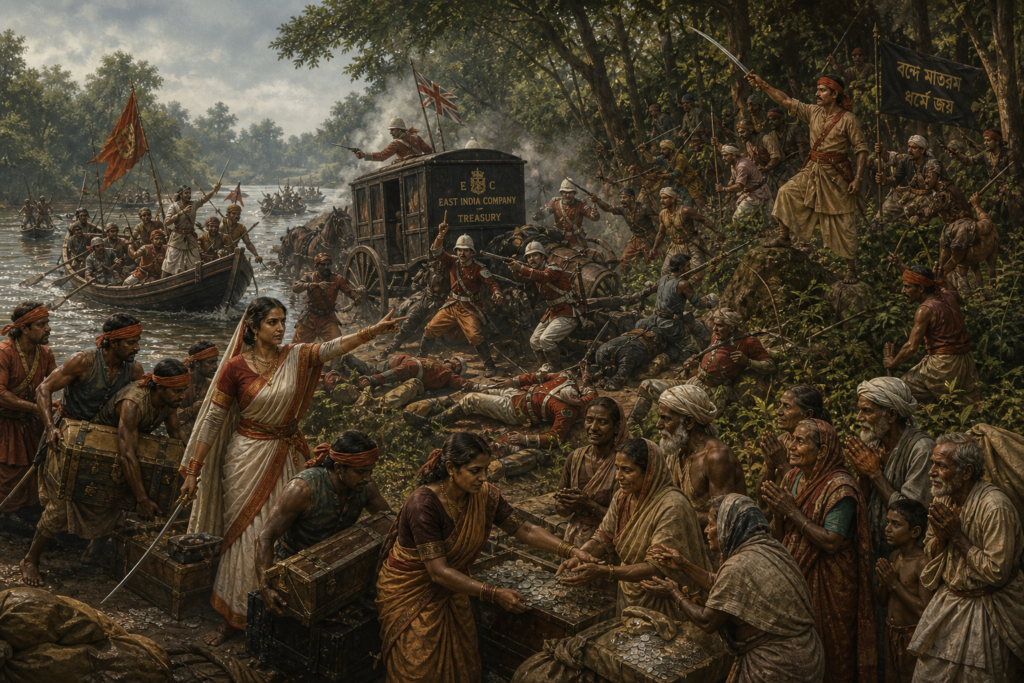
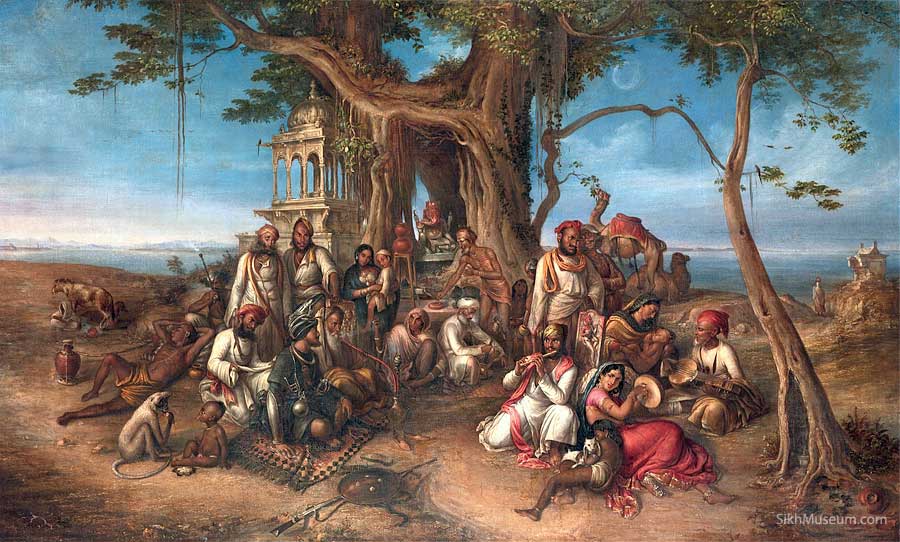
    Devi Choudhurani and Bhabani Pathak – Often the line between “zamindar” and “outlaw” was blurred in the old times in Bengal. It was one of the worst kept secrets that the ancestors of some of the prominent zamindar families in Bengal had been land bandits or river pirates. While some of them robbed their neighbours for money, others wanted power or revenge. Yet, there were some like Devi Choudhurani whose goals were truly noble. While Devi Choudhurani was the zamindar of the Manthana estate (currently in Rangpur, Bangladesh), who took charge of her estate after her husband’s death in 1765. Her mentor was Bhabani Pathak, a leader of the Sanyasi-Fakir rebellion who was revered by many minor zamindars as well as local rural communities.

    Real-life Robin Hood-like figures, they robbed wealthy merchants and British treasury transports to succour those suffering in the Great Famine of 1770. Operating out of Murshidabad and Baikunthpur forests, Bhabani Pathak maintained a massive network of followers and functioned as a shadow-sovereign. Devi Choudhurani openly rebelled against the British and used the complex riverine waterways to evade capture and wage guerrilla warfare against British troops.

    Not all zamindars of Bengal were such complicated and colourful characters. Many of the renowned zamindar families were involved in social reform and the Bengal Renaissance as well as legal economic activities that made them immensely wealthy. I might talk about them in some other post, but today we will restrict ourselves to the juicy stories.

    Image created using ChatGPT

    As for the question I asked in the introduction to this post—why have I chosen to focus on the criminal and scandalous stories of Bengal’s zamindars—the answer is simple. Manik Choudhury, the protagonist of my City of Kaali series, is an erstwhile zamindar. Not only that, but he is inspired by one of the characters I have described in this post.

    Now, to make matters more interesting, I have a contest for you good folks. Can you guess which of these characters Manik is based on? Share your guesses in the comments below by the 10th of May 2026, and 3 lucky winners will get free copies of my book Ageless Feud. So, get guessing folks! After all, no matter whom you pick, there’s a 25% chance you’re right!

    #AtoZChallenge

    #BlogchatterA2Z

    #Kolkata

    #cityofkaali

    #zamindarsofbengal

    This post is a part of Blogchatter A2Z Challenge 2026

  • Y is for Yellow Taxi

    Y is for Yellow Taxi

    Hi folks!

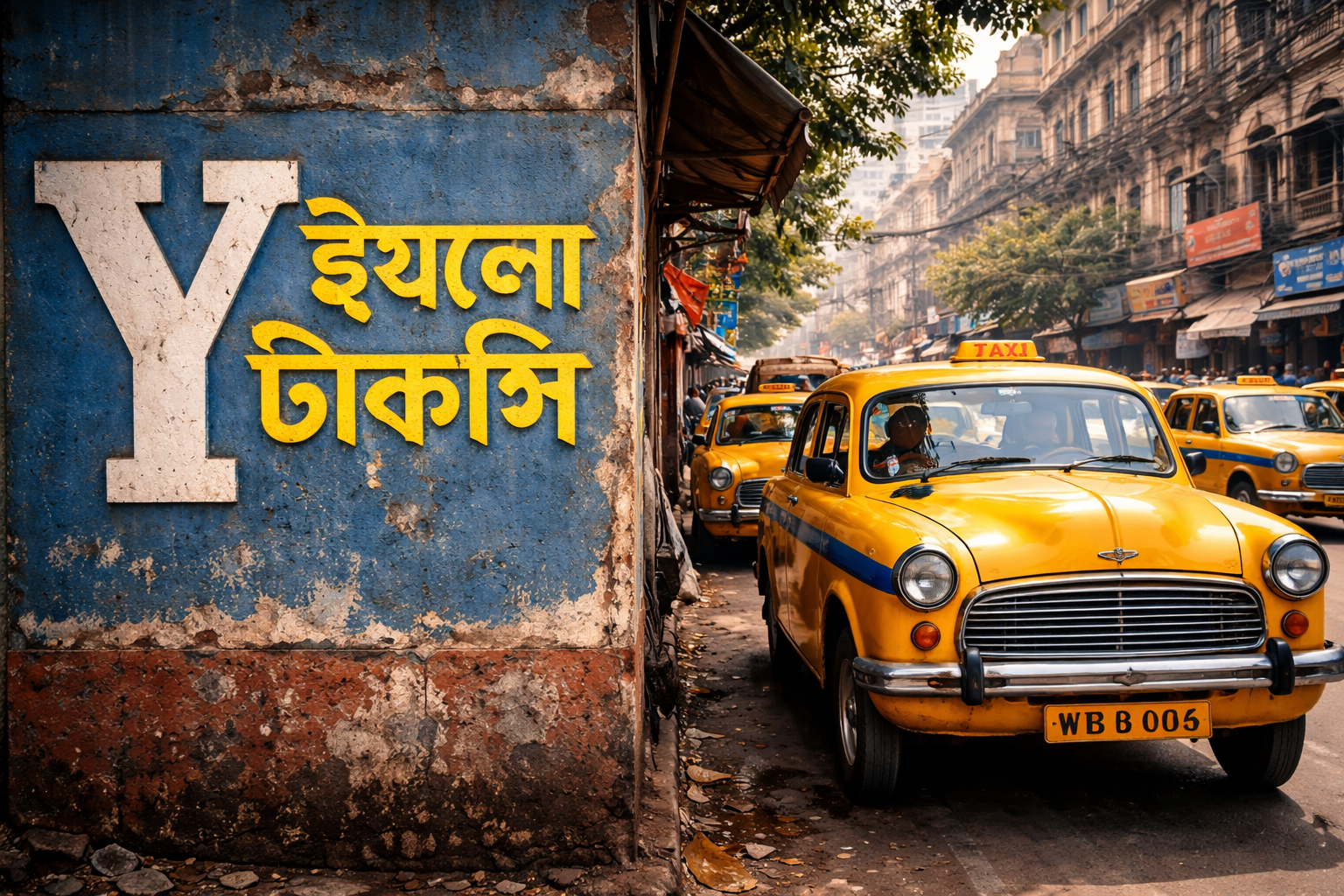
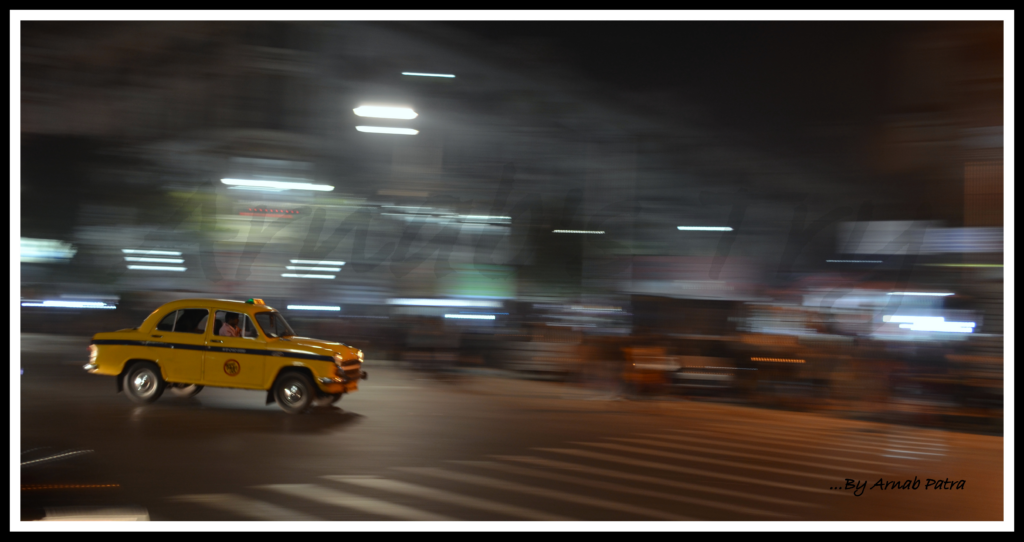
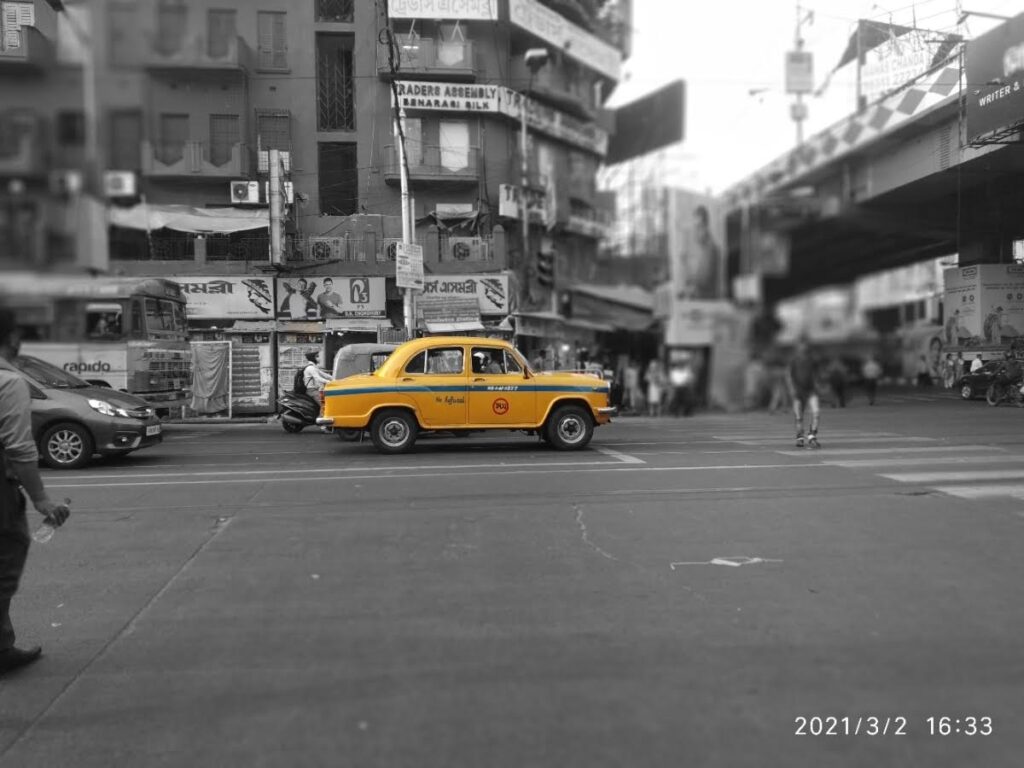
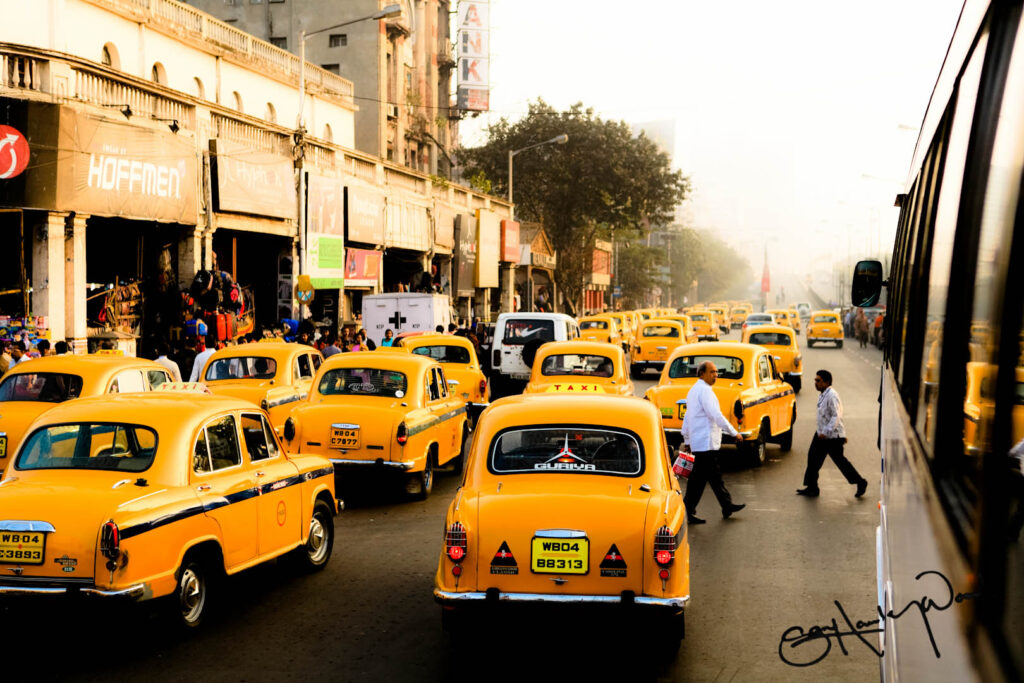
    Kolkata has three iconic modes of overland transportation: the hand-pulled rickshaw, the tram, and the yellow ambassador taxi. Hand-pulled rickshaws are on the decline, though 3,500 of these controversial vehicles still ply on the streets of Kolkata. Trams are almost gone, with only a couple of heritage lines still active. The yellow Ambassador taxi faces a similar fate, with only a few thousands left plying and plans to phase them out by 2028 in the works. Of these three, the one I will miss the most once it’s gone is probably the yellow ambassador taxi that was once called the “King of the Road”.

    Arne Hückelheim, CC BY-SA 3.0 https://creativecommons.org/licenses/by-sa/3.0, via Wikimedia Commons

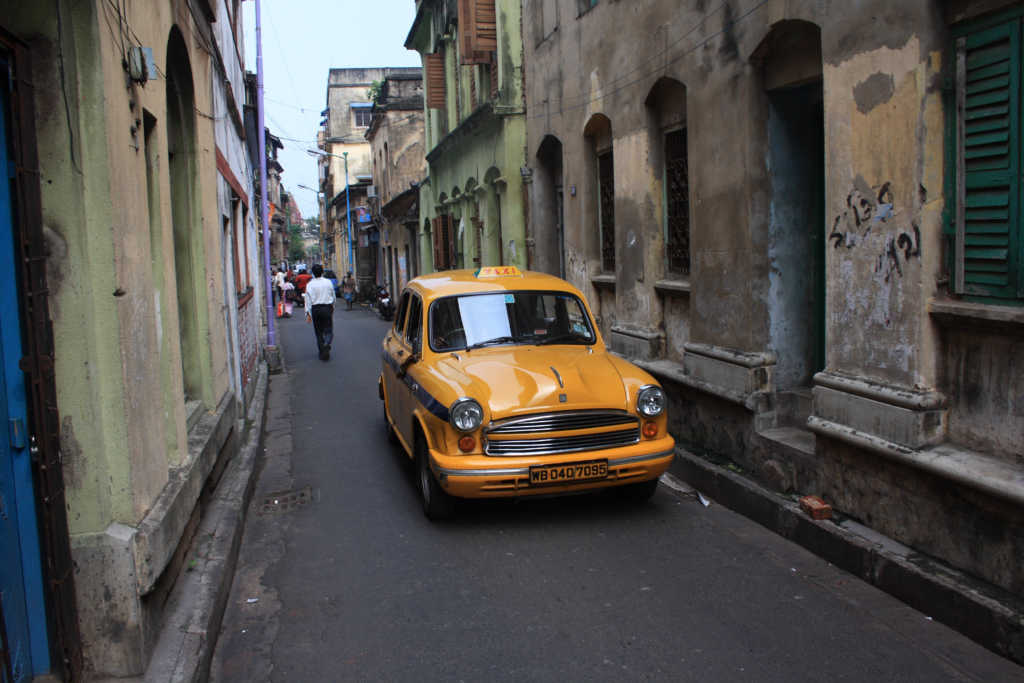
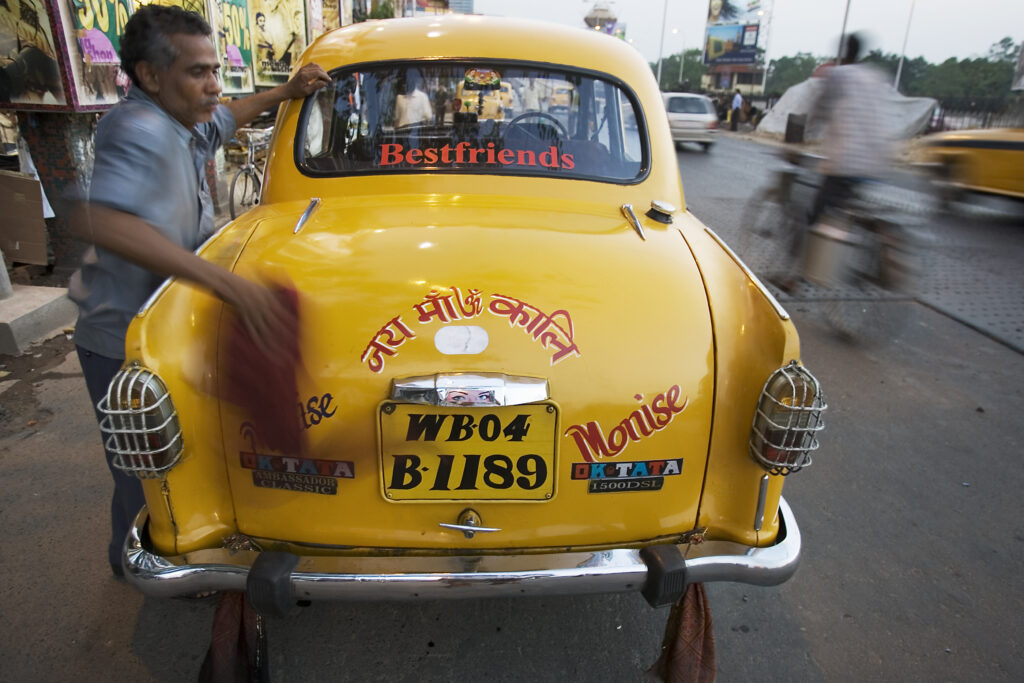
    The yellow taxi of Kolkata was introduced in the late 1950s, and the Ambassador was given its standardised yellow colour with a blue stripe in 1962. The Ambassador chosen for its sturdiness and space inside. Even as recently as 2013, the BBC’s Top Gear declared the Ambassador the best taxi in the world because of its durability. Manufactured by Hindustan Motors, this redoubtable vehicle was perfect for Indian roads. In Kolkata, the colour yellow was chosen for their livery as the city’s standard taxi because of its vibrancy. Even in heavy rains or at night, they would be easily visible.

    ARNABPATRA JHARGRAM, CC BY-SA 4.0 https://creativecommons.org/licenses/by-sa/4.0, via Wikimedia Commons

    In fact, the legacy of these taxis is over a century old. These taxis had actually been around from before independence. But it was only with the establishment of the Hindustan Motors Uttarpara factory in 1948 that they became abundantly available and the company became self-reliant. The Ambassador was designed based on the 1956 Morris Oxford Series III, and Hindustan Motors launched a total of eight designs of the Ambassadors before finally shutting down production in 2014.

    Pritam 940, CC BY-SA 4.0 https://creativecommons.org/licenses/by-sa/4.0, via Wikimedia Commons

    Some of the most interesting things about the yellow taxi of Kolkata are not about the taxi at all. Rather, the ball of nostalgia people feel for them is a tangle of experiences, people, and stories. Of course, the nostalgia often lasts only until one actually gets into the taxi! In one of the earliest instances of travel in Ageless Feud, Manik has to take a taxi home. Here’s the excerpt:

    In the end, I hailed a yellow Ambassador taxi to go home even though I lived barely over a kilometre away. These taxis are an institution of this city. They were first introduced to the city in the late 1950s. Now, even though Ambassador cars are no longer manufactured, these relics of a bygone era still patrol the streets of the city, a reminder that in Kolkata the past never really dies.

    The taxi driver gave me a look of suspicion and hesitated. I reached into my wallet and pulled out a two hundred rupee note. Two hundred rupees was ridiculously higher than the regular fare for that distance. The driver gestured to me to hop in and started the engine. I dragged myself onto the dark rexine backseat. It smelt of heat, mould and the sweat of strangers. I turned the crank to lower the left window, which opened halfway and refused to budge further. The crank for the other window was missing altogether. Sighing inwardly, I tried to stare at the road to take my mind off the pain.

    © Jorge Royan / http://www.royan.com.ar

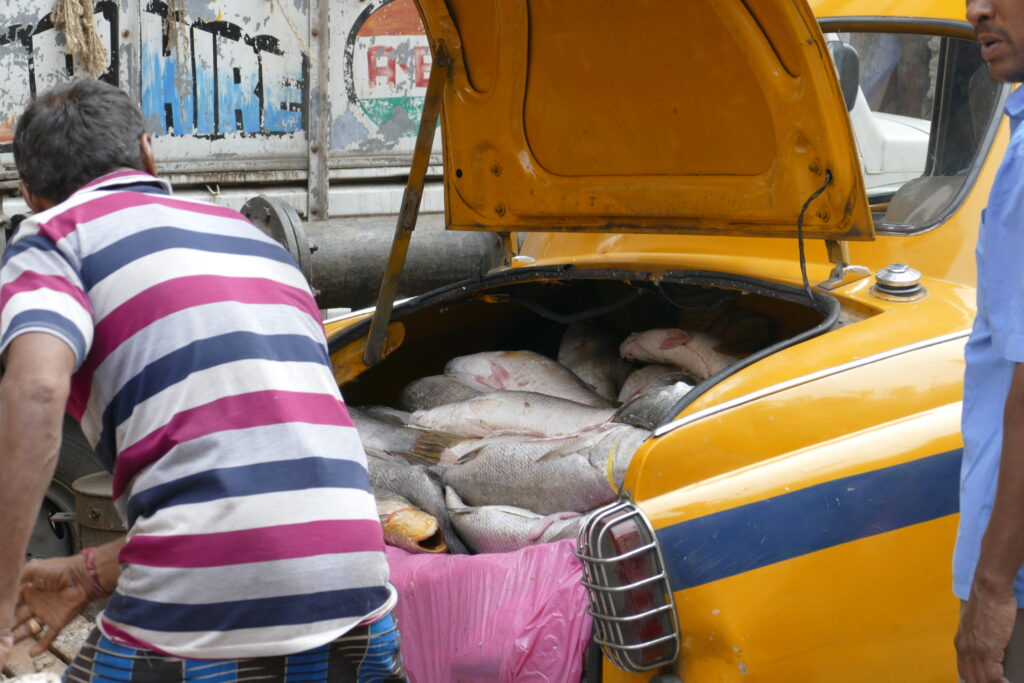
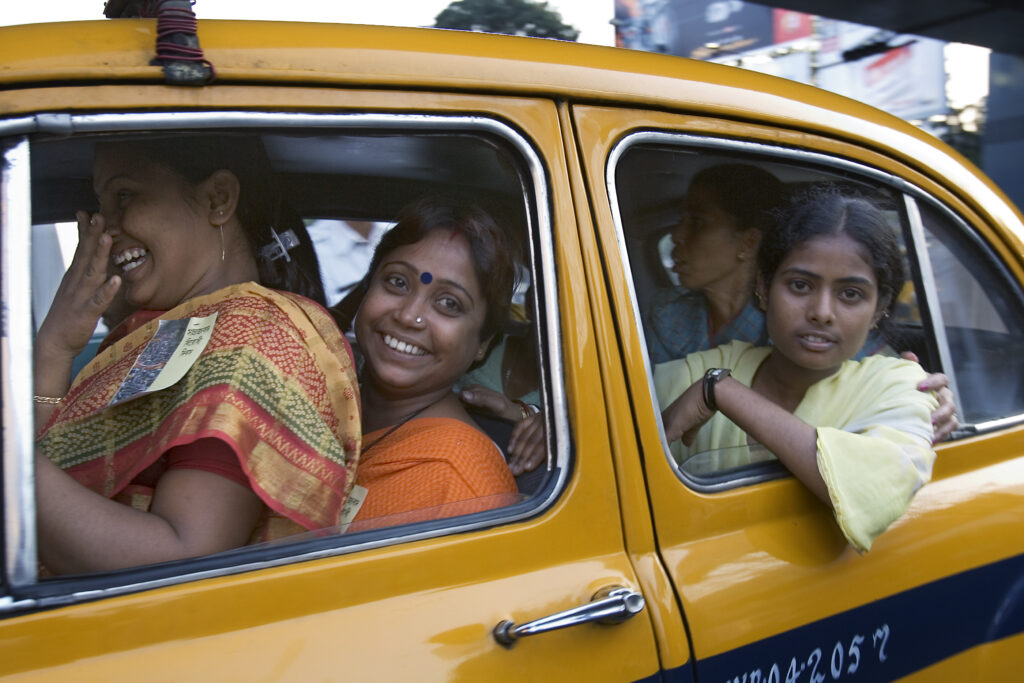
    The drivers of the taxis have played no less an integral part in turning them into a cultural symbol. In the 1960s, drivers from the Sikh community were engaged in driving these vehicles in large numbers. In the 1990s, migrants from Bihar would often rent taxis on a contractual basis, driving them for a livelihood. So familiar with the city’s roads, lanes, alleyways, and shortcuts were these drivers that GPS would have bowed down to their knowledge. Often quite friendly and willing to chat, these communities of drivers have become an indelible part of the stories folded in the pages of this layered city.

    Kritzolina, CC BY-SA 4.0 https://creativecommons.org/licenses/by-sa/4.0, via Wikimedia Commons

    Kolkata’s yellow taxis have been featured in many books, movies and television series. In fact, they are so iconic that all you need to portray a place as “Kolkata” is a yellow taxi on the road. They have also been portrayed in hundreds—if not thousands—of paintings and photographs. In movies like Satyajit Ray’s Abhijaan and Sujoy Ghosh’s Kahaani, the yellow taxi almost becomes a character in itself, supporting the main characters to play out their internal and external conflicts to the fullest extent.

    Sam Hawley, CC BY 2.0 https://creativecommons.org/licenses/by/2.0, via Wikimedia Commons

    In 2008, the Calcutta High Court ordered that commercial vehicles older than 15 years should be decommissioned to deal with the city’s air pollution levels. The diesel-run Ambassadors were unable to comply with BS-VI emission norms. This led to about half of the yellow taxis going off the road within a very short time.  By March 2025, the number had reached 64%. In 2014, Hindustan Motors stopped making the vehicles, so it was not only impossible to replace taxis that retired, it also became difficult to find replacement parts. Many passengers also prefer the newer, more comfortable, and convenient app-based taxis. And in 2020, the COVID pandemic dealt a blow that became the last straw that broke the yellow taxi’s back. It was irretrievably on the way out despite the nostalgia surrounding it.

    © Jorge Royan / http://www.royan.com.ar

    Just over a year ago, the West Bengal Govt declared that all light commercial vehicles with a taxi permit would be allowed to be painted yellow in an effort to continue an iconic tradition. However, the phasing out of the Ambassador taxis will not stop as most of them already fail pollution and transmission norms, and the rest will soon follow suit. The new fleets of taxis that take their place will be newer, more regulation compliant, and maybe even more comfortable. But nothing will beat the presence and attitude of the King of Kolkata’s Roads which it has ruled for close to 70 years!

    #AtoZChallenge

    #BlogchatterA2Z

    #Kolkata

    #cityofkaali

    #yellowtaxi

    This post is a part of Blogchatter A2Z Challenge 2026

  • X is for X-mas on Park Street

    X is for X-mas on Park Street

    Hi folks!

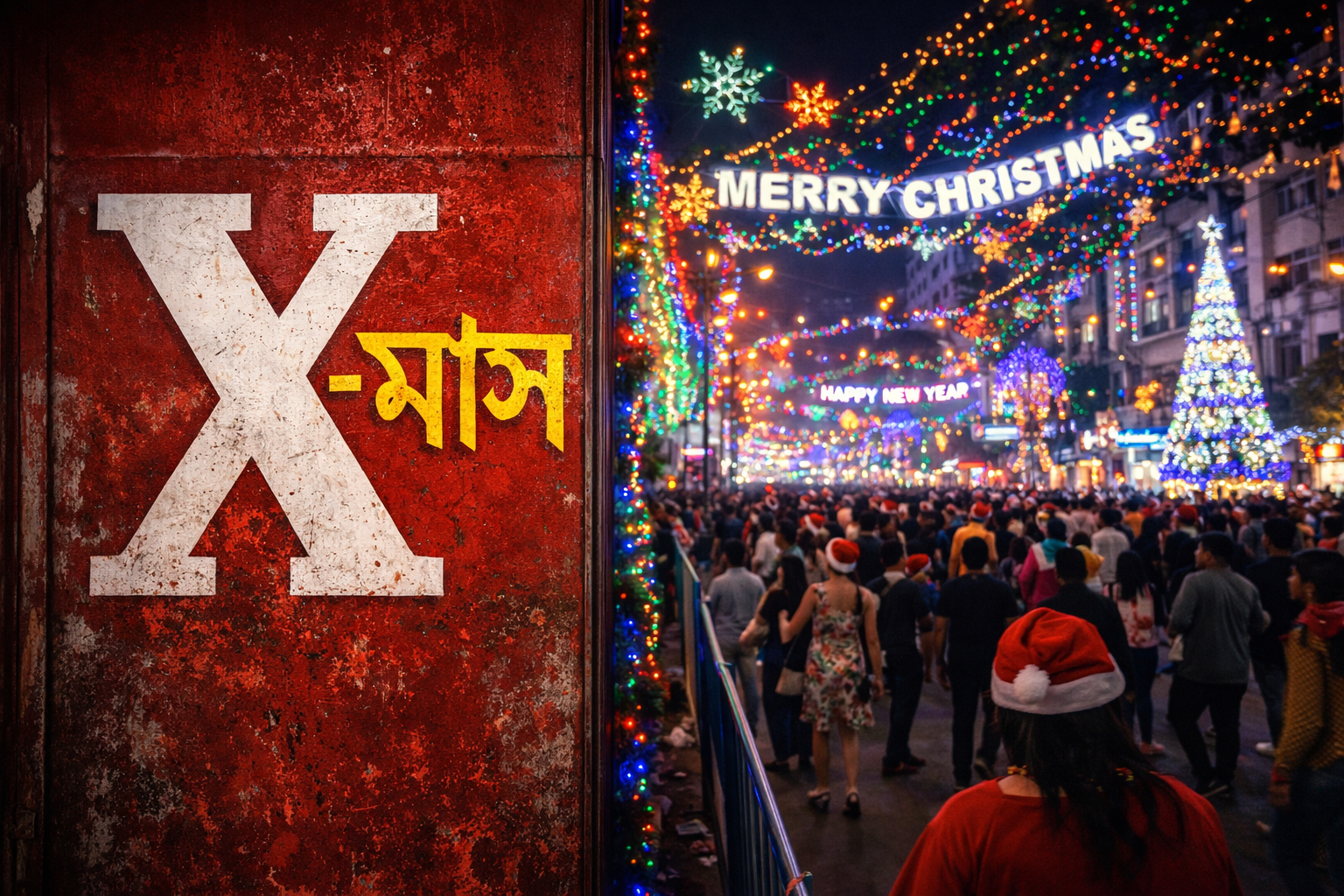
    In Ageless Feud, Manik visits Park Street several times as it contains one of the gateways to Patala. During one of these visits, he remarks on the celebration of Christmas on Park Street. Since the book itself doesn’t take place at Christmas time, I thought I could take all of you on a little trip to Christmas or “Boro Din” (Big Day) on Park Street.

    Anushtup, CC BY-SA 4.0 https://creativecommons.org/licenses/by-sa/4.0, via Wikimedia Commons

    Park Street is one of the oldest Anglo-Indian localities of Kolkata (see my post on White, Black, and South Kolkata) and therefore, has always been an important part of Christmas celebrations here, especially with St Paul’s Cathedral so close by. It is not just a festival of Christians, though. In Kolkata, Christmas is a festival that is embraced and celebrated by all! The celebrations became official in 2011 with the inception of the Kolkata Christmas Festival (KCF) by the Tourism Department of the West Bengal Govt. The KCF takes place from mid-December to New Year, turning Park Street and nearby areas into an open-air carnival zone.

    Goutam1962, CC BY-SA 4.0 https://creativecommons.org/licenses/by-sa/4.0, via Wikimedia Commons

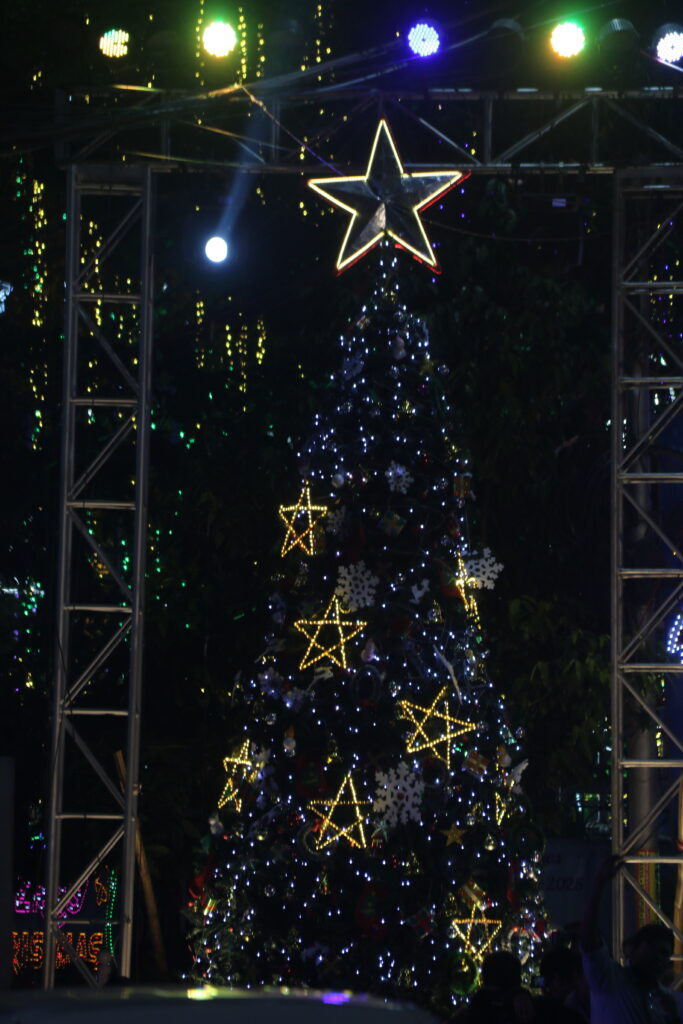
    The core of the festival is at Allen Park on Park Street (whose official name is Mother Teresa Sarani). This is where you can enjoy live musical performances and choir performances from 5:30 in the evening onwards. Artists and bands like Usha Uthup, Barefoot, Krosswindz, and Orient Express have performed there over the years, as have choirs like Dr Graham’s Homes School and Calcutta Symphony Orchestra. The city’s largest public Christmas tree is placed near Mother Teresa’s statue for Christmas celebrations. Park Street becomes a walk-only zone on Christmas Eve, Christmas Day, New Year’s Eve, and New Year’s Day to ensure that pedestrians can enjoy themselves to the hilt.

    Sudiptasarkarcr7, CC BY-SA 4.0 https://creativecommons.org/licenses/by-sa/4.0, via Wikimedia Commons

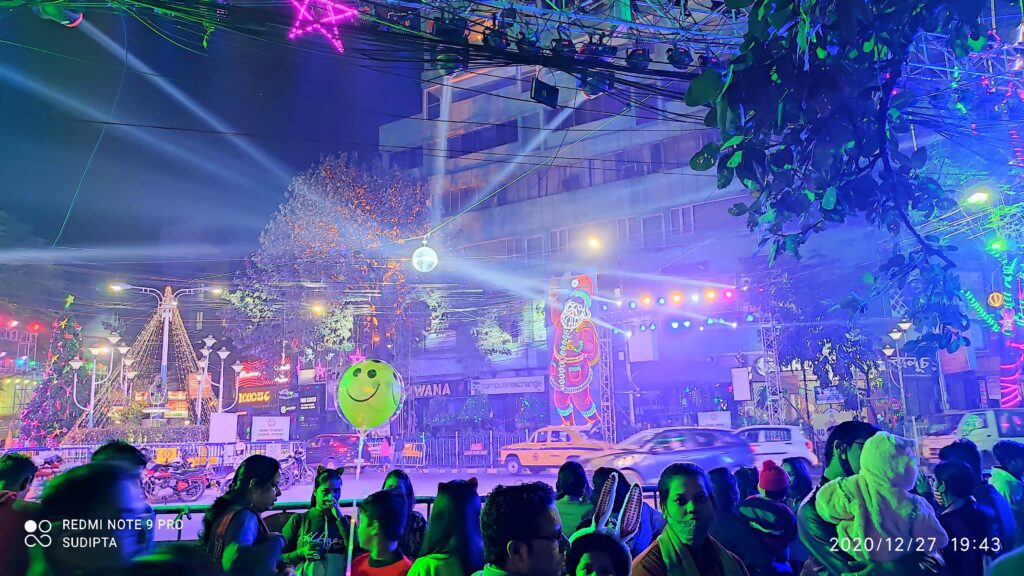
    One of the highlights of the KCF is the dazzling themed lighting that turns the area into a City of Lights. Famous lighting artisans from Chandannagar design and set up the themed lighting canopy that stretches across Park Street that will make your jaw fall open. Originally, it extended from St Xavier’s College to Jawaharlal Nehru Road. In recent years, as the popularity of the KCF has grown, the lighting zone has been increased. It now has offshoots that stretch till St Paul’s Cathedral on Cathedral Road, an offshoot of Jawaharlal Nehru Road, till Mullick Bazar Crossing on Park Street, and till Vardaan Market on Camac Street.

    Anushtup, CC BY-SA 4.0 https://creativecommons.org/licenses/by-sa/4.0, via Wikimedia Commons

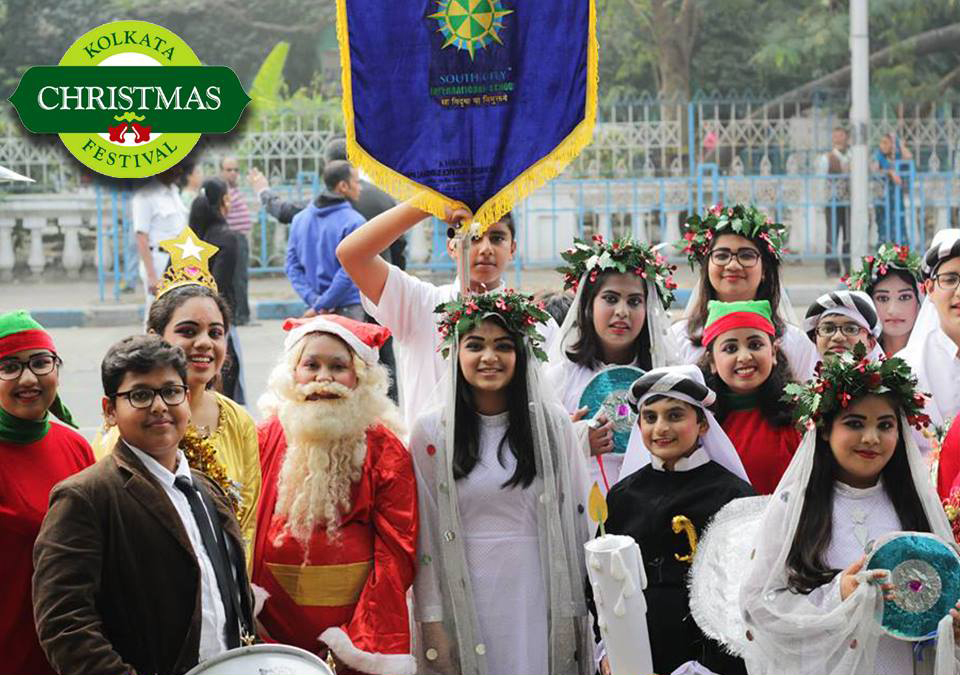
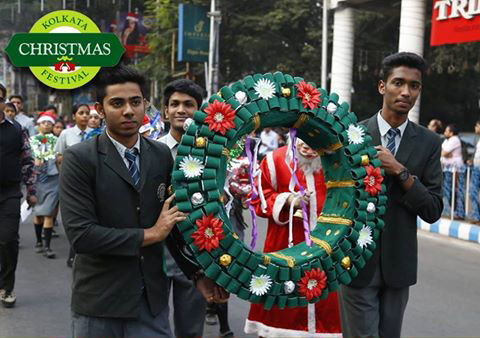
    Another highlight of the KCF is the grand Christmas Parade in which more than 500 schoolkids participate. A two-hour spectacle, it includes several colourful floats and Santa Clauses along with local bands, carol groups, and festively dressed marchers. There is also a buzzing Christmas Bazaar where you can pick up all sorts of fun items and trinkets as well as popular Christmas items like Santa hats, devil horns, or red balloons.

    Anushtup, CC BY-SA 4.0 https://creativecommons.org/licenses/by-sa/4.0, via Wikimedia Commons

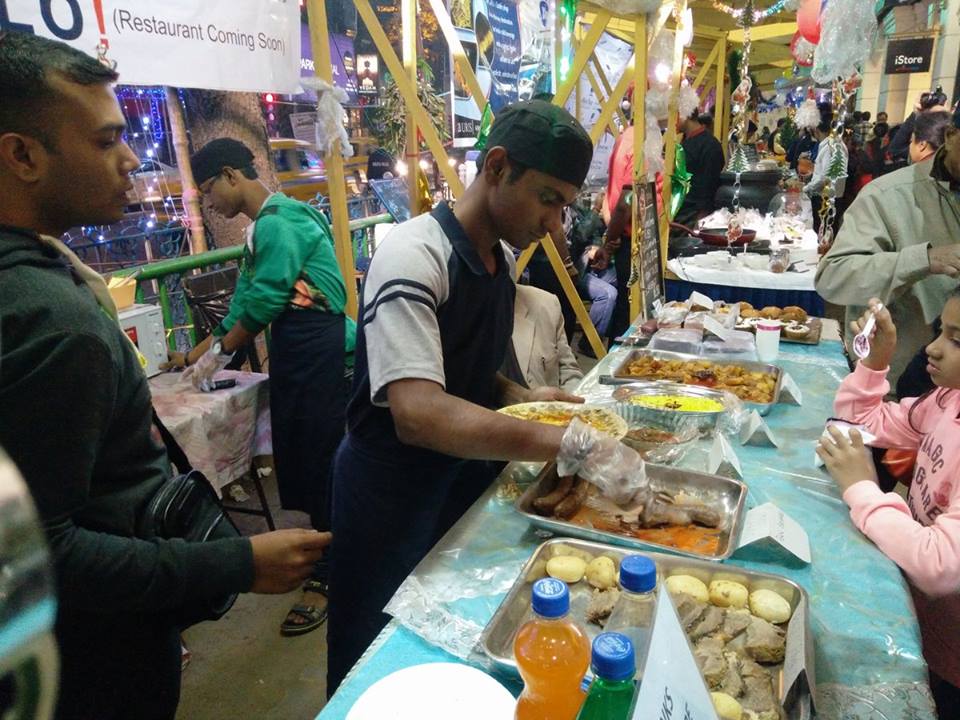
    What is a Bengali festival without finger-licking delectables? During the KCF, over 40 food stalls are set up at Allen Park, selling everything from Goan food to Chinese favourites to Anglo-Indian delicacies. You will get delicious eatables in all shapes, sizes, and flavours, from homemade fruitcakes to pork momos, and from grape wine to savoury crepes called panthras. And if you’re in the mood for something a little more elevated, there are the historic eateries of Park Street that have stood for decades if not centuries—Flury’s, Peter Cat, Mocambo, and Trincas.

    No machine-readable author provided. Dwaipayanc assumed (based on copyright claims)., Public domain, via Wikimedia Commons

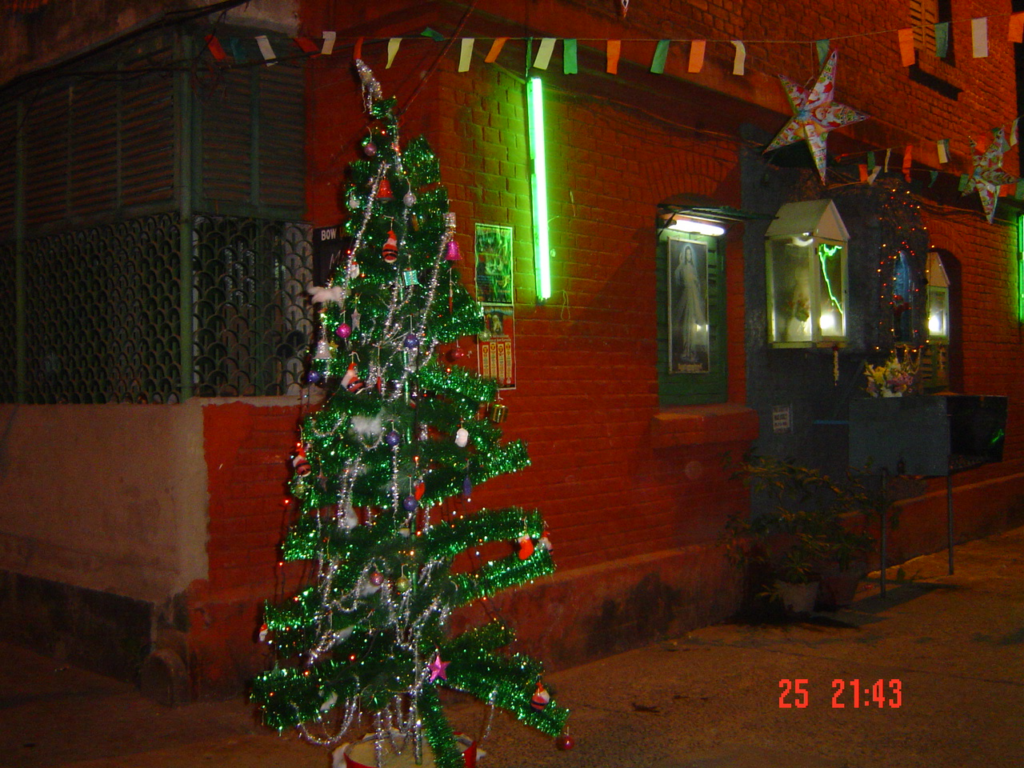
    If this combination of colonial heritage and Bengali exuberance is a little too heady for you, you can always head to nearby Anglo-Indian localities for a quieter celebration. There’s Bow Barracks, a red-brick enclave only 2 kms away from Park Street. Here, Santa Clause arrives in a hand-pulled rickshaw (or at least, used to), and people sell delicious eatables like baked goods and homemade wine from their balconies. The homes and streets are lit with fairy lights, and you can enjoy community carols, which create a homely yet festive atmosphere.

    SamratNandy_98, CC BY-SA 4.0 https://creativecommons.org/licenses/by-sa/4.0, via Wikimedia Commons

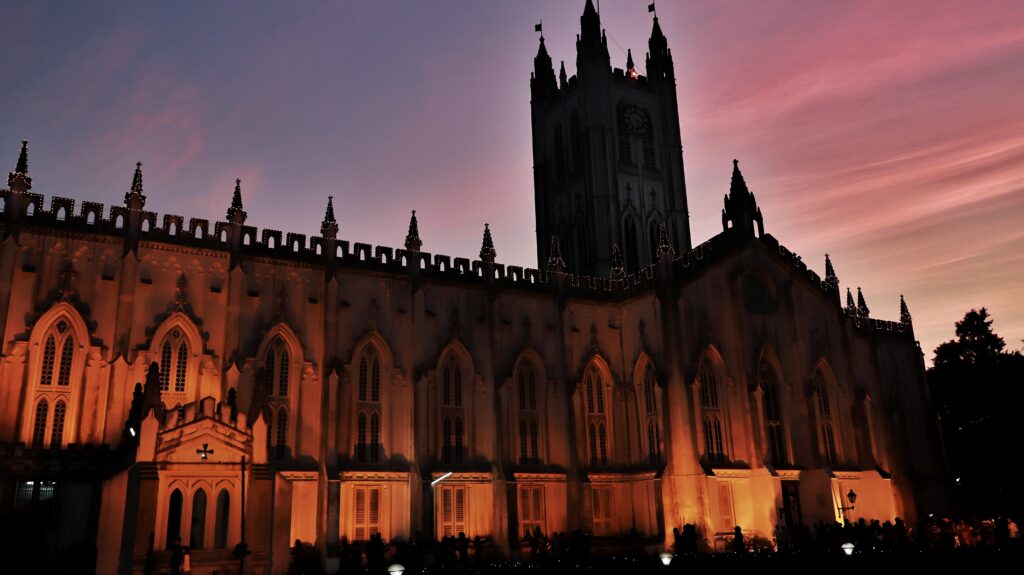
    Then there’s the famed Midnight Mass at St Paul’s Cathedral, which is attended by thousands from across the world. This Indo-Gothic monument was the first ever Anglican cathedral in Asia and has stood for almost two centuries. During Midnight Mass, you can enjoy the serene yet glorious sight of the Cathedral lit up with candles. It features hymns, prayers, and readings, offering a spiritual and reverent counterpoint to the jubilant festivities along Park Street.

    Park Street is a wonderful place to visit any time of the year, especially if you are interested in history or heritage sights or good food. But during Christmas it turns into a veritable street festival of fantastical proportions that truly embody the Bengali love for celebrations. So, if you are planning to visit Kolkata and the Durga Puja insanity is not something you are willing to tackle, Christmas might be a great option for you to visit. Between the cool weather and warm jubilation on Park Street, you will have a vacation to remember.

    #AtoZChallenge

    #BlogchatterA2Z

    #Kolkata

    #cityofkaali

    #kolkatachristmasfestival

    This post is a part of Blogchatter A2Z Challenge 2026

  • W is for White, Black, and South

    W is for White, Black, and South

    Hi folks!

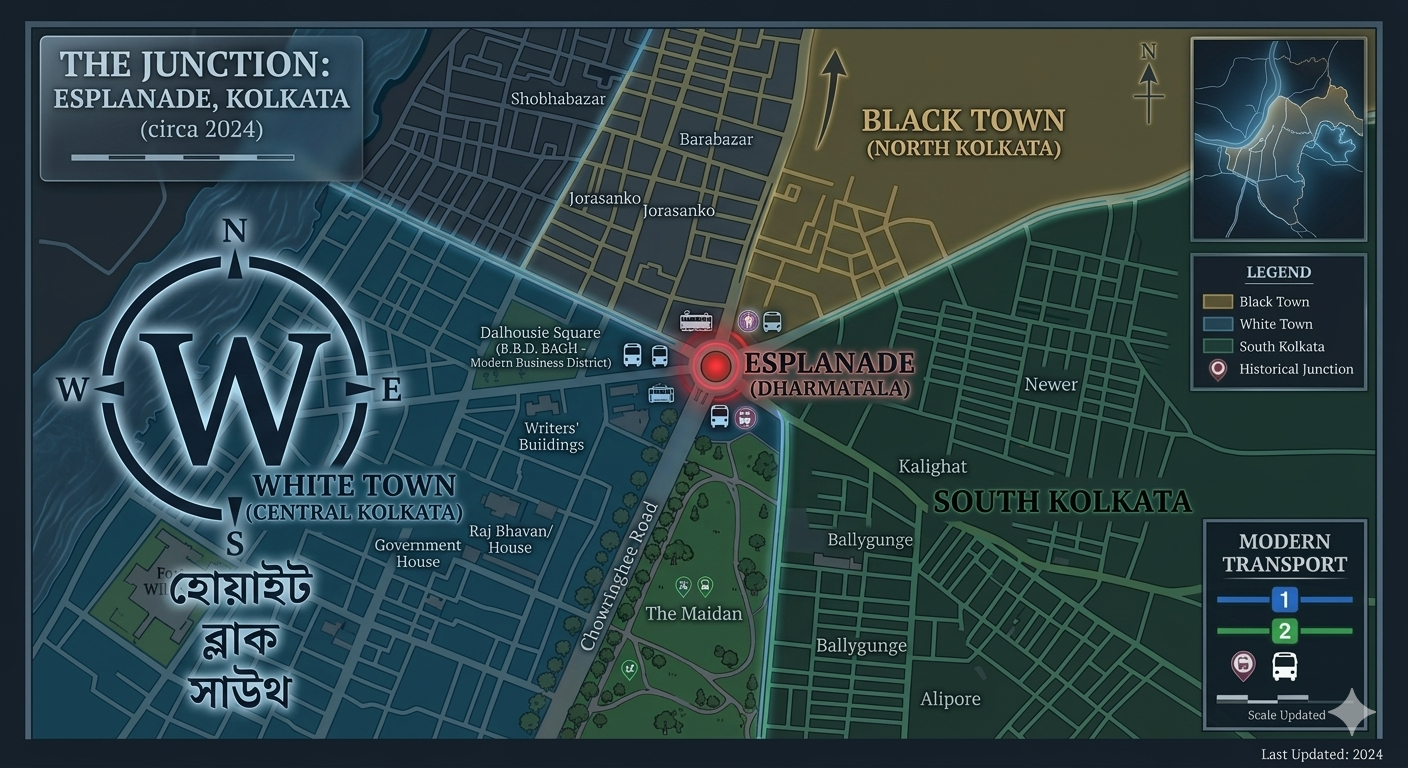
    In my various posts, I’ve been talking about the culture, architecture, and lifestyle of Kolkata. This might have given you the impression of a uniformly charming and quirky city. However, that is far from the case. Like any historical city, Kolkata has layers in its urban evolution. Driven by racial segregation and class aspiration, colonial Kolkata was split along geographical lines that also served as sociocultural lines. Today, let’s look into that and understand how the city’s division into “white town”, “black town”, and “south” has shaped its character.

    When the British East India Company set up their trading post and, later, their headquarters in the newborn city of Kolkata, there were already Bengali communities living in the three villages which they joined together. As the Britishers picked areas like Park Street and Esplanade (and later, Fort William) in central Calcutta for their settlement, the native population was relegated to Sutanuti and its neighbouring areas, leading to the creation of “white town” and “black town”.

    Image created with Gemini

    The people of the villages that were bought by the British had been pursuing traditional rural occupations for generations, though the advent of European traders had started creating new types of jobs too. With the establishment of the city, some of the traditional occupations died out whereas others were created to build, maintain, and expand the city. At this point, most of the locals living in “black town” worked as fishermen, potters, labourers, and other menial workers, living in poverty and squalor. Even most of those who moved from other villages in search of employment in the city could get only these types of jobs and had to live in the kind of humble dwellings they had been used to in their villages.

    There was a small section of the population that was socioeconomically much better off from the bulk of the native population of black town, though. They were newcomers to the city, drawn to it by the prospect of wealth through employment with the East India Company. These were educated men who often took up work as scribes, clerks, agents, etc. for the British. Some of them rose from ordinary levels of society, while some were well-to-do descendants from prosperous landed families of the districts. They became some of the wealthiest native families living in black town and built their mansions all over the area that we today call North Calcutta.

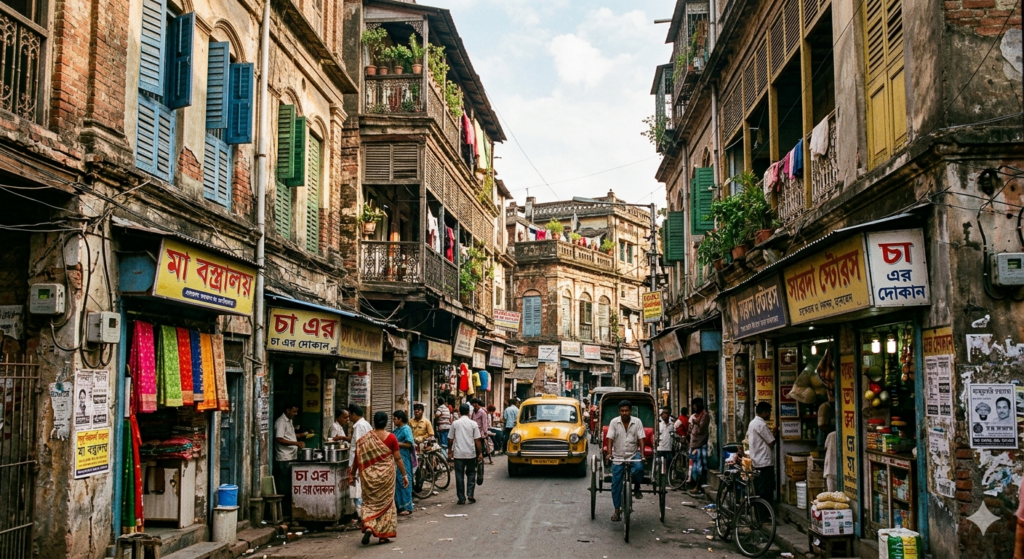
    For the most part, black town—which constituted 80% of the available land space in the new city—was a chaotic mass of humanity. There was no urban planning to speak of; houses piled on top of each other, shops encroaching onto residential areas, narrow lanes and alleys winding through maze-like blocks of houses and markets, no proper thoroughfares or wide roads, and the poorest beggar rubbing shoulders with the richest British agent, geographically speaking. Even today, North Calcutta possesses many of these same characteristics, especially the chaos of unplanned urban development and narrow roads.

    Image created with Gemini

    White town was in sharp contrast to this aesthetically as well as economically. The British had settled down in the central region of the new city, around the Park Street and Esplanade areas, after Siraj-ud-Daulah’s attack on Fort William had forced them to move away from Sutanuti. The new Fort William coming up in the Gobindapur area now became the centre of their habitation. However, it wasn’t big enough to accommodate the growing population of white-skinned people flocking to Kolkata looking to make their fortune.

    Soon, thanks to a land grant by the Mughal Emperor of the time, Farrukhsiyar, the East India Company added 38 new villages to the rapidly expanding city. This included localities like Chowringhee and Birji, into which white town began to expand. These places had well-built wide roads, large colonial mansions, parks, and gardens along the lines of those found in London. At the heart of it was the Maidan, created by clearing away a large portion of forest land, which was meant to echo London’s Hyde Park.

    Although white and black towns were strictly segregated for decades, thanks to the racist beliefs and practices of the colonial British, things began to change in the 19th century. By the end of that century, the barriers between the two sections of the city had almost disappeared as a growing class of western-educated, confident, and wealthy Bengalis started moving into areas originally within white town, especially Theatre Road and its vicinity. This new community of upper-class Bengalis was rooted in their own culture but was also more progressive and ambitious due to the imbibing of western influences through their education.

    Image generated with Gemini

    As the 20th century dawned, these people continued to move further south, into territories that were still largely forested and semi-rural. This shift led to increased urbanisation in what became “south town”. In 1929, the Bengali population of these areas appealed to the Calcutta Improvement Trust for work in around the Dhakuria Lake and Ballygunge, leading to a very different kind of urban development story in South Calcutta. These areas had better roads than the northern part of the city, architecture that blended multiple influences, better public amenities, and much more systematic planning.

    The different stages of Kolkata’s urban evolution have left the city with distinct geographical regions that have very different “vibes”. The differences—which weren’t just architectural or infrastructural—are still visible today. They are manifested in the way people talk, eat, or live, and in their preferred cultural pursuits, pastimes, and houses. The partition and mass migrations of the mid and late 20th century as well as the continued expansion in the late 20th and early 21st centuries has added further layers to the city’s demographic, geographical, and cultural landscape. But those are stories for a different post!

    #AtoZChallenge

    #BlogchatterA2Z

    #Kolkata

    #cityofkaali

    #northkolkatavssouthkolkata

    This post is a part of Blogchatter A2Z Challenge 2026

  • V is for Victoria Memorial

    V is for Victoria Memorial

    Hi folks!

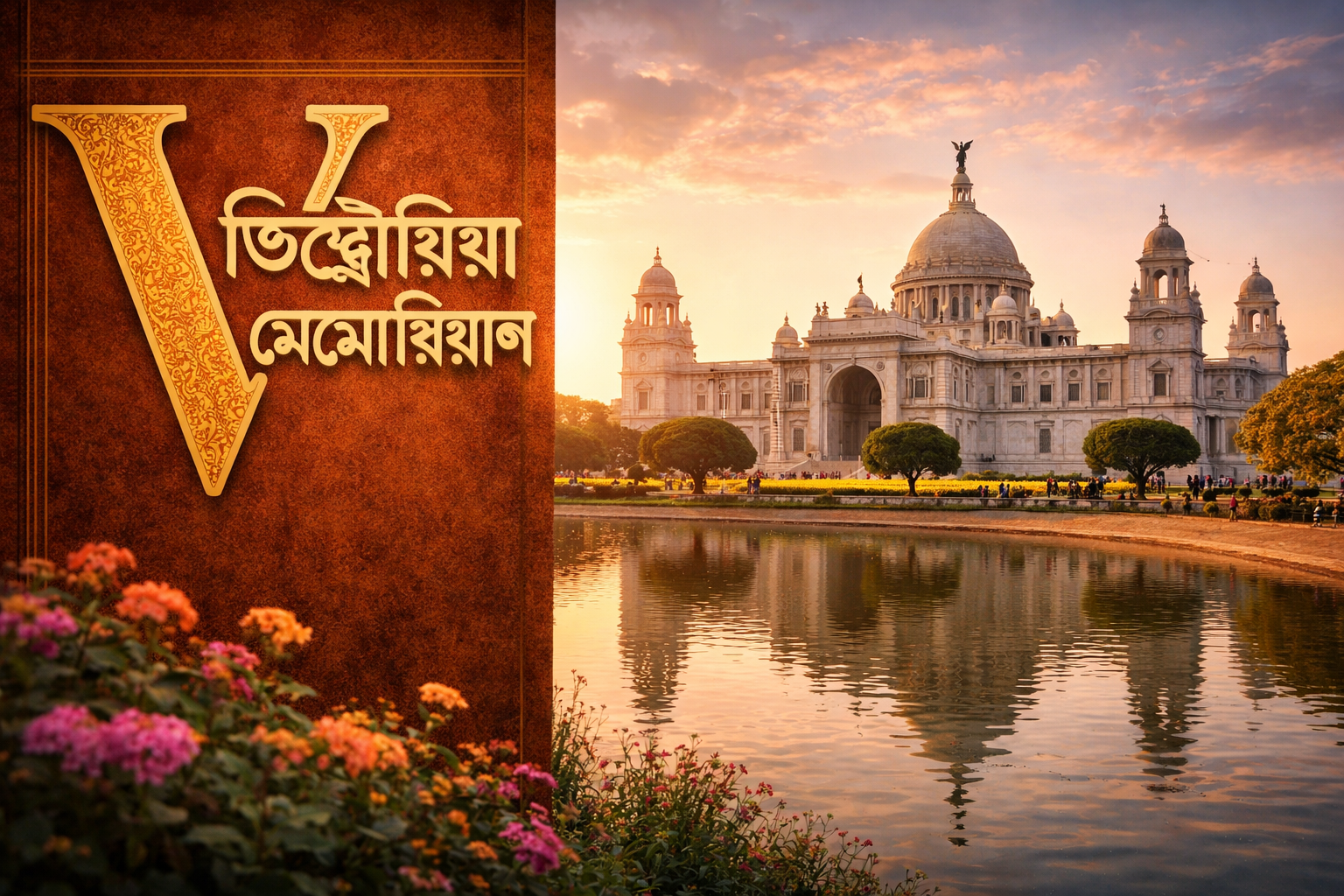
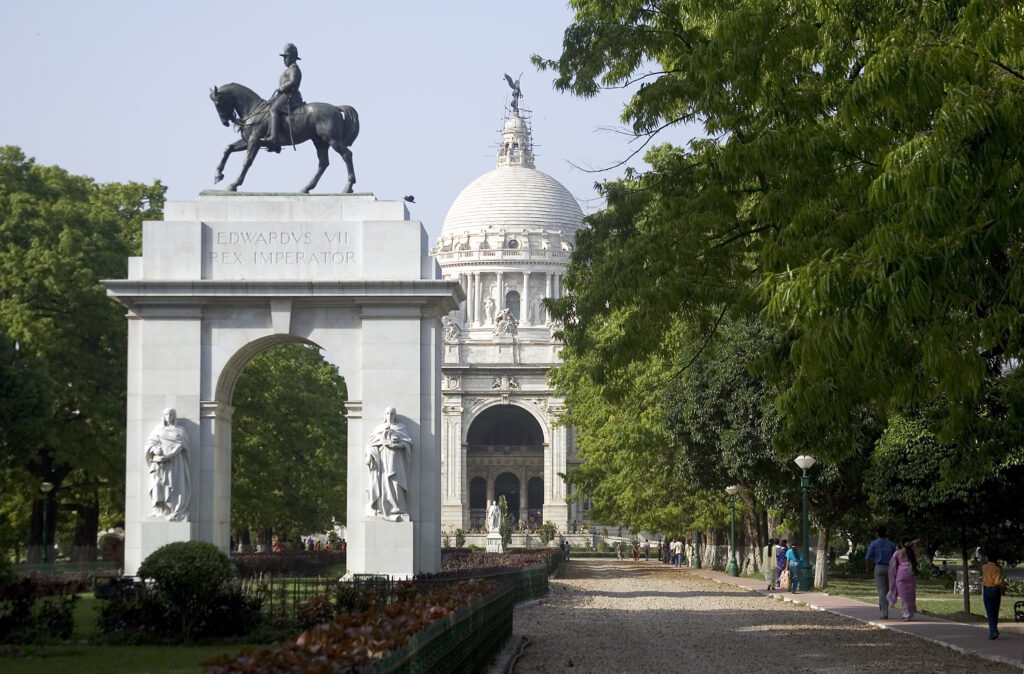
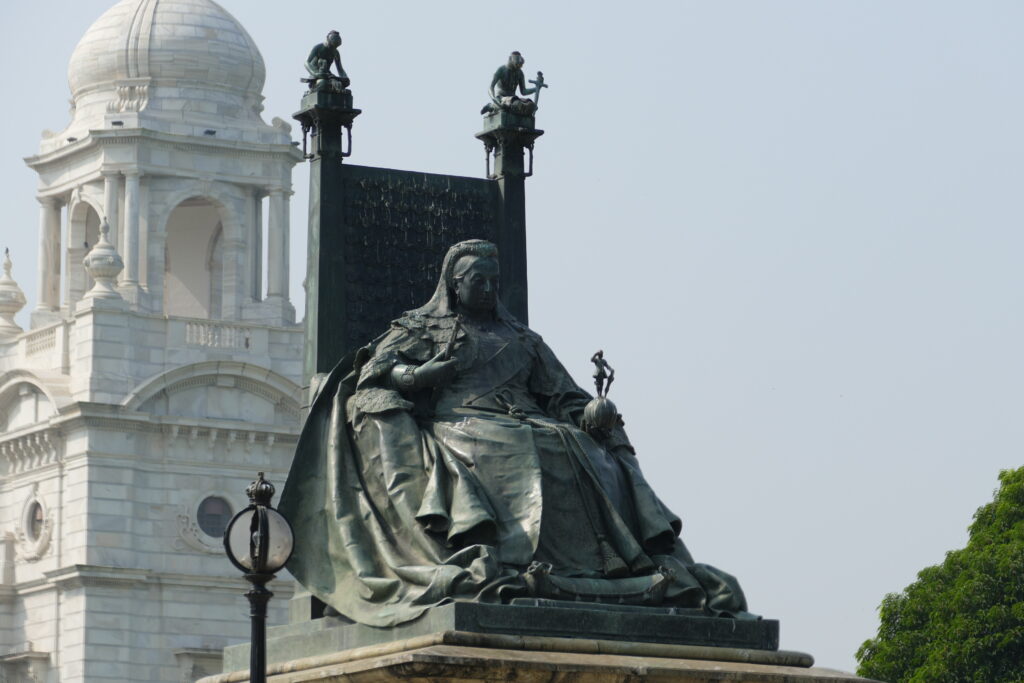
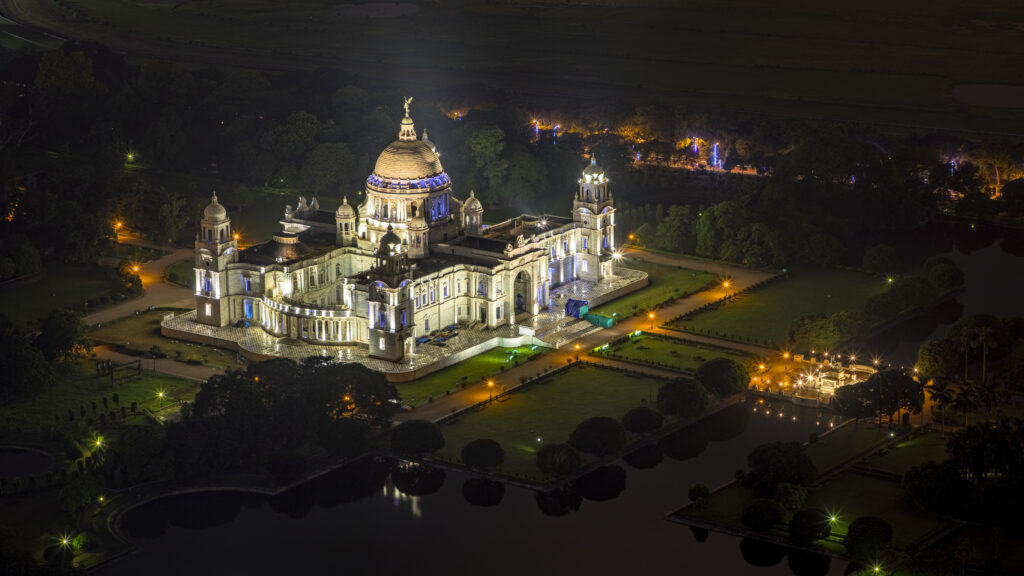
    Delhi has the Qutb Minar, Mumbai has the Gateway of India, Agra has the Taj Mahal. Iconic edifices that define the skyline of a city. For Kolkata, that skyline defining building is the Victoria Memorial. Built between 1906 and 1921 to commemorate Queen Victoria, it is the largest monument dedicated to a monarch anywhere in the world. Sitting in the Maidan, it includes large gardens and a museum. It is not only the most recognisable monument of Kolkata but also a very popular hangout spot for the local population.

    © Jorge Royan / http://www.royan.com.ar

    The plan for this monument was conceived by Lord Curzon, the then-viceroy, before the Queen’s passing in January. However, it was only after her death that he presented his plans to the British government as it provided him with an appropriate occasion for the monument. He appealed to government officials, princes, politicians, and common people for funds. His appeal was met with generous donations, which were enough to meet the construction cost of 1 crore 5 lakh rupees.

    CC BY-SA 3.0, https://commons.wikimedia.org/w/index.php?curid=9800496

    However, there were some teething troubles, including Curzon’s departure from India. Finally, the Prince of Wales laid the foundation stone in 1906, and work began in 1910. At the time, Calcutta was the capital of British India, so the enthusiasm for such a structure can be easily understood. Although in 1911 the capital moved to New Delhi, the construction of the Victoria Memorial was duly completed, and it was inaugurated in December 1921.

    Ankur P from Pune, India, CC BY 2.0 https://creativecommons.org/licenses/by/2.0, via Wikimedia Commons

    The Victoria Memorial was built to outshine the Taj Mahal and is often called the “Taj of the Raj”. Since this was part of Curzon’s agenda, the monument has many things in common with the Taj Mahal. First, the use of White Makrana Marble, which is the same material the Taj Mahal is built of. Its design, too, echoes the Taj Mahal with its central dome, four subsidiaries, octagonal domed chhatris, domed corner towers, etc.

    DeepanjanGhosh, CC BY-SA 4.0 https://creativecommons.org/licenses/by-sa/4.0, via Wikimedia Commons

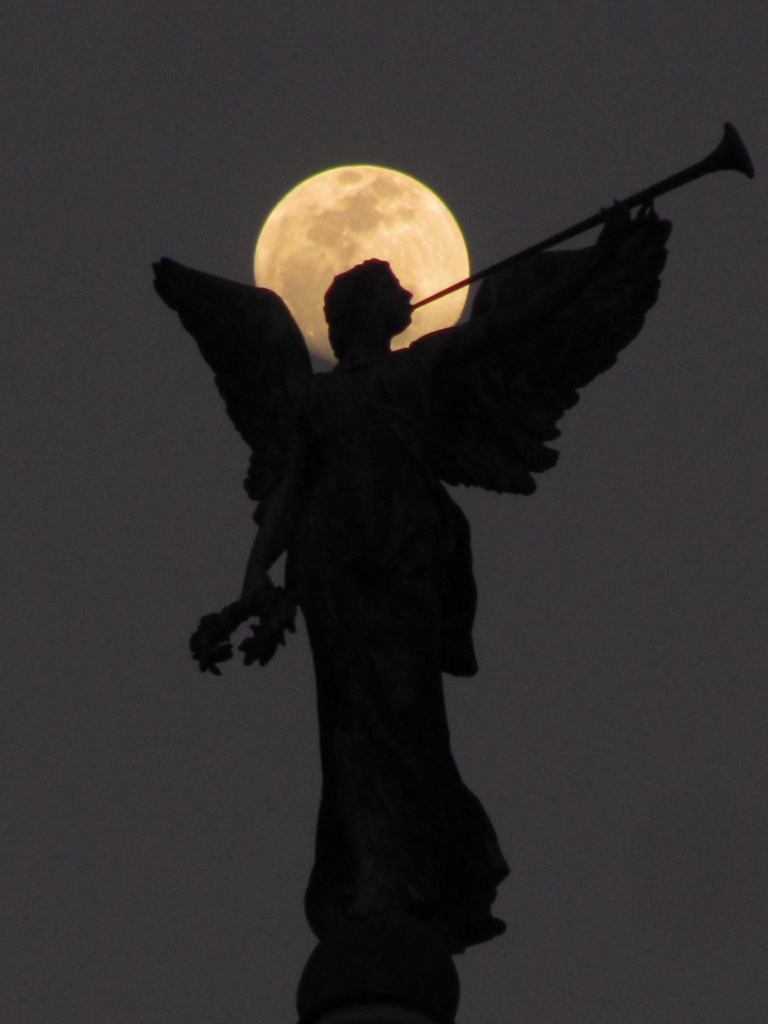
    The central chamber was deliberately constructed to be slightly larger than the Taj Mahal. The style itself is called Indo-Saracenic, which is a mixture of British and Mughal elements with Venetian, Egyptian, and Deccani architectural elements. On top of the central dome stands the Angel of Victory, a large bronze cast statue that rotates with the wind.

    Kedar Kulkarni, CC BY-SA 3.0 https://creativecommons.org/licenses/by-sa/3.0, via Wikimedia Commons

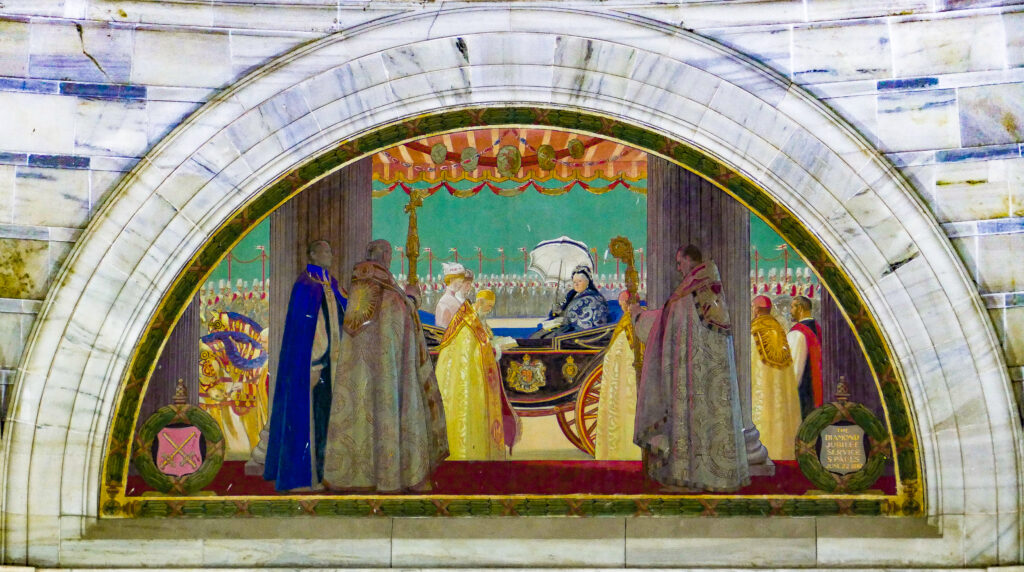
    The Victoria Memorial has 25 galleries. Some of the more prominent ones include the Victoria Gallery, the Portrait Gallery, the Sculpture Gallery, the Central Hall, and the Kolkata Gallery. The Victoria Gallery contains several portraits of Queen Victoria and Prince Albert along with paintings about their lives. Some of these paintings are originals, while some are copies whose originals are in England. The Gallery also displays original furniture used by Queen Victoria.

    Kritzolina, CC BY-SA 4.0 https://creativecommons.org/licenses/by-sa/4.0, via Wikimedia Commons

    The Kolkata Gallery was conceptualised in the 1970s to highlight the history of the city. It finally came into existence in 1992. It houses many wonderful oil paintings and colonial artefacts capturing the city’s history. It also has a life-size diorama of the Chitpur Road in the late 1800s. Another unique artefact here is the original deed signed between the Sabarna Roychoudhury family and Job Charnock selling him the three villages of Gobindapur, Sutanuti, and Kalikata. This fact was kindly brought to my notice by a commenter on my post about the origin and etymology of the city, for which I’m most grateful!

    © Vyacheslav Argenberg, CC BY 4.0 https://creativecommons.org/licenses/by/4.0, via Wikimedia Commons

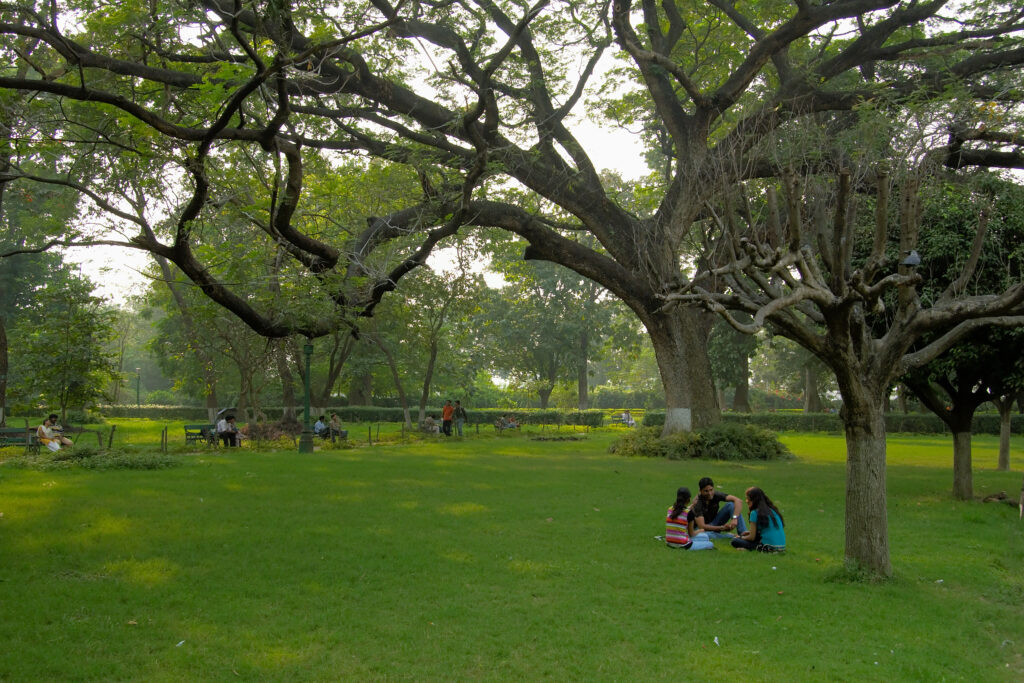
    The gardens of the Victoria Memorial occupy an area of 64 acres and are replete with reflecting pools that capture the beautiful marble’s image, artistic bridges, statues of Queen Victoria and many other dignitaries, paved quadrangles, lush lawns, and majestic trees. Maintained by 21 gardeners, the gardens of the Victoria Memorial are an oasis of bliss and greenery in the middle of the hustle and bustle of the city.

    Rangan Datta Wiki, CC BY-SA 4.0 https://creativecommons.org/licenses/by-sa/4.0, via Wikimedia Commons

    Families picnic on the lawns, couples try to find a moment of quiet togetherness, groups of friends dive into the passion of Adda on its premises (see my post about Adda), and fitness enthusiasts run, jog, or perform yoga in these gardens. In the evenings, the Eastern Garden also becomes the venue for a remarkable Light and Sound show, which uses the Memorial itself as a backdrop to tell the story of Kolkata.

    Ravi Dwivedi, CC BY-SA 4.0 https://creativecommons.org/licenses/by-sa/4.0, via Wikimedia Commons

    Though the Victoria Memorial was built as a tribute to British colonialists’ belief in their supremacy and right to rule over India, today it stands as one of the most striking and beautiful works of architecture in India. Not only have changes been made to the Memorial and its galleries since independence, but the Light and Sound show also clearly criticises British colonial rule in India while narrating the history of the city. The locals of Kolkata have embraced this monument as their very own, making it as much a part of their cultural identity as Kalighat temple!

    #AtoZChallenge

    #BlogchatterA2Z

    #Kolkata

    #cityofkaali

    #victoriamemorial

    This post is a part of Blogchatter A2Z Challenge 2026

  • U is for Underground Kolkata

    U is for Underground Kolkata

    Hi folks!

    This has to be, hands down, the weirdest post in my A2ZChallenge this year. It is also a topic that is very close to my heart. Because, in trying to bring Patala Kaalikshetra to life in my City of Kaali series, I have had to research Kolkata’s nether regions—both the real and legendary varieties. Kolkata has existed for hundreds of years (about which I discuss in my Kolkata-Calcutta post), and as happens with any old city, underneath the skyscrapers rubbing shoulders with heritage buildings lies a second, hidden city. From 19th century brickwork to the latest in metro rail technology, from legends of escape routes to tunnelling by members of an “underworld” of a different nature, Kolkata has it all! It’s been a fascinating journey for me, and I hope to give all of you a taste of it in this post.

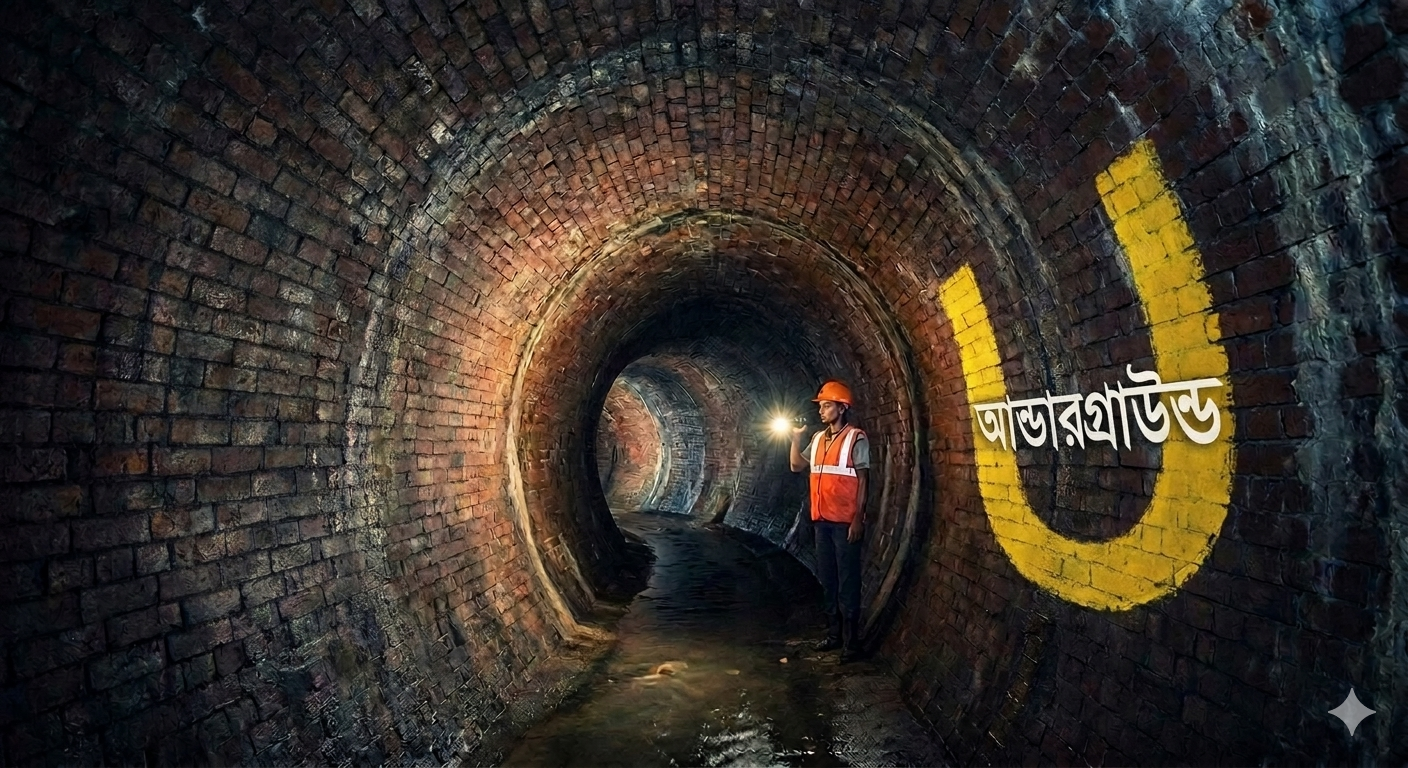
    Let’s begin with the real underground structures—the marvels of engineering that hold up the city’s habitability in more ways than one. The oldest of these is the sewer system made during Victorian times (1860 – 1875), which also happens to be the oldest organised underground sewerage system in Asia. Built in imitation of the one in London, this 300-km-long system boasted large, oval tunnels for carrying solid waste away from the city. Decades of silting and wear and tear led to some sections of the tunnels becoming unusable, collapsing, or flooding. Since 2007, restoration work has been going on in this backbone of the city’s sanitation system, reinforcing the kilometres of brickwork with modern technology.

    Another marvel of underground technology—this one is not just underground but underwater too!—is the Calcutta Electric Supply Corporation (CESC) Power Tunnel. It connects Howrah and Kolkata deep below the Hooghly River, ensuring transmission of high-voltage electricity between the two regions. This 539-metre-long tunnel was built completely by hand, using tools like shovels and spades. The project took 17 months to complete, and started officially functioning from July 1931. Running between Metiaburuz and the Bontanical Gardens, this tunnel still serves as an integral part of Kolkata’s power infrastructure and was the blueprint for the Calcutta Metro decades later.

    Image generated with Gemini

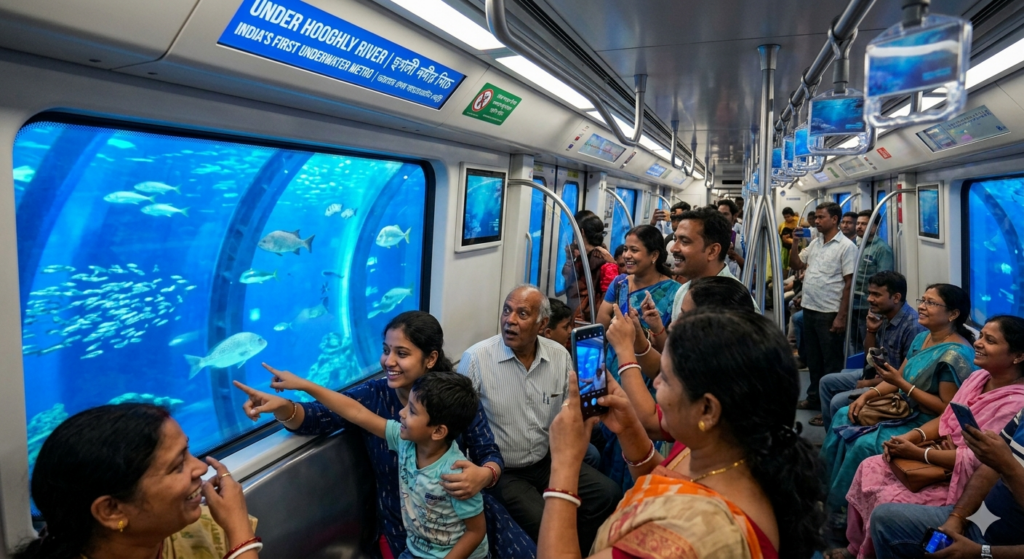
    Which brings us to the third engineering marvel among underground structures of Kolkata—the Kolkata Metro network, which opened in 1984. Though there were few changes to it for decades, it currently covers approximately 73.4 kms connected by 58 stations across 5 lines: Blue, Green, Purple, Orange, and Yellow. The latest astonishing addition to this network is the Kolkata Metro Underwater Tunnel that is part of the Green Line. Inaugurated on 6 March 2024, this 520-metre-long stretch falls between Howrah Metro Station, which is India’s deepest station, and Mahakaran Metro Station. The metro rail crosses it in 45 seconds, and passengers are reminded of their underground status using lighting and animation.

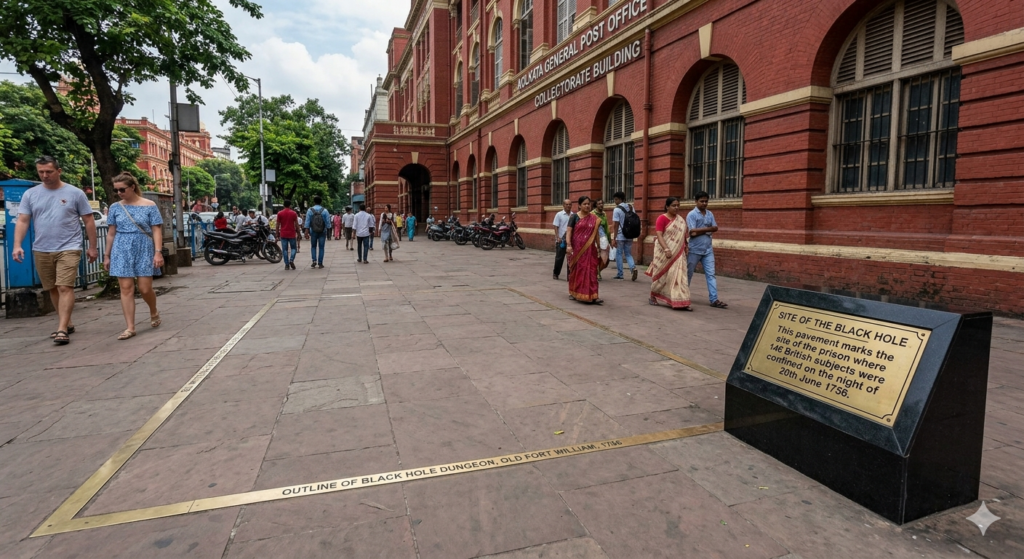
    These are not the only underground tunnels or chambers that the city boasts of. There are some that, though equally real, are far more intriguing by dint of being shrouded in mystery and hints of conspiracy. The most infamous of these is the Black Hole of Fort William. This was a tiny (14 ft x 18 ft) underground guardroom where British prisoners were held overnight by Siraj-ud-Daulah after taking the fort in 1756. According to the British records, 146 people were forced into this, the circumstances causing almost all of them to perish from suffocation and heat exhaustion. There is much controversy surrounding this incident, and historians now believe that the number of prisoners had been 64, of whom 43 died. The original site was demolished when the fort was replaced, but the site is marked out by brass rails in the GPO complex.

    Image generated with Gemini

    Another “secret” remnant of the colonial times is the underground chamber discovered inside the National Museum in 2010 by the Archaeological Survey of India while renovating Belvedere House. The discovery of this 1000-square-foot windowless room sparked rumours of a treasure vault or torture chamber. In truth, the “chamber” had been dug out and filled with packed earth in the 18th century to help stabilise the structure of the building atop it.

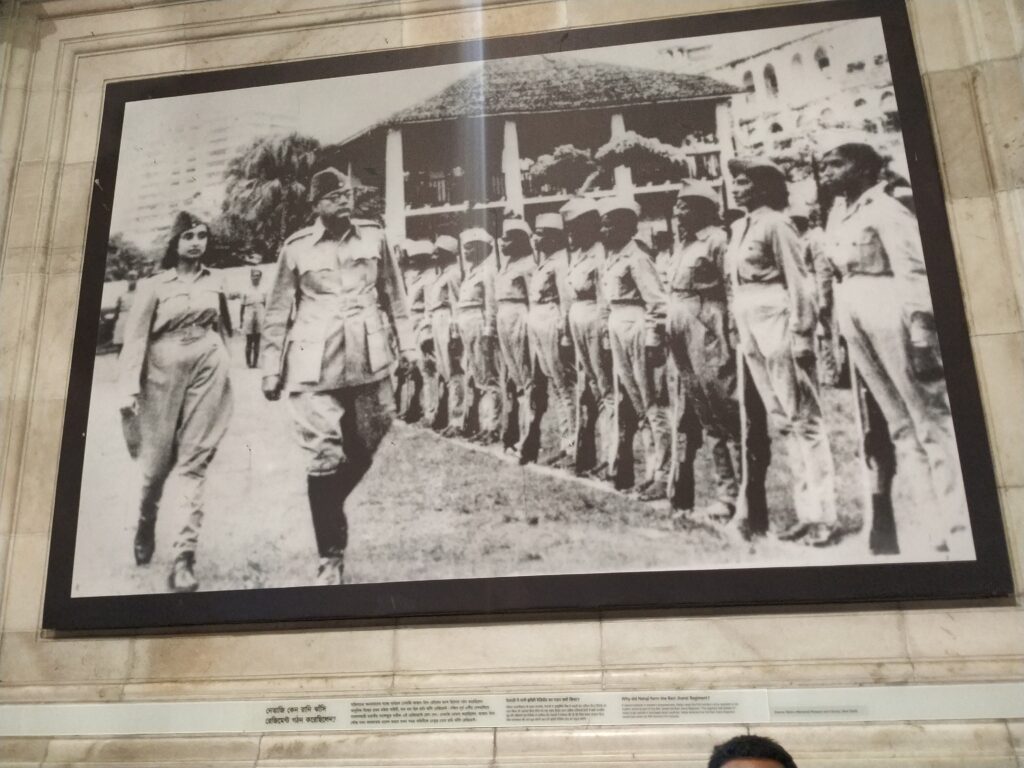
    Then there are the ones for which no evidence has yet been found, yet the myths of their existence persist and resurface at regular intervals. Such as the “escape tunnel” from Elgin Road used by Netaji when slipping through the net of the British. Given that he escaped over land and not below it, this myth has been debunked yet continues to live in the public consciousness. Similarly, there are stories of escape tunnels under Fort William, which were probably born from the reality of massive masonry drainage culverts.

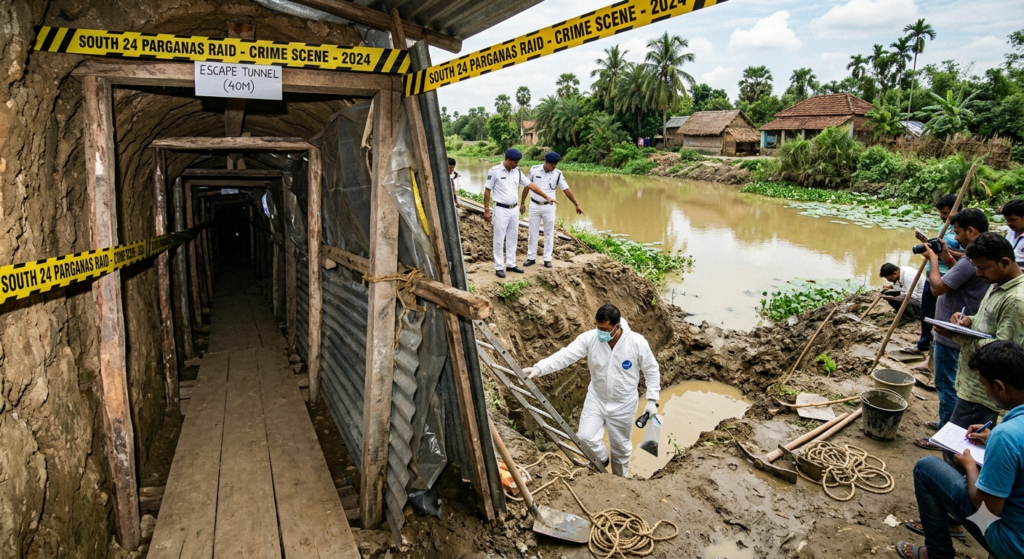
    And as if all these real and mythical tunnels were not enough, Kolkata’s criminal underworld has also made its fair share of contributions to the city’s literal underworld. Between 2013 and 2015, two tunnels were found under Red Road, near Army headquarters, which sparked concerns about national security. It was later discovered that these had been the work of local cable-theft gangs. And as recently as 2024, the Kolkata Police discovered a 40-metre-long tunnel under the house of a gold smuggler during a raid at his house. The tunnel led to a canal behind the house, which connects to the Matla River in Bangladesh—a perfect system for a quick getaway across the border!

    Image generated with Gemini

    In Ageless Feud, the nether regions of Kolkata play a key part, and not just because Patala Kaalikshetra is one of the two dual settings of the story. Some of the places mentioned in the post have featured or have inspired locations in the book. And no, I am not going to spill the beans here! You’ll have to read the book and find out. I originally started researching into Underground Kolkata in preparation for Ageless Feud, though I have learnt much on the subject even after the book’s publication. Who knows, maybe some day more of these locations will pop up in Manik’s continuing adventures.

    #AtoZChallenge

    #BlogchatterA2Z

    #Kolkata

    #cityofkaali

    #underground

    This post is a part of Blogchatter A2Z Challenge 2026

  • T is for Thugs

    T is for Thugs

    Hi folks!

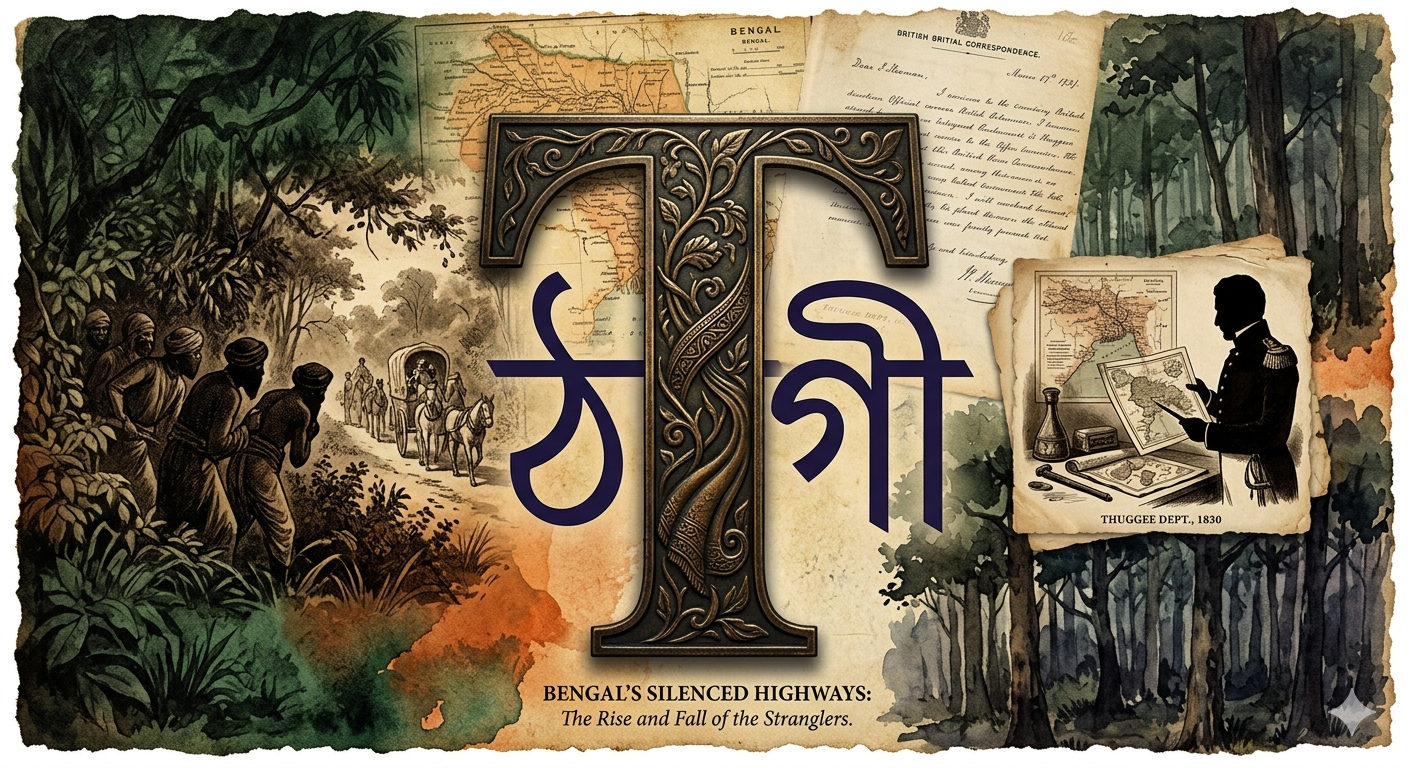
    Most English readers will be familiar with the word “thug” and its meaning of a rough, violent person, especially a bully or a criminal. What few know is that the word arrived into English from Sanskrit via Bengal! Behind today’s generic muscled goon is a terrifying criminal phenomenon that forced the British in India to sit up and take notice. Though the original word meant “to deceive”, deception was only the beginning of the game for the thugs who became legends that plagued the British Empire for decades.

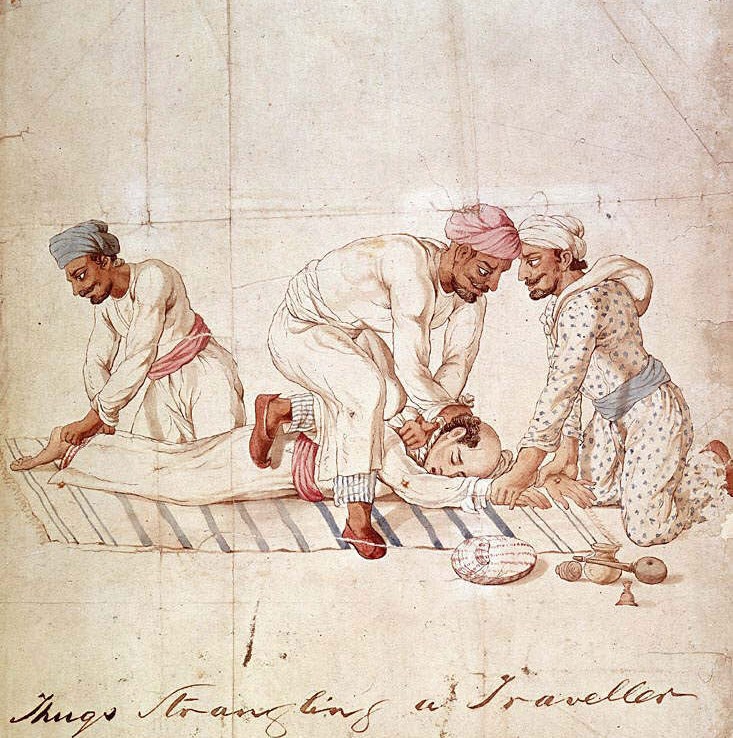
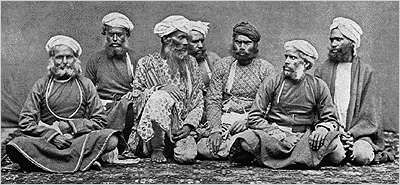
    Imagine a lonely traveller on the road—a pilgrim or travelling merchant or sepoy. He is insecure and a little scared. He comes across a group of friendly strangers who welcome him with open arms, sharing their food and fire. After a while, he starts feeling drowsy. Then, one of his new companions points up at something. He raises his head to see. Before he can understand what is happening, he finds himself choking, a weighted handkerchief inexorably tightening around his neck. By the time he realises he has become a victim of thugee, it is too late.

    Anonymous Indian artist. Made for Capt. James Paton, Assistant to the British Resident at Lucknow, 1829-1840, Public domain, via Wikimedia Commons

    Thugs—or murderous bandits with a similar modus operandi—are mentioned as early as 15th/16th century by Sant Surdas. From the 17th century onwards, there are several mentions of such criminals in various sources both Indian and European. The British colonials first encountered it in the early 1800s, and made several futile attempts to curb it until William Henry Sleeman’s campaign, about which we’ll talk a little later. What is clear that thugs had existed across the length and breadth of India for many centuries.

    In the face of that, it is a little hard to imagine them as a secret cult of Kali worshippers, which was how the British colonials painted them. To have sustained their practices throughout the country and for a period of time that was longer than many empires without their identities being discovered would have required a level of organisation that is truly mind-boggling! It is far more likely that while local gangs of thugs might have been close-knit and well-organised, thugs as a whole likely weren’t so, unless of course, they were India’s version of the Knights Templar or Freemasons! Now, that’s an idea that historical thriller writers out there can run with. Any takers?

    August Theodor Schoefft, Public domain, via Wikimedia Commons

    Though the popular image of thugee (the practice of the thugs or the crime committed by them) is by means of a weighted handkerchief only, in truth, thugs used other weapons just as much, including knives, swords, or poison. Even when strangling their victims, they would use anything that served the purpose, such as cords, clothing, or a wrap. When attacking groups, thugs murdered every member of the party to ensure there were no eyewitnesses. Their victims were either thrown into a well or ditch, or buried.

    There are several theories regarding why they preferred strangulation of their victims over bloodshed, though the modus operandi is more myth than truth due to its appeal to the imagination. One theory links it to the Mughal legal loophole that allowed stranglers to not be given capital punishment. Another gives it a ritualistic angle, tying it to the worship of Goddess Kali by the thugs. Much of this idea, along with the spread of the idea of thugee as a cult, was the product of British colonial perspective and propaganda.

    Bourne & Shepherd, Public domain, via Wikimedia Commons

    The thugs did worship the Devi in different forms, and even Muslim thugs worshipped her (which baffled the British officer interrogating them), but it is more likely the result of Devi worship being a common religious practice in ALL the local Hindu population. Thugs also believed in the Islamic concept of fate. In short, the thugs were a brilliant example of religious syncretism that the British police force could neither understand nor digest. Even more ironically, it is quite possible that the connection between thugee and religion was completely non-existent and was purely a product of colonial propaganda. At this remove of time, and with history being written by the colonials who were in power, it isn’t easy to separate fact from fiction where thugs are concerned.

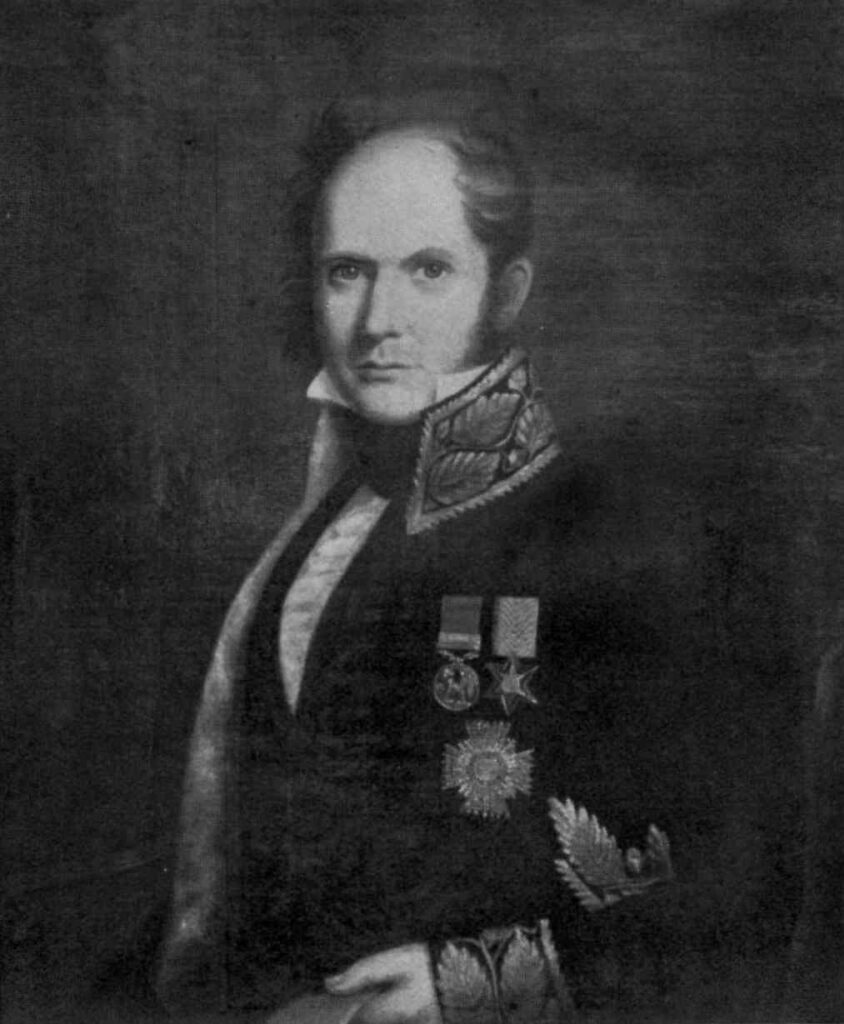
    After thriving for centuries, the thugs finally met their match in William Henry Sleeman. He launched a large-scale organised campaign against them in the 1930s that was intelligence-driven and centralised. It was one of the first systematic anti-organised crime initiatives in the history of police work. He used “approvers” (thugs who turned government witnesses in exchange for immunity or leniency) as the primary weapon of his campaign. He also built a huge archive of paperwork including extensive records, genealogies, and maps under the Thuggee and Dacoity Department (created by him in 1935). He used a carrot and stick policy most effectively to root out, arrest, convict, and punish thousands of thugs. Within a decade, Sleeman and his team had broken the back of thugee as an organised activity. Epic Channel has an excellent program on this campaign that you might wish to check out.

    See page for author, Public domain, via Wikimedia Commons

    Popular fiction and modern modes of storytelling have been fascinated by thugs almost as much as by pirates. Many 19th century authors, especially British ones, including Jules Verne and Conan Doyle, included thugs as characters in their books. Interest in thugs might have waned for authors in the first part of the 20th century, but returned with a vengeance in the latter part, with a Thug villain Ravan even appearing in the pages of DC Comics. Films and television too have depicted thugs in various capacities, though usually as antagonists, from mid-20th century onwards. Perhaps the bizarre and secretive nature of thugee, along with the almost-mystical legends that have grown up around the practice, make it such an enticing element for fiction.

    In Ageless Feud, too, there is a mention of thugs, though indirectly. In a story that Manik Choudhury tells the Historian, he talks about his grandfather and a British colonial who went hunting together. Thugs are mentioned in the context of this story, though Manik makes a shocking observation about their involvement. Given how fascinating thugs and their practices were, I’m not sure I’m done with them. Even if I don’t include them in further books of City of Kaali, I might use them in some other story. Whether that materialises or not, only time will tell!

    #AtoZChallenge

    #BlogchatterA2Z

    #Kolkata

    #cityofkaali

    #thugs

    This post is a part of Blogchatter A2Z Challenge 2026

  • S is for Sharadindu Bandopadhyay

    S is for Sharadindu Bandopadhyay

    Hi folks!

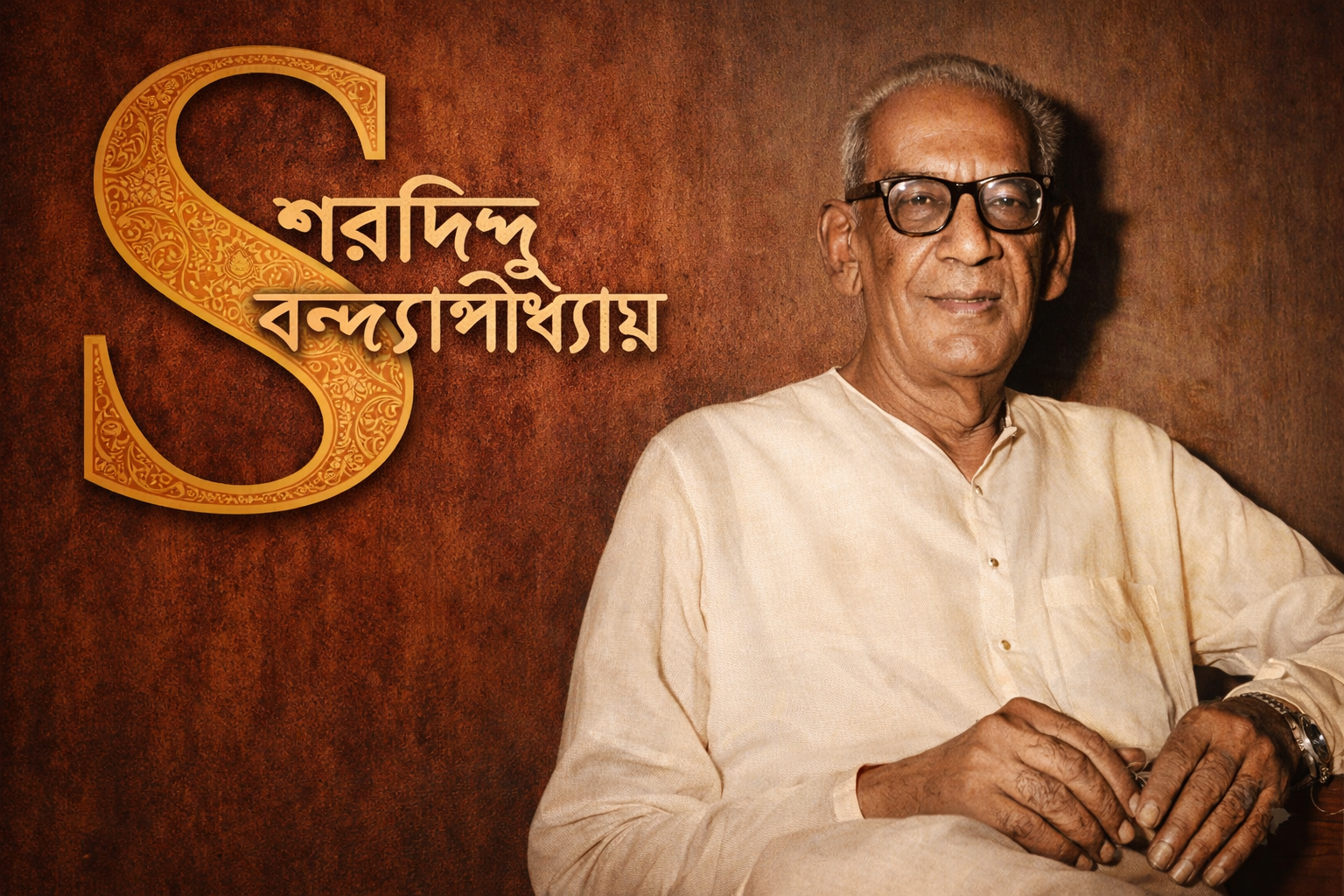
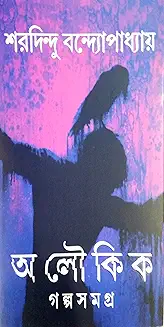
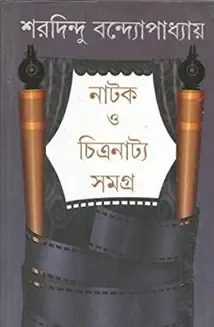
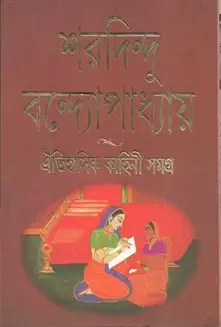
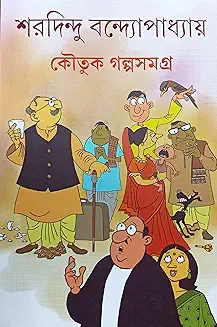
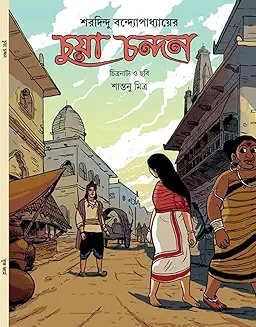
    In my post on Hemendra Kumar Roy, I mentioned that I dislike “favourite author” type questions. I still stand by that, but if I absolutely had to make a choice—like if someone held a gun to my head or something—I’d probably have to say Sharadindu Bandopadhyay. Like with much of Bengali literature, my introduction to Sharadindu Bandopadhyay’s works was through my mother’s censored narration. She’d read his books as a prelude to her afternoon nap, and as she’d want me to nap as well, she read them aloud, modifying the bits that were unsuitable for my tender years. It wasn’t too many years later that, as a high-schooler, I was reading them by myself.

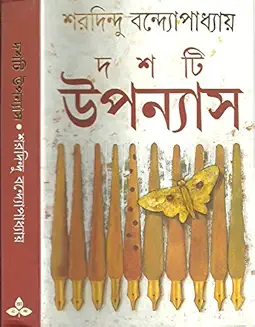
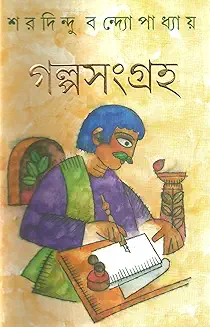
    Sharadindu Babu was one of the most versatile writers to grace the field of Bengali literature. His works range from historical to detective fiction, from Hindi and Bengali screenplays to paranormal stories, and from children’s fiction to plays and much more. I remember spending three rapturous days one summer vacation devouring two full volumes of his novels. I lay on the sofa, propped up with cushions and pillows, and read, forgetting the world. The only breaks I took were for the most essential functions of life, disappearing back into the pages of his mesmerising storytelling as soon as possible. But I was young then, and read Bengali as fast as I read English. I doubt I’ll ever be able to repeat that feat ever again!

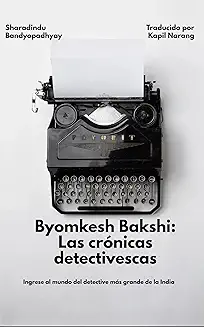
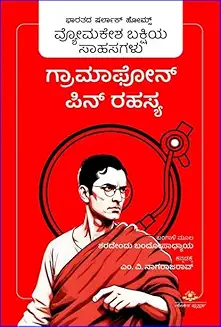
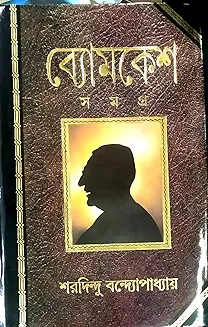
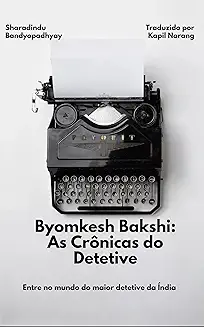
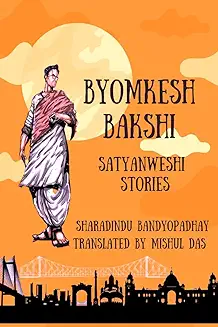
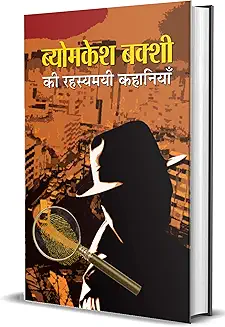
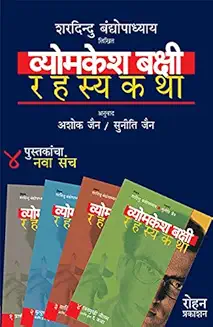
    One of his most popular creations—possibly even better-known in mainstream Indian consciousness than his creator—is Satyanweshi Byomkesh Bakshi. Thanks to Shyam Benegal’s immortal adaptation of the stories and novels of this Bengali detective, every lover of crime fiction in India knows his name. Refusing to be called a “detective” or “investigator”, this “seeker of truth” solves the most twisted of mysteries through sharp reasoning, keen observation skills, and his knowledge of forensics. He usually has his reliable chronicler and closest friend, Ajit Bandopadhyay, in tow. Several of the stories also feature his servant Putiram and Inspector Rakhal. Unusually for the genre, Byomkesh gets married to Satyabati and has a son who is only called “Khoka” meaning “Little Boy”.

    There have been many adaptations of the 32 stories in Bengali as well as Hindi over a period of almost sixty years! There are more than 20 Byomkesh Bakshi movies, including some only loosely based on the books, including the disastrous Detective Byomkesh Bakshi (Hindi) and Bidaay Byomkesh (Bengali). Beyond this, there are adaptations in several other media as well. The truly international appeal of this homegrown satyanweshi, however, is a reference to it in the hugely popular sitcom Bing Bang Theory, where Sherlock Holmes is called the “English Byomkesh Bakshi”! Talk about the Empire writing back!

    Another of Sharadindu Bandopadhyay’s popular characters is Boroda, a “Bhootanweshi” or ghost-chaser who narrates his encounters with ghosts to his friends. The stories are gripping and atmospheric, with surprising twists at the end. There are 13 Boroda stories that were written between 1915 and 1962. Interestingly, there is a crossover titled Byomkesh O Boroda in which these two popular characters meet.

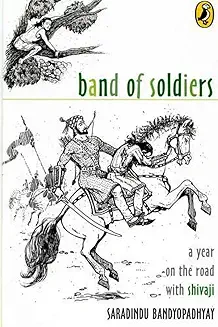
    A third series protagonist who is quite popular, though the genre of the books is children’s fiction, is Sadashiv Rao, a young Maratha soldier in the army of Shivaji while he is engaged in reclaiming his birthright and establishing his kingdom by going to war with the Adil Shahi and Mughal dynasties. It is historical fiction but from the point of view of a young boy from an ordinary background, which makes it both relatable and endearing. These stories have been translated into English as Band of Soldiers: A Year on the Road with Shivaji by Sreejata Gupta. I have always loved these books, and reading them a few years ago showed me that my love for the young hero’s wit and courage have not diminished.

    Apart from series, Sharadindu Babu also wrote a large number of standalone historical novels and stories sweeping across every period of Indian history from pre-historical times to the Mughal era. Full of intrigue, gripping action, romance, adventure, and fascinating characters, these are perfect examples of masterful storytelling. He also wrote contemporary novels and stories, as well as several screenplays for both Bollywood and the Bengal film scenario.

    One of the most fascinating things about his life for me was something that I discovered about a decade and a half ago. I realised that I had been unwittingly following in the footsteps of my literary hero, at least, geographically speaking. He had moved from Kolkata to work in Bollywood in 1928. In 1952, he moved to Pune to become a full-fledged writer. Though my own life trajectory hasn’t been exactly the same, I too moved from Kolkata (where, in contrast to Sharadindu Babu, I hadn’t been born or raised) to Mumbai for work and later to Pune, where I now pursue the career of a full-time writer. I managed to find out that in Mumbai he had lived in Malad due to its proximity to Film City, and I was beyond thrilled since I’d lived in the nearby localities of Goregaon and Kandivali. Unfortunately, I have no idea of where in Pune he lived.

    His works have not only been a source of great joy for me since childhood, transporting me to worlds and adventures beyond my wildest dreams, but also an inspiration for my own writing. The inspiration is clear to see in the kinds of books I love to read and write. His were some of the earliest non-kid-lit books I ever read and fell in love with. And sometimes it feels as if that me searches for an echo of those books in everything I read and tries to build a tribute to them in everything I write. How successful I am in doing either is something only time will tell!

    #AtoZChallenge

    #Blogchatter A2Z

    #Kolkata

    #cityofkaali

    #sharadindubandopadhyay

    This post is a part of Blogchatter A2Z Challenge 2026

  • R is for Rasogolla

    R is for Rasogolla

    Hi folks!

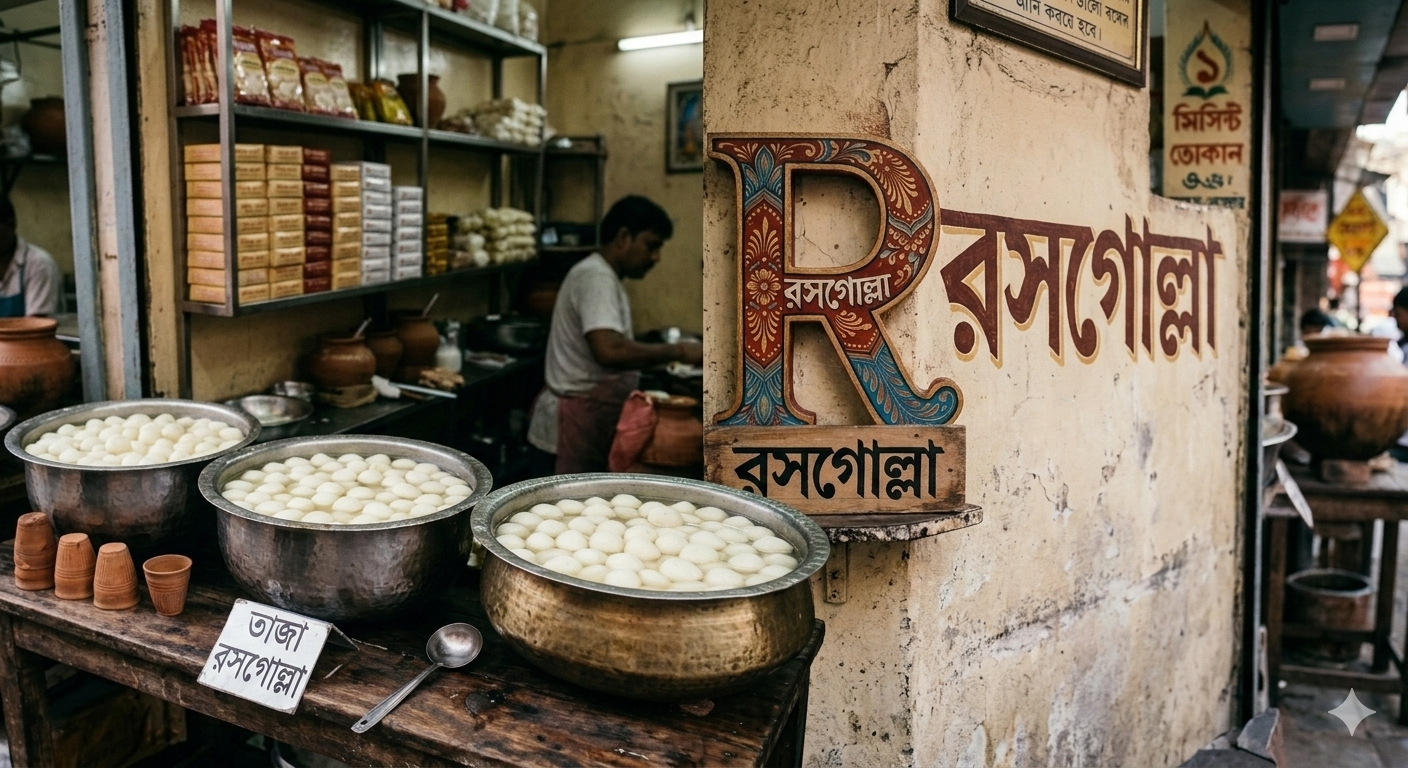
    When I was eleven, I entered into an extempore speech contest for the first time ever. My topic was Rasgulla or, as we Bengalis lovingly call it, Rasogolla (ball of juice). I earned a second-prize spot, a kilo of Rasgullas from a “fan”, and a nickname that stuck around in citywide elocution and extempore circuits for a few extremely annoying years. Oddly enough, it was one of the few sweets that I enjoyed at the time. My sweet tooth has lengthened over the years—proof that people CAN change—and I still love it. So, imagine my surprise when I discovered that one of my favourite sweets is also GI tagged. Banglar Rasogolla was given its GI tag in 2017. The use of “Banglar” in the name indicates that the GI tag doesn’t apply to other varieties of Rasgullas, but more on that later.

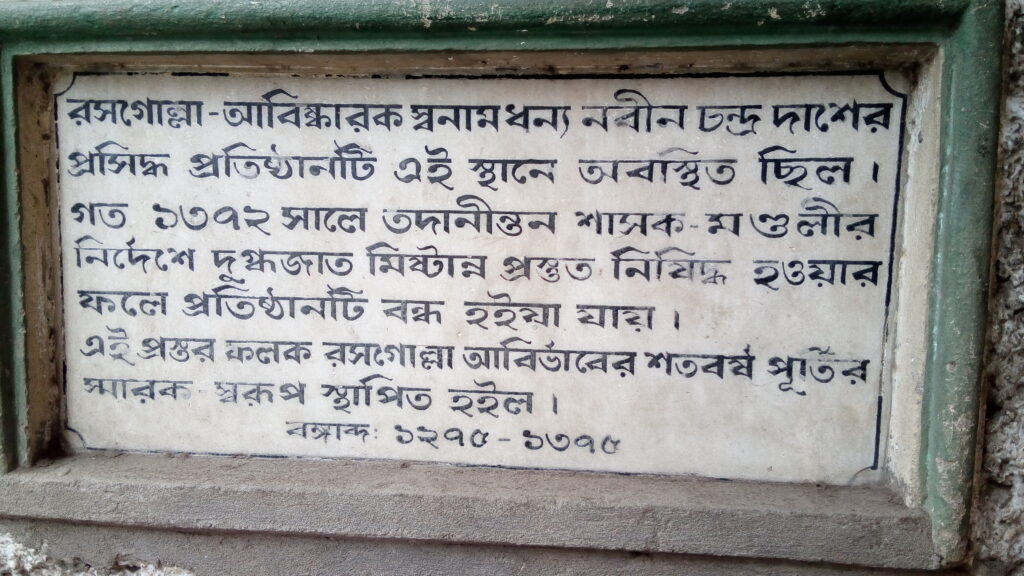
    There are many stories about how the Rasogolla was invented. One of the most popular is that it was invented in 1868 by Nabin Chandra Das. His son, KC Das, carried on his father’s legacy, and his name is now a world-famous brand for Bengali sweets. Another theory claims that it was invented in the 19th century by Haradhan Mondal, a Phulia-based moira (sweetmaker). There are also legends of its popularity in Nabadwip and Phulia under the patronage of Sri Chaitanya, which is tied to the idea of its popularisation in other regions with the spread of the Bhakti Movement.

    Priyankasingha1811, CC BY-SA 4.0 https://creativecommons.org/licenses/by-sa/4.0, via Wikimedia Commons

    Another historian claims that the Rasogolla was invented by Braja Moira in 1866, two years before Nabin Chandra Das. There are many such theories of how this sweet came to be, and claimants to the throne of “first there” include the Jatingolla, Gopalgolla, Bhabanigolla, and Rasugolla. Whatever be the truth about the origin, there is no doubt that Nabin Chandra brought a certain refinement to the sweet that helped it reach its immense popularity.

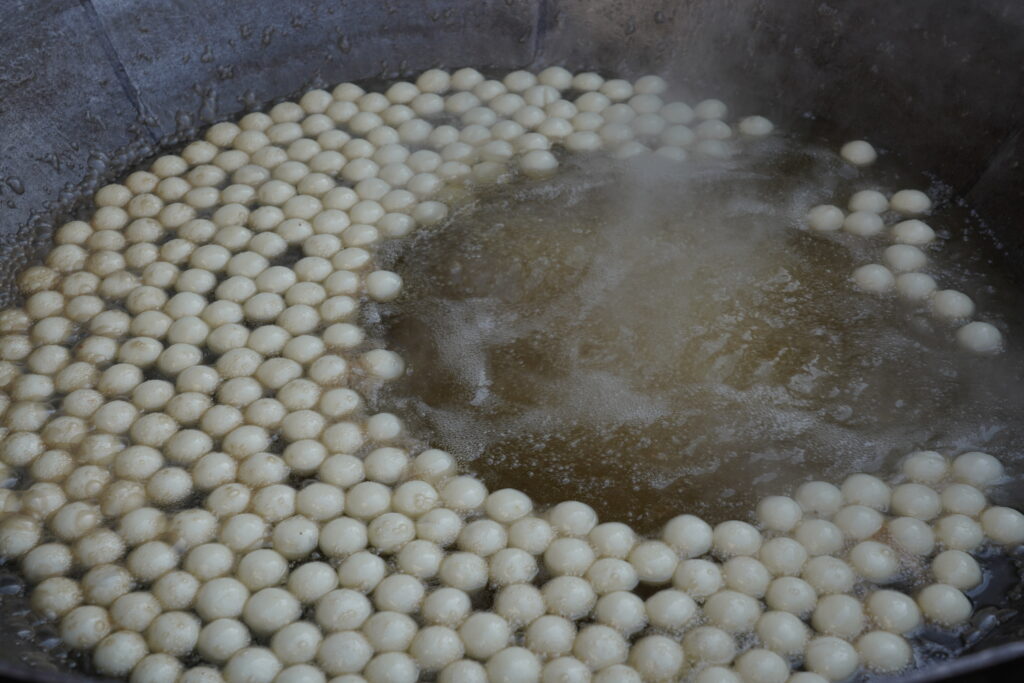
    The sweet itself—for those unfamiliar with it—is soft and spongy. It has a porous body and is pure white in colour. It’s closest sibling is the Nolen Gurer Rasogolla, which incorporates Nolen Gur (Date Palm Jaggery) and is reddish in colour in consequence. Three close cousins are Angoori (tiny, less spongy), Rajbhog (larger, yellowish, stuffed with nuts and cardamom), and Kamalabhog (orange variant). Apart from these traditional varieties, these days one can find many fusion and experimental options like Baked Rasogolla, Chocolate Rasogolla, Fruit-flavoured options, and many more.

    Satdeep Gill, CC BY-SA 4.0 https://creativecommons.org/licenses/by-sa/4.0, via Wikimedia Commons

    It is important to mention here about the great Rasgulla controversy. This is essentially a war of claims between Bengal and Odisha about which region the Rasgulla was invented in, with both claiming to be the first to create this delicacy. The story according to historians of Odisha is that it first came into being as Khir Mohana at the Jagannath temple in Puri and later became the Pahala Rasagola. The version found in Odisha received its own GI tag in 2019 and is known as the Odisha Rasagola. This version too has a few variants like the reddish Rasagolas of Pahala and the coloured Rasagolas of Kalahandi.

    When I was very young, Doordarshan used to run a Public Service Advertisement where kids from different cultures of India shared the contents of their lunch boxes. The “Bengali” kid would say, “Amar Rasogolla bhishon meetha, khao khao na!” (My Rasgulla is very sweet, please do eat). I used to grind my teeth whenever I heard this line, partly because of the implication that Bengalis speak poor Hindi, partly because of the cliché of the Rasgulla-loving Bengali, and partly because of the invariable association of Bengalihood with the Rasogolla, a sweet whose name lends itself so well to the fun poked at the Bengali language for its rounded vowel sounds. The line still bothers me for most of the same reasons, but I have given up being annoyed by the Bengali-Rasogolla association.
    #AtoZChallenge

    #BlogchatterA2Z

    #Kolkata

    #cityofkaali

    #rasogolla

    This post is a part of Blogchatter A2Z Challenge 2026

  • Q is for Qorma, Kalia, Pulao

    Q is for Qorma, Kalia, Pulao

    Hi folks!

    In my post Jhale-Jhole-Ambale, I talked about the staples of a regular Bengali household kitchen. Today, I will swing my ladle in the opposite direction and introduce some of our richest delicacies to you. Many of these items have evolved due to a mixture of indigenous Bengali ingredients and tastes and the Mughal and Awadhi heritage of Bengal. Mughal rule was established in Bengal in 1576, and Nawab Wajid Ali Shah of Awadh was exiled to Kolkata in 1856. Small wonder then that the cuisines of both these cultures became mingled with that of the locals. Today, these items are as loved—if not more—by the food-loving Bengali palate.
    While it would be wrong to say that these rich and decadent items are never prepared in the home kitchen, many of them are often enjoyed at renowned eateries both old and new. Historic eateries like Aminia, Arsalan, Royal Indian Hotel, Anadi Cabin, Sabir’s, Dilkhusha Cabin, Tarun Niketan, etc. rub shoulders with modern icons like Oudh 1590, 28 Buffet Avenue, Sera Bangali Hessel, 6 Ballygunge Place, Koshe Kosha, Amar Khamar, etc.

    Photo by Abraham Owunna on Unsplash

    In fact, the “date” scene in Ageless Feud is set in a place that is inspired by one of these iconic eateries (though you’ll have to check my Instagram to discover which one!). In the book, Manik is also found eating such delicacies with relish quite often, which is sometimes a point of contention between his mother and aunt. But, not to digress, let us dive into a discussion of decadent Bengali dishes.
    Qorma – Originally, Qorma was a savoury Mughal dish of meat braised in fat and yoghurt with spices like ginger, garlic, cardamom, cloves, and cinnamon. A paste of onions and nuts was added for richness, and rose or saffron water were added for flavour. The Bengali Qorma, on the other hand, is sweet and creamy, with a thick gravy. Instead of being cooked only in yoghurt, milk or cream are added as well. The base is also whiter than the original dish, with coconut milk or poppy seed paste sometimes added alongside cashew paste.
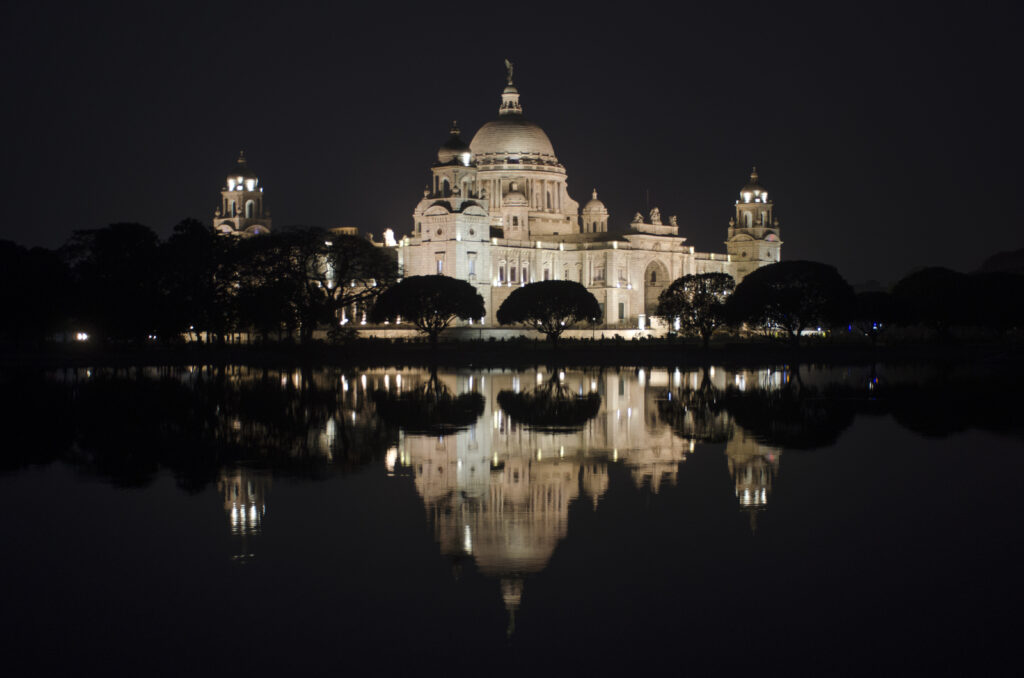
    Photo by Pranjall Kumar on Unsplash

    Rezala – Rezala is an even better example of a “fusion” dish than Qorma since there is no “original” version of it. Most likely derived from the Mughal Qorma as well, Rezala has a lighter gravy than the Bengali Qorma. It is also more aromatic with whole spices like bay leaves, cardamom, cinnamon, cloves, etc. supplemented by Kewra water. It has a tangy-sweet flavour profile, and a noticeable feature is the layer of fragrant oil sitting on top of the gravy once the dish is complete. Also, unlike Qorma, it requires large pieces of meat on the bone.

    Kalia – This is one dish that has come very far from the version that birthed it, literally and figuratively. The original Qalia was a lamb-based Persian dish with a rich, onion-based gravy. It travelled to Kolkata via Mughal and then Awadhi cuisine, where it was lovingly adopted into Fish Kalia. The gravy is still made up of onion paste, but it also features tomato paste and a phoron of whole garam masala (to know what phoron means, check out my post Jhale-Jhole-Ambale). The cooking oil is mustard, and the dish is enriched with a cumin flavour. The most commonly used fish for Kalia are Rohu or Catla.

    Photo by PRATEEK JAISWAL on Unsplash

    Pulao – There is some debate about the origins of this dish. According to some sources, it actually originated in the Indus Valley. There is mention of the dish Palanna (Pal+Anna) meaning Meat+Rice even in the Mahabharata in a literary work within the epic by Draupadi. There are other mentions in several texts as well, including the Chandi Mangal. What is probable is that this dish travelled from India to Persia and back to India with the Mughals. Like the Kalia, it reached Kolkata with Wajid Ali Shah. The most popular of Bengali pulaos is the Basanti Pulao, a sweet, golden, saffron-infused pulao made with Gobindobhog rice. Other popular options are Shada (White) Pulao, Chingri (Prawn) Pulao, Badshahi Pulao (more nuts and fragrant additives), Dhakai Pulao (less sweet, more spice), Akhni Pulao (paanch phoron flavoured, wetter), etc.

    Biryani – This is one of the most well-known dishes of this country, and every cuisine probably has a version of its own. The Bengali version evolved from the Awadhi version and notably contains large chunks of potato and whole hard-boiled eggs. It is also milder in taste than other regional varieties, including the use of whole spices like nutmeg, mace, cinnamon, and cardamom, as well as Kewra water or Rose water.

    Photo by shahinshad C on Unsplash

    Chaap – The Bengali Chaap is a Mughlai dish made with chicken legs or mutton. The meat is marinated in a mix of yoghurt, cashews, poppy seed paste, and various spices for several hours and then slow cooked on a low heat using the Dum Pukht technique. It is scented with Kewra water, Meetha Attar, and saffron for a regal fragrance. It has a rich, fat-heavy gravy. Chaap is rarely eaten on its own; it is generally paired with Biryani or Rumali Roti.

    Kebab – Surprising as it might seem, Bengali cuisine hosts its own range of kebabs, which are unique in texture and taste despite being derived from Mughlai and Awadhi cuisine. There is the Sutli Kebab (named for the cotton thread that is tied to hold minced meat together when cooking), the Bihari Kebab (beef or mutton kebab marinated in mustard oil and raw papaya), the Chelow Kebab (an Iranian-inspired dish served with buttered saffron rice and a poached egg), the Galouti Kebab (cousin to the famous Lucknow Galouti Kebab), the Kathi Kebab (kebabs made on wooden skewers, predecessors to the Kathi Roll), and the Handi Kebab (meat is cooked in an earthen pot rather than over open fire). An interesting Bengali twist is the use of fish for making kebabs.

    Photo by Polly Sadler on Unsplash

    Mughlai Paratha – The Mughlai Paratha is a uniquely inspired dish with a misleading name. Though born through the influence of Mughal cuisine, it is a wholly indigenous Bengali dish that evolved in the old eateries of Kolkata. It is a stuffed and folded rectangular paratha that is crisp and juicy. The filling is a mixture of beaten eggs, chopped onions, green chillies, and ginger and spices, often with minced chicken or mutton serving as the highlight of the filling. Usually served with a dry spiced potato curry (sometimes Aloor Dum, sometimes a nameless concoction) and Kasundi (Bengali mustard sauce), it is a true representative of Mughal-Bengali fusion cuisine.

    Highly popular, these dishes are favourites for special occasions rather than for daily eating. Though, for Bengalis, eating itself can often become a special occasion meriting the best of food! Some astute readers might have noticed the title of this post comes from a song in Satyajit Ray’s Goopy Gyne Bagha Byne. The two summon mounds of food to stop a war, and the menu includes these delicacies. Starving soldiers forget about fighting and decide to fill their bellies instead. And who could blame them for choosing finger-licking yumminess over the stupidity and brutality of war? Now, if only someone could summon such deliciousness down from the sky in the distant origin-place of these amazing dishes!

    #AtoZChallenge

    #BlogchatterA2Z

    #Kolkata

    #cityofkaali

    #bengalimughlaicuisine

    This post is a part of Blogchatter A2Z Challenge 2026