Hi folks!
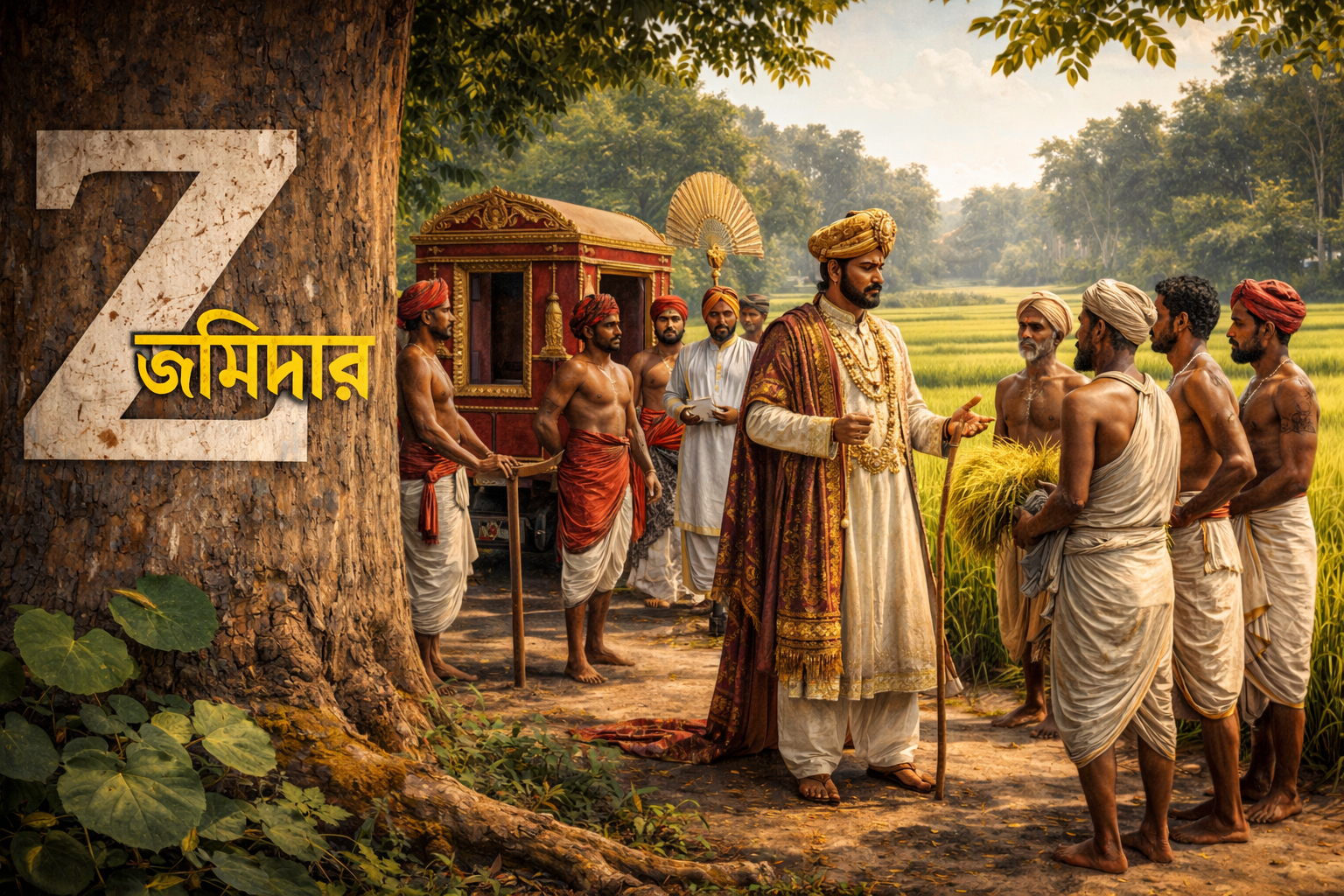
I can’t believe I’m finally on Z! And this one’s going to be a cracker. Because today I’m going to tell you about zamindars of Bengal. No, not their history or their activities. But some of the juiciest scandals and crimes associated with Bengal’s zamindars that will make you sit up and whistle. And why, you might ask, am I going down this route? For the answer to that, you’ll need to wait till the end.
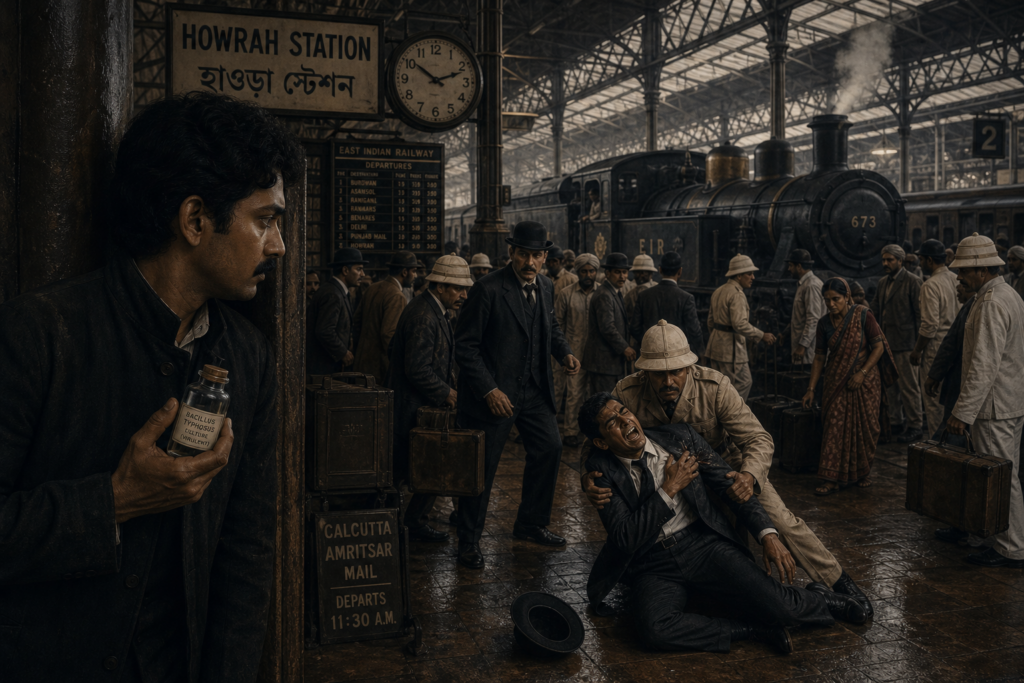
The Pakur Murder Case – The very first case I want to talk about is the Pakur Murder Case. It is one of the most talked about murders because it was committed using an unbelievable “weapon”. Brothers Amarendra Chandra Pandey and Benoyendra Chandra Pandey were in a bitter rivalry over their father’s zamindari estate in Pakur (then in Bengal, now in Jharkhand). In 1933, when about to board a train at Howrah Station, Amarendra felt a sharp prick in his arm. The deed was done by a stranger, but soon after he fell severely ill and died.
Posthumous blood tests revealed the presence of the Bubonic Plague Bacteria—which was found only in laboratories—in his bloodstream. Further investigations revealed that Benoyendra had procured this bacteria sample from a lab in Bombay (now Mumbai) by paying off a corrupt doctor. He was later arrested and convicted for the murder of his brother.
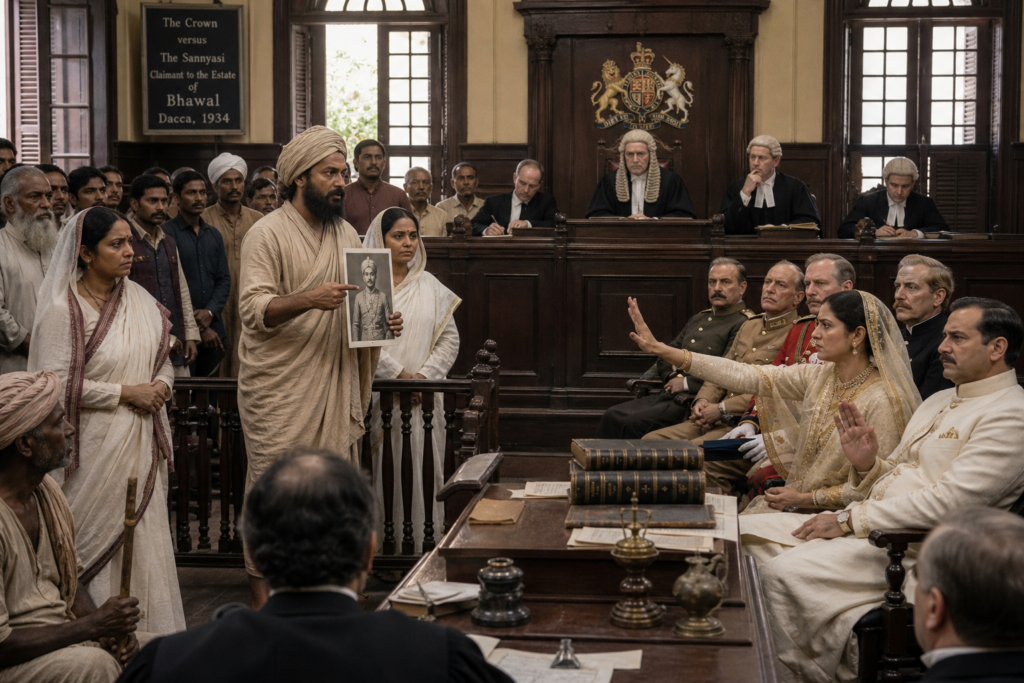
The Bhawal Sanyasi Case – The Bhawal Sanyasi case is not only well known, but also one of the most bizarre cases. Ramendra Narayan Roy, the second “prince” or Kumar of the estate of Bhawal, was declared dead in 1909 in Darjeeling and supposedly cremated there. Twelve years later, a sanyasi appeared in Dhaka claiming to be the Kumar. Many of the tenants, and even the Kumar’s sisters, accepted him as Ramendra Narayan Roy. The Kumar’s wife and the Court of Wards, which had taken over the property after the Kumar was declared dead intestate, claimed that he was an impostor.
He filed a case to prove his identity. He also accused his brother-in-law of conspiring against him with the family doctor. He claimed that he had been saved and revived by a Naga sanyasi at the cremation grounds after those who had gone to cremate him had run away due to a severe storm, following which he had become a Naga sanyasi himself. In a long-drawn-out case, where 1584 witnesses appeared and 2000 exhibits were presented to the courts through multiple appeals and countersuits, the courts finally ruled in his favour. Unfortunately, he died very shortly after, and there were rumours that the cause of death had not been natural.
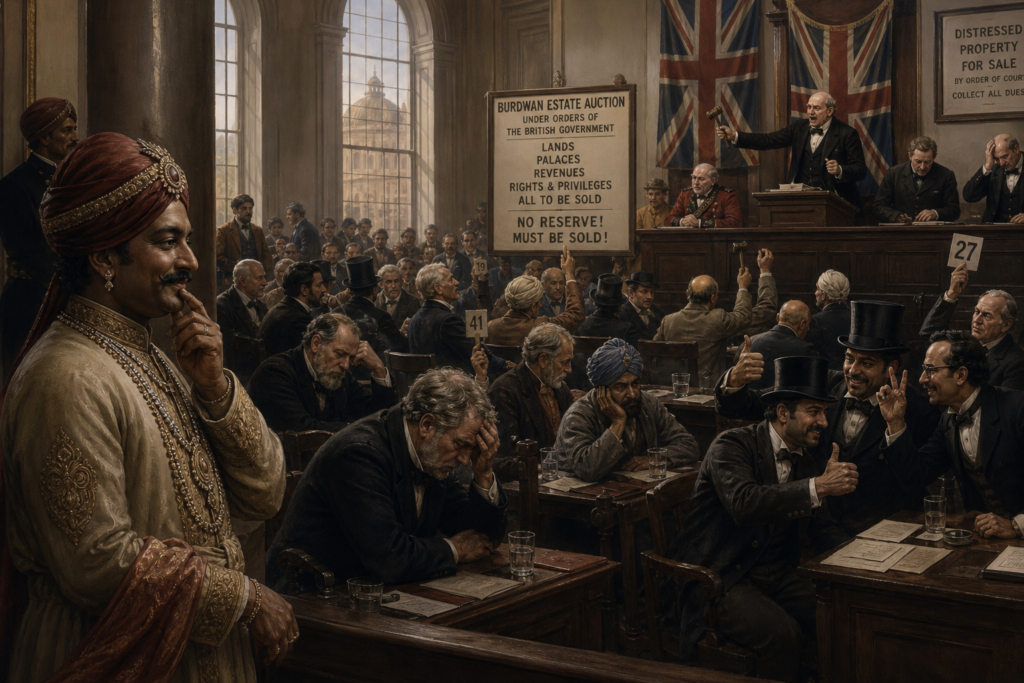
The Burdwan Raj – Not all crime and scandal cases related to Bengal’s zamindars were murders. In 1797, in a move worthy of the best heist/con movies, the Maharaja of Burdwan turned the tables on the British using their own legal provisions. This happened because of a law known as the Sunset Law, according to which, if a zamindar failed to pay his revenue by a certain date by sunset, his property was auctioned off. Raja Tejchand, the zamindar of Burdwan, took advantage of this law by deliberately allowing his estate to fall into arrears. When the British auctioned off his properties, his own servants and agents bought them in the guise of independent buyers at exorbitant prices. However, they then refused to pay, which forced the British to put the properties up for sale again, where his followers made the highest bids fraudulently.
The process was repeated until genuine buyers got fed up and lost interest. In the end, the British were so desperate to sell that they sold off the estate at very low prices to—no surprises there—the Maharaja’s followers pretending to be independent buyers. Through these “benami” or fraudulent transactions, his associates bought back the properties and then transferred them back to him. Through these tactics, the Raja was able to retain control of his estates despite the British not wanting him to. Interestingly, this was not an isolated incident. That year, 95% of auction sales in Burdwan were fraudulent.
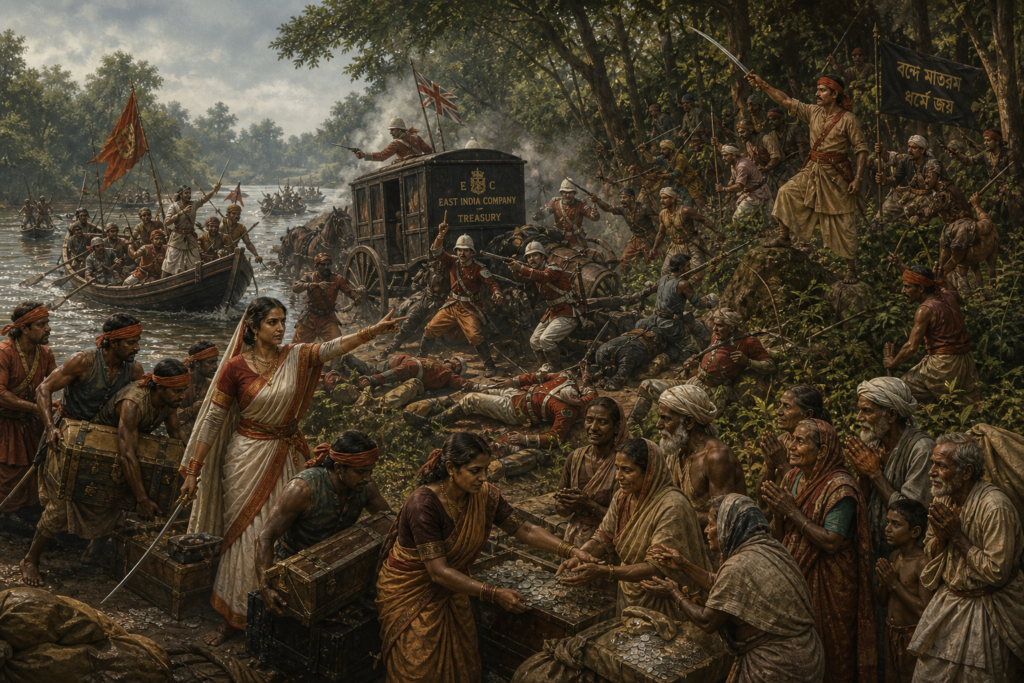
Devi Choudhurani and Bhabani Pathak – Often the line between “zamindar” and “outlaw” was blurred in the old times in Bengal. It was one of the worst kept secrets that the ancestors of some of the prominent zamindar families in Bengal had been land bandits or river pirates. While some of them robbed their neighbours for money, others wanted power or revenge. Yet, there were some like Devi Choudhurani whose goals were truly noble. While Devi Choudhurani was the zamindar of the Manthana estate (currently in Rangpur, Bangladesh), who took charge of her estate after her husband’s death in 1765. Her mentor was Bhabani Pathak, a leader of the Sanyasi-Fakir rebellion who was revered by many minor zamindars as well as local rural communities.
Real-life Robin Hood-like figures, they robbed wealthy merchants and British treasury transports to succour those suffering in the Great Famine of 1770. Operating out of Murshidabad and Baikunthpur forests, Bhabani Pathak maintained a massive network of followers and functioned as a shadow-sovereign. Devi Choudhurani openly rebelled against the British and used the complex riverine waterways to evade capture and wage guerrilla warfare against British troops.
Not all zamindars of Bengal were such complicated and colourful characters. Many of the renowned zamindar families were involved in social reform and the Bengal Renaissance as well as legal economic activities that made them immensely wealthy. I might talk about them in some other post, but today we will restrict ourselves to the juicy stories.
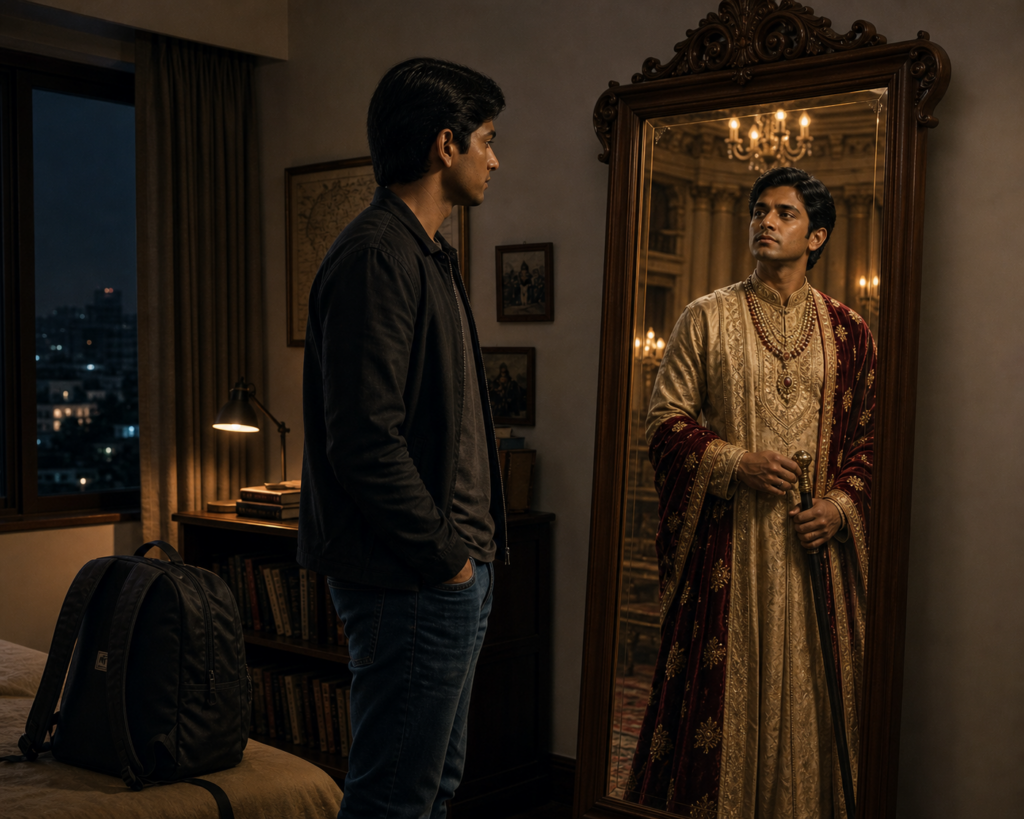
As for the question I asked in the introduction to this post—why have I chosen to focus on the criminal and scandalous stories of Bengal’s zamindars—the answer is simple. Manik Choudhury, the protagonist of my City of Kaali series, is an erstwhile zamindar. Not only that, but he is inspired by one of the characters I have described in this post.
Now, to make matters more interesting, I have a contest for you good folks. Can you guess which of these characters Manik is based on? Share your guesses in the comments below by the 10th of May 2026, and 3 lucky winners will get free copies of my book Ageless Feud. So, get guessing folks! After all, no matter whom you pick, there’s a 25% chance you’re right!
#AtoZChallenge
#BlogchatterA2Z
#Kolkata
#cityofkaali
#zamindarsofbengal
This post is a part of Blogchatter A2Z Challenge 2026



Leave a Reply