Hi folks!
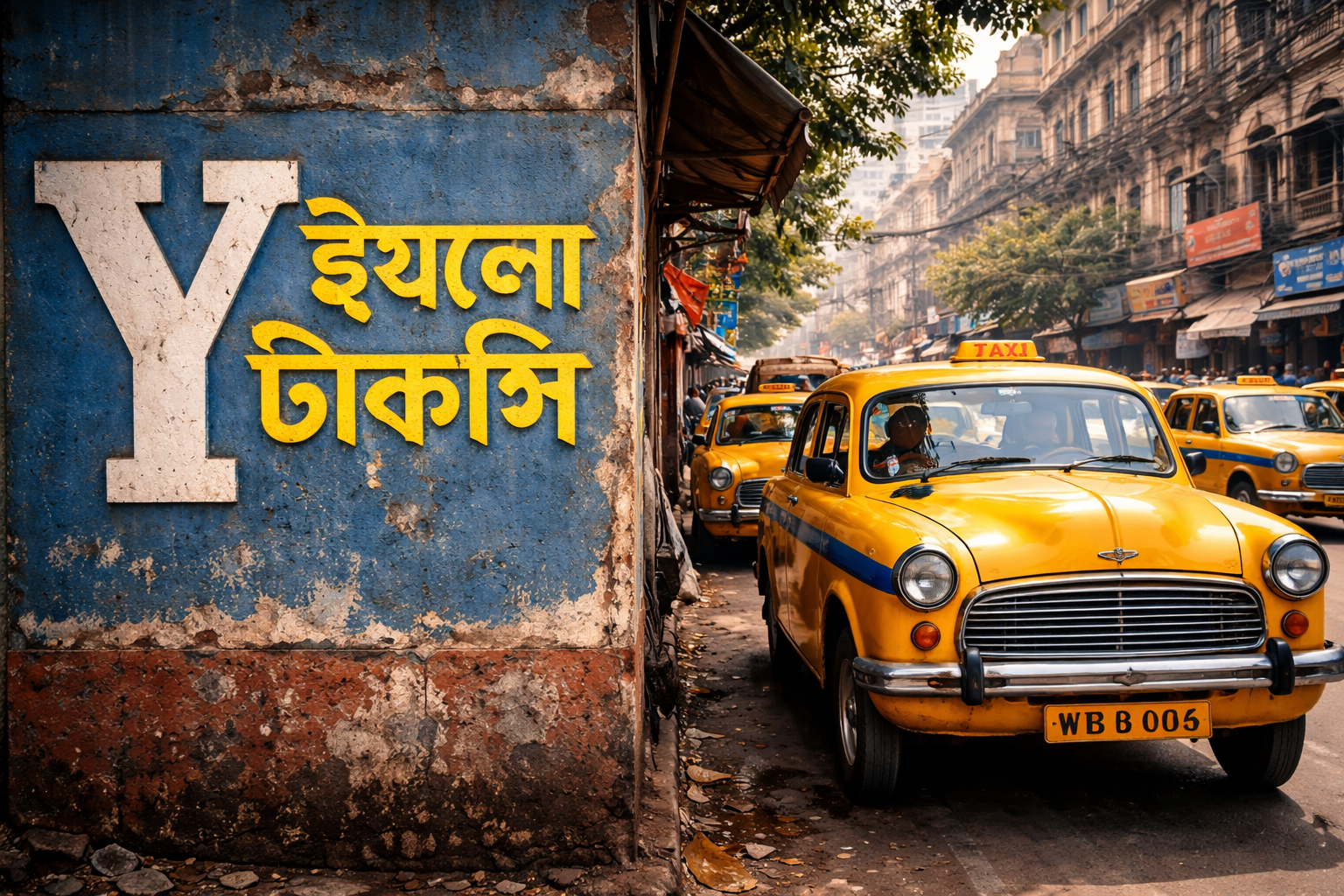
Kolkata has three iconic modes of overland transportation: the hand-pulled rickshaw, the tram, and the yellow ambassador taxi. Hand-pulled rickshaws are on the decline, though 3,500 of these controversial vehicles still ply on the streets of Kolkata. Trams are almost gone, with only a couple of heritage lines still active. The yellow Ambassador taxi faces a similar fate, with only a few thousands left plying and plans to phase them out by 2028 in the works. Of these three, the one I will miss the most once it’s gone is probably the yellow ambassador taxi that was once called the “King of the Road”.
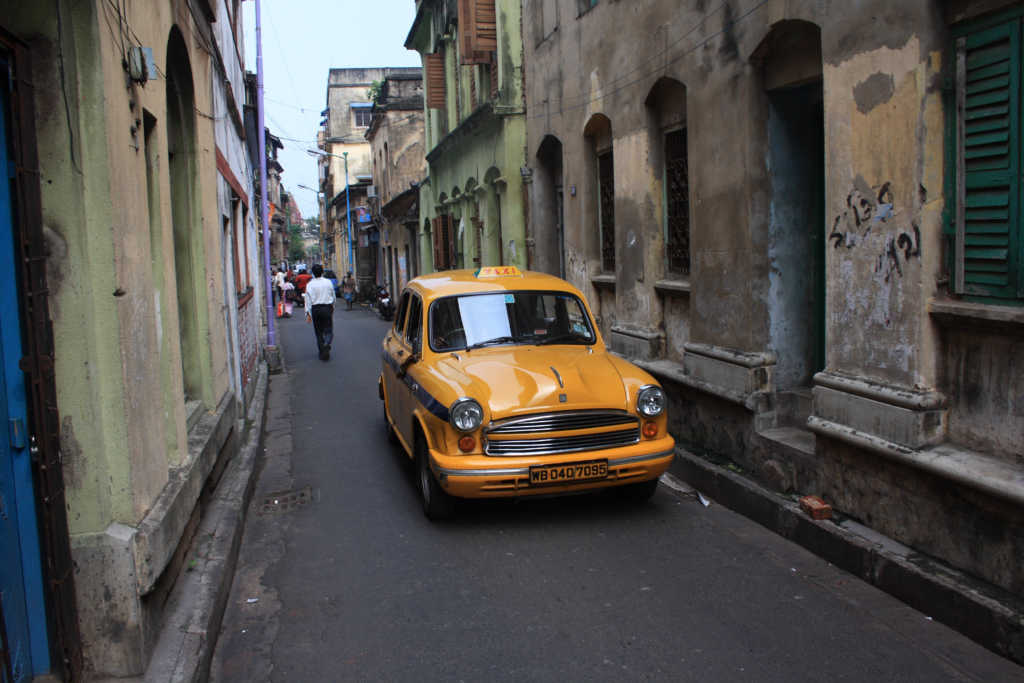
The yellow taxi of Kolkata was introduced in the late 1950s, and the Ambassador was given its standardised yellow colour with a blue stripe in 1962. The Ambassador chosen for its sturdiness and space inside. Even as recently as 2013, the BBC’s Top Gear declared the Ambassador the best taxi in the world because of its durability. Manufactured by Hindustan Motors, this redoubtable vehicle was perfect for Indian roads. In Kolkata, the colour yellow was chosen for their livery as the city’s standard taxi because of its vibrancy. Even in heavy rains or at night, they would be easily visible.
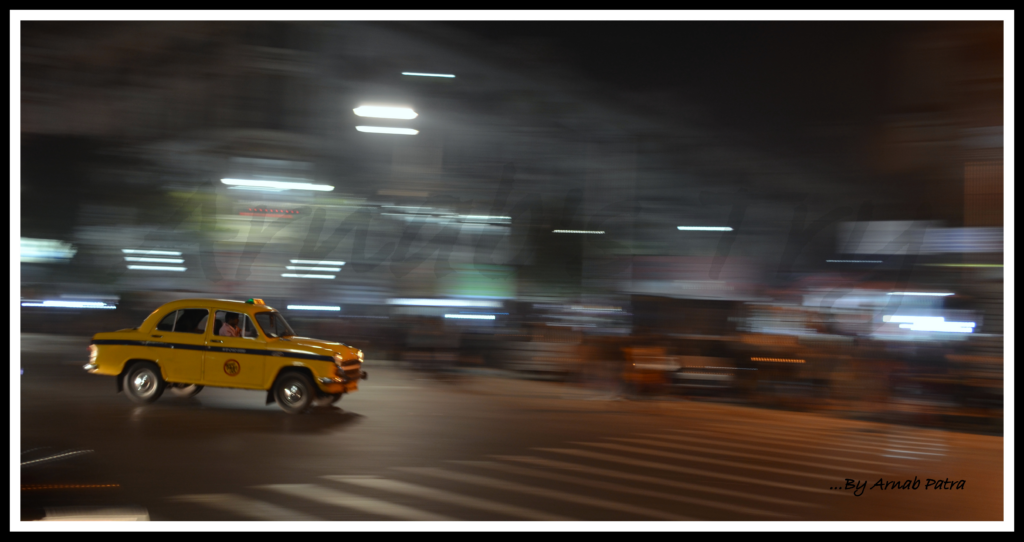
In fact, the legacy of these taxis is over a century old. These taxis had actually been around from before independence. But it was only with the establishment of the Hindustan Motors Uttarpara factory in 1948 that they became abundantly available and the company became self-reliant. The Ambassador was designed based on the 1956 Morris Oxford Series III, and Hindustan Motors launched a total of eight designs of the Ambassadors before finally shutting down production in 2014.
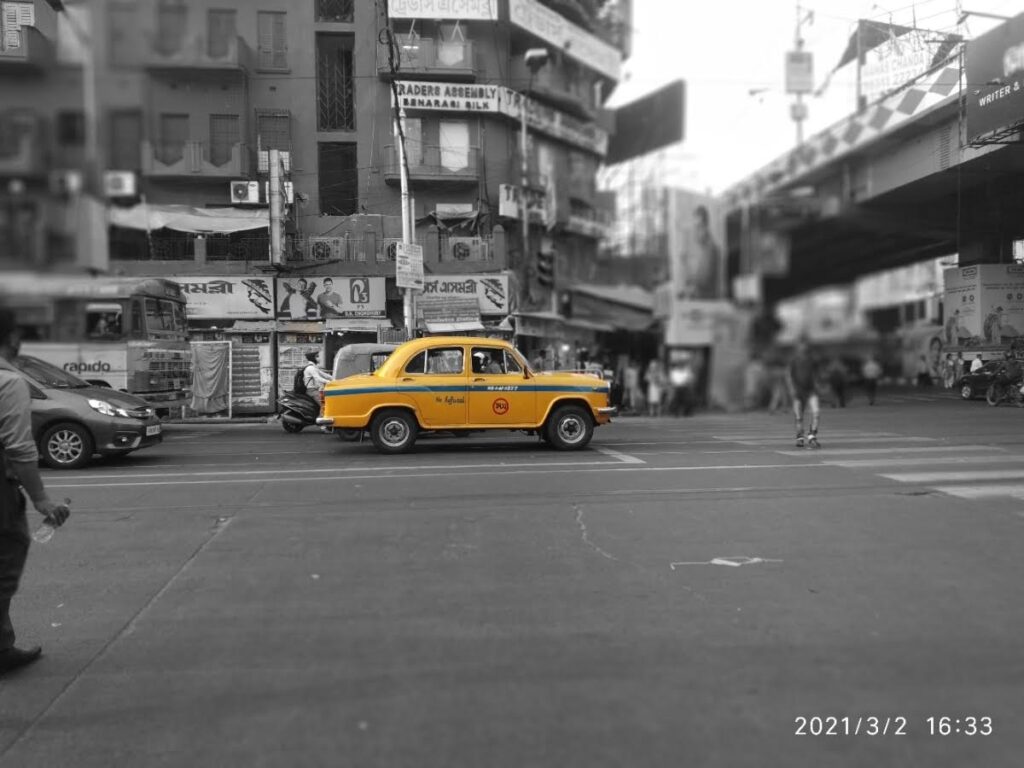
Some of the most interesting things about the yellow taxi of Kolkata are not about the taxi at all. Rather, the ball of nostalgia people feel for them is a tangle of experiences, people, and stories. Of course, the nostalgia often lasts only until one actually gets into the taxi! In one of the earliest instances of travel in Ageless Feud, Manik has to take a taxi home. Here’s the excerpt:
In the end, I hailed a yellow Ambassador taxi to go home even though I lived barely over a kilometre away. These taxis are an institution of this city. They were first introduced to the city in the late 1950s. Now, even though Ambassador cars are no longer manufactured, these relics of a bygone era still patrol the streets of the city, a reminder that in Kolkata the past never really dies.
The taxi driver gave me a look of suspicion and hesitated. I reached into my wallet and pulled out a two hundred rupee note. Two hundred rupees was ridiculously higher than the regular fare for that distance. The driver gestured to me to hop in and started the engine. I dragged myself onto the dark rexine backseat. It smelt of heat, mould and the sweat of strangers. I turned the crank to lower the left window, which opened halfway and refused to budge further. The crank for the other window was missing altogether. Sighing inwardly, I tried to stare at the road to take my mind off the pain.
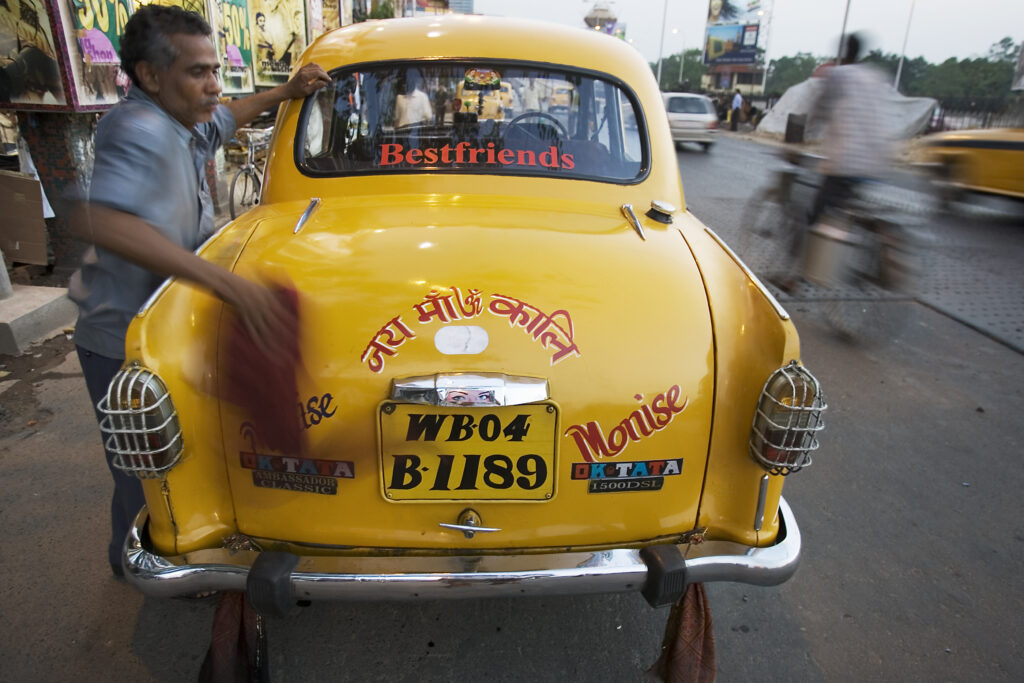
The drivers of the taxis have played no less an integral part in turning them into a cultural symbol. In the 1960s, drivers from the Sikh community were engaged in driving these vehicles in large numbers. In the 1990s, migrants from Bihar would often rent taxis on a contractual basis, driving them for a livelihood. So familiar with the city’s roads, lanes, alleyways, and shortcuts were these drivers that GPS would have bowed down to their knowledge. Often quite friendly and willing to chat, these communities of drivers have become an indelible part of the stories folded in the pages of this layered city.
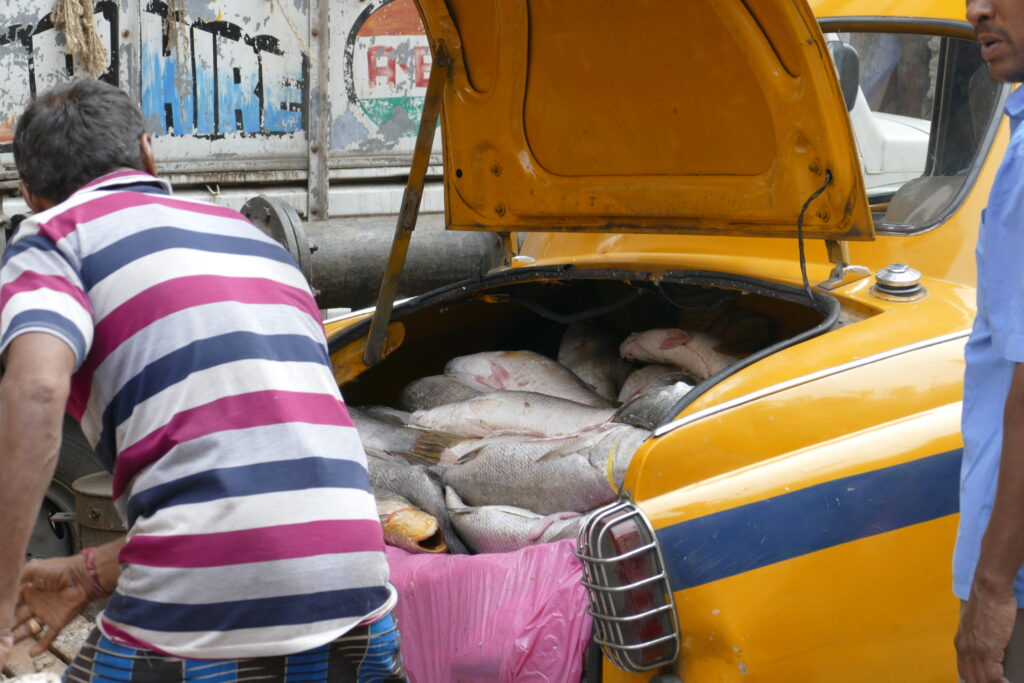
Kolkata’s yellow taxis have been featured in many books, movies and television series. In fact, they are so iconic that all you need to portray a place as “Kolkata” is a yellow taxi on the road. They have also been portrayed in hundreds—if not thousands—of paintings and photographs. In movies like Satyajit Ray’s Abhijaan and Sujoy Ghosh’s Kahaani, the yellow taxi almost becomes a character in itself, supporting the main characters to play out their internal and external conflicts to the fullest extent.
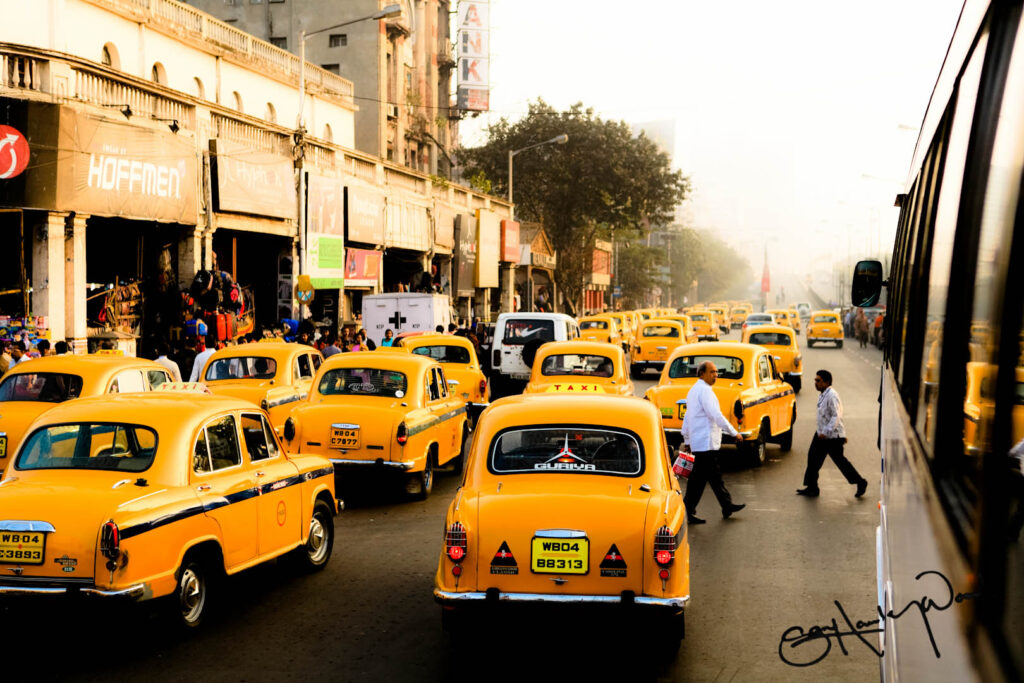
In 2008, the Calcutta High Court ordered that commercial vehicles older than 15 years should be decommissioned to deal with the city’s air pollution levels. The diesel-run Ambassadors were unable to comply with BS-VI emission norms. This led to about half of the yellow taxis going off the road within a very short time. By March 2025, the number had reached 64%. In 2014, Hindustan Motors stopped making the vehicles, so it was not only impossible to replace taxis that retired, it also became difficult to find replacement parts. Many passengers also prefer the newer, more comfortable, and convenient app-based taxis. And in 2020, the COVID pandemic dealt a blow that became the last straw that broke the yellow taxi’s back. It was irretrievably on the way out despite the nostalgia surrounding it.
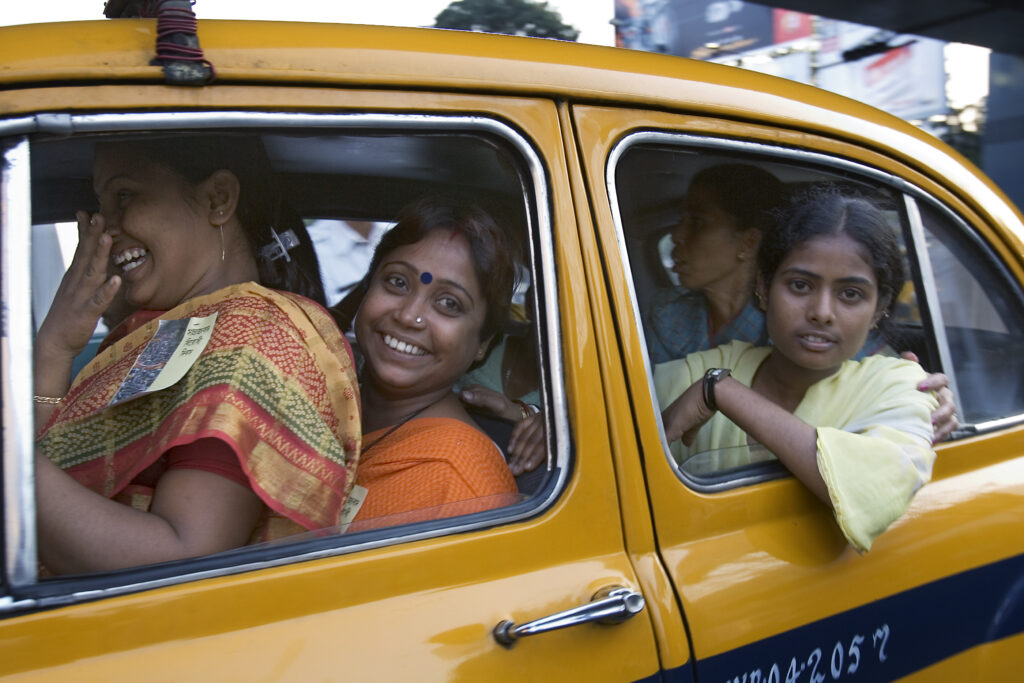
Just over a year ago, the West Bengal Govt declared that all light commercial vehicles with a taxi permit would be allowed to be painted yellow in an effort to continue an iconic tradition. However, the phasing out of the Ambassador taxis will not stop as most of them already fail pollution and transmission norms, and the rest will soon follow suit. The new fleets of taxis that take their place will be newer, more regulation compliant, and maybe even more comfortable. But nothing will beat the presence and attitude of the King of Kolkata’s Roads which it has ruled for close to 70 years!
#AtoZChallenge
#BlogchatterA2Z
#Kolkata
#cityofkaali
#yellowtaxi
This post is a part of Blogchatter A2Z Challenge 2026



Leave a Reply