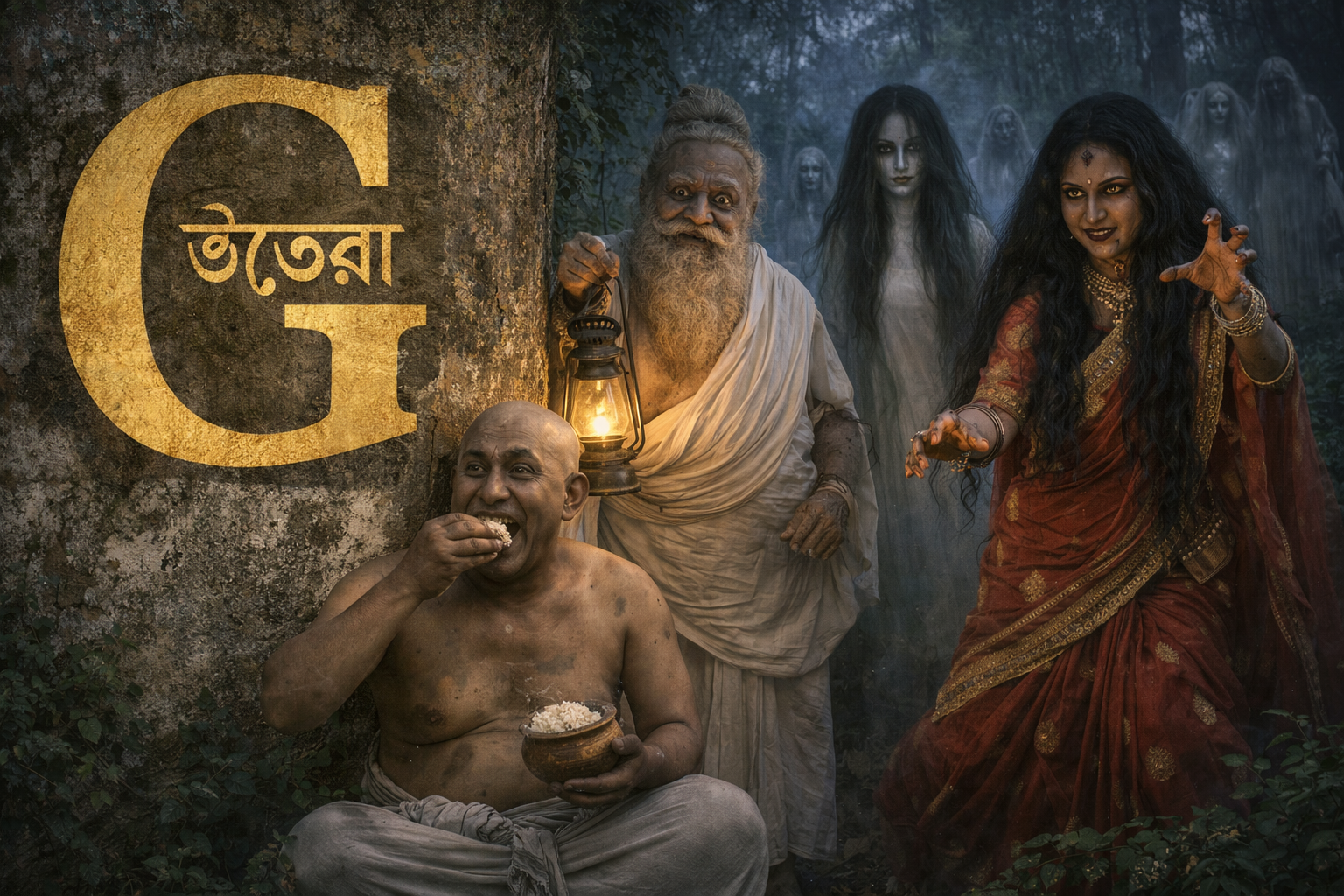
Hi folks!
This post, from what I have seen on the internet, should come with a disclaimer. Being lazy, I’m just using a modified version of the one I put in Ageless Feud: This blog is meant purely for the entertainment and amusement of readers and is not intended to offend any person, group, or community. Nor is the blog meant to support belief in magic, superstition and supernatural forces.
With the business of saving my skin over, let’s get into the real fun. Bengali folklore is full of spirits of the departed, and many of them have been finding their way into my series City of Kaali. But more about that later. For now, let me be a good host and serve you a delicious dollop of the deadly, with a scrumptious side of the shivers, followed by a healthy helping of the heebie-jeebies!
A short note first: Bengali ghosts are a reflection of the folk culture of Bengal. Therefore, like Bengali people, they come in different castes, religions, genders, marital statuses, and so on. It is important to keep in mind that these legends have evolved over centuries, absorbing socio-cultural-economic-political conflicts and dynamics, and so should not be judged simply by modern standards.
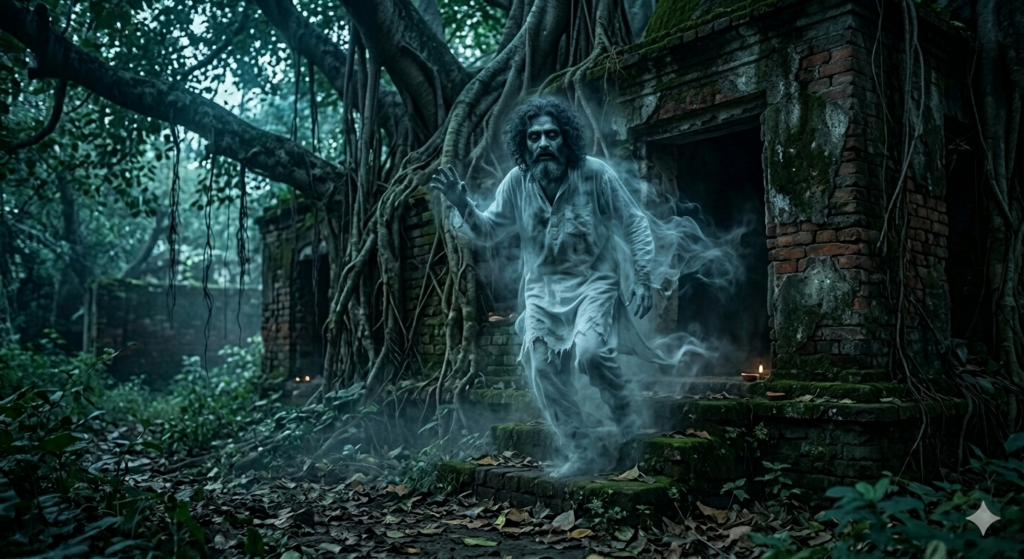
Bhoot – The first one on the list is, of course, the most basic of the lot. A bhoot is the spirit of a dead person that cannot move on from this world. It is used to refer to a generic male ghost as well as a class appellate meant to distinguish ghosts from other types of supernatural beings.
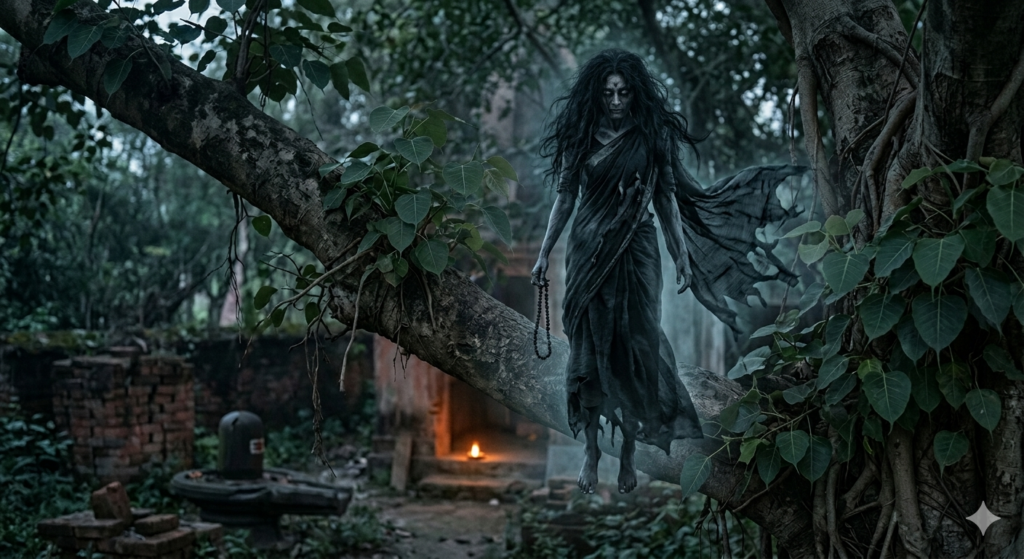
Petni – The petni is the female equivalent of a bhoot. Now, you will get many blogs and websites saying that a petni is the ghost of an unmarried woman. However, nothing I have read in stories of folk tales or ghost stories supports that. There have been as many petnis from married as from unmarried women in those stories. PS: You WILL encounter two petnis in City of Kaali, and they are very important to the story.
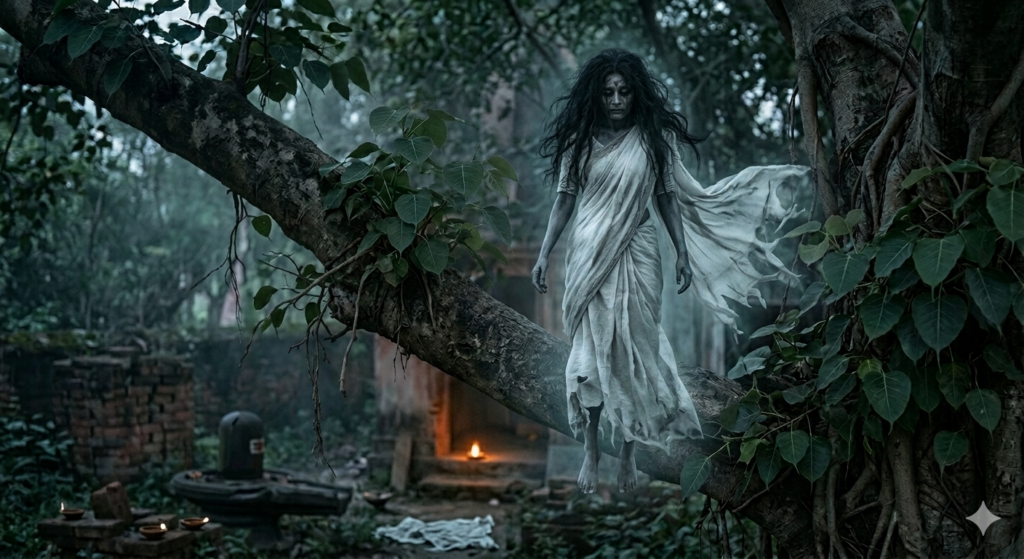
Shankhchunni – A shankchunni is another type of female ghost that is highly misrepresented on the internet. Sites and blogs often claim that this is the ghost of a married woman because of the word “Shankh” in the name referring to the “shankha” that married Bengali women wear. They conveniently—or ignorantly—ignore the “chunni” part of the name, which derives from “churnika” referring to breaking. Shankhchunnis, therefore, are female ghosts who have broken their shankhas, i.e., ghosts of widows. PS: If this has intrigued you, you should definitely check out the Saat Shankchunni in Ageless Feud. I had great fun writing about this girl gang! Ok, shameless self-promotion over.
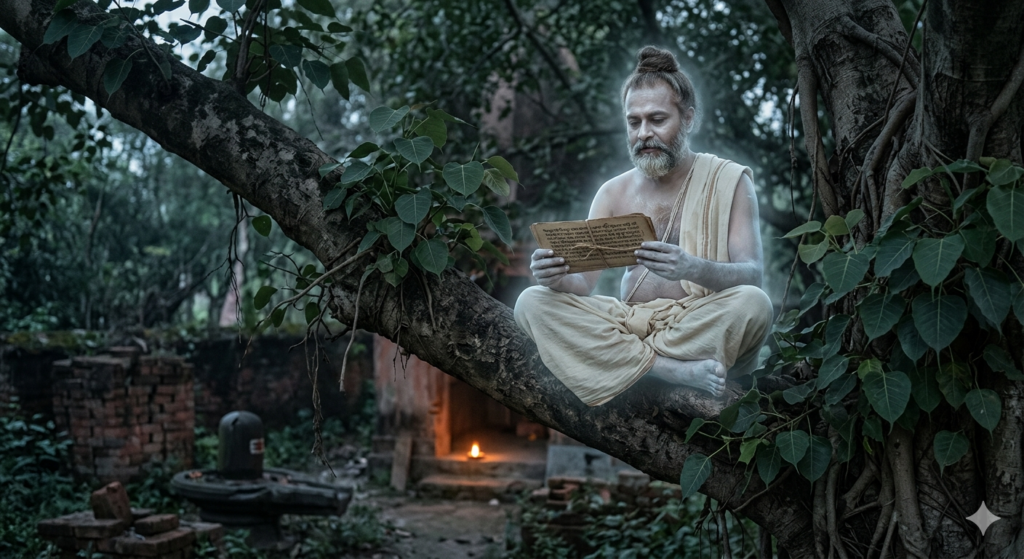
Brohmodoityo – A brohmodoityo is the ghost of a brahmin, though some sites claim that it is the spirit of a dead brahmin priest. These ghosts are usually benevolent, with dhoti, chadar and sacred thread being their distinguishing features. They are said to prefer residing in Bael trees.
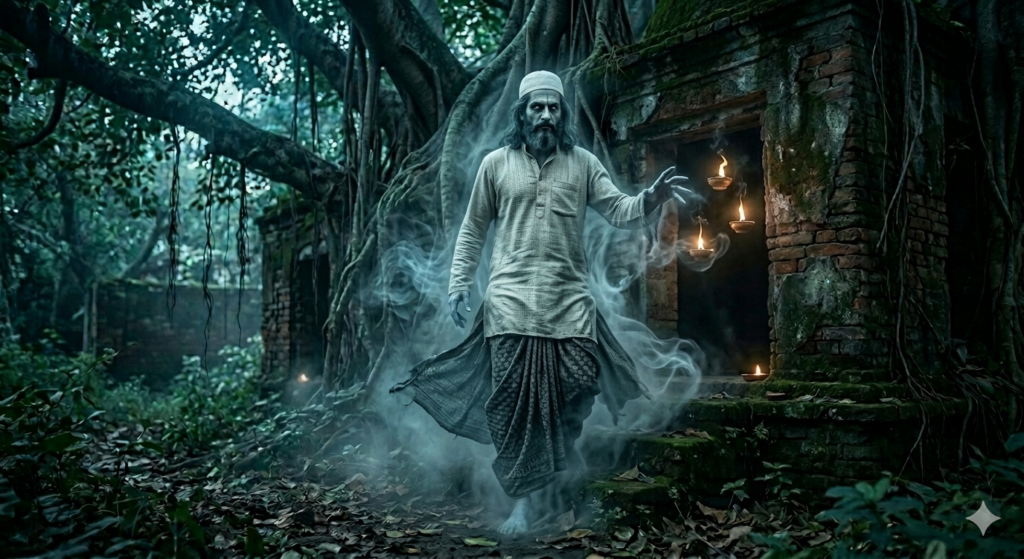
Mamdo – This one is interesting in its etymology as well as context. A mamdo is the ghost of a Bengali Mulsim. The name itself is derived from “Mohammadiya”, meaning “follower of Mohammad”. The fact that ghosts of Muslims are classified separately, and are considered to be one of the most dangerous, is likely a result of Bengal’s complex history riddled with religious conflict and violence.
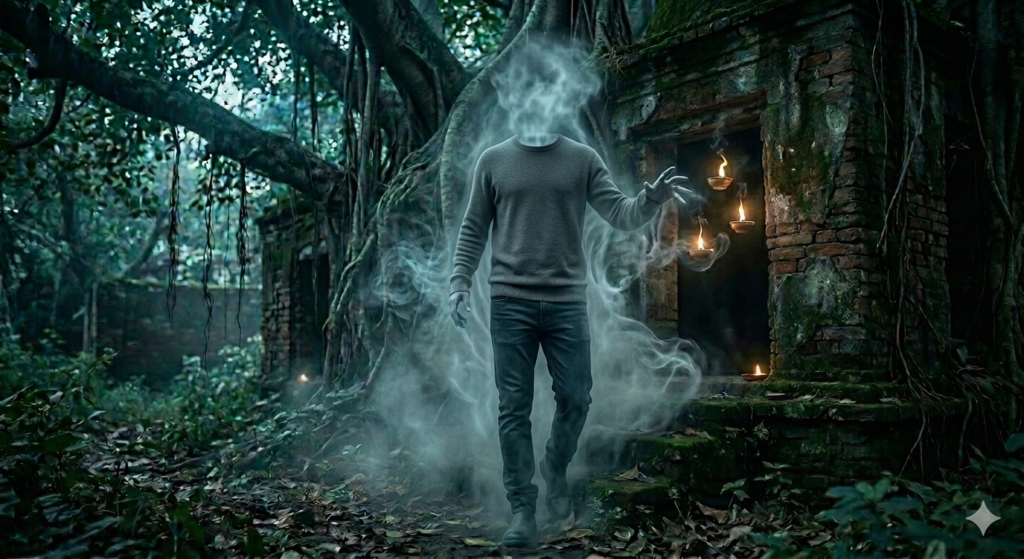
Skondhokata – The skondhokata or kabandho is a headless ghost. Though this ghost’s legend stretches back to the Kabandha Rakshasha from the Ramayana, its most recent incarnations tend to be those who have lost their heads on railway tracks. So, they often haunt railway stations, though neither decapitation nor their haunting grounds are restricted to the railways.
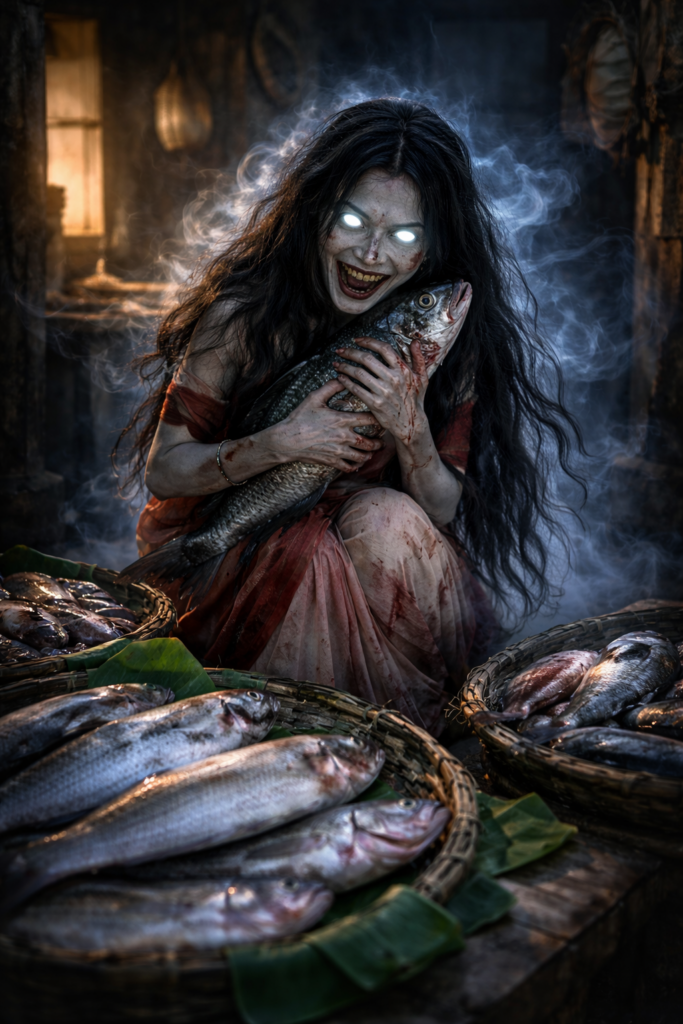
Mechho Bhoot –These are fish-obsessed ghosts who haunt fishermen, fish sellers, or people who are travelling alone with purchased fish. They are reputed to ask for fish in exchange for safe passage or even steal fish from nearby kitchens. Believed to be the souls of those who’ve died while fishing, they are found near water bodies and are rooted in Bengal’s rural culture.
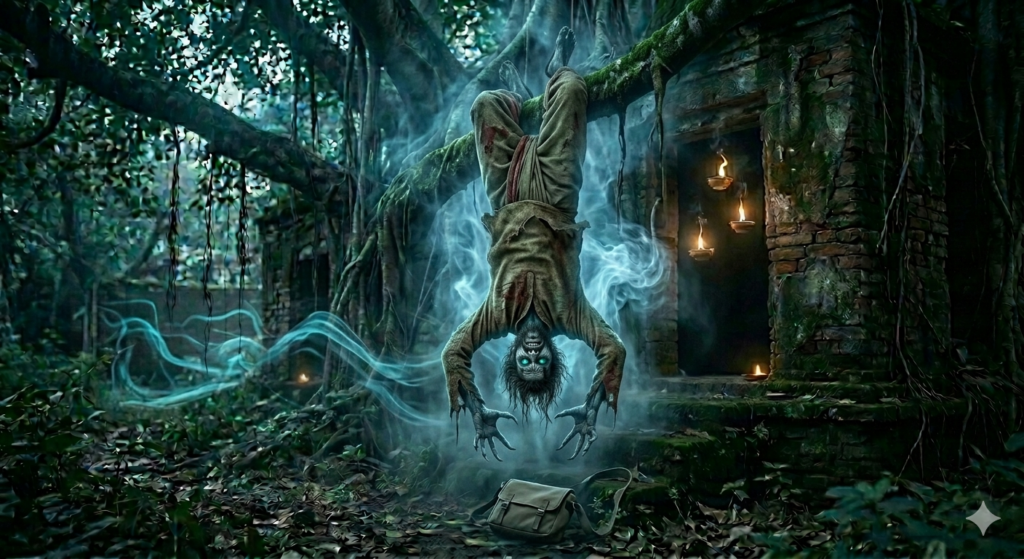
Gechho Bhoot – Though many types of ghosts prefer to reside in trees, this ghost’s specialty is in not just living (metaphorically speaking) in trees but in attacking using them. Often living in packs, these highly malevolent ghosts hang upside down from branches, lying in wait for their victims. They grab solitary travellers at night and twist their necks to kill them.
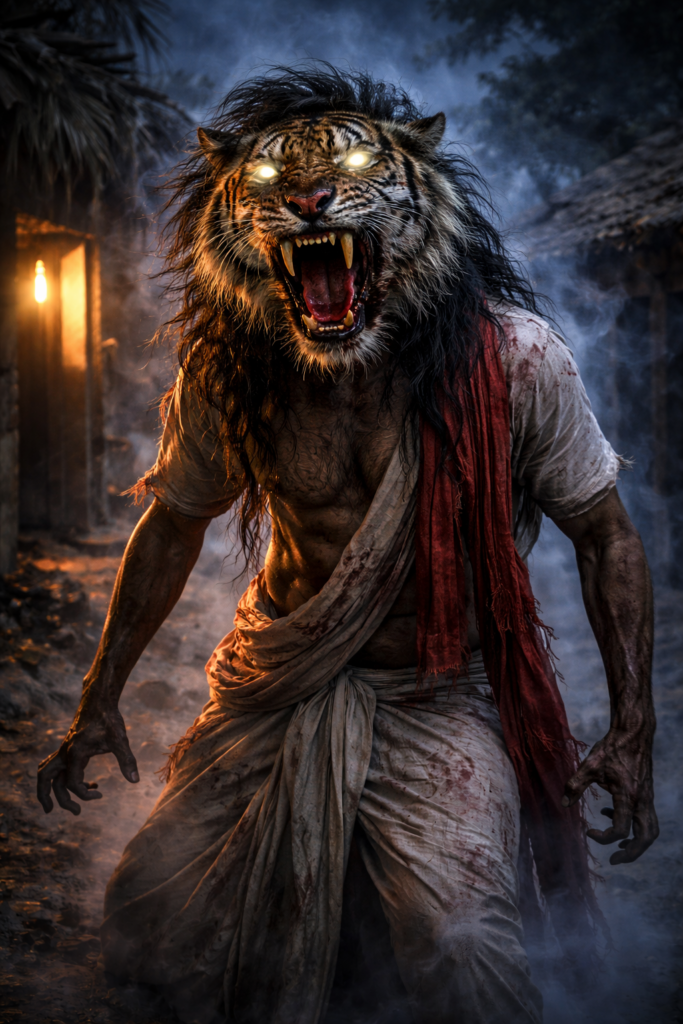
Begho Bhoot – This ghost is a product of the Sunderbans where many villagers are killed by tigers in the forests. Ironically, they roar like tigers to scare villagers and lure them into the forests to be killed by tigers.
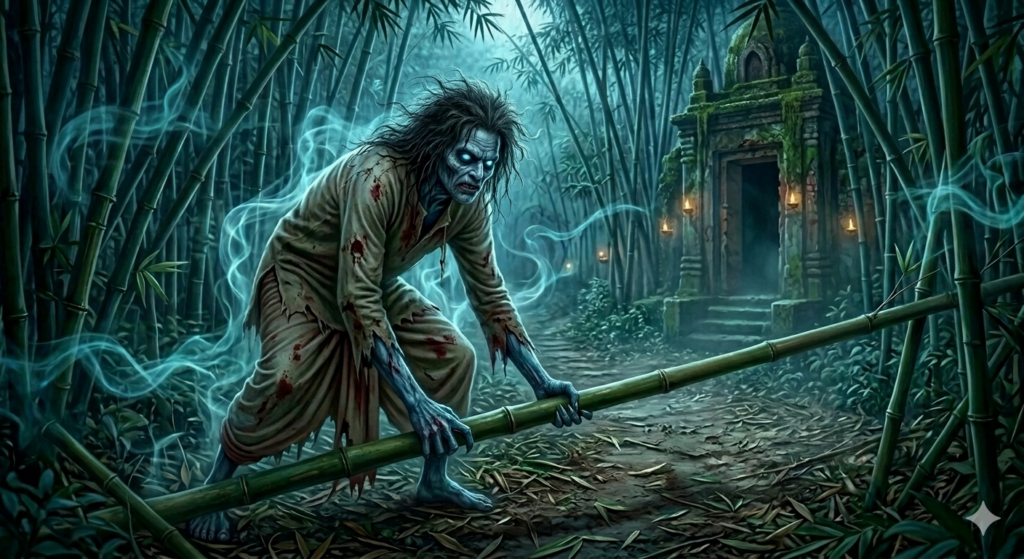
Besho Bhoot – Another ghost defined by its habitat, the besho bhoot lives in bamboo groves (the word “besho” comes from “baansh” meaning bamboo). Like their tree-dwelling counterparts, they are also malevolent and lie in wait for travellers. This is why legends ask one to avoid stepping over a bamboo leaning too close to the ground and to instead walk around it, lest the besho bhoot uses the bamboo to impale one.
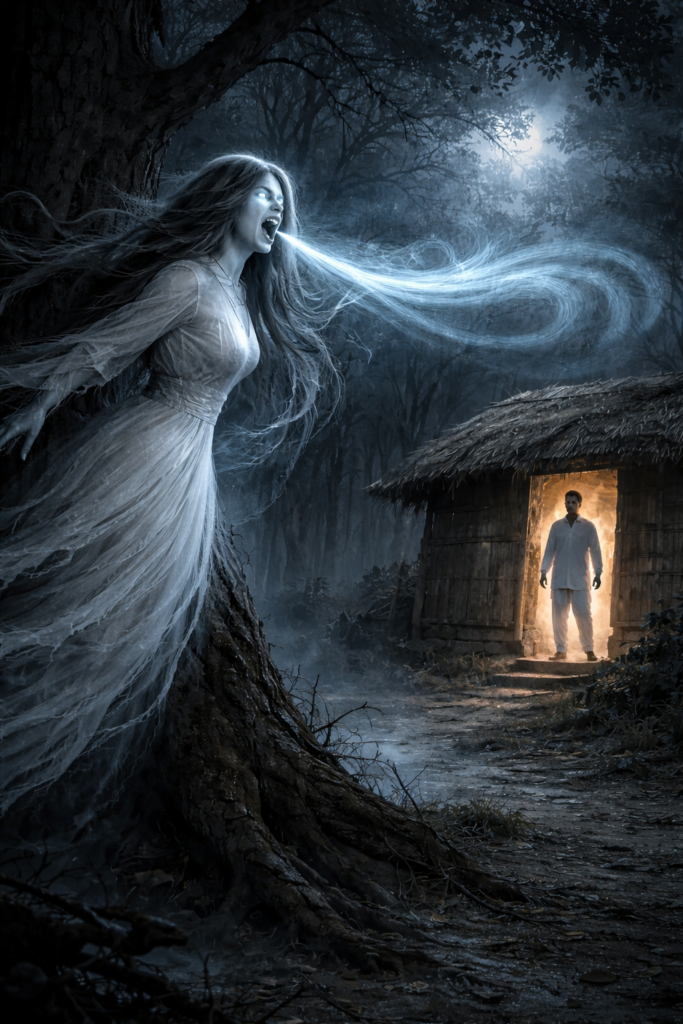
Nishi – The nishi (literally meaning “night”) is a malevolent spirit that calls to people imitating voices of loved ones to come out from the safety of their homes. People cannot resist this “daak” or call and are thus lured to their death.
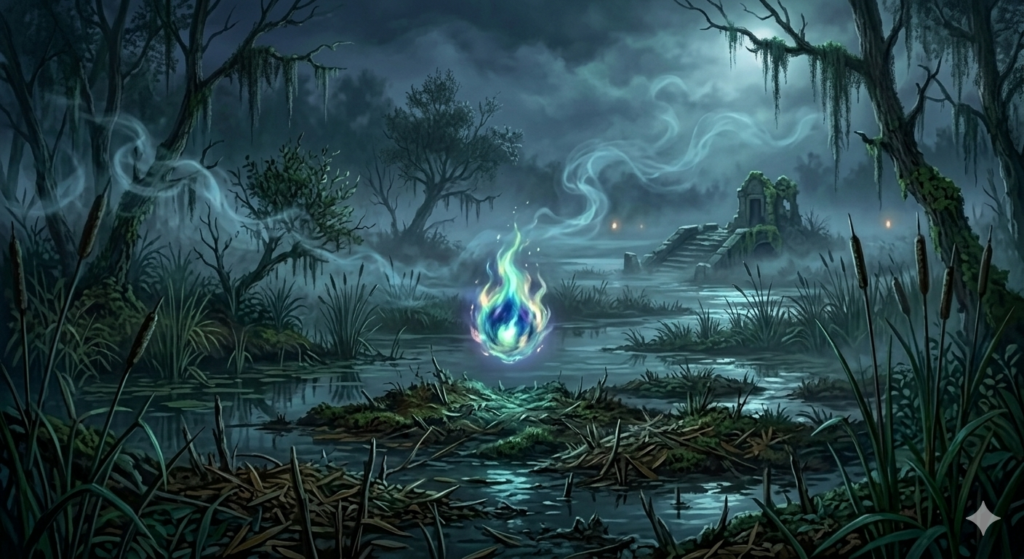
Aleya – One of the few counterparts of supernatural elements found in Western myths and legends, the aleya is a light that misleads travellers and fishermen, luring them into marshes. It is similar to the will-o’-the-wisp, and another ghost whose origins can be traced to the Sunderbans. It is also one of the few ghosts that have captured the romantic imaginations of poets and finds a place in songs and poems.
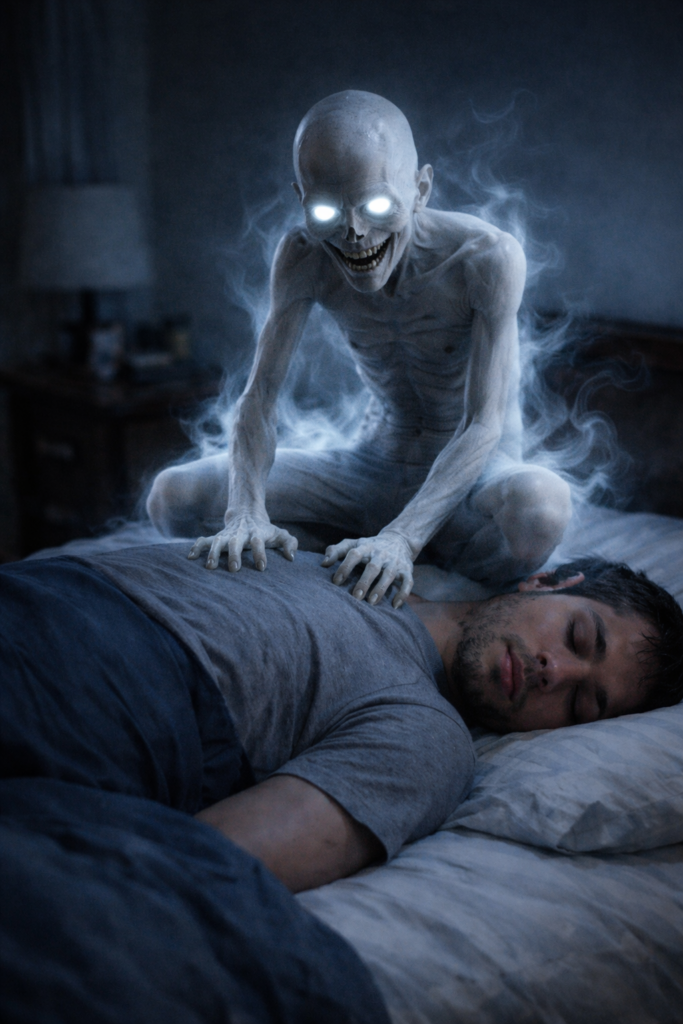
Boba – This is less a ghost than a personification of a phenomenon many of us have experienced while sleeping: sleep paralysis. A boba is said to sit on its victim and strangle them, making it impossible for them to either move or speak. It is similar to the Western Old Hag. As someone with personal experience of sleep paralysis, I can testify to how terrifying it is and why people in olden times have felt compelled to ascribe the phenomenon to supernatural reasons.
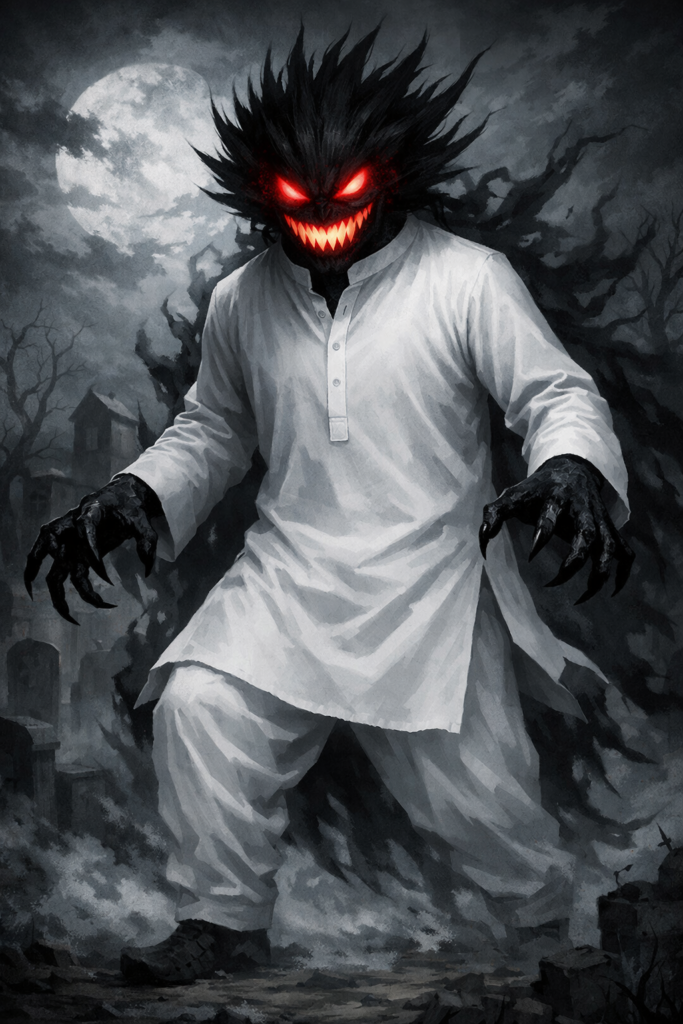
Pishach – The last one in the list is one of the most dangerous and malevolent spirits. It is the spirit of an evil person who takes over an uncremated body, giving rise to a terrifyingly murderous supernatural being. It is said to be able to take any form, change its size, and even become invisible. This is said to be why bodies are meant to be guarded until they are cremated. PS: You will encounter a particularly exciting pishach in Ageless Feud, and Manik tackles it in one of the first fight sequences of the book. So, if your curiosity has been aroused, go and grab a copy.
There are many other types of supernatural entities in Bengali folklore and stories, and maybe someday I will write about the non-ghost ones. Ghosts, one must remember, are created by unfulfilled desires, violent ends, and unfinished business. They are both a warning and a hope that there is something beyond death, at least for those whom the idea of death being complete dissolution is a scary one.
Often born from Bengal’s rural and agrarian culture and history, these ghosts have intrigued storytellers and writers for centuries, resulting in ghost stories being one of the most popular genres in Bengali literature. Have you encountered any of these stories? If you did, tell me in the comments what kind of ghost and what kind of story it was. For now, I wish you a Good Night, and may no disembodied spirits stalk your footsteps in the dark!
#AtoZChallenge
#BlogchatterA2Z
#Kolkata
#cityofkaali
#ghostsofbengal
This post is a part of BlogchatterA2Z Challenge 2026

Leave a Reply