Hi folks!
Today I’ll share with you one of my favourite things in the world: the folk and fairy tales of Bengal that I grew up with. Given how much I love to talk about these, if I’m not careful, this post runs the risk of turning into a PhD thesis!!!
Before I go on to specific tales, let me tell you a little bit about why I love them so much. There is a strange relatability in these stories despite their obviously fictional nature. They are also rooted in the lifestyles of our agrarian past, which despite the juggernaut of urbanisation, somehow holds a special place in all our hearts. At least, it does in mine. And then there’s the nostalgia too! The memory of my grandmother reading these stories in her infamous monotone that immediately put me to sleep in the afternoons. These were also some of the earliest works I read in Bengali once I started reading on my own. And I won’t even go into the intellectual reasons I find these stories fascinating!
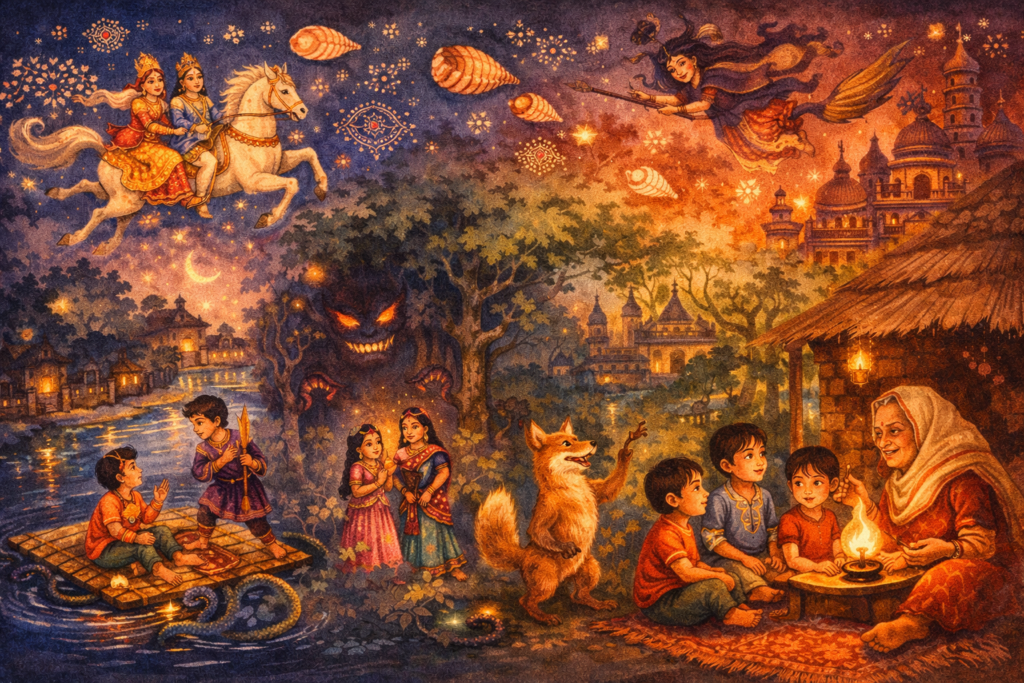
Ok, so on to the stories before I get all tangled up and go off at a tangent. The ones I started with were, probably quite predictably, the tales of the Thakurmar Jhuli. These were stories collated into an anthology by Dakshinaranjan Mitra Majumdar. It wasn’t the only anthology of folk and fairy tales he composed, but it is the best known. Interestingly, the original introduction to the book was written by none other than Rabindranath Tagore himself who lauded the attempt to keep alive Bengal’s folk literature in the face of European fairy tales being the only such literature available for children to read.
Among the stories of the Thakurmar Jhuli (1907), the best known are perhaps Buddhu-Bhutum and Lalkamal-Neelkamal. I’ve long since lost count of the number of times I listened to the audio-drama cassettes of these two as a child and later on too. In fact, I unashamedly confess that I still listen to them online nowadays. Some of my other favourites from the Thakurmar Jhuli are Arun Barun O Kiranmala, Saatbhai Champa, Daalimkumar, and Sheyal Pandit. I always liked the stories with rakkhosh-khokkosh a lot more than the ones with the talking animals.
Majumdar moshai also collated some other volumes of the stories he gathered from across Bengal on his travels: Thakurdadar Jhuli (1909), Thandir Thale (1909), and Dadamashayer Thale (1913). While not as well-known as his first volume, these too contain stories from Bengal’s folk traditions of children’s stories. Interestingly, this was not the first attempt at collating Bengal’s folk tales. In 1883, the Rev Lal Behari Dey had published a book titled Folk Tales of Bengal in English. It contained many of the same stories that Majumdar moshai later included in his compilations in Bengali. And in 1920, Francis B Bradley-Birt published a translated collection of over 30 such stories in his Bengal Fairy Tales.
I was borderline obsessed with disinherited royal heirs, disguised rakkhoshis, Patalpuri rescues, and winged horses that only carried true princes. It’s no wonder these elements have found their way into my writing, especially the epic fantasy series I was writing before City of Kaali. The obsession with Patalpuri and rakkhoshes has, however, made a smooth transit into this series as well.
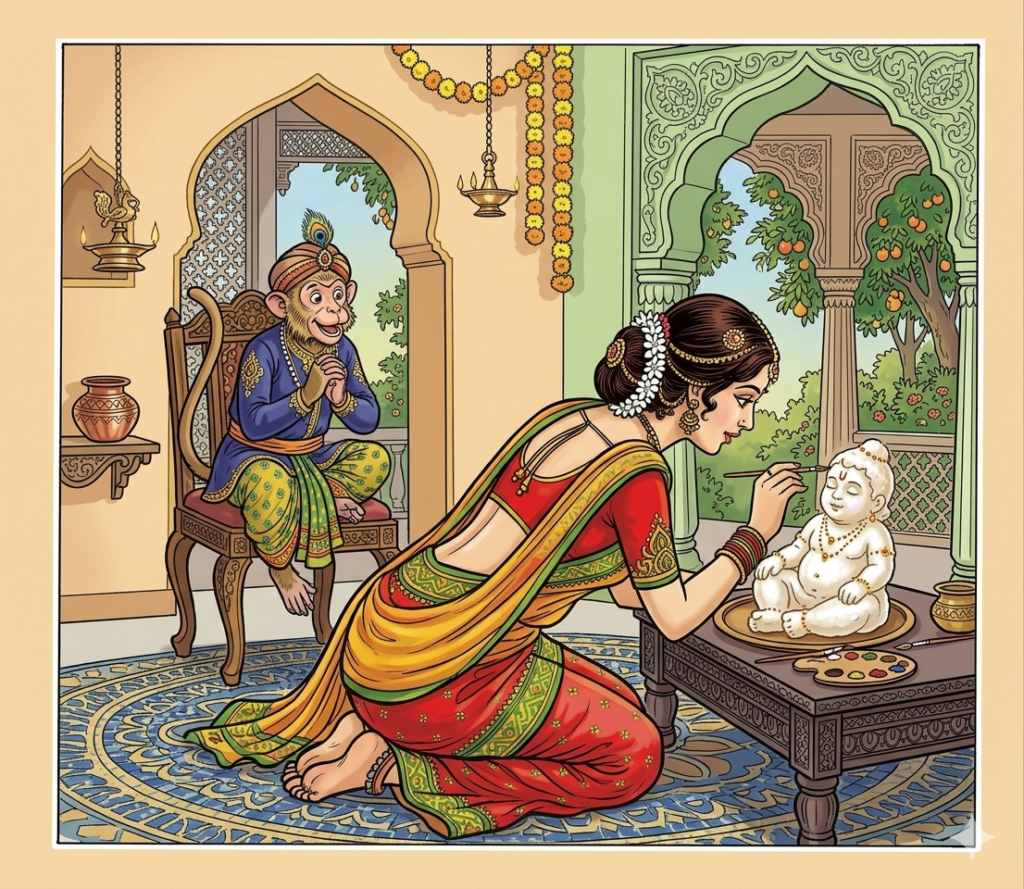
Moving away from the collations, we have Abanindranath Tagore’s Kshirer Putul, an original story with many elements in common with the tales from oral traditions. The highlight of the story is a talking monkey who is determined to bring about a return in the fortunes of his foster mother, the abandoned queen who, like in many of these tales, is childless. His Buro Angla, the tales of a thumb-sized boy’s adventures, is another popular book.
Upendrakishore Ray Chowdhury’s Goopy Gyne Bagha Byne is an original fairy tale full of magic and adventure. The story was later expanded and adapted into a world-renowned film by his grandson, the incomparable Satyajit Ray. His Ghyanghashur is also one of my favourite Bengali fairy stories. In the fashion of European stories, the third son of a poor farmer succeeds where others, including princes and his own brothers fail, because of his kindness and resourcefulness.
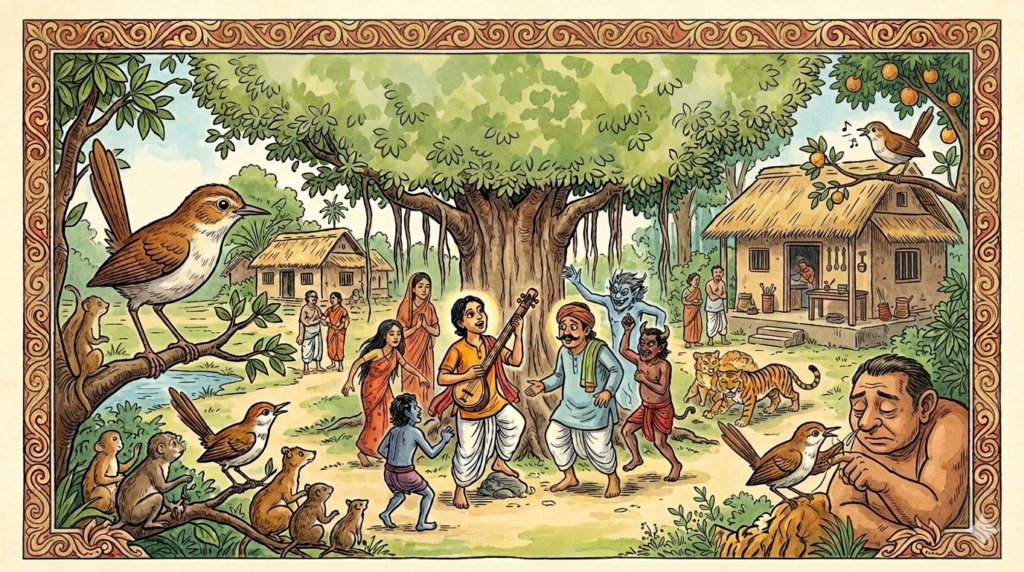
Tuntunir Boi by him was another original collection, this time of animal fables, quite in line with the talking animal stories of earlier traditions but often with a sharp political undertone. I absolutely love the story Tuntuni O Raja where a king becomes obsessed with destroying a tailor bird. Long before Tom and Jerry or Mousehunt, this tale established the trope of a powerful antagonist being thwarted by an apparently powerless protagonist. I recently reread the story, and found it to still be relevant to our times as a testament to the arrogance and corruption of unchallenged power.
In later years, Sukumar Ray, Leela Majumdar, and Sukhalata Rao contributed further to this genre, bringing an element of modern storytelling blended with the traditional tropes and traditions. Their works extended to more than just folk and fairy tales, so I am not going to go into details here. Among recent works, too, many authors have published anthologies containing either retellings, derivations, or original stories based on the folk traditions.
What are some of your favourite folk and fairy tales from your culture? Share them with me in the comments below. I would love to read them too!
#AtoZChallenge
#BlogchatterA2Z
#Kolkata
#cityofkaali
#Bengalifolktales
#Bengalifairytales
This post is a part of BlogchatterA2Z Challenge 2026