Hi folks!
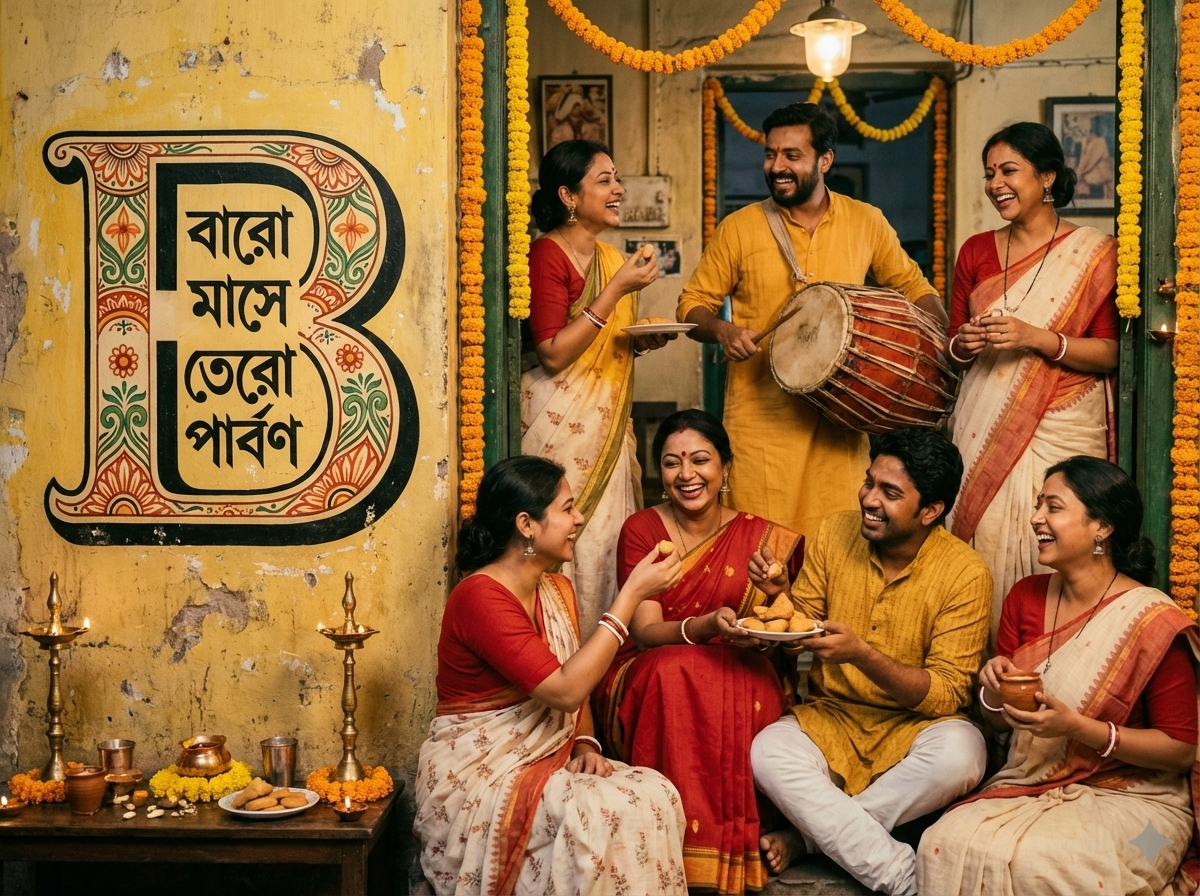
Growing up, I often heard the expression “baro mashe tero parbon” in the context of Bengali festivals. Meaning “thirteen festivals in twelve months”, it is used metaphorically to refer to the large number of festivals that Bengalis celebrate. Imagine my surprise when I recently found out that the expression is not just metaphorical but refers to thirteen actual festivals!
Surprisingly, an internet search didn’t provide a whole lot of clarity because most sites mentioning these thirteen festivals added and subtracted two or three. That is not surprising, since these festivals are rooted in rural traditions, and with growing urbanisation, several have lost their original significance in people’s lives. To confuse matters more, we Bengalis really do have an overabundance of festivities, so it is quite easy to mix up one’s list of festivals.
I was almost on the verge of asking our family priest (yes, there’s one, thanks to my dad) when I came across an old rhyme summarising the thirteen festivals by month. I don’t feel it is necessary to include it here as some of the information is archaic and no longer relevant. You can find the rhyme and its explanation in this video if you’re interested: https://www.youtube.com/watch?v=dyF3OrpoAko
Now, let’s get on with the task of discovering what these thirteen festivals really are. Below, I’ll enumerate them by month with brief descriptions.
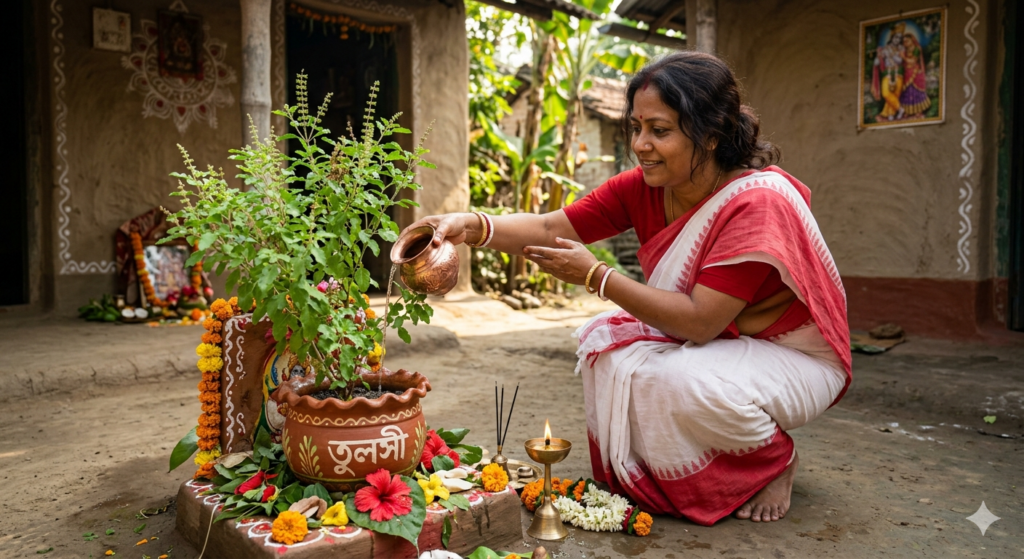
Boishakh (April-May) – Boishakh is the first month of the Bengali calendar. One would expect Poila Boishakh/ Naboborsho (Bengali New Year) to be the festival for this month. Oddly enough, it is not! The festival for Boishakh is actually Tulsi Jhara, a month-long celebration that is surprisingly modern in its manifestation. A water pot is hung above a Tulsi (Holy Basil) plant, from which water drips onto the plant. Considering the change in seasons, this is an excellent way to water a plant to ensure that the increasing heat doesn’t harm it. The plant is also worshipped every morning and evening with offerings of flowers, sandal, and water.
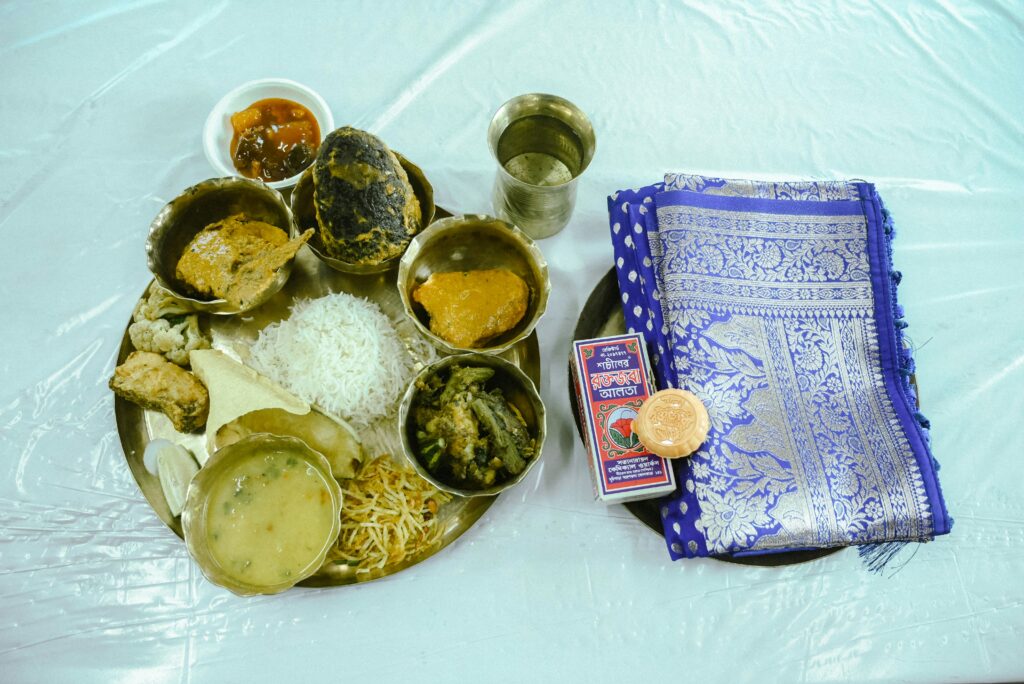
Joishtho (May-June) – The festival for Joishtho is one of the most popular ones in a Bengali household: Jamai Shashthi. This observance is both for gaining and protection of children. Even though in Kolkata, the focus of the festival is the Jamai or son-in-law, in many Bengali communities, all children and children-in-law are equally prayed for. Growing up, tying of a “protection thread” on the wrist, reading of the story of Ma Shashthi and her black cat, and a special feast were the highlights of this festival for me. It is one of the most opulent of Bengali festivals with grand feasts and the exchange of lavish gifts.
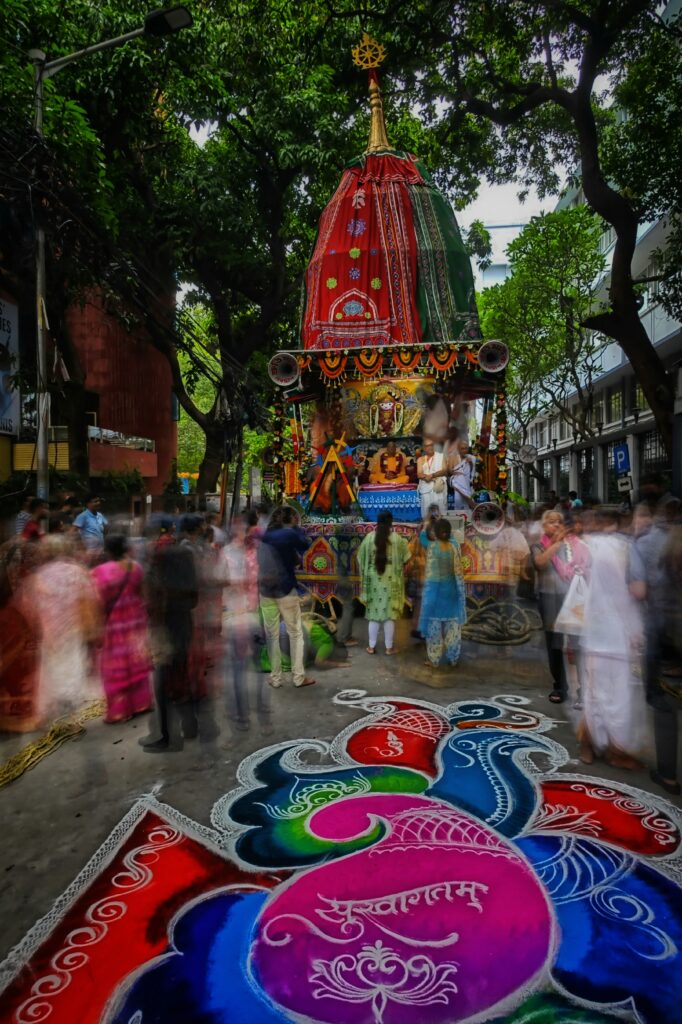
Asharh (June-July) – The festival for Asharh is Rath Jatra. It is popular throughout eastern India, though Puri is its principal centre. Devotees pull the chariots of Lord Shri Krishna, Lord Balaram, and Devi Subhadra through the streets in a massive procession. The legend behind the modern-day Rath Jatra denotes it as the journey of the deities to their aunt’s house. However, our scriptures mention a far older tradition attached to a different legend. So entrenched is this festival in Bengali culture that it has given birth to the saying “Rath dekha aar kala becha”, a reference to achieving two goals through one task! A major mela also takes place on the occasion.
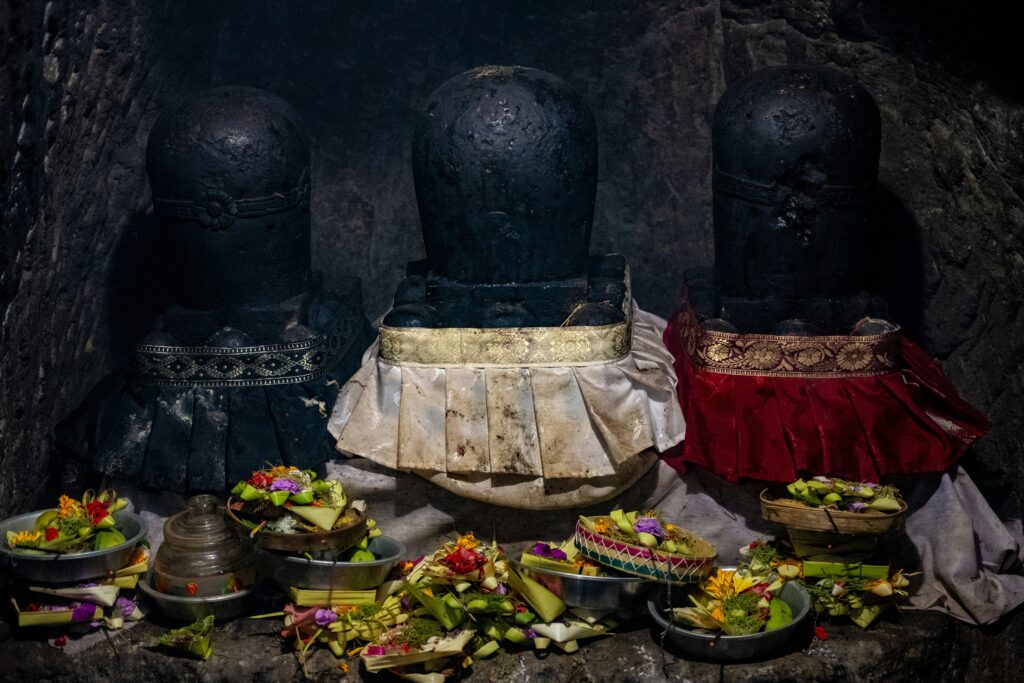
Srabon (July-August) – The month of Srabon doesn’t have a fixed festival day. Rather the entire month is dedicated to the worship of Lord Shiva. It is believed that practicing observances related to the worship of Lord Shiva throughout the month removes all obstacles and challenges and brings prosperity. Some mistakenly believe that the festival for Srabon is Jhulan Jatra because it takes place in the same month. However, despite being an important festival, Jhulan does not find a place in the list of tero parbon.
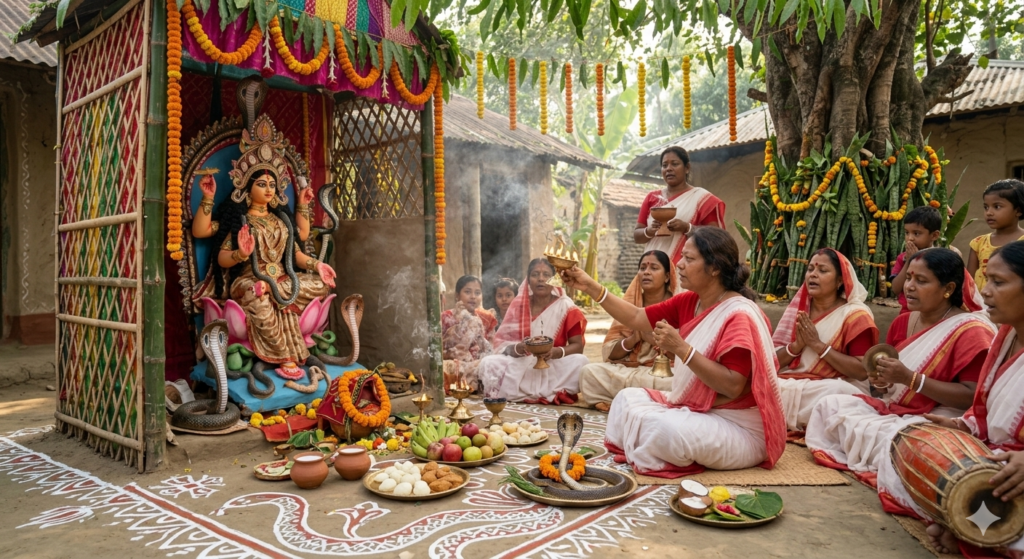
Bhadro (August-September) – Despite three other major festivals falling in the same month, the list of thirteen includes a festival that is inherently rural in nature: Manasa Puja. Though the Goddess of Serpents is worshipped on different days throughout the monsoon months according to different traditions, the rhyme specifically mentions it as the festival for Bhadro. It makes sense too as snakes have always been a serious concern in rural areas, especially during the rainy season. Which major festivals of this month surprisingly miss out on inclusion in the list? Janmashtami, Ganesh Chaturthi, and Vishwakarma Puja.
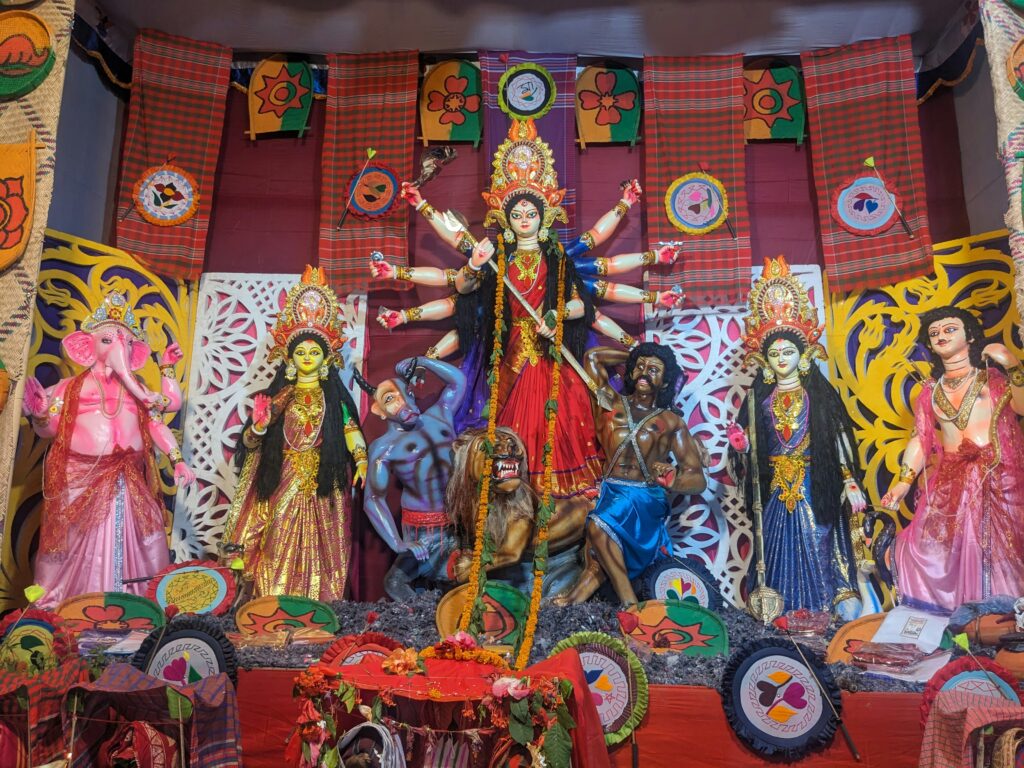
Ashwin (September-October) – The celebration for Ashwin is one that is famous worldwide. Type the word “Bengali” and you’ll get hundreds of images of our biggest festival: Durga Puja. Though it technically starts from the day of Mahalaya—with the evergreen baritone of Birendra Krishna Bhadra rousing us from sleep at dawn year after year through the decades—the primary festivities take place from Shashthi to Dashami. Dhak, dhuno, glorious traditional clothing, cultural programmes, a smorgasbord of delectable foodstuffs…this festival is a dazzling feast for the senses. Kolkata is, of course, transformed into a magical land during these days. The scale of the celebration is so superlative that it needs a post (or two or three) of its own! The Poornima (full moon) after Durga Puja is celebrated as Kojagari Lokkhi Puja, which also doesn’t make it to the list of thirteen parbons despite being an important Bengali festival.
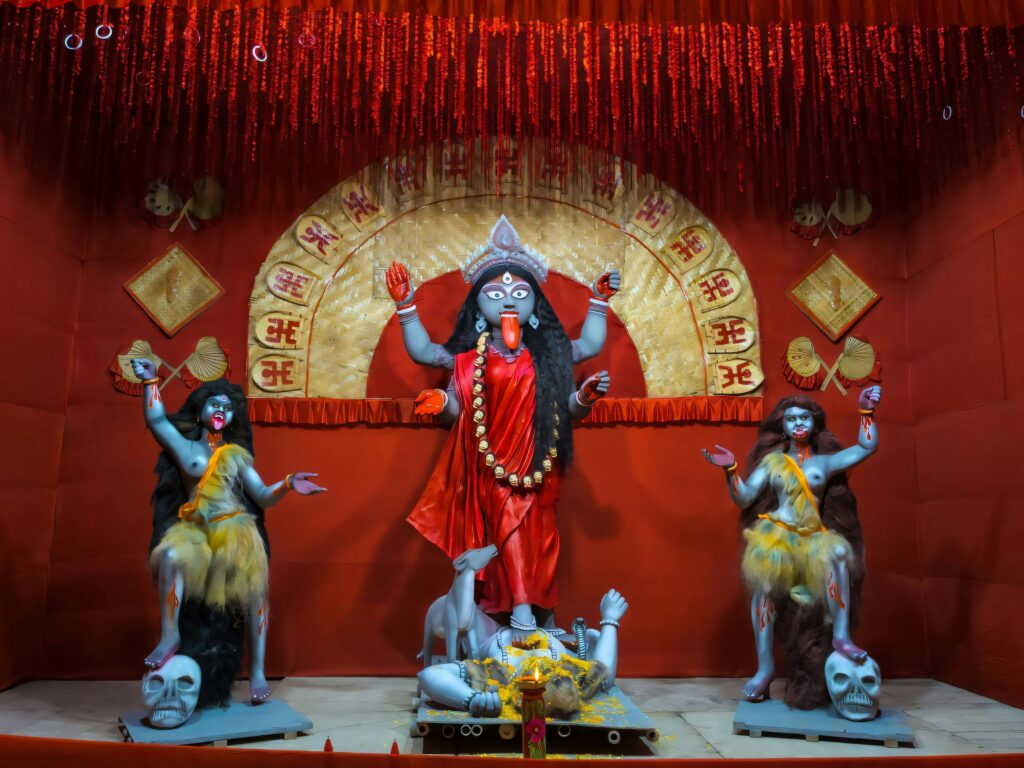
Kartik (October-November) – This is the month that gets two parbons, and no prizes for guessing which ones! The first one is, of course, Kali Puja. Taking place half a lunar cycle after Lokkhi Puja, Kali Puja takes place late at night on Amavasya (new moon). This intensely mystical festival is concurrent with Deepavali, though the latter is not one of the tero parbon.
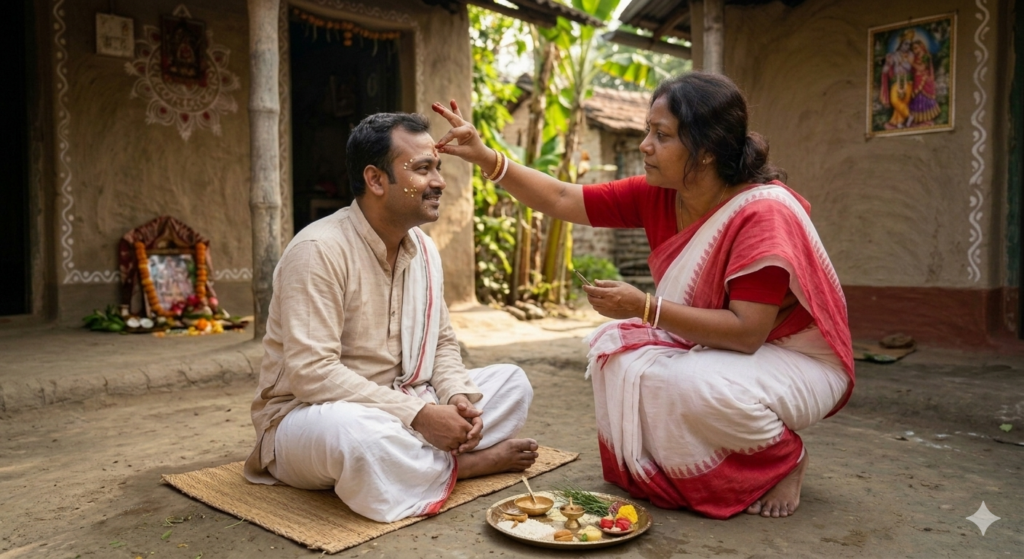
The eighth parbon takes places just two days after Kali Puja. Bhai Phonta (also known as Bhai Dooj or Bhratri Dwitiya in some places) is a celebration of the bond of brother and sister. Putting the sandalwood phonta on my brother’s temple, reciting the chant of protection, and then arguing about touching his feet (since he’s only two years older), and exchanging gifts are all such fond memories of my childhood!
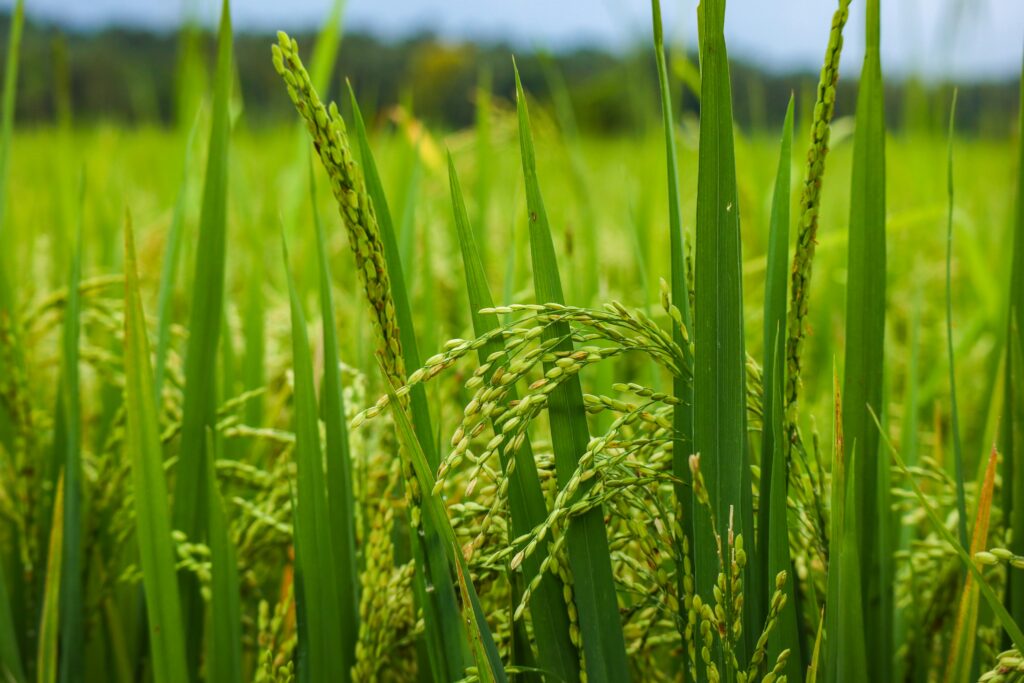
Ogrohayon (November-December) – The festival for Ogrohayon is so deeply rooted in Bengal’s agrarian and rural past that many might not even have heard of it. Nabanna, meaning naba (new) + anna (grain), is a folk festival to mark the germination of the new rice crop grain heads or panicles. The festival is accompanied by prayers for greater crop yield, rain, cattle, children, and other hallmarks of rural prosperity.
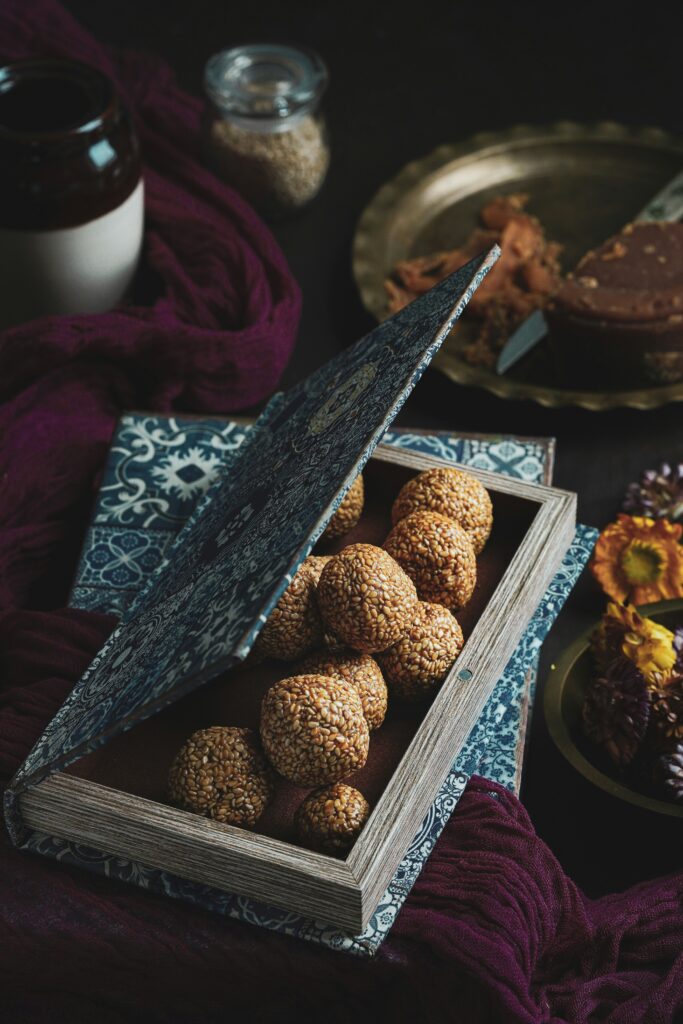
Poush (December-January) – Though the previous festival has a connection to this one, it is not a connection that is noticed by many. Poush Sankranti, also called Makar Sankranti, is both a harvest festival and a celebration to mark the transition of seasons from winter to spring. Several similar festivals occur across India at the same time, and newly harvested rice crops play a central role in many of them. For Bengalis, this is the festival of delicious pithe, puli, and patishapta—sweets made from rice, jaggery, coconut, sesame seeds, and various milk products. This is the ultimate festival for those with a sweet tooth!
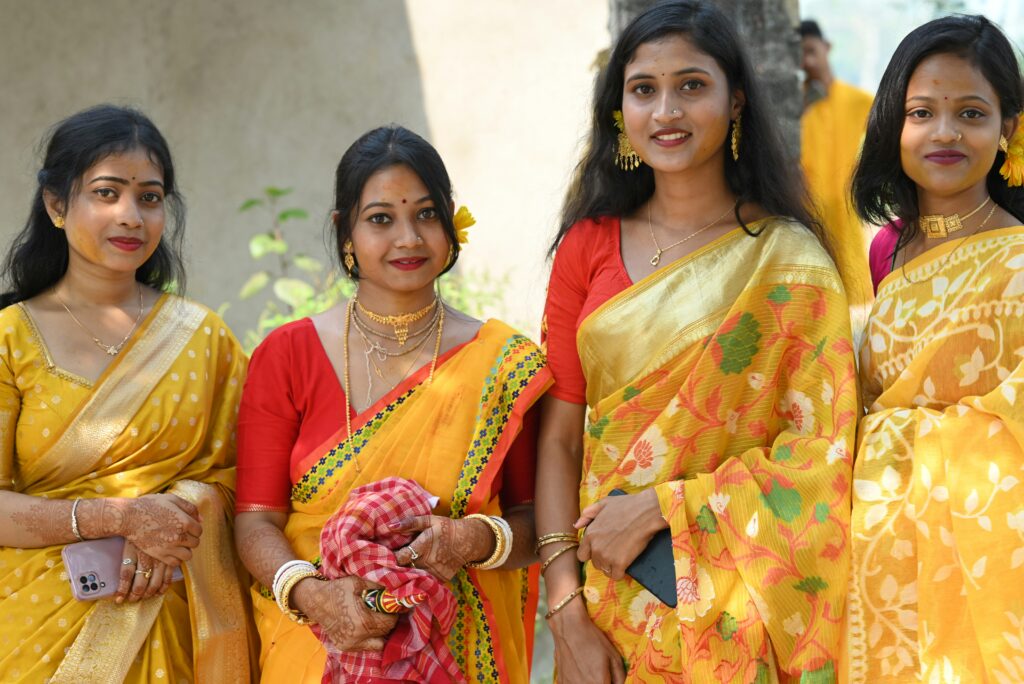
Magh (January-February) – Magh is the month for Saraswati Puja. It is also known as Vasant Panchami in many parts of India, and is considered the official beginning of spring. This is also the day of hatey khori for Bengalis, the day when education formally begins for children. Some of my fondest childhood memories of this festival are of setting up and decorating the puja pandal the night before, waking up early to bathe and wear a yellow saree, keeping school books and notebooks in the pandal, fasting until the puja got over and we had all said our prayers, pandal hopping with friends eating the same prasad at every pandal yet believing it to taste different at every spot, and writing the word “Saraswati” in Bengali 108 times in the evening under my grandmother’s guidance.
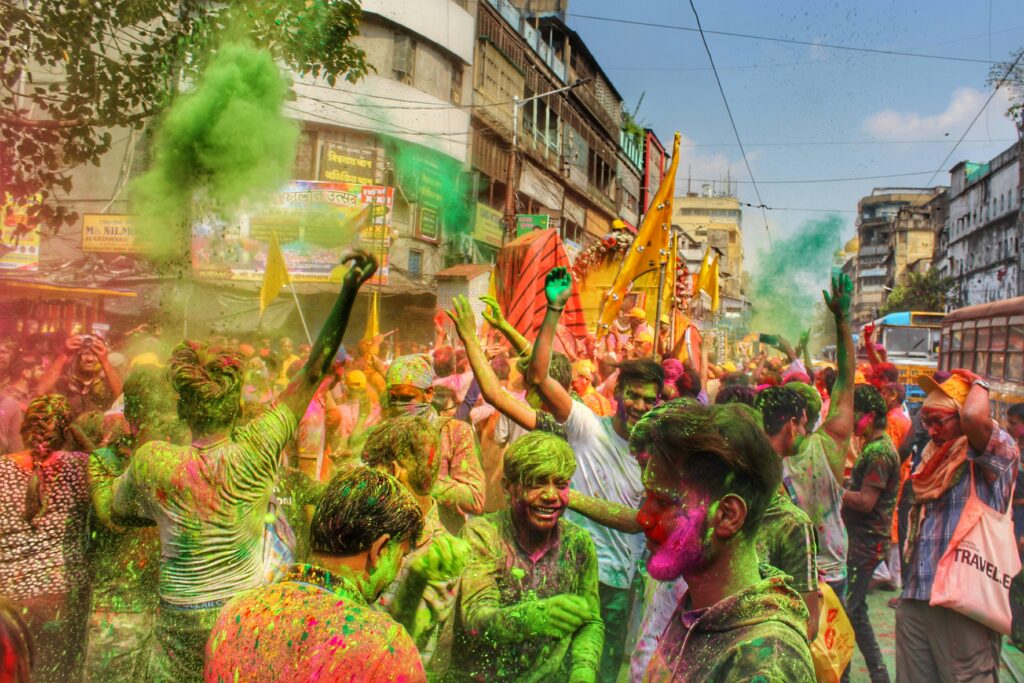
Phalgun (February-March) – The festival for Phalgun is one of the biggest celebrations not just for Bengalis but for all Indians: Holi. It is called Dol Poornima or Dol Jatra in Bengali and is celebrated in much the same fashion as in the rest of the country: playing with gulal colours as a reminder of the tradition of Lord Shri Krishna playing with colours with the gopis in Vrindavan.
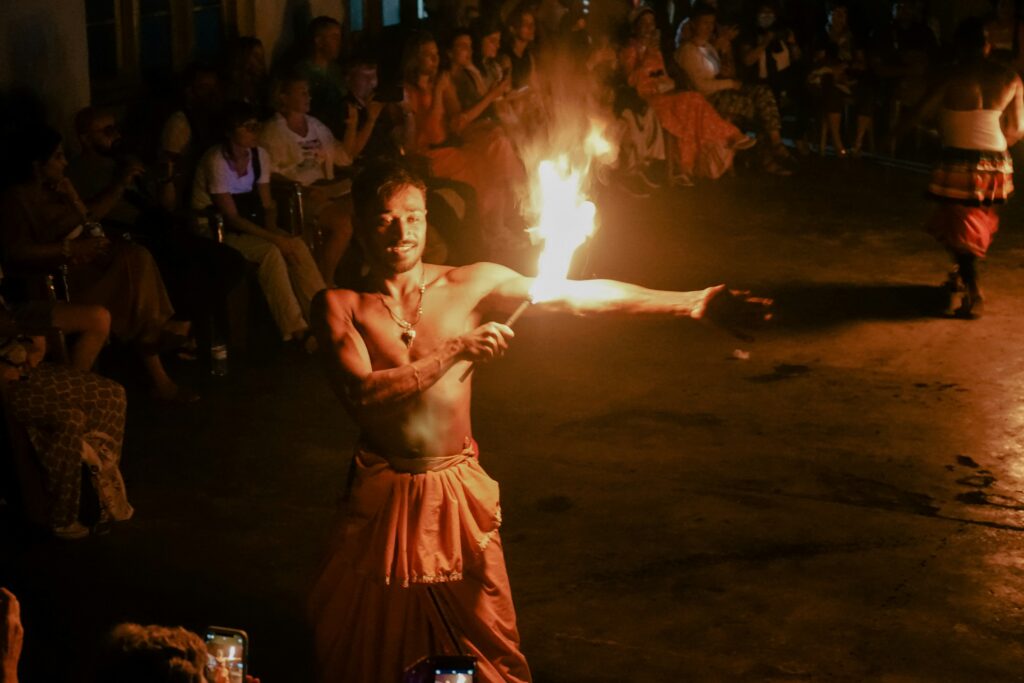
Chaitro (March-April) – The final festival on the list of the tero parbon is one that is again rooted in Bengal’s rural heritage. Dedicated to Lord Shiva and Kali, Charak Puja is one of the most unique, and possibly the most intense, of festivals of Bengal. It is also part of the week-long Gajan festival that marks the end of the Bengali calendar year. Some of the rituals associated with this festival are crocodile worship, walking on hot coals, fire dancing, piercing the body with metallic hooks or rods, and other austerities, usually by large numbers of sanyasis or bhaktos. It is also accompanied by a vibrant folk fair.
So, this post has turned out to be rather longer than I thought it would be. Quickly cutting to the chase now. How are all these festivals related to my series City of Kaali? Well, the connection with Kali Puja is needless to say. But given that Manik Choudhury, my protagonist, is a 150+ year-old one-time zamindar, I think you can guess what many of these festivals—especially the rurally rooted ones—have meant to him across the years. Even in the present, some of these celebrations will feature in his life. How they will affect him is for me to know and you to find out as the series progresses!
#AtoZChallenge
#BlogchatterA2Z
#Kolkata
#cityofkaali
#festivalsofbengal
This post is a part of Blogchatter A2Z Challenge 2026.