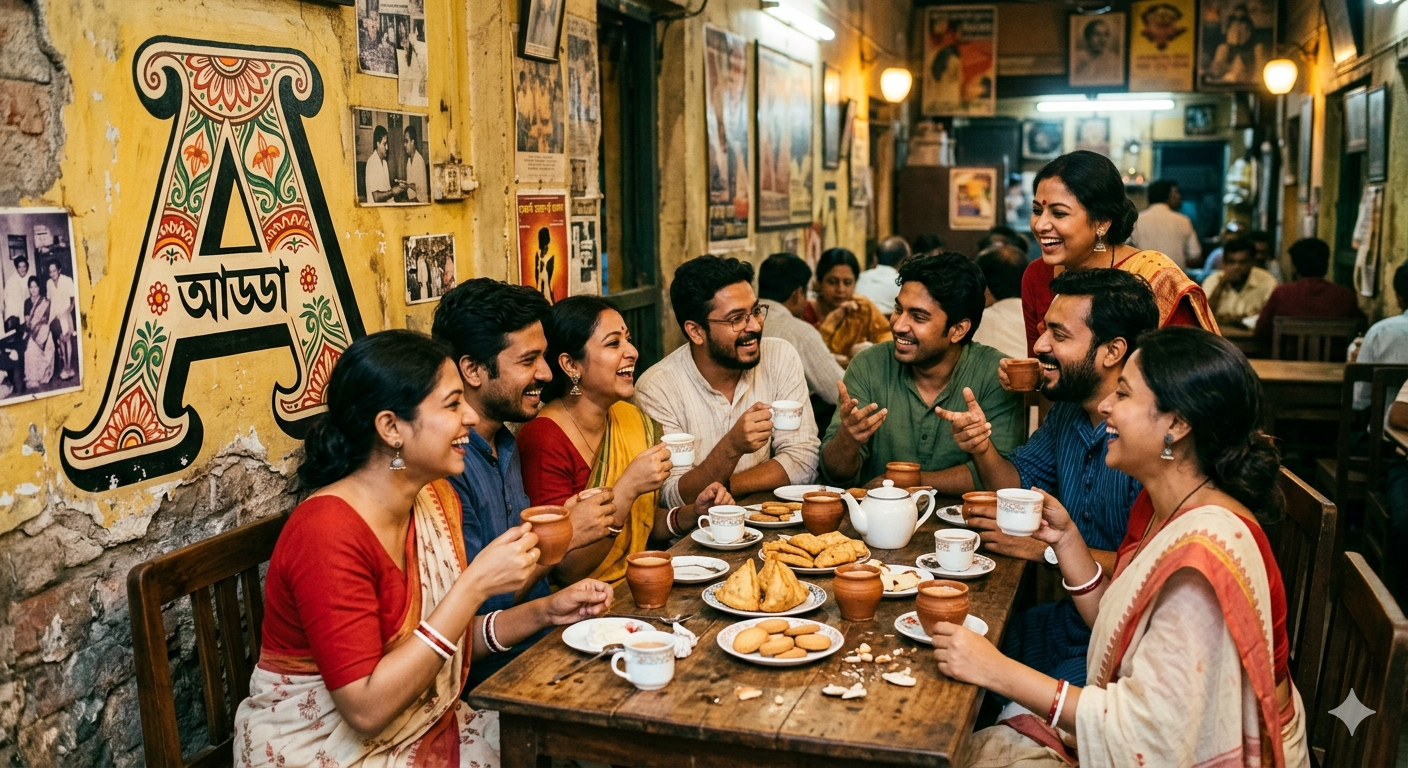
Hi folks!
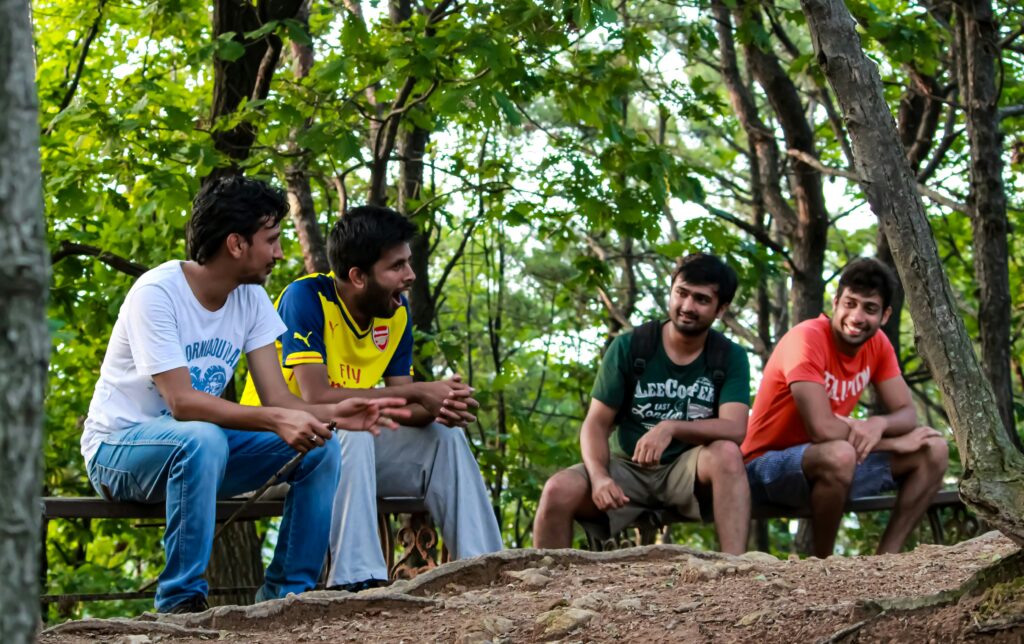
Many of you might be familiar with the word “Adda”. It’s used in several Sanskrit-descended Indian languages in the sense of a place of gathering. According to Google Baba, even Kannada contains this word, though it’s used to mean cross or crossroad. But to Bengalis, Adda is not a place or even an activity. Adda is emotion. Adda is a cultural phenomenon. Adda is soul sustenance.
Technically, in Bengali, Adda refers to a gathering of people for the purposes of conversation. Not a meeting, not a purposeful discussion, and not even idle gossip. Rather, a gathering whose sole purpose is relaxed conversation. Though, “relaxed” often flies out the window as soon as hotly debated topics emerge.
An adda requires a minimum of two people to be present, though there is no upper limit. If the gathering is very large, the adda might break up into multiple smaller addas. The chaos and cacophony in such cases—quite paradoxically, might I add—increases exponentially instead of becoming manageably scaled-down.
Adda also has no fixed duration, though on metaphorical paper (which is usually an answer to the question of “How long will you be gone?” by a family member), it ranges between half an hour to an hour. Adda-addled time tends to behave very mysteriously, sometimes stretching like the most elastic of mozzarellas and sometimes flying past like the Shanghai Maglev.
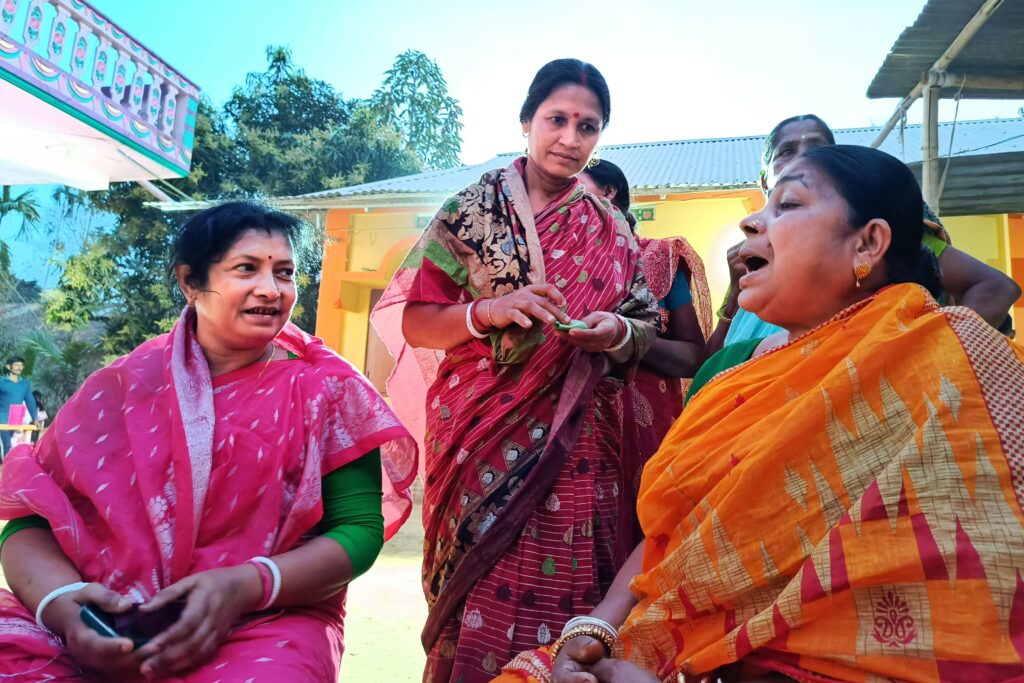
Addas can be fixed, regular assemblies. For instance, daily evening gatherings of elderly ladies after their walks to discuss maids and daughters-in-law. Or card addas in the local train during morning commutes where witty comments matter more than actual tactics. Or a nightly heated debate of neighbourhood youth on politics, romance, movies, and global warming.
Sometimes addas are occasional. Such as when old friends find themselves in the same city after many years, and the pull of nostalgia is too strong to resist. Or when relatives who haven’t seen each other for decades congregate for a wedding. Tasks related to the main purpose of the visit are relegated to the wayside as catchup and ribbing take centre stage.
But the most interesting addas are often the impromptu ones, the ones that spring up among strangers in the most unexpected places. At Puja Pandals between elderly gentlemen recalling their youth. Or during a metro rail journey when two young ladies find themselves reading the same book. Or among parents who find themselves stuck in interminable queues during admission season.
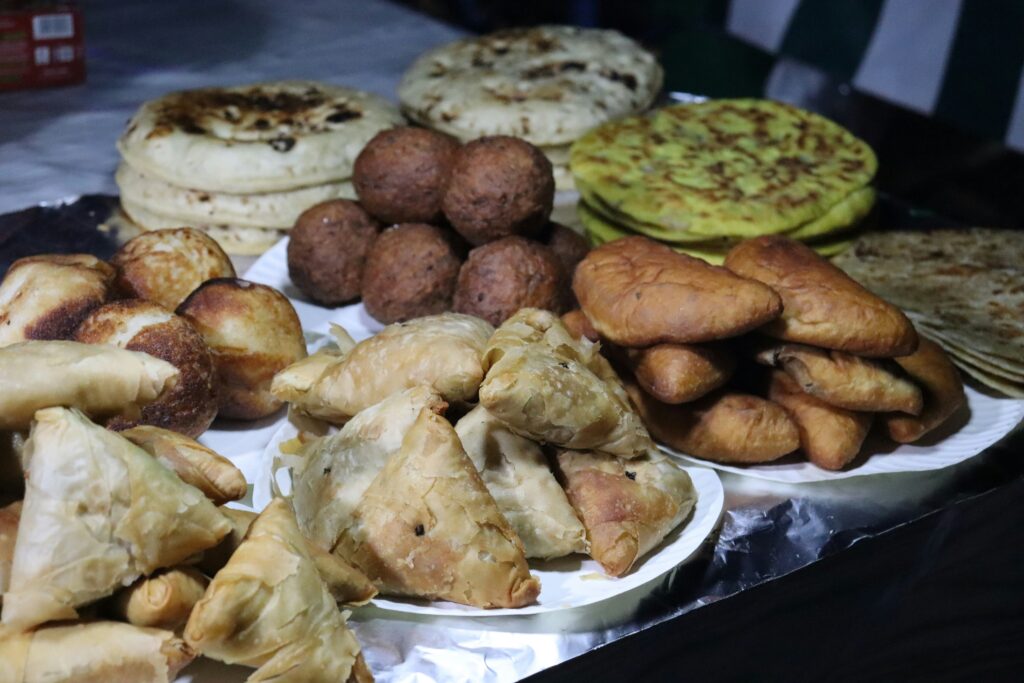
Adda is, of course, to be lubricated by sweet tea or coffee and deep-fried umami snacks. The food may not be the point of the gathering, but it can often turn out to be the highlight, determining where and when the rendezvous should take place. Singara, kochuri, nimki, telebhaja, chanachur, chop, cutlet, and kobiraji are age-old comrades of adda. With the inexorable march of modernity, newer snacks like pizza, burgers, nachos, chips, and sandwich have also managed to jostle open a space for themselves on the communal table.
For me, personally, the earliest introduction to adda were visits to and from friends of my parents. I still have no clue what prompted them to mandate my presence at these gatherings that were duller than ditchwater to me. I strongly suspect those early exposures to this sociocultural phenomenon—instead of having the desired effect of teaching me social skills—consigned me to lifelong introversion.
As I’ve grown older, I’ve come to appreciate the joys and hidden benefits (sometimes hidden deeper than a pirate’s treasure) of this quirky facet of Bengali life. Enjoying both planned and unplanned addas of my own, I now understand why adda matters to the Bengali soul so much, and why it is a tradition we are hanging on to tooth and nail even in this age of internet and social media.
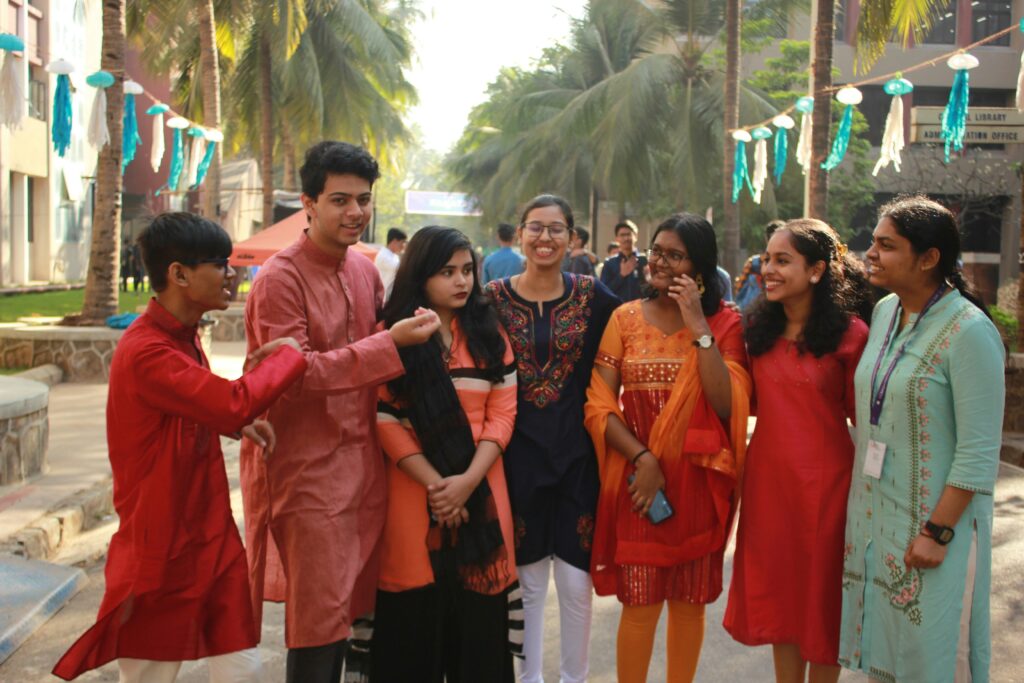
Because adda is a safe space where you can be unabashedly yourself. Where you can give and take in equal measure and leave everything on the floor to begin anew at the next gathering. Where you can connect with minds, hearts, and spirits that share the same corner of the universe as yours, no matter how big or small that corner might be. Where you can relive the impulse that first led humans to start living in groups.
It is unique in its deliberate aimlessness, its animated posturing, its joyful spontaneity, its surprisingly covert—and sometimes overt—aggressiveness, and its persistent break from constant purposefulness. In a word, it is essentially Bengali.
One of the most poignant depictions of adda is in the very, very famous song by the late Manna Dey – coffee houser sei addata (Album: Hits of Manna Dey Volume 2, Lyrics: Gauriprasanna Mazumdar, Music: Suparna Kanti Ghosh). As the legend presses all the nostalgic buttons while narrating the tale of seven friends who used to meet regularly at the Coffee House for adda, the relatability of their lives and fates resonates within us too.
When I was younger, I used to joke that most of them ended up with unsatisfactory endings because they spent too much time at their adda instead of focusing on studies and career! Needless to say, I don’t actually believe that any more even though I might still spout that joke from time to time!
And now, coming to the final bit, the one where I tell you how all this is connected to my series City of Kaali, as promised in my theme reveal. Adda has two connections to the series. First in the lack of this very Bengali essential of daily life. If you know what it means for a Bengali, especially a Bengali of Kolkata—or have figured it out from my ramblings above—you’ll begin to understand something important about Manik, my protagonist. What it is I won’t spell out for you since I respect your intelligence enough to trust you to figure it out.
Second, there is a character in Ageless Feud who is named for one of the seven friends from Manna Dey’s song. Not just the character but his profession too is inspired by the iconic song. While there were claims of art imitating life regarding this character—a claim that was soundly repudiated by the author of the song—in my case, it is a case of art inspiring art. And no, I’m not going to tell you the name of this potentially recurring character either. To find that out, you’ll need to read my book and listen to this marvel of music that will draw you into the magic of Adda whether you want or not!
#BlogchatterA2Z
#AtoZChallenge
#Kolkata
#cityofkaali
#adda
“This post belongs to Featured Category BlogchatterA2Z.”
Comments
4 responses to “A is for Adda”
Hey, Felt nostalgic while reading this one. Yeh Raat Bheegi Bheegi by Manna Dey used to be my fav song.
Yes, we have a word “Adda” in Kannada. It also sometimes mean what you meant here not only cross or crossroads.
These Addas have modern avatar now like Kitty Party, Club Meet(purpose is often forgotten here ;)) isn’t it ?
Hi! I’m glad you enjoyed my post. Yes, it is a nostalgic subject for many of us who are used to that lifestyle. 🙂
Commendable Writa
A is so Exhaustive.
Congratulations.
From a member of Authors ADDA
Thank you Sir. Glad you liked the post. Your feedback is much appreciated.