Hi folks!
This has to be, hands down, the weirdest post in my A2ZChallenge this year. It is also a topic that is very close to my heart. Because, in trying to bring Patala Kaalikshetra to life in my City of Kaali series, I have had to research Kolkata’s nether regions—both the real and legendary varieties. Kolkata has existed for hundreds of years (about which I discuss in my Kolkata-Calcutta post), and as happens with any old city, underneath the skyscrapers rubbing shoulders with heritage buildings lies a second, hidden city. From 19th century brickwork to the latest in metro rail technology, from legends of escape routes to tunnelling by members of an “underworld” of a different nature, Kolkata has it all! It’s been a fascinating journey for me, and I hope to give all of you a taste of it in this post.
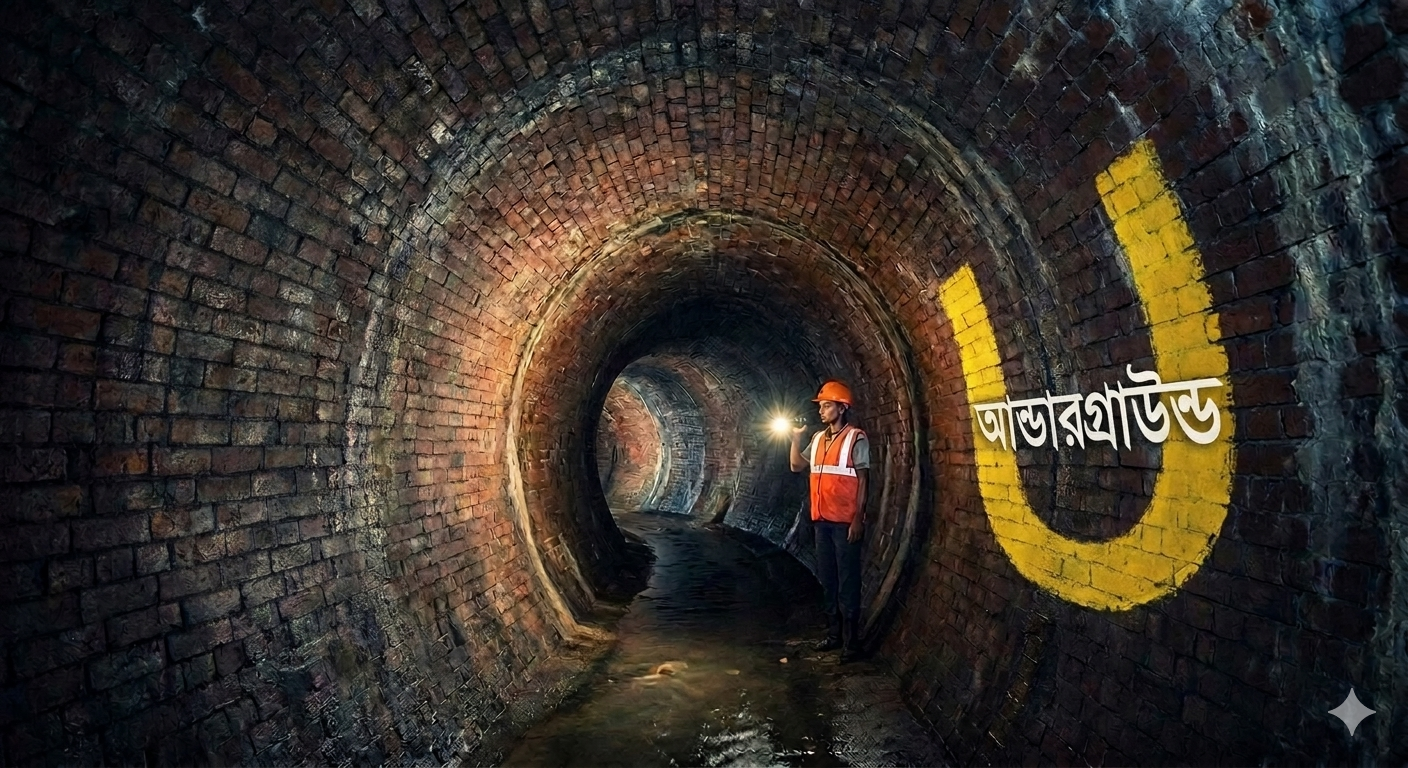
Let’s begin with the real underground structures—the marvels of engineering that hold up the city’s habitability in more ways than one. The oldest of these is the sewer system made during Victorian times (1860 – 1875), which also happens to be the oldest organised underground sewerage system in Asia. Built in imitation of the one in London, this 300-km-long system boasted large, oval tunnels for carrying solid waste away from the city. Decades of silting and wear and tear led to some sections of the tunnels becoming unusable, collapsing, or flooding. Since 2007, restoration work has been going on in this backbone of the city’s sanitation system, reinforcing the kilometres of brickwork with modern technology.
Another marvel of underground technology—this one is not just underground but underwater too!—is the Calcutta Electric Supply Corporation (CESC) Power Tunnel. It connects Howrah and Kolkata deep below the Hooghly River, ensuring transmission of high-voltage electricity between the two regions. This 539-metre-long tunnel was built completely by hand, using tools like shovels and spades. The project took 17 months to complete, and started officially functioning from July 1931. Running between Metiaburuz and the Bontanical Gardens, this tunnel still serves as an integral part of Kolkata’s power infrastructure and was the blueprint for the Calcutta Metro decades later.
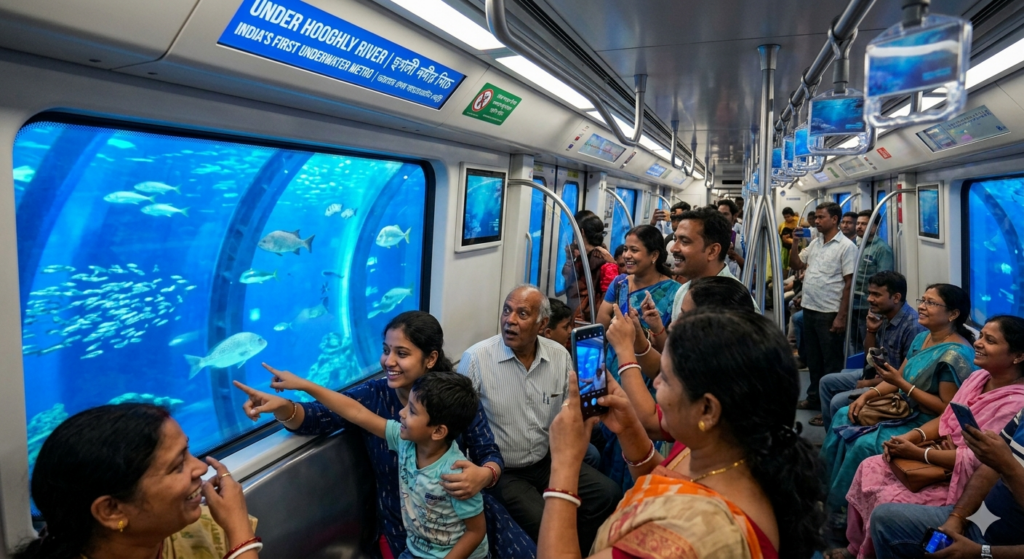
Which brings us to the third engineering marvel among underground structures of Kolkata—the Kolkata Metro network, which opened in 1984. Though there were few changes to it for decades, it currently covers approximately 73.4 kms connected by 58 stations across 5 lines: Blue, Green, Purple, Orange, and Yellow. The latest astonishing addition to this network is the Kolkata Metro Underwater Tunnel that is part of the Green Line. Inaugurated on 6 March 2024, this 520-metre-long stretch falls between Howrah Metro Station, which is India’s deepest station, and Mahakaran Metro Station. The metro rail crosses it in 45 seconds, and passengers are reminded of their underground status using lighting and animation.
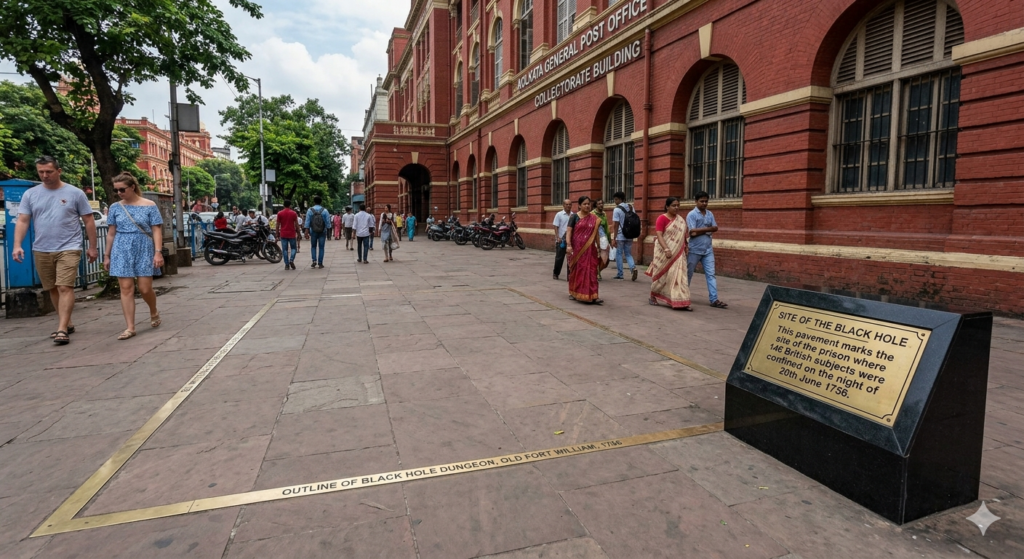
These are not the only underground tunnels or chambers that the city boasts of. There are some that, though equally real, are far more intriguing by dint of being shrouded in mystery and hints of conspiracy. The most infamous of these is the Black Hole of Fort William. This was a tiny (14 ft x 18 ft) underground guardroom where British prisoners were held overnight by Siraj-ud-Daulah after taking the fort in 1756. According to the British records, 146 people were forced into this, the circumstances causing almost all of them to perish from suffocation and heat exhaustion. There is much controversy surrounding this incident, and historians now believe that the number of prisoners had been 64, of whom 43 died. The original site was demolished when the fort was replaced, but the site is marked out by brass rails in the GPO complex.
Another “secret” remnant of the colonial times is the underground chamber discovered inside the National Museum in 2010 by the Archaeological Survey of India while renovating Belvedere House. The discovery of this 1000-square-foot windowless room sparked rumours of a treasure vault or torture chamber. In truth, the “chamber” had been dug out and filled with packed earth in the 18th century to help stabilise the structure of the building atop it.
Then there are the ones for which no evidence has yet been found, yet the myths of their existence persist and resurface at regular intervals. Such as the “escape tunnel” from Elgin Road used by Netaji when slipping through the net of the British. Given that he escaped over land and not below it, this myth has been debunked yet continues to live in the public consciousness. Similarly, there are stories of escape tunnels under Fort William, which were probably born from the reality of massive masonry drainage culverts.
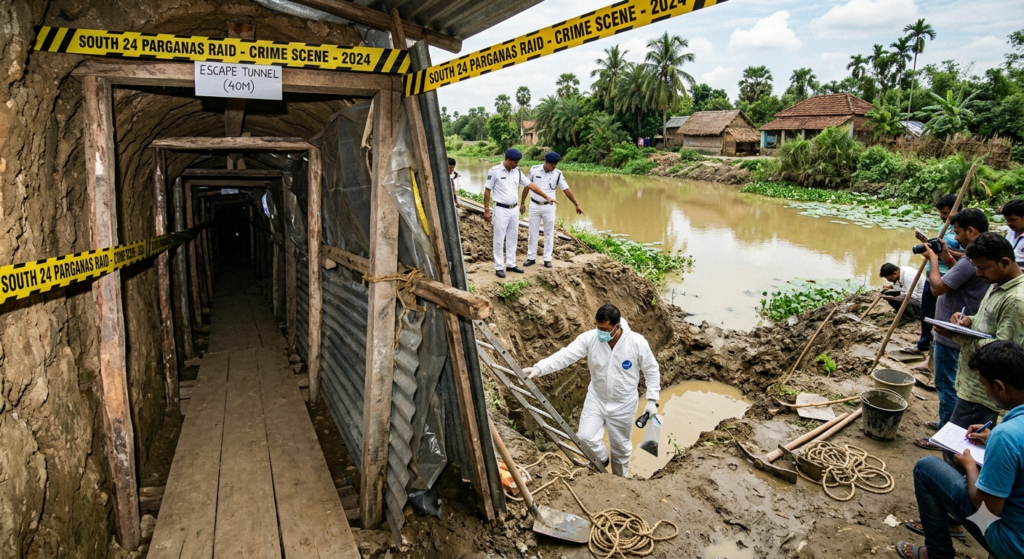
And as if all these real and mythical tunnels were not enough, Kolkata’s criminal underworld has also made its fair share of contributions to the city’s literal underworld. Between 2013 and 2015, two tunnels were found under Red Road, near Army headquarters, which sparked concerns about national security. It was later discovered that these had been the work of local cable-theft gangs. And as recently as 2024, the Kolkata Police discovered a 40-metre-long tunnel under the house of a gold smuggler during a raid at his house. The tunnel led to a canal behind the house, which connects to the Matla River in Bangladesh—a perfect system for a quick getaway across the border!
In Ageless Feud, the nether regions of Kolkata play a key part, and not just because Patala Kaalikshetra is one of the two dual settings of the story. Some of the places mentioned in the post have featured or have inspired locations in the book. And no, I am not going to spill the beans here! You’ll have to read the book and find out. I originally started researching into Underground Kolkata in preparation for Ageless Feud, though I have learnt much on the subject even after the book’s publication. Who knows, maybe some day more of these locations will pop up in Manik’s continuing adventures.
#AtoZChallenge
#BlogchatterA2Z
#Kolkata
#cityofkaali
#underground
This post is a part of Blogchatter A2Z Challenge 2026

Leave a Reply