Hi folks!
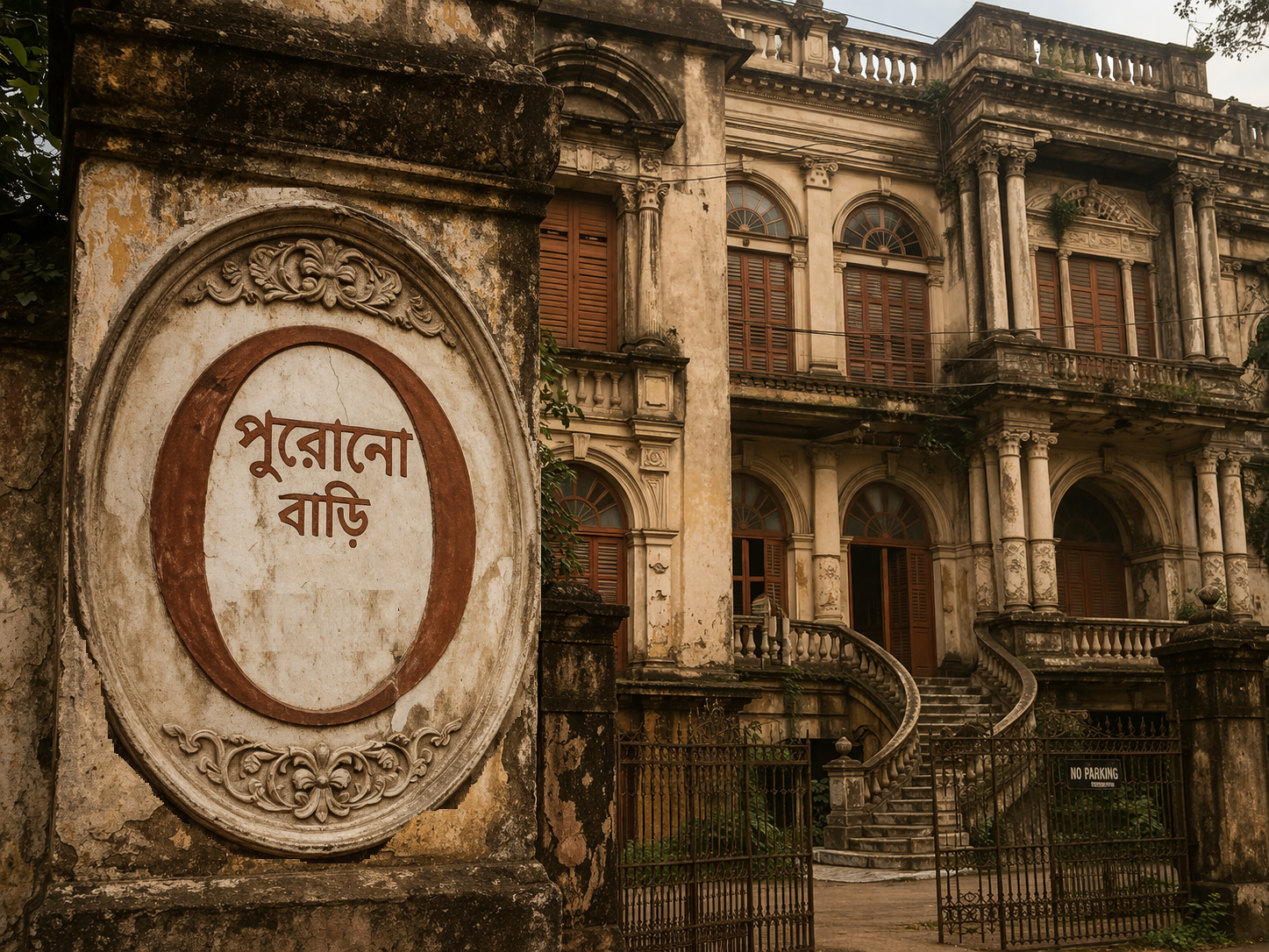
One of my favourite things to do in Kolkata is walk down or drive down roads (OK, I don’t drive personally because that would be a suicidal endeavour; I sit in the back while my father’s driver takes on the challenge of navigating Kolkata’s streets), especially in older parts of the city. Just looking up to the left and right, I find fascinating and heartbreaking sights of the city’s old houses looking down on the traffic and pedestrians. Some of these are a century old, some two centuries old, some even older. Some are in a dilapidated condition, often condemned to demolition, some are hanging on with the bare minimum maintenance, while some are thriving under the care of owners who have both the desire and means of upkeep.
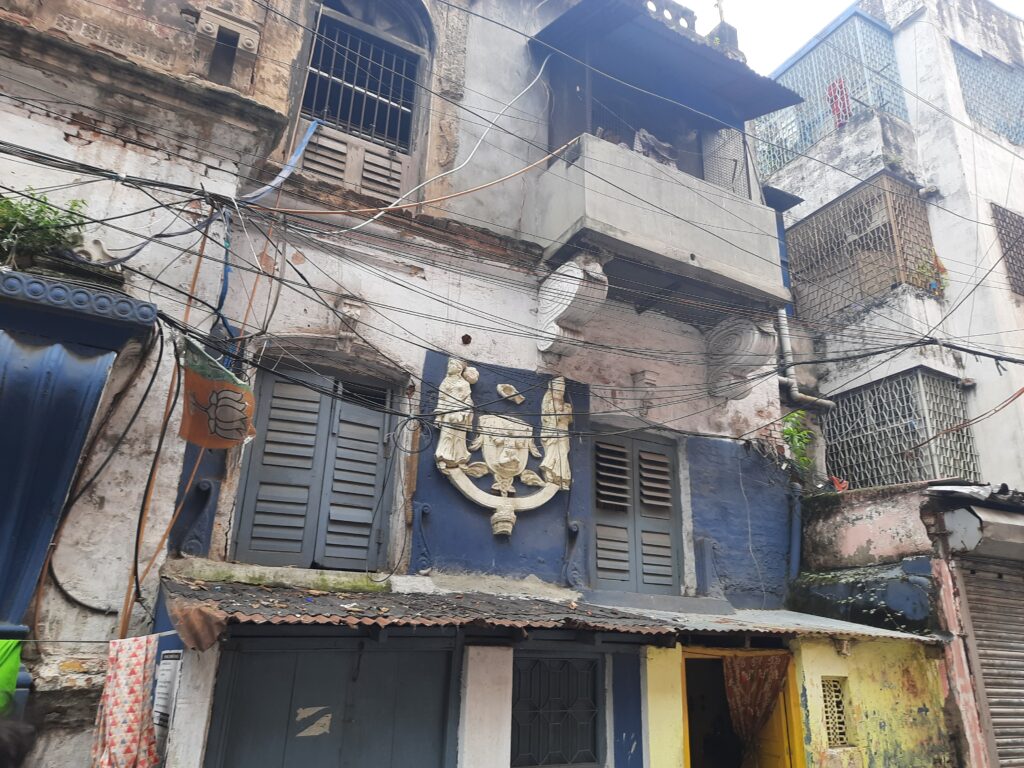
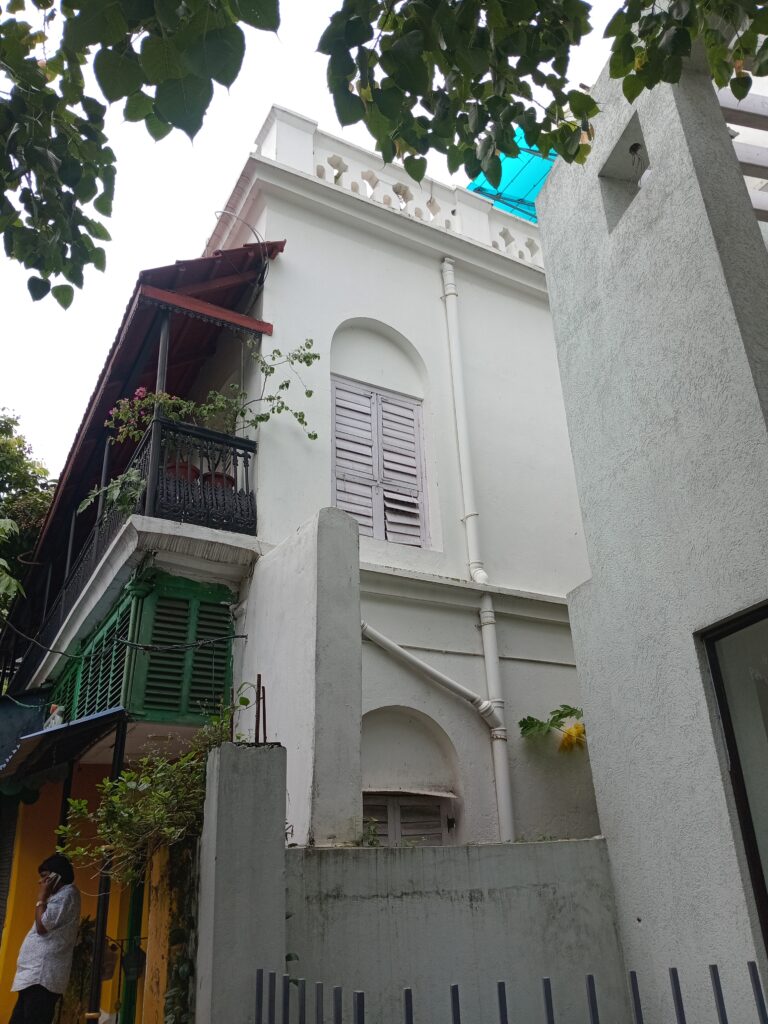
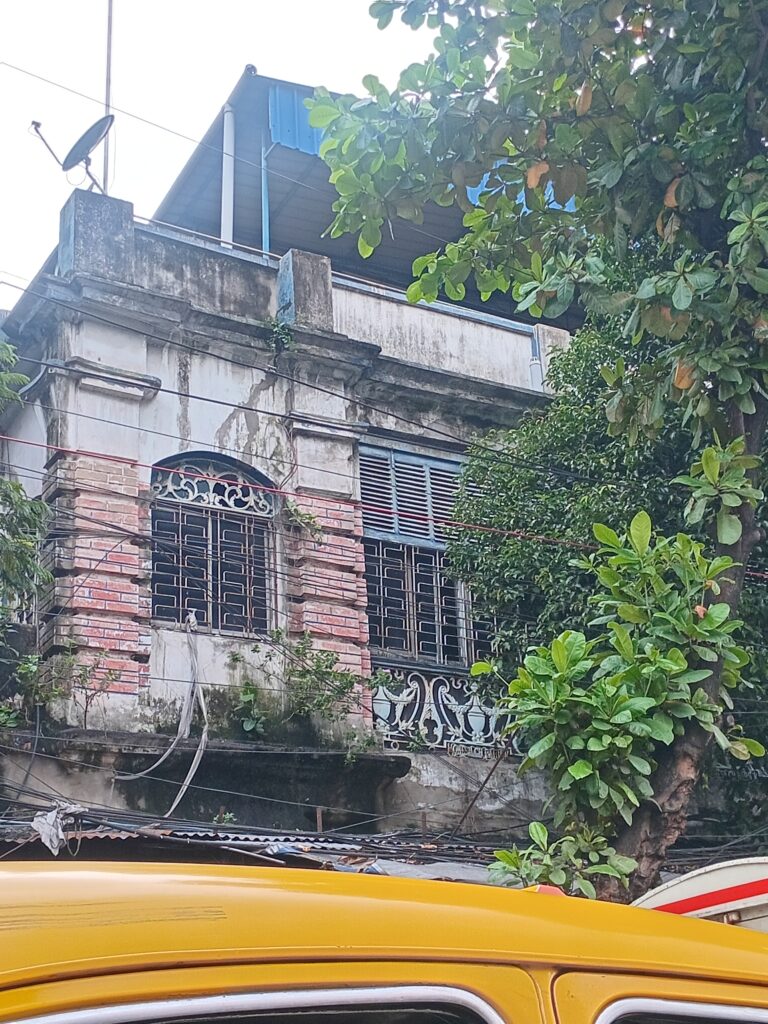
Anyone who has been to Kolkata will agree that there is “something” about these old houses that pulls you towards them. They are a unique, fascinating style that is sometimes called “Calcutta Corinthian” because of the blend of neoclassical architectural elements brought by Europeans with the traditional design elements of Bengali houses. One of their most noticeable features, of course, are the louvred windows called Khorkhoris. These iconic wooden shuttered windows were highly effective at keeping the weather at bay while still allowing light and ventilation to enter as well as maintaining privacy of the residents.
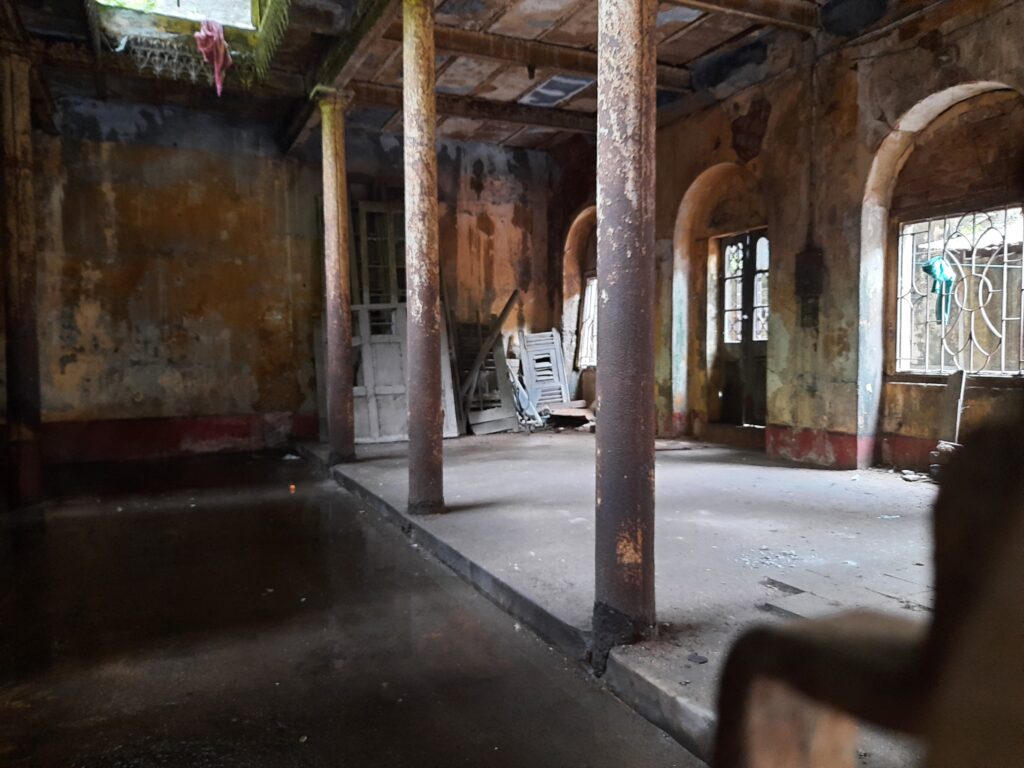
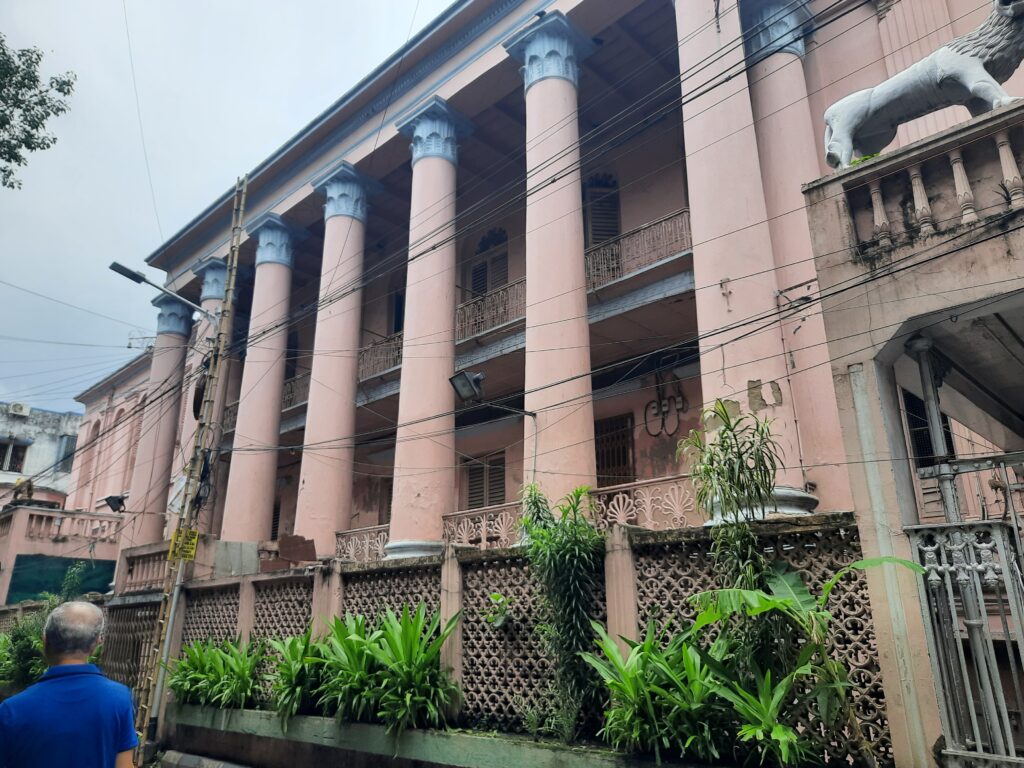
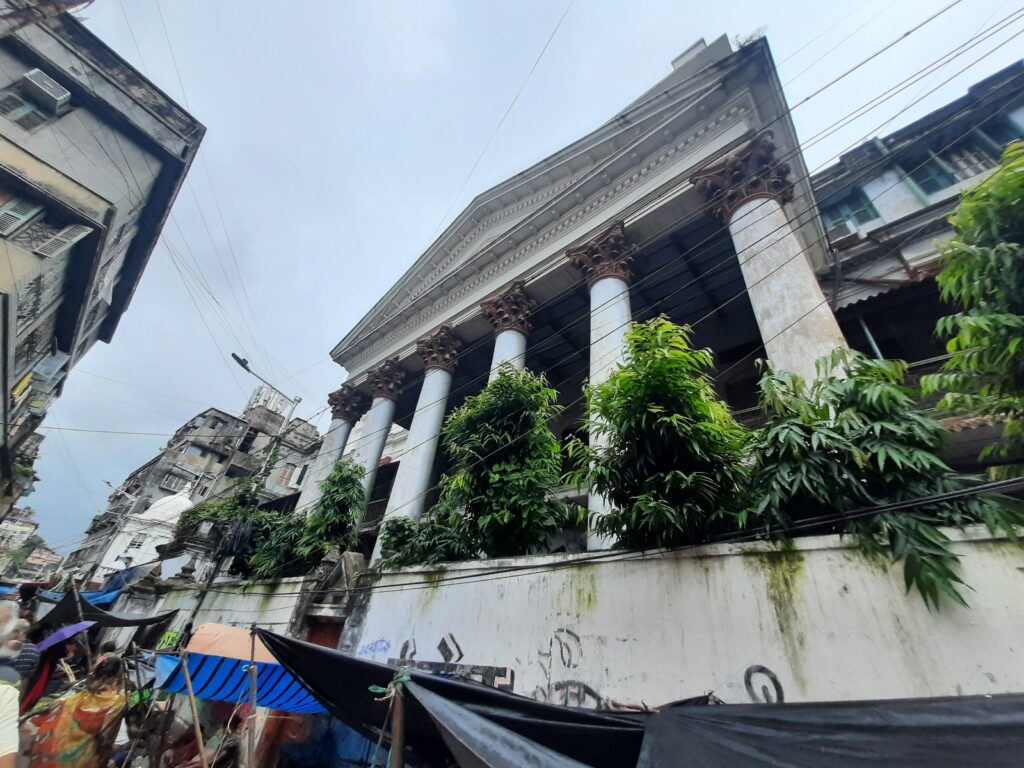
The massive pillars of these houses are also often visible from the roadside. Built in the fashion of European architecture, these large pillars can be classified as Doric, Ionic, or Corinthian columns. They usually line the façade of the house when the property is still in good condition, creating a sense of grandeur and opulence. More often, they are hidden somewhere behind the newer walls that have come up in and around the older property to make it suitable for modern living. At other times, they are in a pitiable state, crumbling and on the verge of collapse, conveniently concealed behind shops or lowrises that have risen in front of them.
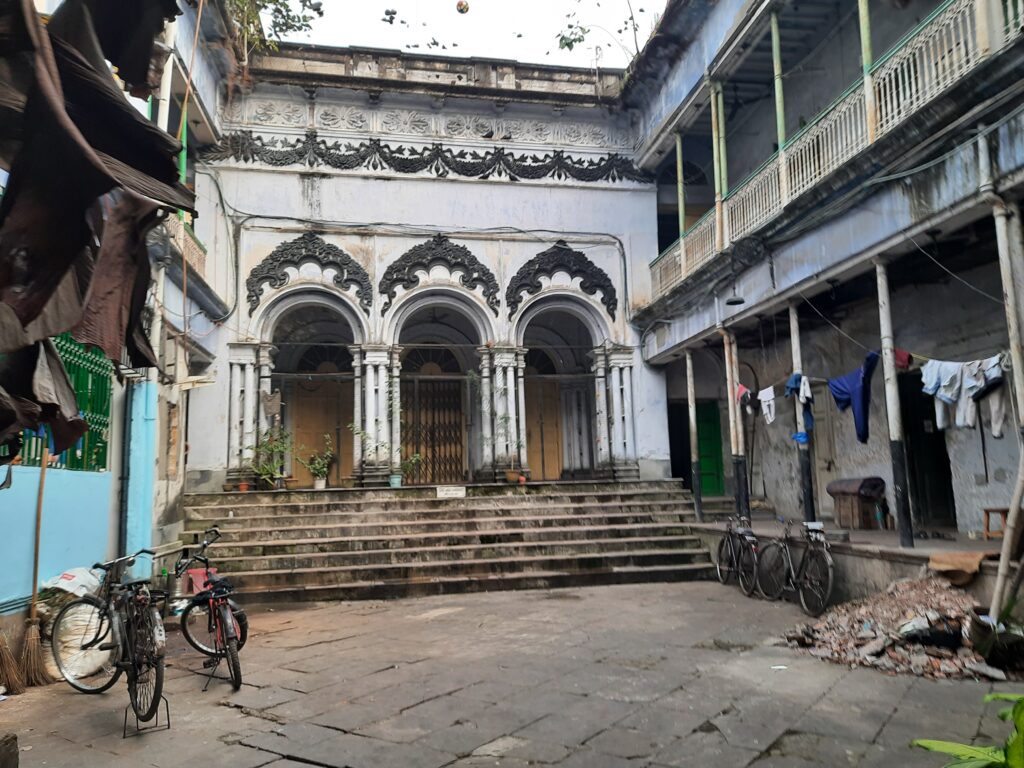
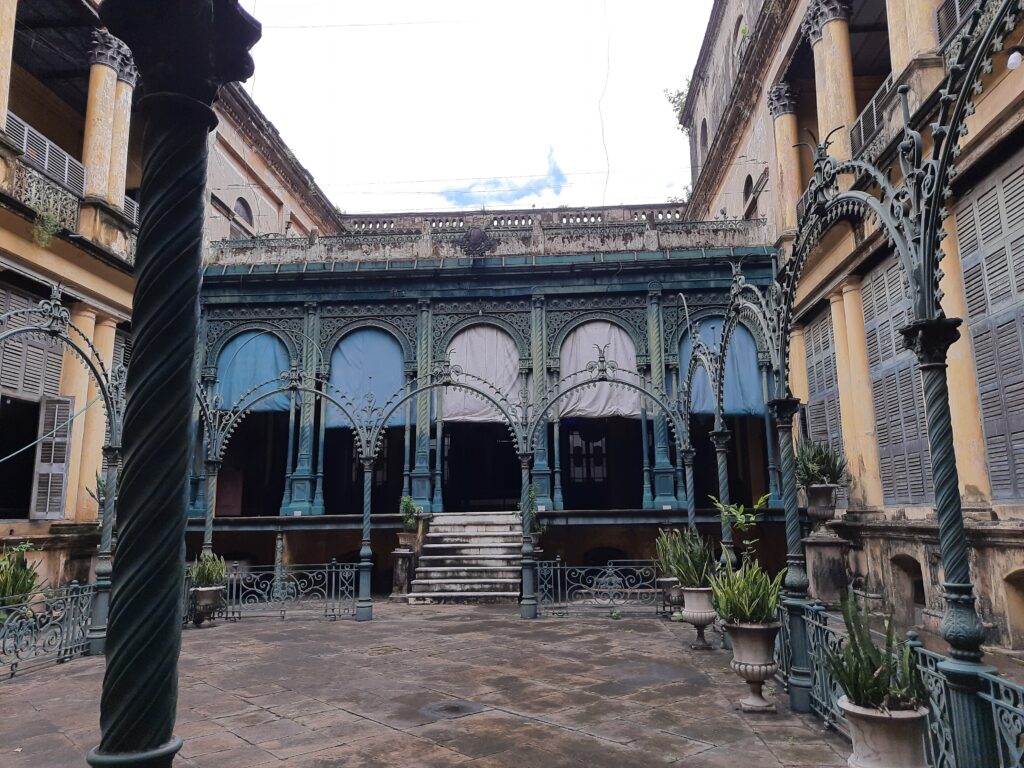
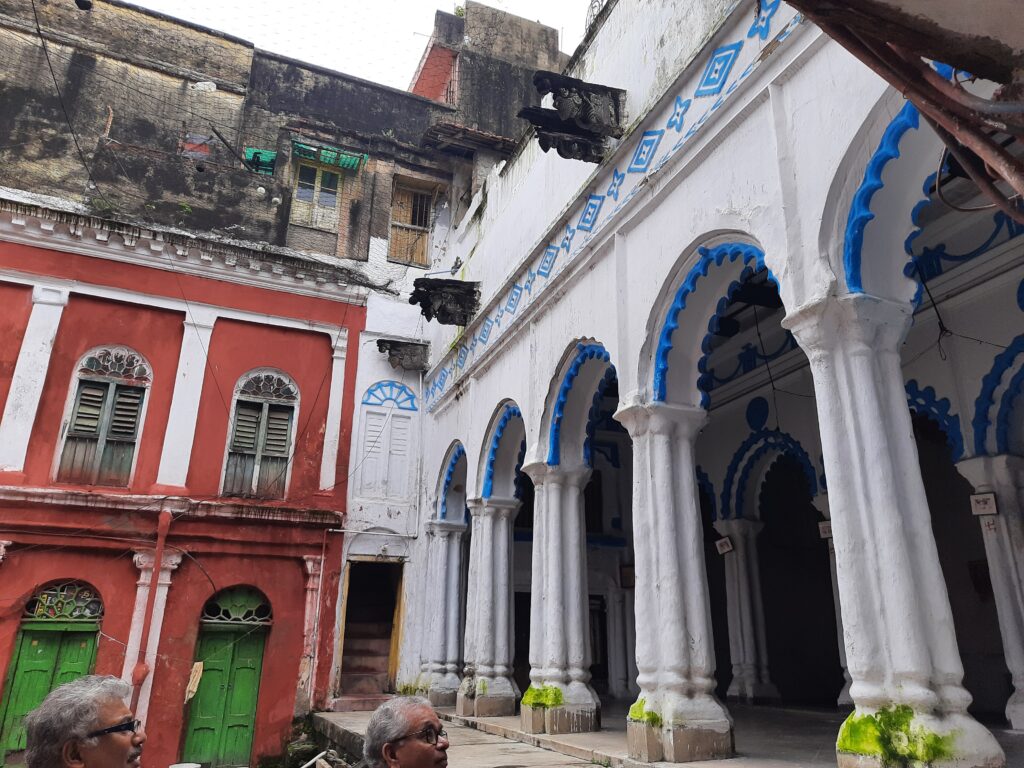
Within the houses, one of the most prominent features was the courtyard or Uthon. This was a large, often square, open-air area around which the house was built. This was the heart of the household, the space where family members gathered to exchange conversation, perform domestic chores, spend leisure hours, or observe religious rituals. In some of the larger houses, there is a raise platform at one end of the courtyard that was used for religious rituals. Courtyards with such platforms were called Thakurdalans.
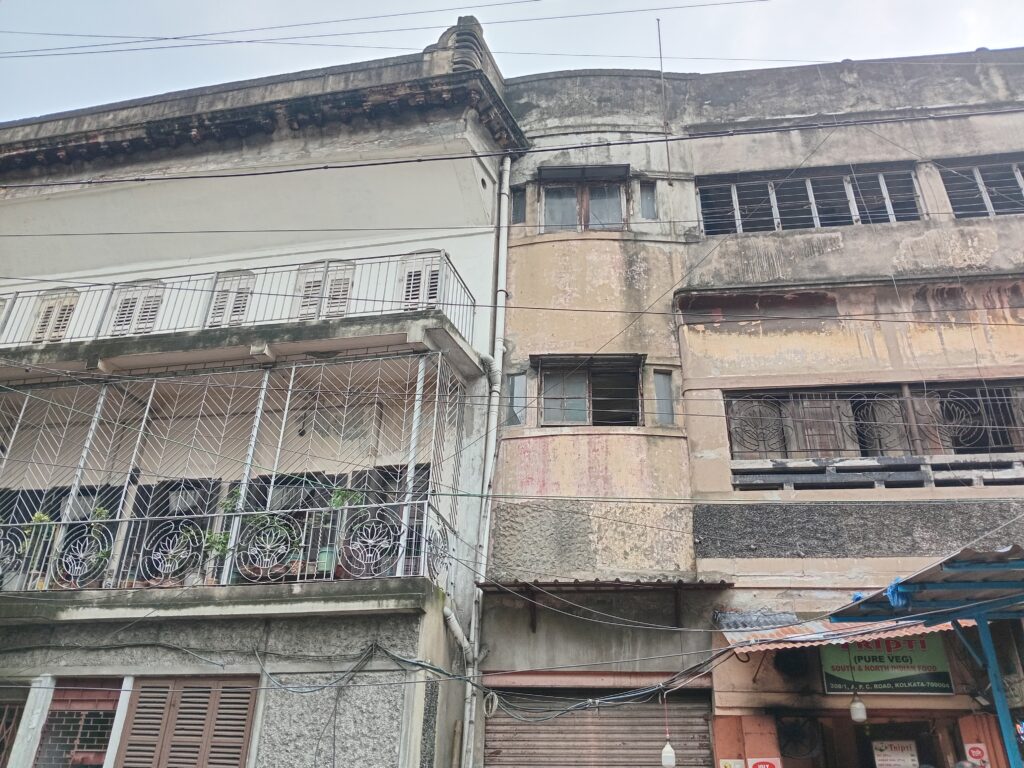
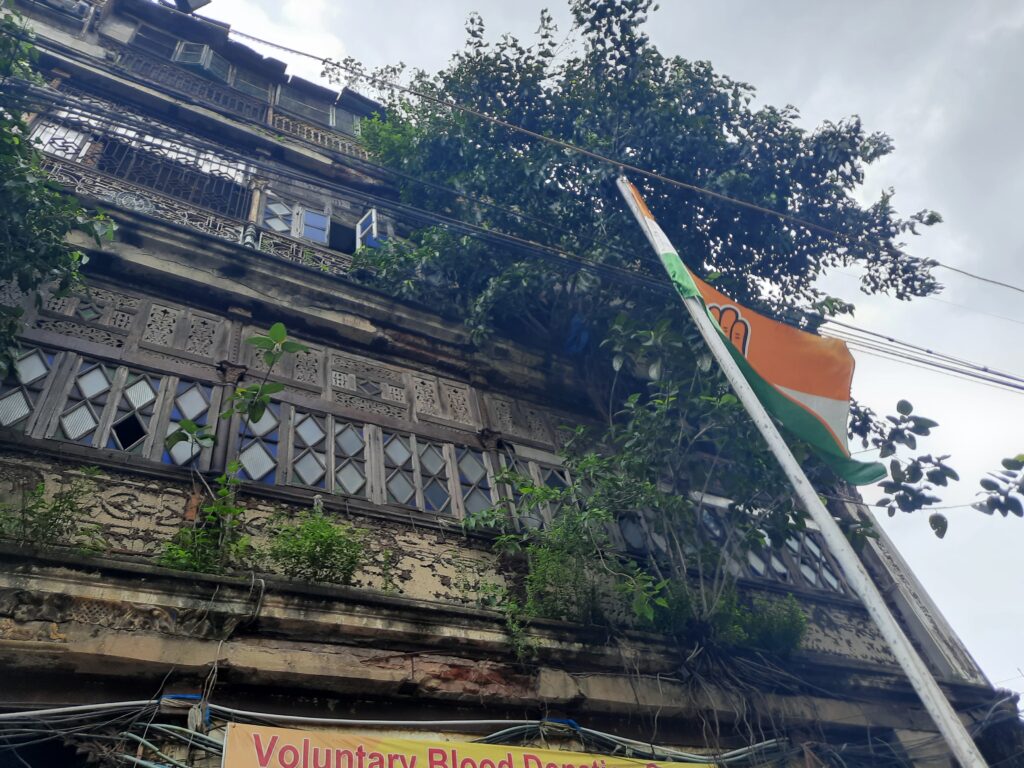
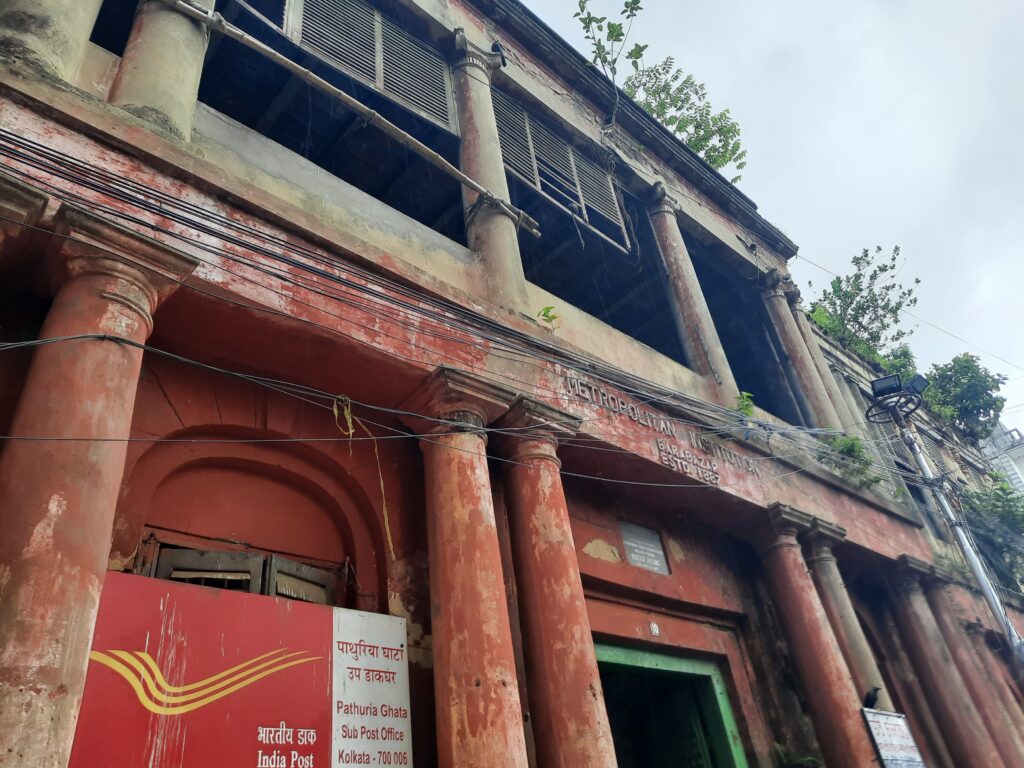
Around these courtyards are found long, open, wraparound balconies that connect the various rooms and parts of the house. In the heyday of such houses, these balconies served as buffer spaces that allowed light and ventilation without the heat or cold impacting the insides of the rooms too much. At times, ornate wooden screens called Jhilmils were placed there as sunshades. The railings of these balconies sometimes sport beautiful wrought-iron grilles with intricate geometric or floral motifs, their beauty often marred or hidden by rust, soot, dust, or nearby buildings.
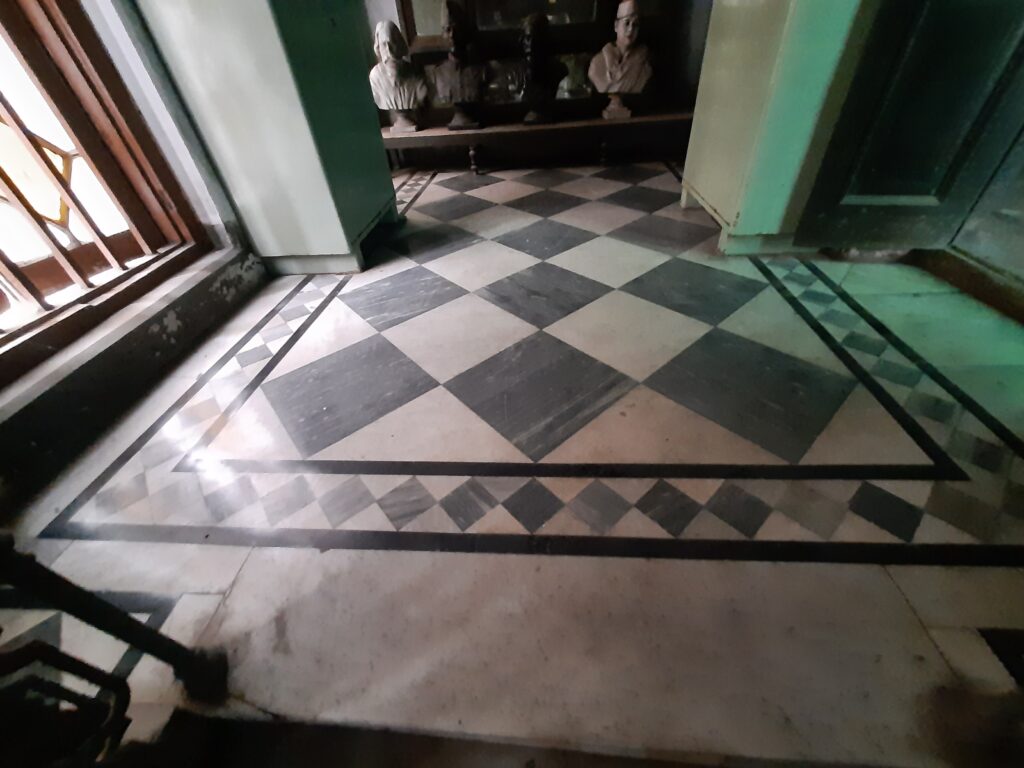
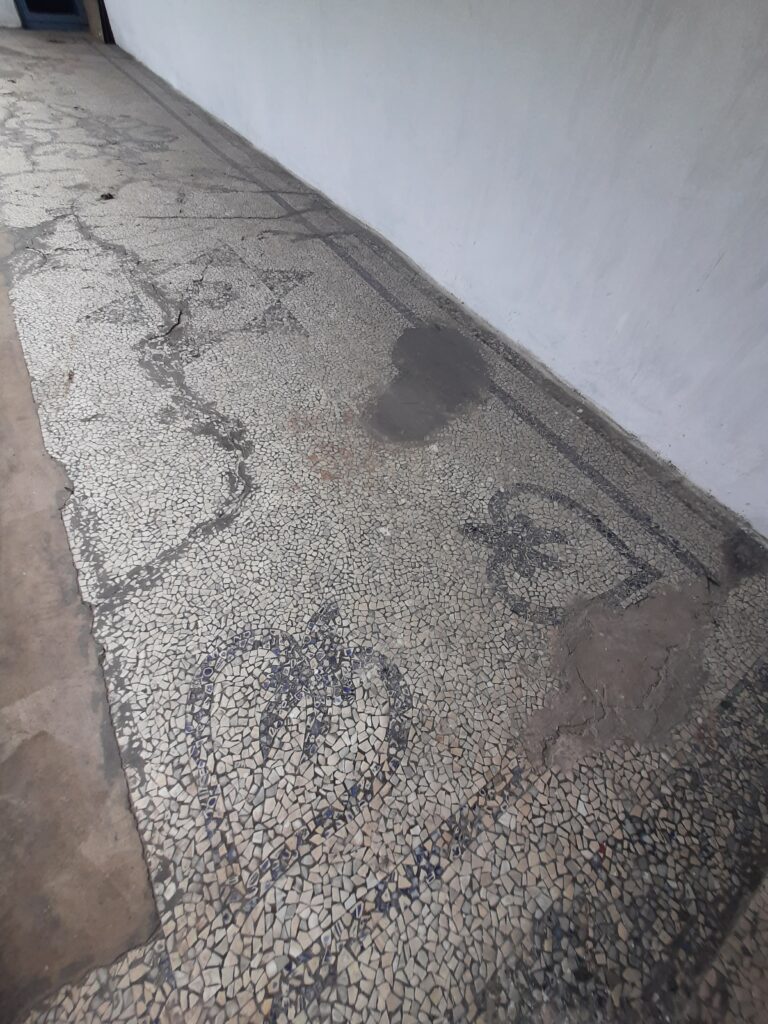
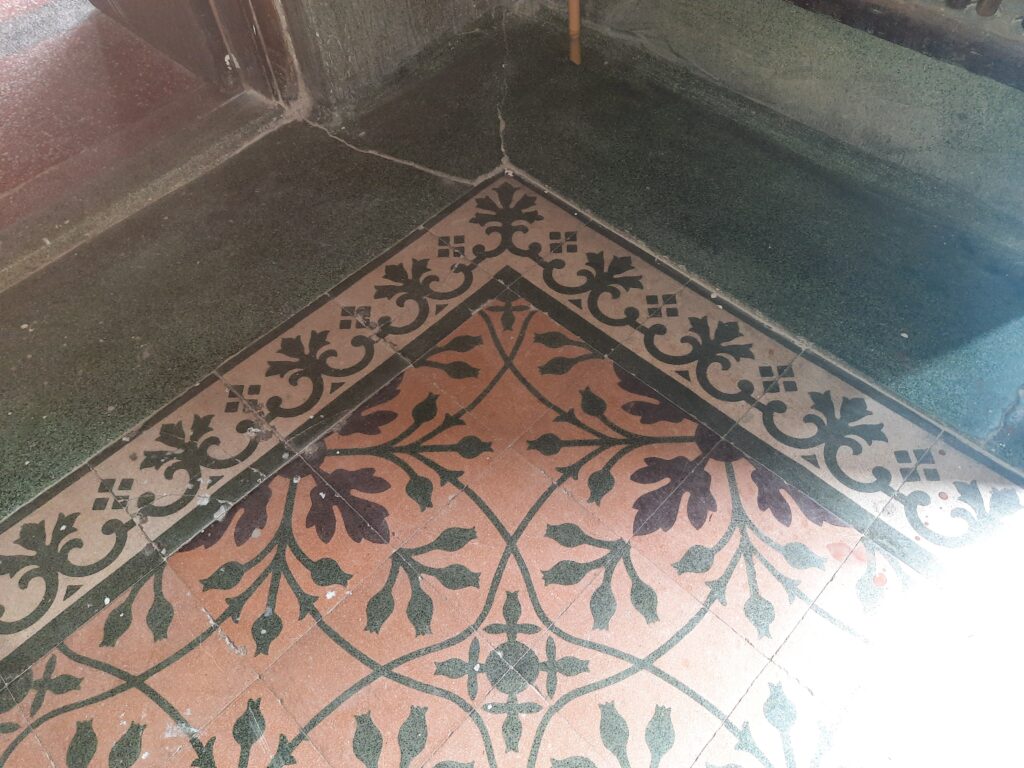
Another of my favourite features about the old houses of Kolkata is their mesmerising flooring. Some have red oxide floors, while others have beautiful tiles that were often imported. One of the most common patterns—and one that I absolutely adore—is the black and white checkerboard pattern of tiling. Some houses also have beautiful mosaics created with small chips of stone or marble, hemmed in with intricate borders. There is something very soothing yet glamorous about these floors that modern tiles somehow just can’t live up to. What’s more, these floors were often naturally thermostatic, helping to keep the house cool during summers.
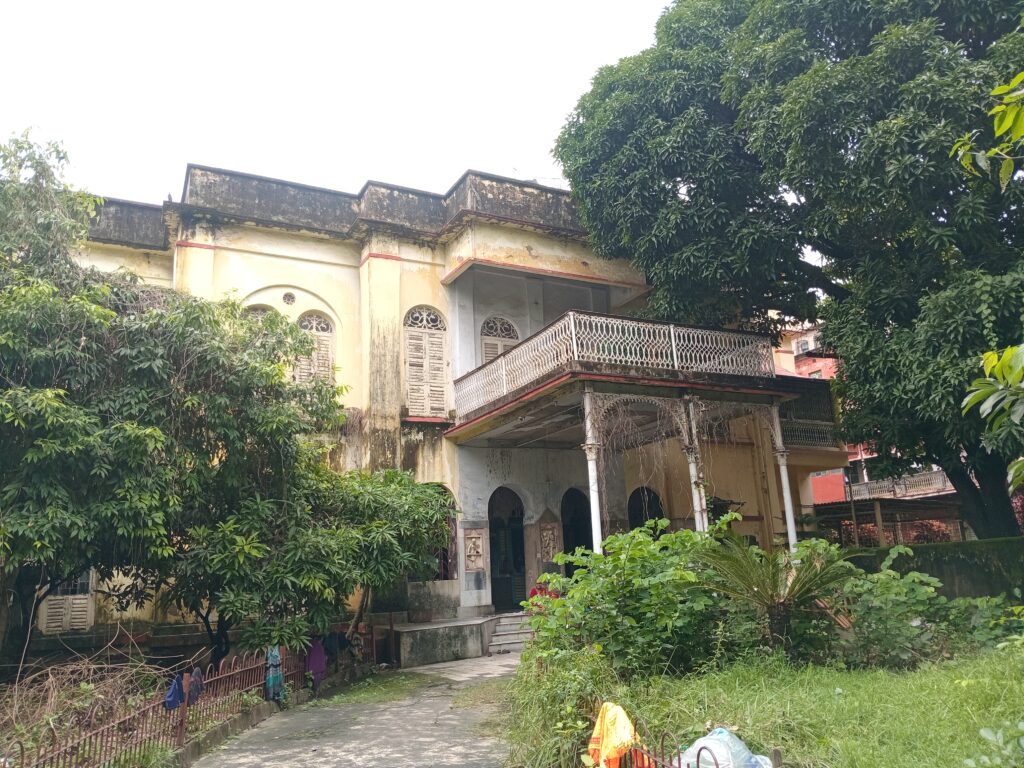
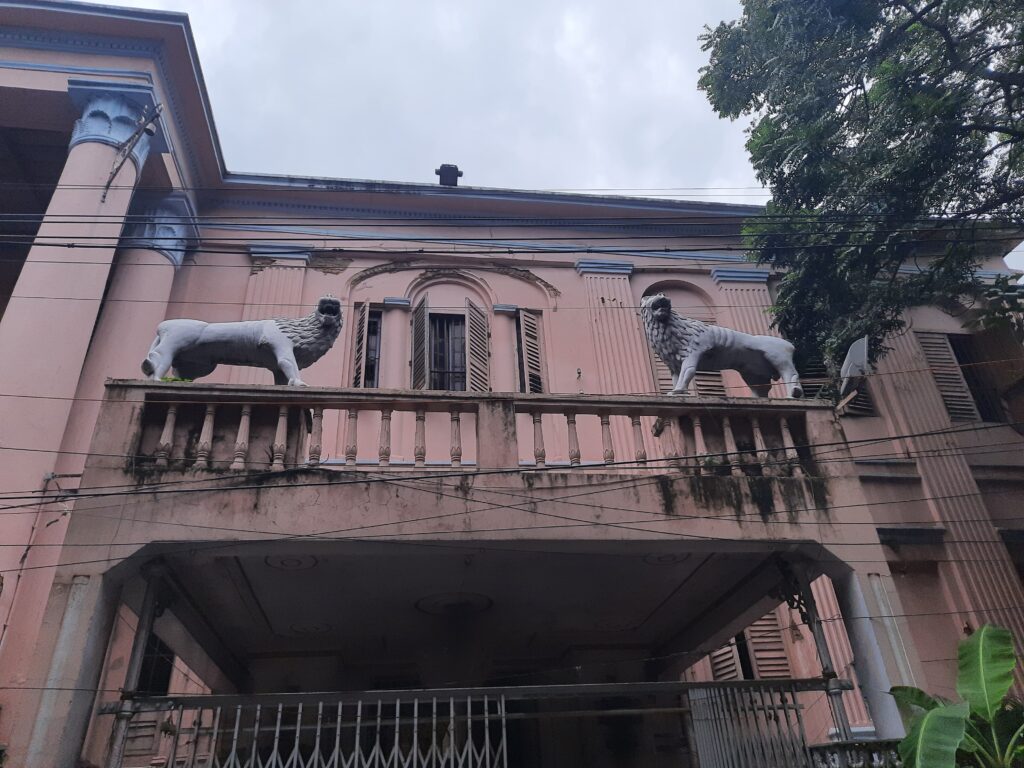
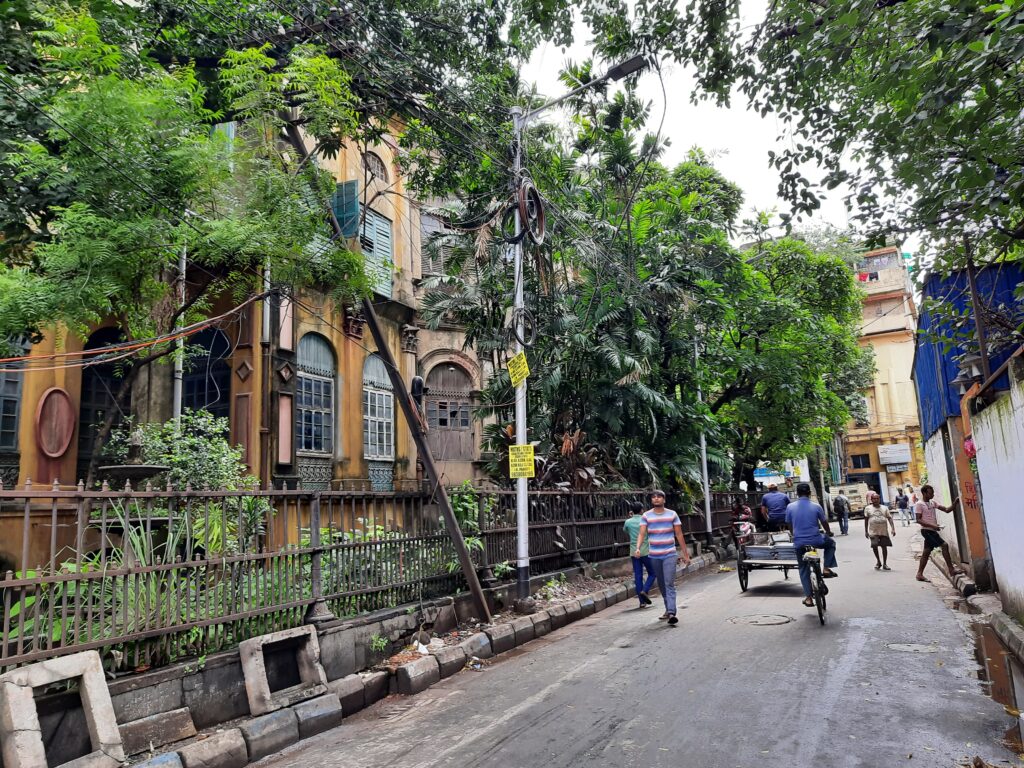
There is so much more to these old houses of Kolkata than crumbling brickwork and dilapidated facades, though increasingly the older ones of the lot are succumbing to these depredations of time. The reason, I am told, is that it is financially more viable for the owners to let them decay and collapse or get demolished than to invest in their upkeep as they cannot expect to make enough returns. While one can understand that, it is still heartbreaking to see the state some of them are in. And though crumbling old houses send a pang through the heart, old houses turned into chawl-like hovels full of filth and stink hurt even worse. On those occasions, it seems that leaving them empty might have been a saner and more sanitary choice.
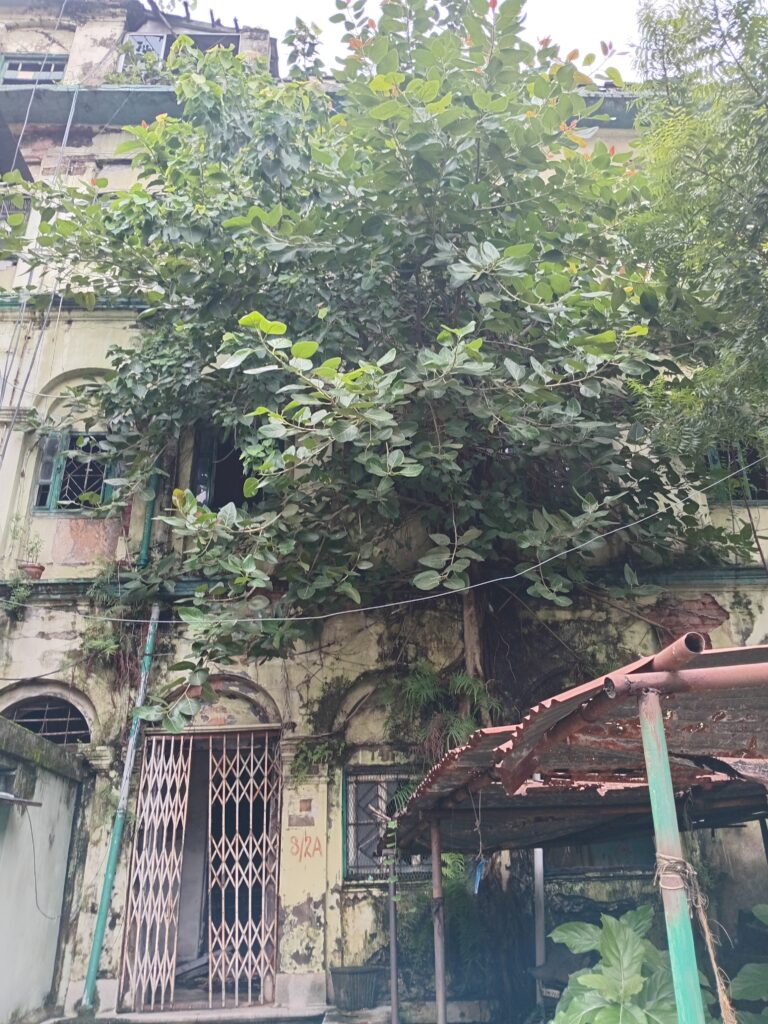
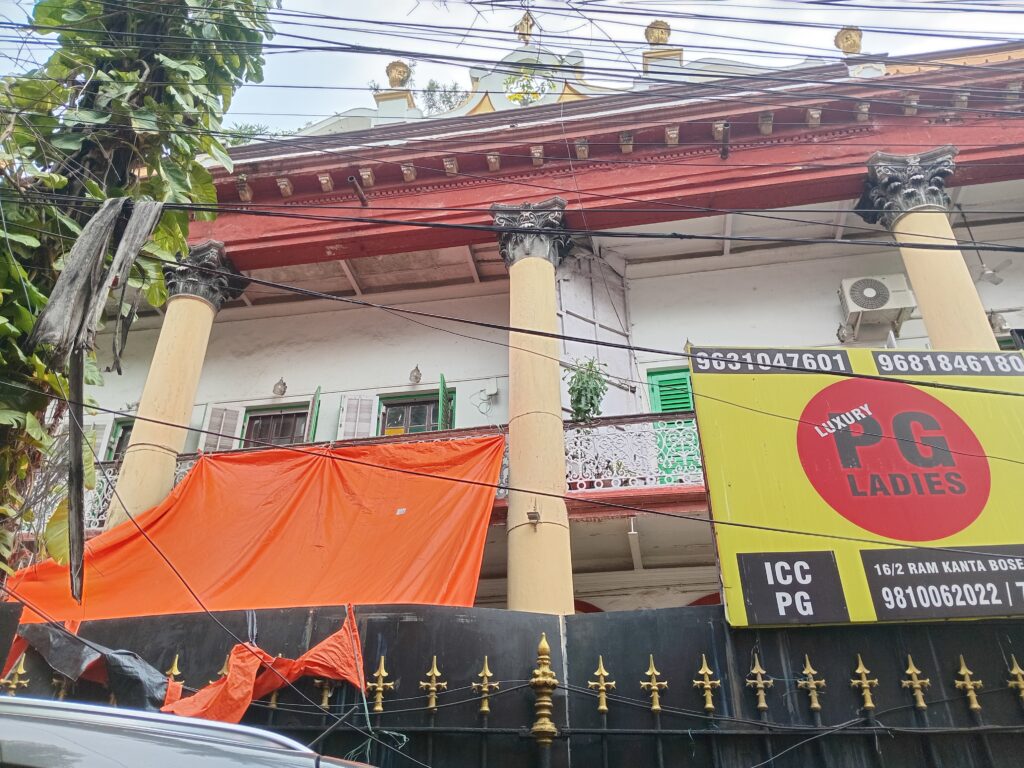
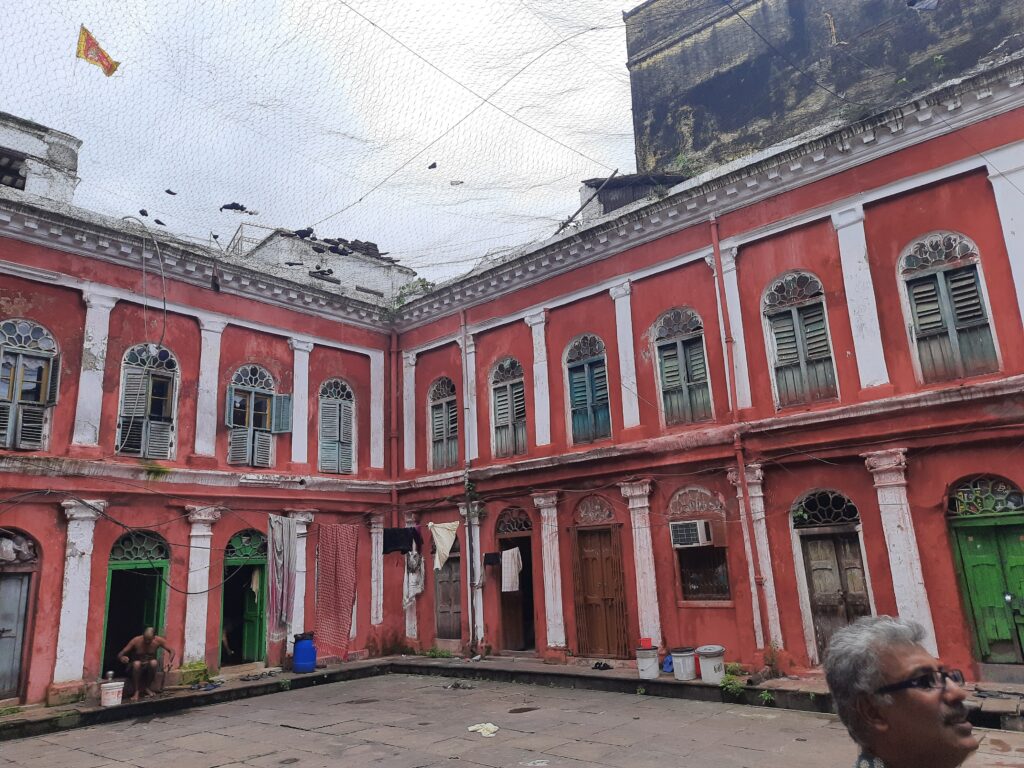
The house that Manik, my protagonist, lives in is also one such old house. Though it is in a fairly liveable condition, it is not entirely in a condition that screams prosperity. Part of that choice is deliberate, part is through necessity. As I have mentioned in one of my social media posts, the house is inspired by and based on the houses in Hazra Road, especially one particular house, in central Kolkata, one of the older prosperous areas of Kolkata.
Just standing in front of any of these houses, I feel like they aren’t just edifices. They are entire epics of the lives of people who lived in them or still do. They stand as silent witnesses to the ebbs and tides of the city that has seen so much drama and revolution in the past few centuries, not all of it for the best. These houses aren’t merely brick and mortar; they are a testament to a way of life that has quietly vanished while we were chasing progress and development. Does that make me a maudlin fool? Maybe it does, but anyone who isn’t inspired to a little sentimentality by these houses probably needs an injection of epinephrine to get their heart beating again!
#AtoZChallenge
#BlogchatterA2Z
#Kolkata
#cityofkaali
#oldkolkatahouses
This post is a part of Blogchatter A2Z Challenge 2026

Leave a Reply