Hi folks!
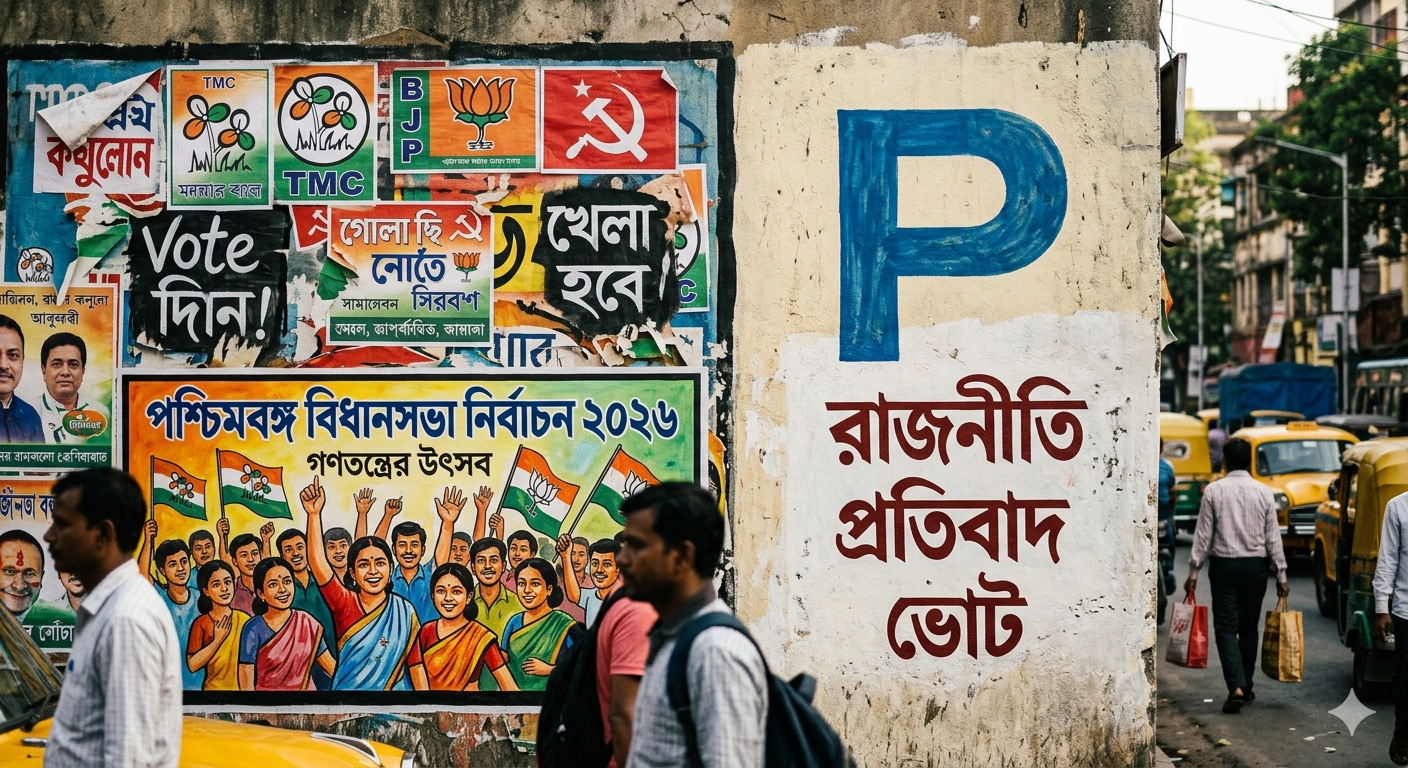
I have a small confession to make. This post was originally supposed to be about something else. But hearing my father proudly talk about the 92% polling in the ongoing Bengal elections, I just couldn’t resist taking up this topic instead. Fair warning, though. If you are looking for astute political analysis, this is not the right post for you.
Talking of elections, there’s a popular one that’s been around a good long while. A young man runs into a polling centre, panting, and asks the official, “Has Shrimati Lakshmi Devi already cast her vote?” The official checks his records and replies, “Yes, just five minutes ago.” The youth wails, “Oh no! I missed her this time too!” Concerned, the official asks him what the matter is. The young man explains, “She is my late grandmother. Ever since passing away a decade ago, she has been turning up to vote in every election—corporation, state, general. Every time, I miss her, and this time too I was too unfortunate to arrive in time to meet her one more time!”
I’m told that this kind of situation no longer happens thanks to the vigilance of the forces deployed during elections in Kolkata and elsewhere. However, that doesn’t mean that the usual shenanigans were missing this time around. In fact, new trends have been doing the rounds this election season, and I’ll come to those in a bit. Before that, I want to talk about a lesser-known epithet of Kolkata. All of you must have heard of the epithet City of Joy. Another well-known epithet is City of Palaces. But how many of you have heard of the epithet “Michhiler Shahar”, i.e., City of Protests?
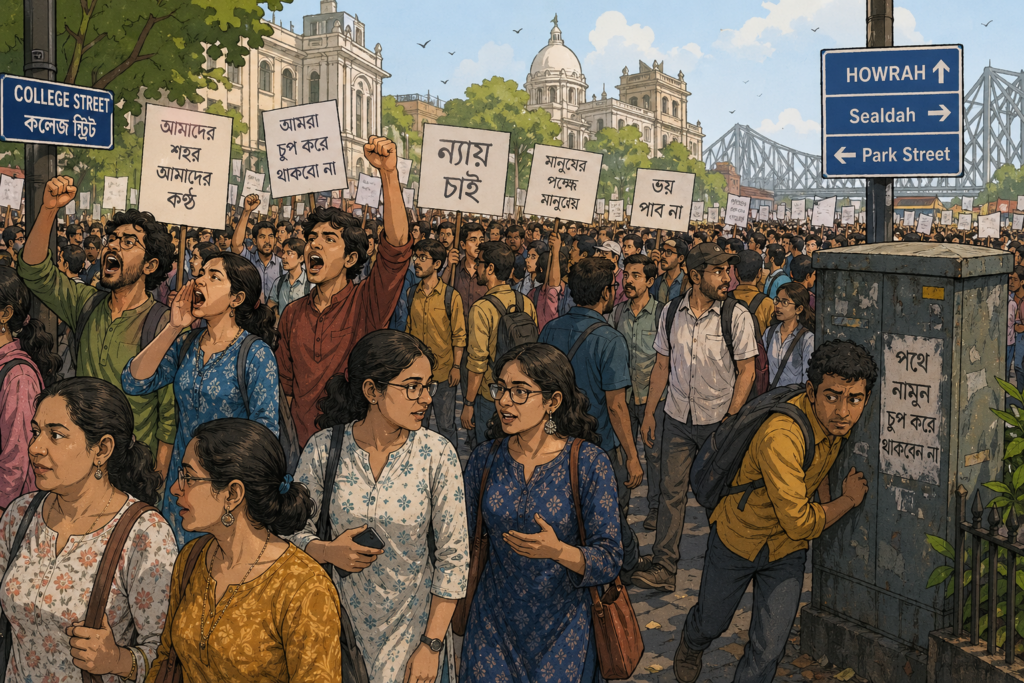
Even Google can’t tell you how many protests take place in Kolkata annually. It will sheepishly declare that the number is uncountable as protests range from local neighbourhood agitations to citywide protests that inevitably and inexorably centre on the Maidan (about which I have mentioned in my post on Esplanade). The causes of the protests can be anything from lack of teachers to hiring of teachers, lack of industry to establishment of industry, the sitting government to protests against the sitting government.
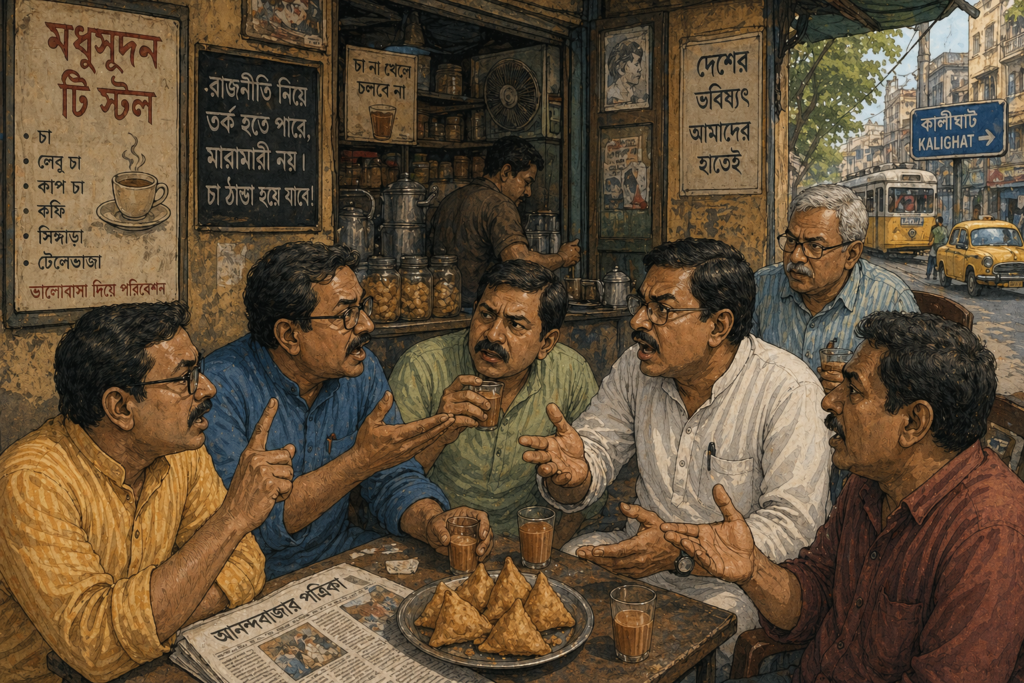
Protests are the lifeblood of Kolkata’s work culture, providing an untaxable source of income to some and an excuse for reaching late to work for others. They are also a great training ground for students, who learn to participate actively in the country’s democratic process, and also manage to secure an undeniable excuse for poor attendance in classes. It is said that if three Bengalis gather, two of them are planning a protest, while the third is looking for tea!
While there is no doubt that among the attendees, many are genuinely involved in demanding change, some just turn up because their friends are going or because they find their calendars strangely empty of any other engagement. In fact, anyone wishing to do a study on human motivation for psychological or sociological purposes need only talk to a few of the attendees of a Michhil to obtain a fairly wide range of data points! Some, of course, are there simply to bide the time until the fateful packet of Biryani arrives at the end.
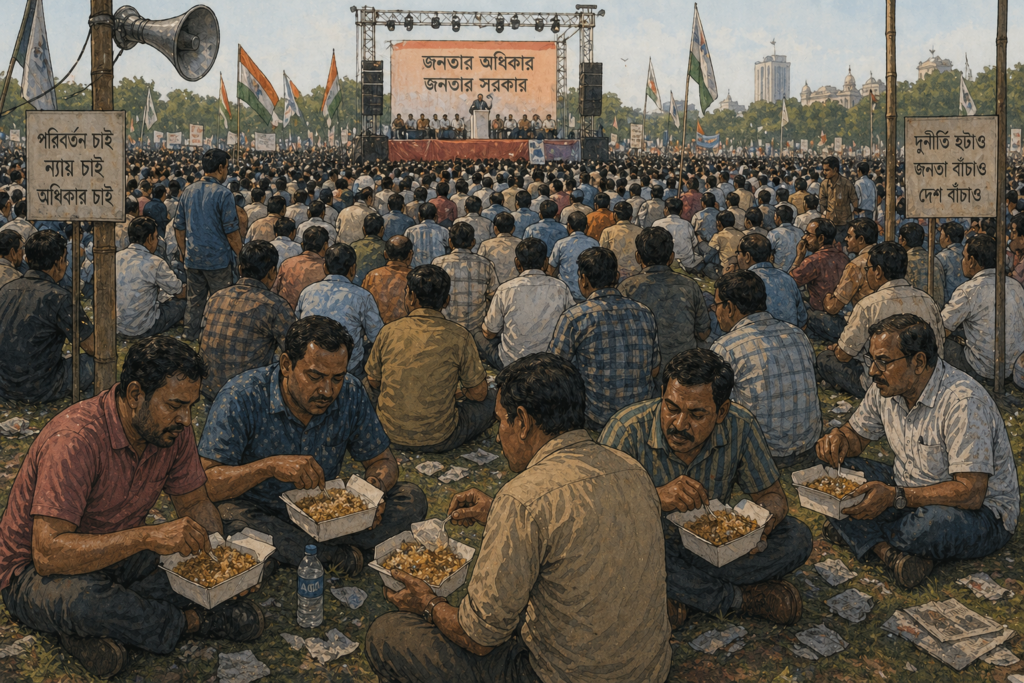
Anyone spending any length of time in Kolkata will have their own Michhil stories, good and bad. My husband, who grew up in the city, talks about a time when he and his fellow students were co-opted by the student wing of a political party to join in a rally. Not being particularly enthusiastic about it, a handful of them joined the queue of students right at the back. And while the student leaders were leading the line towards the main rally, these few lads slipped away, jumped the college walls and escaped! Not that they were alone in conceiving such a brilliant strategy to shirk their involuntary political participation; evidently, by the time the queue reached its destination, it was significantly shorter than it had been at the beginning.
Being Bengali means being political and has for generations. We are an opinionated people, and nowhere do those opinions get aired more than at gatherings where politics is discussed. Friendships get built and broken, lifelong grudges get formed, and even seeds of divorce are sown in these discussions where everyone from the Head of the Para Pujo Committee to the fishmonger in the local market has an opinion and isn’t afraid to express it. Whether the opinion is logical, fact-based, and valid is moot. What matters is that it is passionately held and even more passionately expressed.
The recent elections have seen lakhs of such discussions in every house, market, and street corner of Kolkata alongside slinging of slogans and accusations of every hue and shade. Street corner tea stalls have rivalled news channels for political commentary and debate, with neighbourhood Kakus and Kakimas holding forth on their arguments with as much passion and as little foundation as experts on TV. The atmosphere has reached the fever pitch of a World Cup where Brazil has reached the semis. Local gatherings have turned akin to Durga Puja Committee meetings, minus the impending puja, but with the same level of shouting, snacking, and tea!
In the political arena, the parties and politicians have been making moves to put GoT’s most cunning strategists to shame. Rallies with a level of drama that Shakespeare would have drawn inspiration from have kept the lives of the denizens of Kolkata entertained. From TMC candidate Partha Hazari suddenly deciding to make chapatis in a local’s kitchen to Prime Minister Narendra Modi stopping his convoy in Jhargram to eat Jhalmuri to CPI-M “resurrecting” late CM Buddhadeb Bhattacharjee via AI for video appeals, our political leaders have kept the populace thoroughly amused.
Not to be left behind, the Election Commission has contributed its fair share of hilariousness. At one point, it banned all motorbikes to prevent “miscreants” from getting around, only to realise that it had brought the entire city’s home delivery infrastructure to a halt, to say nothing of numerous commuters. The ban was withdrawn shortly after coming into effect. And in an ultimate example of irony, 65 poll officials found their names struck off the very voting lists they were supposed to manage. All in all, it has been a pretty diverting lead-up to the polls this year!
The slogan game has also reached new heights, almost reaching meme-like immortality, with city walls serving as the canvas of artistic (and literary) mud-slinging and sloganeering. From hijacking Tagore’s poem “Kumor Parar Gorur Gadi” to caricaturing national leaders to depiction of “flying slippers” in full attack mode to “capture” of walls with fervour to rival armies capturing and recapturing territories during World War II, this election has seen it all. Slogans like “Jotoi karo hamla, abar jitbe Bangla” (no matter how much you attack, Bengal will win again), “Banchte chai, BJP tai” (to survive, we need BJP), “Paltano darkar, chai BJP sarkar” (change is needed, we want a BJP government), and “Bodol noy, badla chai” (We want revenge, not change) have gone viral.
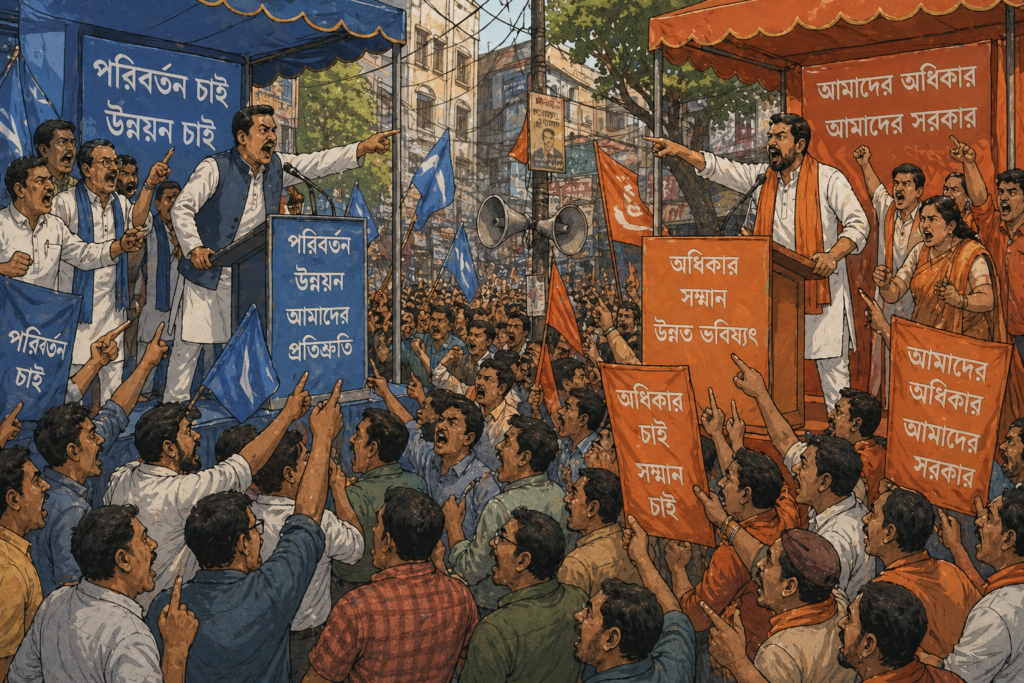
On a slightly serious note (only slightly), the fact that such a massive number of people have turned up to vote is truly heartening. Whereas most states struggle to get people to the polling booths, using tactics ranging from distributing cups of tea or coffee to hiring buses and trucks to ferry people, Kolkata’s voters have shown a steely determination to let nothing get in their way of exercising their democratic right. As I have mentioned multiple times before, in City of Kaali, I steer clear of “real” politics deliberately. Politics in West Bengal has been—and will likely continue to be—far too complicated to do justice to within the boundaries of that work. However, if I were to ever include anything about politics in it—real or otherwise—you can be certain that it will be in the same vein as I have done in this post.
#AtoZChallenge
#BlogchatterA2Z
#Kolkata
#cityofkaali
#elections2026
This post is a part of Blogchatter A2Z Challenge 2026

Leave a Reply