Hi folks!
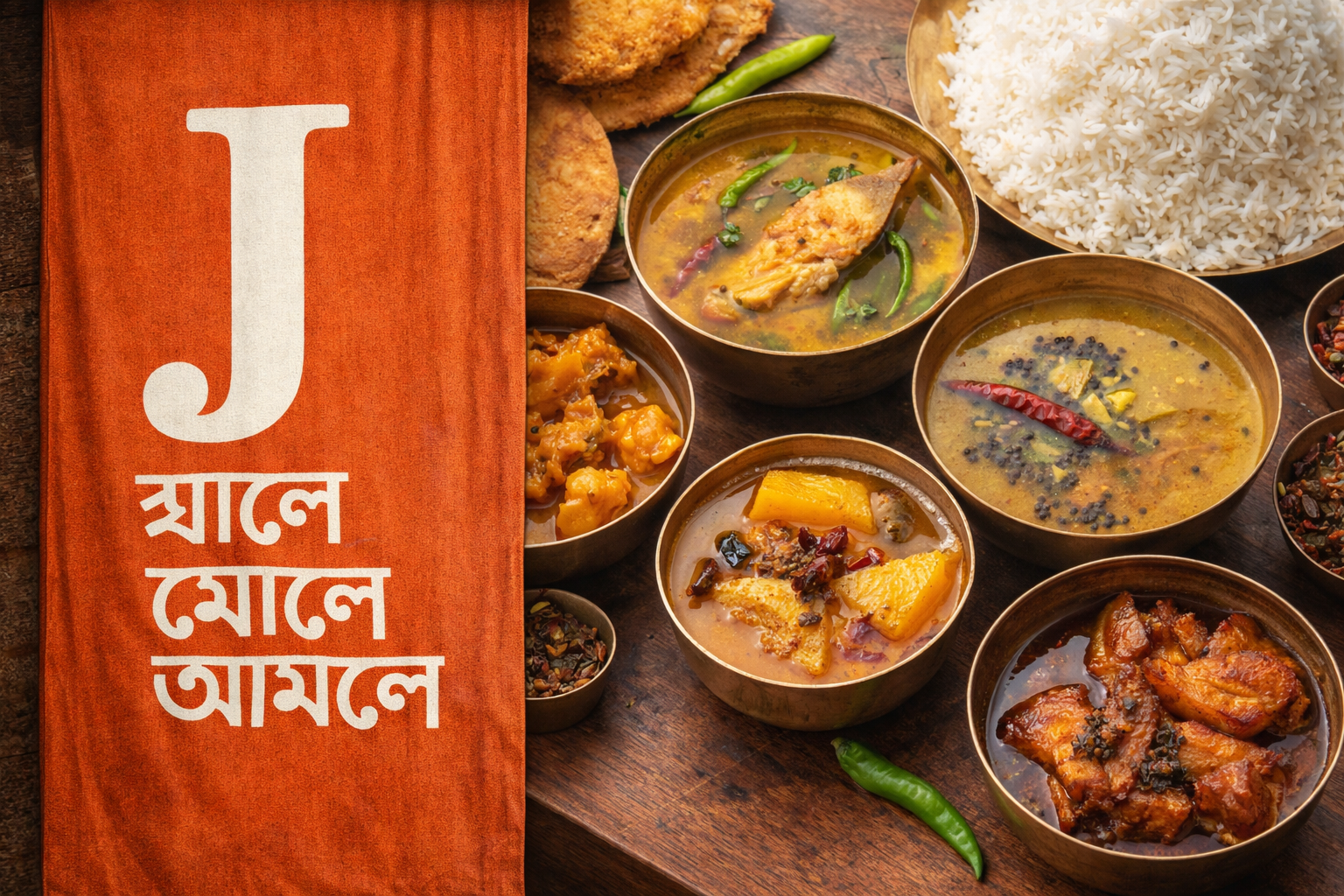
If you walk into a Bengali restaurant, you will be greeted by delicious dishes with thick gravies and rich preparations. That is also the kind of food you will often find my series’ main character, Manik, eating. While such dishes form an important and appealing part of Bengali cuisine, they don’t necessarily represent all of it. In fact, the main body of Bengali cuisine is made up of far more simple dishes—embodied by the saying “Jhale-Jhole-Ambale-Machhe-Bhate Bangali”, meaning (roughly translated) “Bengalis live on hot curry, light gravy, sour gravy, fish, and rice”.
Fair warning, I am not a professional chef or an “expert” at Bengali cuisine. I have, however, been cooking “regular” Bengali food for myself and my family for over three decades. Food is important to me, and not to brag, but I am a pretty decent home cook, especially of traditional Bengali dishes. My great ambition is to one day publish a cookbook of these dishes that I have inherited from my ancestresses who have added their own little twists to them. Anyway, here’s my attempt to share my thoughts and experience of basic food that is prepared in the kitchens of most Bengali families.
Before we go to the types of dishes, it might be a good idea to talk about a few culinary terms. First is “phoron”. We Bengalis start many dishes by frying whole spices or other flavouring agents before adding the main ingredients. This is called phoron. A related term is “paanch phoron” which literally means 5 phorons. It is a mixture of 5 whole spices: cumin, nigella seeds, yellow mustard, fenugreek seeds, and fennel seeds. It gives off a pungent, garlicky fragrance and adds a slight tartness to the flavour. Another key term to understand is “jhol”. While also the name of a type of dish, it refers to the watery portion or gravy of any dish. So, in this post, if it is spelled as Jhol, it refers to the dish, and if spelled as jhol, the word refers to the gravy.
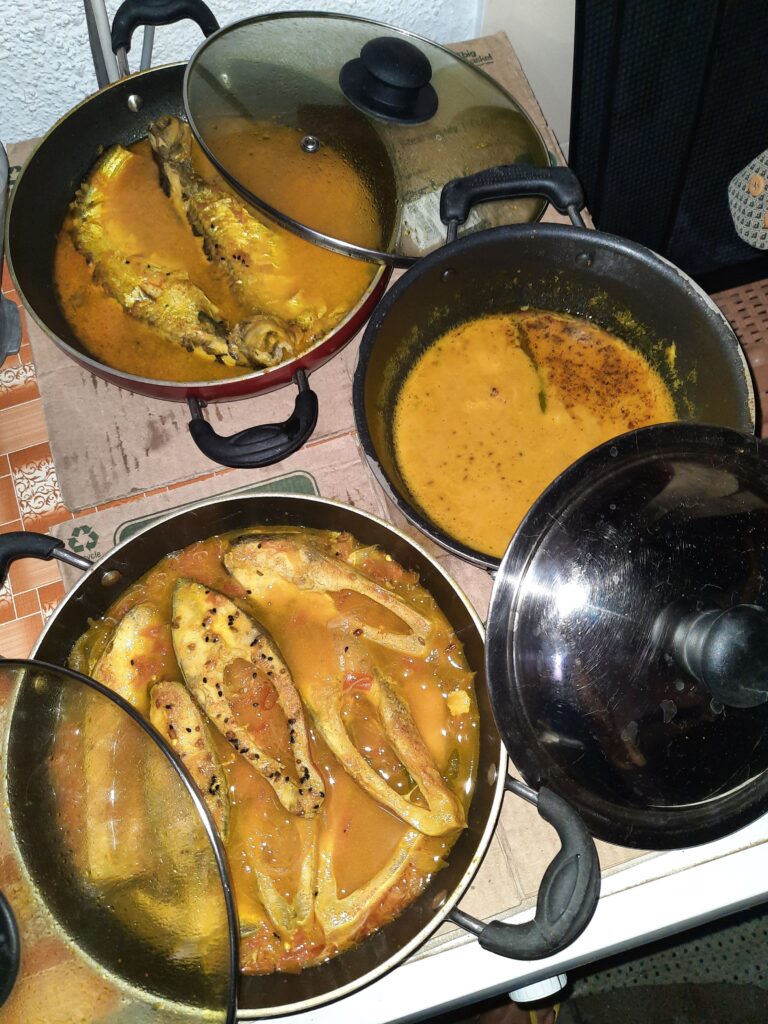
Let us start with Jhal or hot curry. “Jhal” literally means “hot” or “fiery”. It is one of the most popular types of curries prepared in households. The phoron is usually nigella seeds or paanch phoron. Green chillies are almost invariably used for the heat, though sometimes red chilli powder and mustard paste are also used to create a more layered flavour profile. Its jhol is less in volume and comparatively dense. Popular ingredients for Jhal include fish, meat, boiled eggs, cauliflower, brinjals, etc.
The next item is Jhol, and it is immensely popular in the current season. Jhol is usually made with a phoron of cumin, nigella seeds, paanch phoron, or other common whole spices. The ingredients are usually those that retain a solid or mostly-solid texture after cooking. This type of dish is very light with a lot of watery jhol. Seasoning is very basic with salt and turmeric powder being the most common ones. Because it is not a glamorous item, it isn’t often found in its true form in restaurants. Popular ingredients include green papaya, cauliflower, green banana, brinjal, potato, fish, eggs, chicken, etc.
The third item in this list is Ambal or Tok (meaning Sour), which is unfortunately going out of popularity slowly. It is also one of the most confusing types of dishes in Bengali cuisine. You will find it variously described as a runny chutney, a tangy condiment, a liquid pickle, and so on. However, in any self-respecting Bengali cookbook, it finds its place firmly under curries, both vegetarian and non-vegetarian. It is, essentially, a sour curry made with tamarind paste or seasonal sour ingredients like raw mangoes or elephant apple (seriously! It’s like every other fruit is an “apple” of some kind!!!). Popular main ingredients include fish and various types of vegetables.
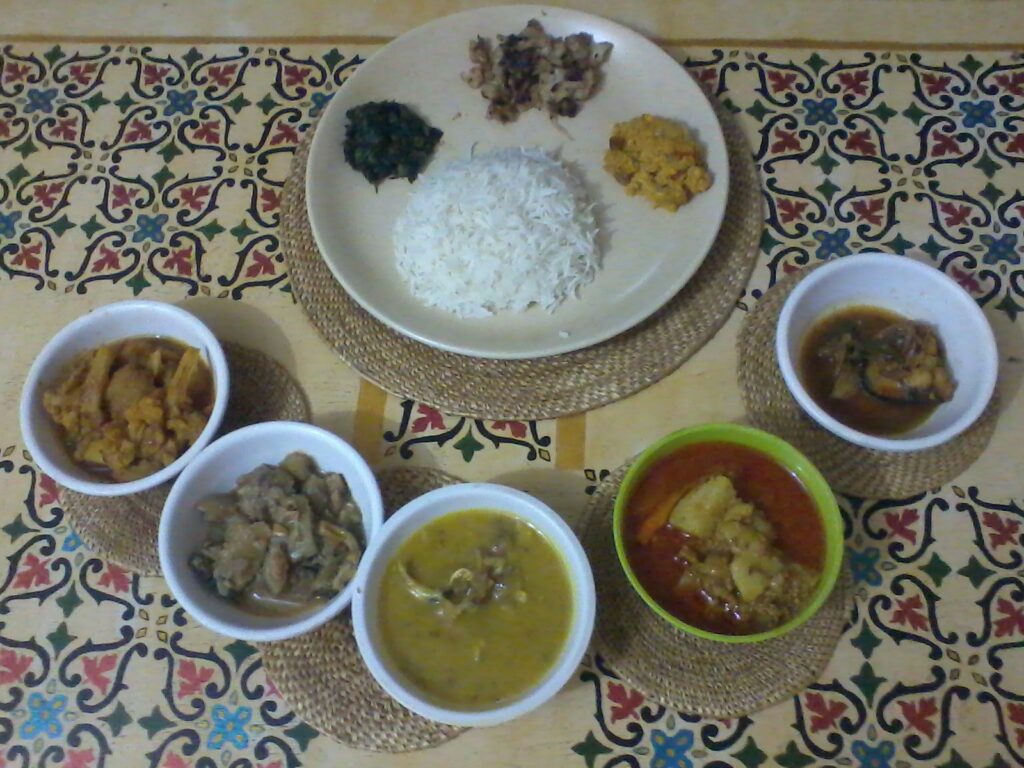
Now, going beyond the titular dish types, let me talk about Ghanto. It stands apart from the previous three by dint of being a dry item rather than one with jhol. It is made with shredded vegetables like raw papaya, banana flower, radish, raw jackfruit, etc. Phoron is usually dried bay leaves, dried chillies, and cumin. Sometimes diced potatoes, Bengal gram, or bodi (dried lentil nuggets) are added. Its taste can range from slightly sweetish (though not sweet) to quite hot. A unique exception is Muri Ghanto, which is made with fish head and rice rather than vegetables.
Not to be confused with the previous item, the next one on our list is Ghaent or Chochchori. Another dry or semi-dry dish, it is a mishmash of ingredients, typically those that become semi-solid or mushy when cooked, e.g., pumpkin, brinjal, various green leafy vegetables, etc. These might be mixed with items that retain their texture (like potatoes) as well as non-vegetarian ingredients like (of course!) fish. Phoron is often paanch phoron, and the flavour profile is non-spicy. It’s one of the best items to make when you have a little bit of many ingredients in the house but not enough of any to make a whole dish.
A similar item to Chochchori is Shukto, though the flavour profile is predominantly a combination of bitter (through use of bitter gourd) and bland, with just a tiny amount of heat and sweet to balance out the bitter. It is an excellent palate cleanser and a great item to have during the summers. Again, it is an item with a mixed texture and almost no jhol. Oddly enough, it is also one of the dishes most restaurants (and people) don’t do well. One of the most complex dishes in Bengali cuisine, Shukto can be made with watery ingredients like gourd, raw papaya, green leafy vegetables, etc. A dash of poppy paste and mustard paste are often added.
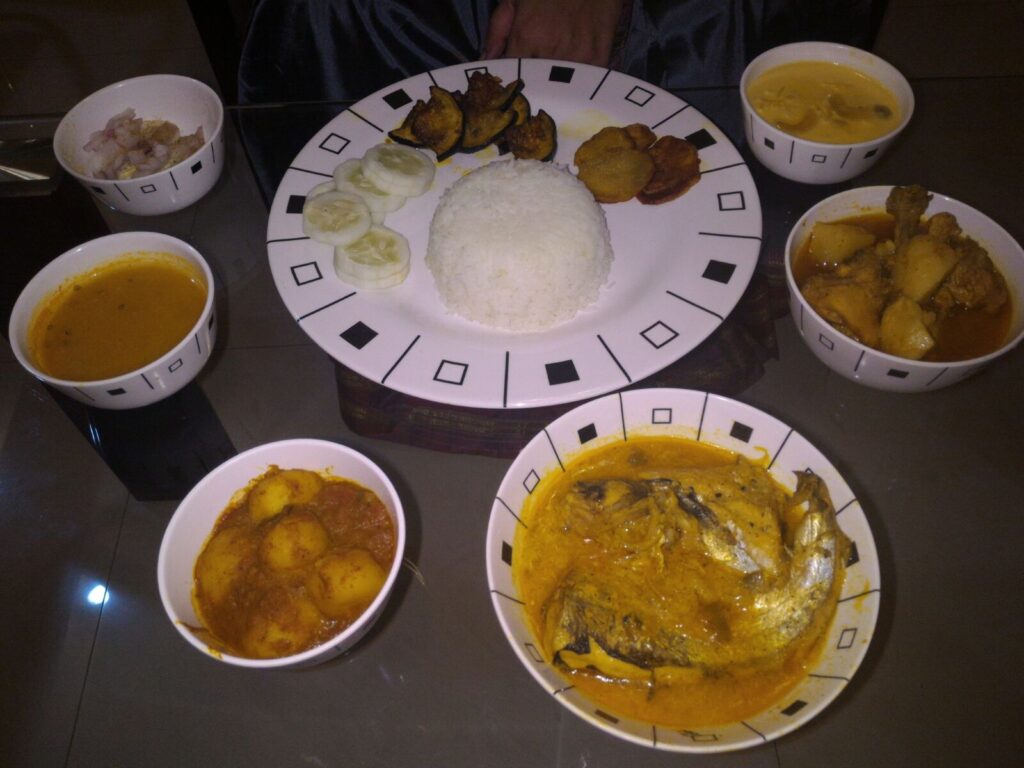
The last dish type I’ll discuss is texturally somewhere between wet and dry: Dalna. The name might be misleading as it includes “Dal”, but it literally means “not Dal”, though I have no clue why. It is also the richest of the regular items made in Bengali homes, with onion, garlic, and tomato pastes often used to make the base gravy. It also uses garam masala as a key flavouring agent. Again, you can have both vegetarian and non-vegetarian Dalna, with ingredients like chhana (paneer), eggs, cauliflower, raw jackfruit, pointed gourd, etc. being popular.
The daily culinary palette of a regular Bengali household includes many other types of simple, healthy, yet tasty dishes like Dal, Chhenchki, Chhakka, Shaak, etc. I am not going into all of those to avoid making this post too long. But the next time you are at a Bengali restaurant or going to eat at a Bengali friend’s house, do try out some of these. And keep an eye on the next books in the City of Kaali series to see if Manik manages to transition to a healthier diet!
#AtoZChallenge
#BlogchatterA2Z
#Kolkata
#cityofkaali
#bengalicuisine
#bengalifood
This post is a part of Blogchatter A2Z Challenge 2026

Comments
4 responses to “J is for Jhale-Jhole-Ambale”
Nice to know about Bengali cuisine, along with detailed descriptions of a few basic terms.
Thank you.
Such a flavorful piece. The way you brought “Jhale Jhole Ambale” to life goes beyond food and feels like a celebration of culture, memory, and sensory experience all at once.
Thank you so much! Food is more than just food for many of us Bengalis. And I personally have been passionate about traditional cuisine for a long time. This piece was very close to my heart as it took me right back to my mother and grandmother’s kitchens, where I spent a lot of time as a kid.