Hi folks!
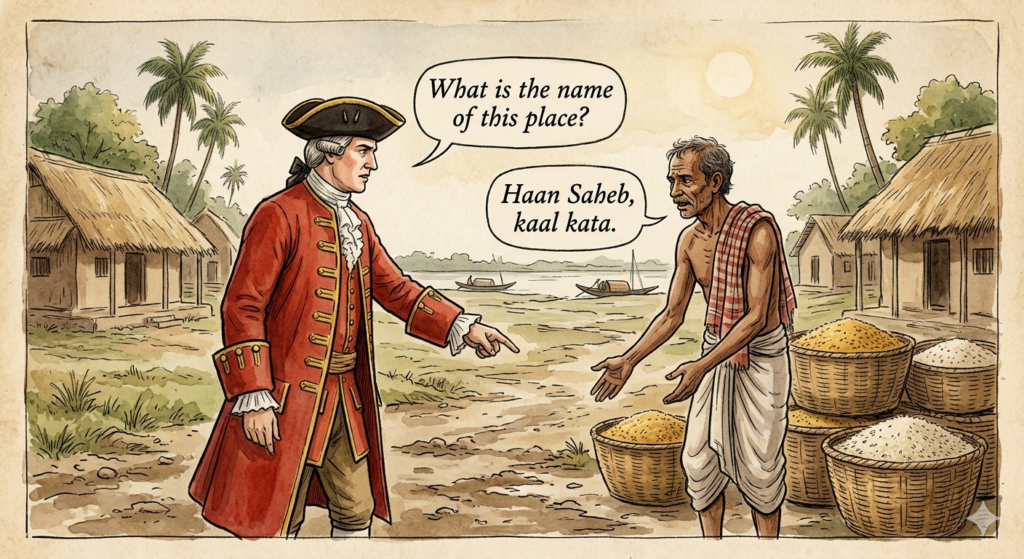
There is an anecdote about how the city of Kolkata got its name. The story goes that when an Englishman landed in what would later become the city, he asked a farmer selling grain what the place was called. He pointed to the ground and asked him the name of the place. The farmer thought that the Gora Babu was asking about his product and replied “Kaal kata” (cut yesterday). And that was how the city was named “Calcutta”.
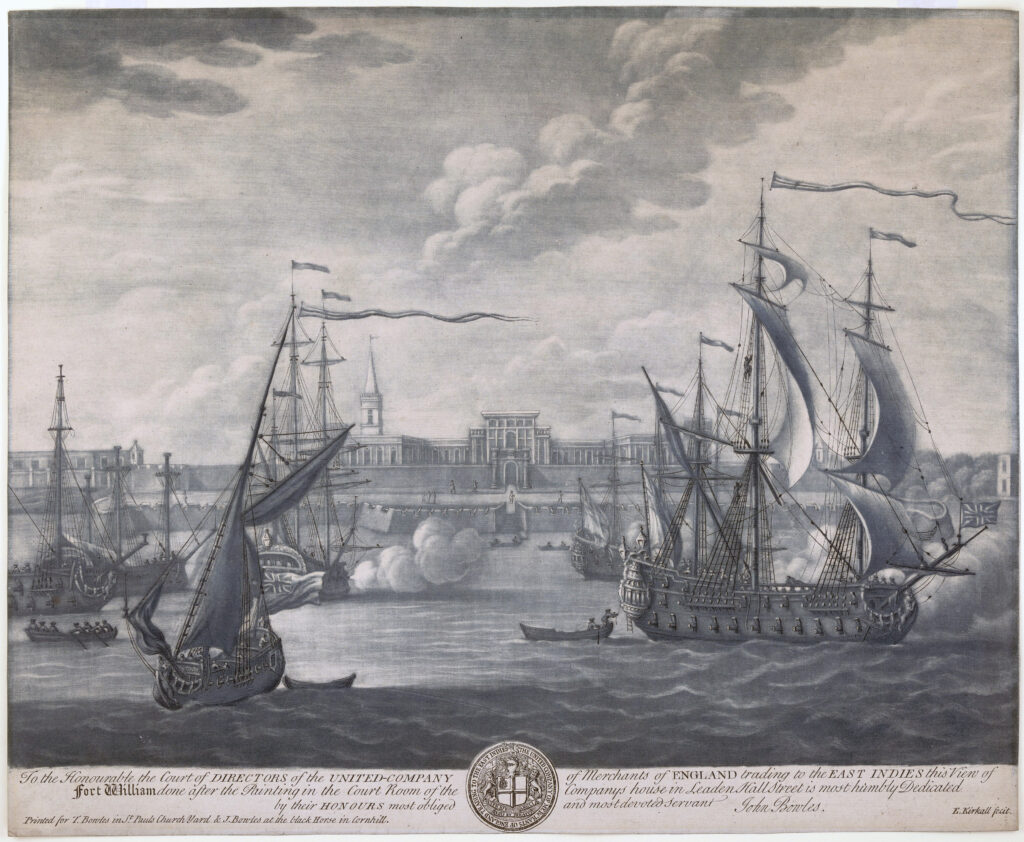
That is, of course, a diverting folk myth about the etymology of the city. In truth, there is no definite answer to the question of how Kolkata got its name and when. Before we go into the question of etymology, a brief history lesson: Job Charnock arrived in India in 1655/56. In 1686, he became the chief agent of the East India Company. His original headquarters were at Hugli/Hooghly on the eponymous river, but he had to move due to the threats of the Mughal viceroy. In 1698, he bought three villages—Gobindapur, Sutanuti, and Kalikata—from the Sabarna Roy Choudhury family to establish the new headquarters.
To this joint area was given the name Calcutta as the British couldn’t pronounce Kalikata. The city grew from there to the one we know today over the next few centuries. For this reason, Job Charnock was considered the “founder” of Calcutta for a very long time. In 2003, the Kolkata High Court ruled that he couldn’t be considered as such since the area had been inhabited from long before his arrival there.
Returning to the etymology of the name, the most popular theory is that the name comes from “Kalikshetra” meaning “land of Kali”. Given the preponderance of Kali worship in Bengal, and specifically in Kolkata, it is not unbelievable. That is also the interpretation I have used in my series City of Kaali. In fact, the netherworld below the modern-day Kolkata in the story is called “Patala Kaalikshetra”.
Some connect the name Kalighat to the modern-day name. Since Kalighat is a believable derivation of Kalikshetra, and a place named Kalighat has existed in Kolkata (or Kalikata) for centuries, this could be a probable origin of the city’s name. Kalighat might be the “middle-man” via which “Kalikshetra” reached “Kalikata”. Or it could very well be that both Kalikata and Kalighat are derived from Kalikshetra. There are a few other theories about how the city got its name: from Kilkila (meaning flat area), from Khal Kata (dug a canal), or from Koli Chun (Quicklime) and Kata (coir), two products for which the area was known.
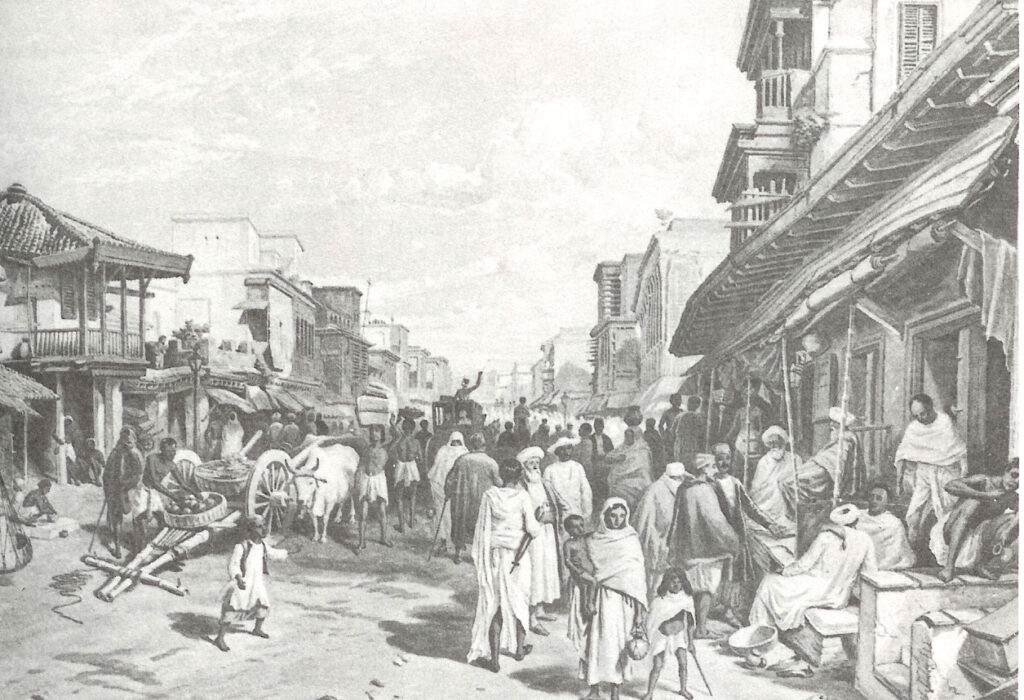
Whatever be the actual origin of the name, what is known for certain is that it has been around for over two millennia. Evidence of this has been discovered through the archaeological study of Chandraketugarh, a site 35 km north of Kolkata. Texts from the 15th, 16th, and 17th century also refer to the village: Bipradas Pipilai’s Manasa Vijay (1495), Mukundaram Chakrabarti’s Chandimangal (1594), Todar Mal’s taxation list in the Ain-i-Akbari (1596), and Krishnaram Das’s Kalikamangal (1676/77).
In 2001, as part of an attempt to shed the colonial legacy, the city was officially renamed as Kolkata from Calcutta. However, you will still find people, especially among the older generations, who sometimes use the older name. Several institutions too retained the word Calcutta in their names, which only makes the Kolkata-Calcutta conundrum more complex and confounding! Interestingly, in Bengali, the village (and later, the city) had been called Kalikata for centuries. It was only with the simplification of the Bengali language that Kalikata became Kolkata in Bengali.
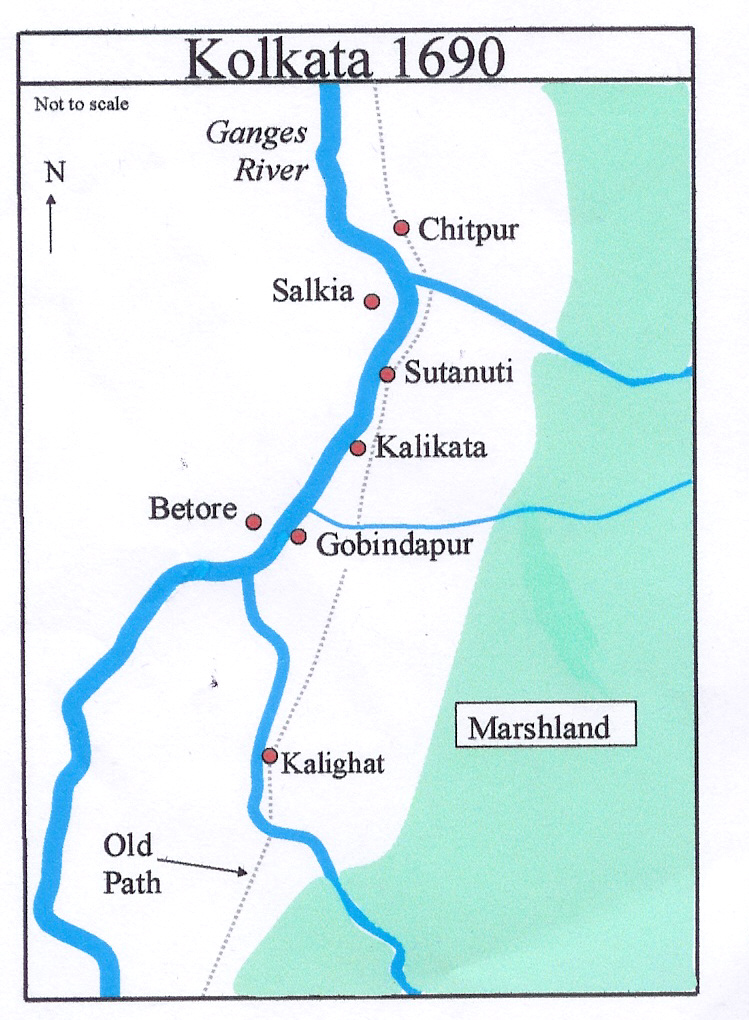
For those who are interested in knowing what happened to the original villages and whether they still exist in any form or shape, the answer is yes. Though no longer distinguishable as independent villages or even specific locations, they do exist as historical localities. Sutanuti which, as the name suggests, was a trading hub for yarn and cotton, was in the northern part of the modern city. It encompasses areas like Shyambazar, Hatkhola, and Bagbazar. The name itself survives in the metro station name of Sovabazar Sutanuti.
Gobindapur village was the area where Fort William was built, and in the present day, the original location comprises the Maidan area and nearby localities of South Kolkata. Kalikata, which had been a fishing village, was situated between Sutanuti and Gobindapur. It had been known for the Kalighat temple. In the present city, the areas of Esplanade and Dalhousie Square.
Thanks to our colonial legacy, many believe that Kolkata/Calcutta sprung into existence thanks to the benefices of Job Charnock and the East India Company. That belief, as we now know, couldn’t be further from the truth. Such is the case of many places in our ancient country. And I hope that this rather meandering discussion on the etymology and establishment of Calcutta/Kolkata will encourage you to explore your own towns and cities and their heritage. If you know anything more about ancient Kolkata or about your own town/city/village’s pre-colonial story, do let me know in the comments.
#AtoZChallenge
#BlogchatterA2Z
#Kolkata
#cityofkaali
#kolkataetymology
This post is a part of Blogchatter A2Z Challenge 2026

Comments
8 responses to “K is for Kolkata-Calcutta”
The original lease deed of the three villages dates back to 10th Nov 1698. It resides in the British Museum. A copy is displayed in the Victoria Memorial.
Wow! This is fascinating. I will definitely pay a visit to the VM on my next visit to check it out. Thanks for sharing it.
I really like the rich historic city kolkata is despite the calcutta or kolkata debate or where did the word originated from.
There are so many layers to the historicity of Kolkata. The more I dig, the more I find.
I didn’t realize there were so many stories behind the name – nicely written!
Thank you! Glad you enjoyed it.
The folklore that mentions the origin of the city’s name is quite interesting. How fascinating it is that the name of a place carries so much history!
Names can carry so much of culture and history in them. That is why etymology, especially of Indian places, fascinates me.