Hi folks!
In my post Jhale-Jhole-Ambale, I talked about the staples of a regular Bengali household kitchen. Today, I will swing my ladle in the opposite direction and introduce some of our richest delicacies to you. Many of these items have evolved due to a mixture of indigenous Bengali ingredients and tastes and the Mughal and Awadhi heritage of Bengal. Mughal rule was established in Bengal in 1576, and Nawab Wajid Ali Shah of Awadh was exiled to Kolkata in 1856. Small wonder then that the cuisines of both these cultures became mingled with that of the locals. Today, these items are as loved—if not more—by the food-loving Bengali palate.
While it would be wrong to say that these rich and decadent items are never prepared in the home kitchen, many of them are often enjoyed at renowned eateries both old and new. Historic eateries like Aminia, Arsalan, Royal Indian Hotel, Anadi Cabin, Sabir’s, Dilkhusha Cabin, Tarun Niketan, etc. rub shoulders with modern icons like Oudh 1590, 28 Buffet Avenue, Sera Bangali Hessel, 6 Ballygunge Place, Koshe Kosha, Amar Khamar, etc.
In fact, the “date” scene in Ageless Feud is set in a place that is inspired by one of these iconic eateries (though you’ll have to check my Instagram to discover which one!). In the book, Manik is also found eating such delicacies with relish quite often, which is sometimes a point of contention between his mother and aunt. But, not to digress, let us dive into a discussion of decadent Bengali dishes.
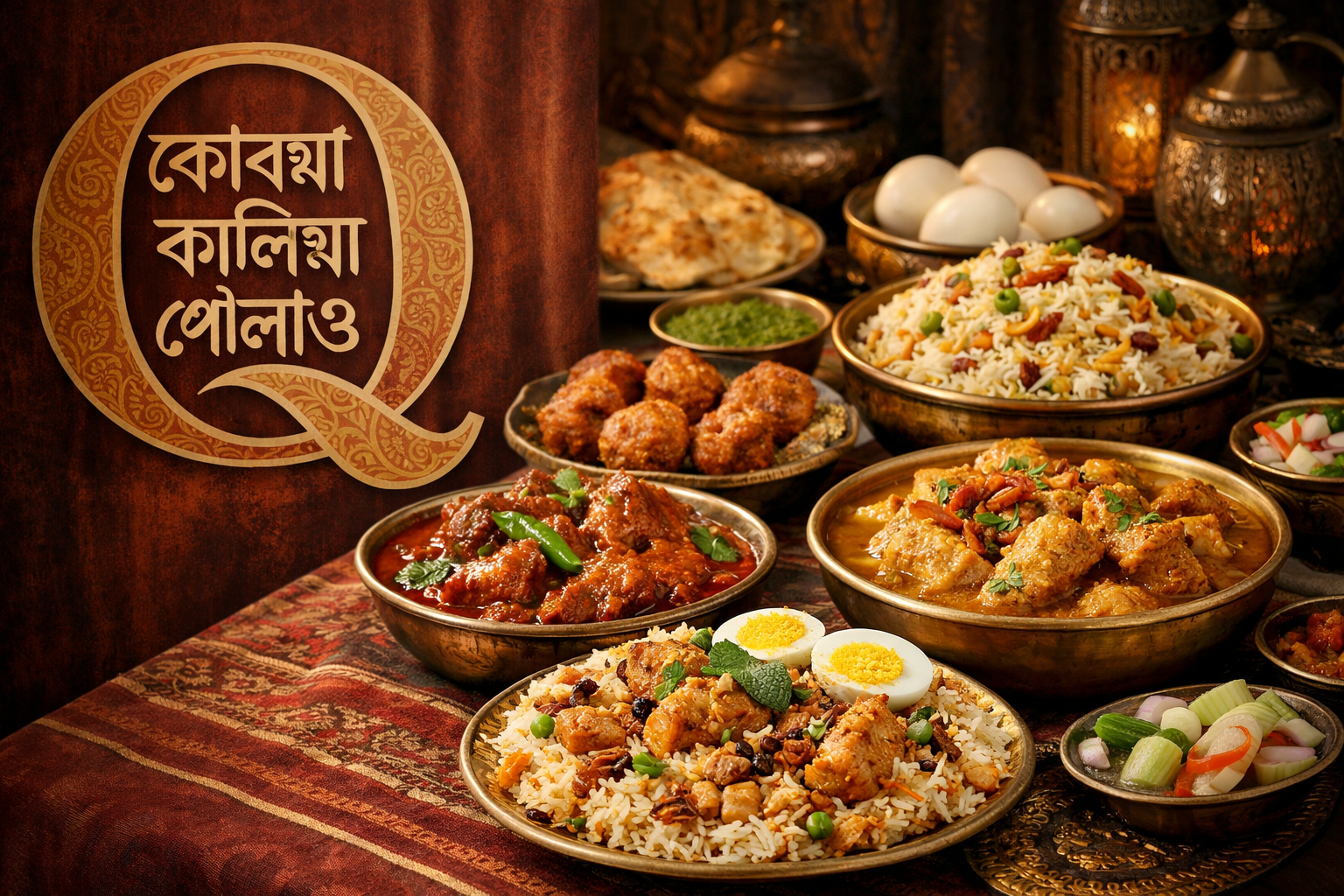
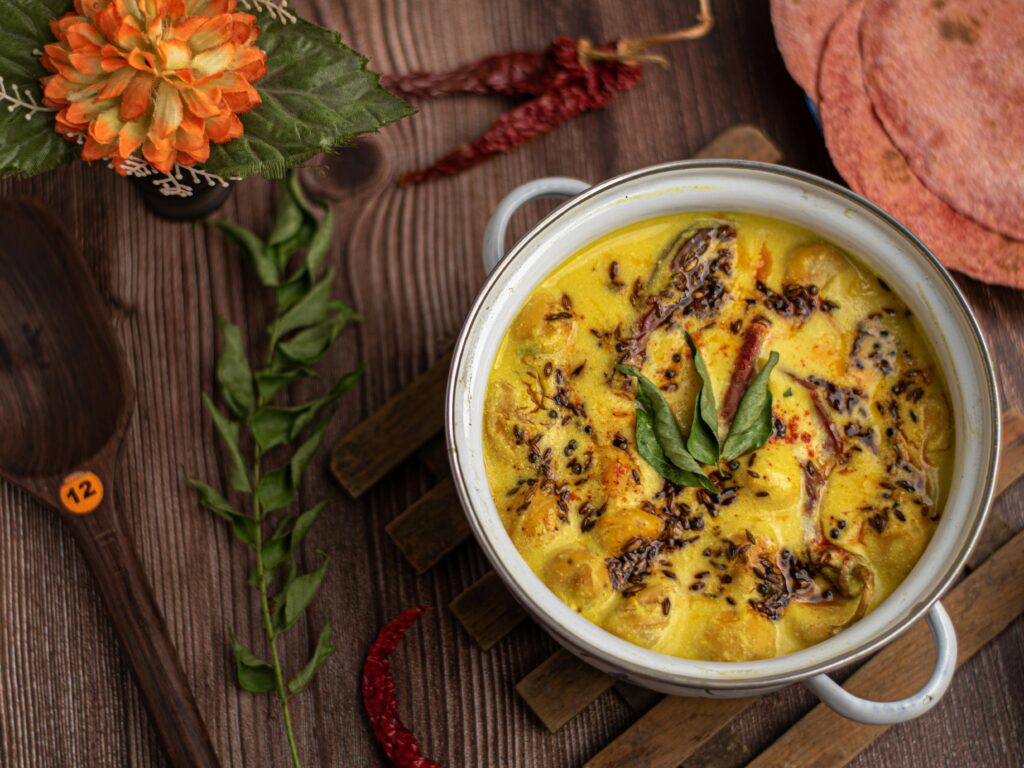
Qorma – Originally, Qorma was a savoury Mughal dish of meat braised in fat and yoghurt with spices like ginger, garlic, cardamom, cloves, and cinnamon. A paste of onions and nuts was added for richness, and rose or saffron water were added for flavour. The Bengali Qorma, on the other hand, is sweet and creamy, with a thick gravy. Instead of being cooked only in yoghurt, milk or cream are added as well. The base is also whiter than the original dish, with coconut milk or poppy seed paste sometimes added alongside cashew paste.
Rezala – Rezala is an even better example of a “fusion” dish than Qorma since there is no “original” version of it. Most likely derived from the Mughal Qorma as well, Rezala has a lighter gravy than the Bengali Qorma. It is also more aromatic with whole spices like bay leaves, cardamom, cinnamon, cloves, etc. supplemented by Kewra water. It has a tangy-sweet flavour profile, and a noticeable feature is the layer of fragrant oil sitting on top of the gravy once the dish is complete. Also, unlike Qorma, it requires large pieces of meat on the bone.
Kalia – This is one dish that has come very far from the version that birthed it, literally and figuratively. The original Qalia was a lamb-based Persian dish with a rich, onion-based gravy. It travelled to Kolkata via Mughal and then Awadhi cuisine, where it was lovingly adopted into Fish Kalia. The gravy is still made up of onion paste, but it also features tomato paste and a phoron of whole garam masala (to know what phoron means, check out my post Jhale-Jhole-Ambale). The cooking oil is mustard, and the dish is enriched with a cumin flavour. The most commonly used fish for Kalia are Rohu or Catla.
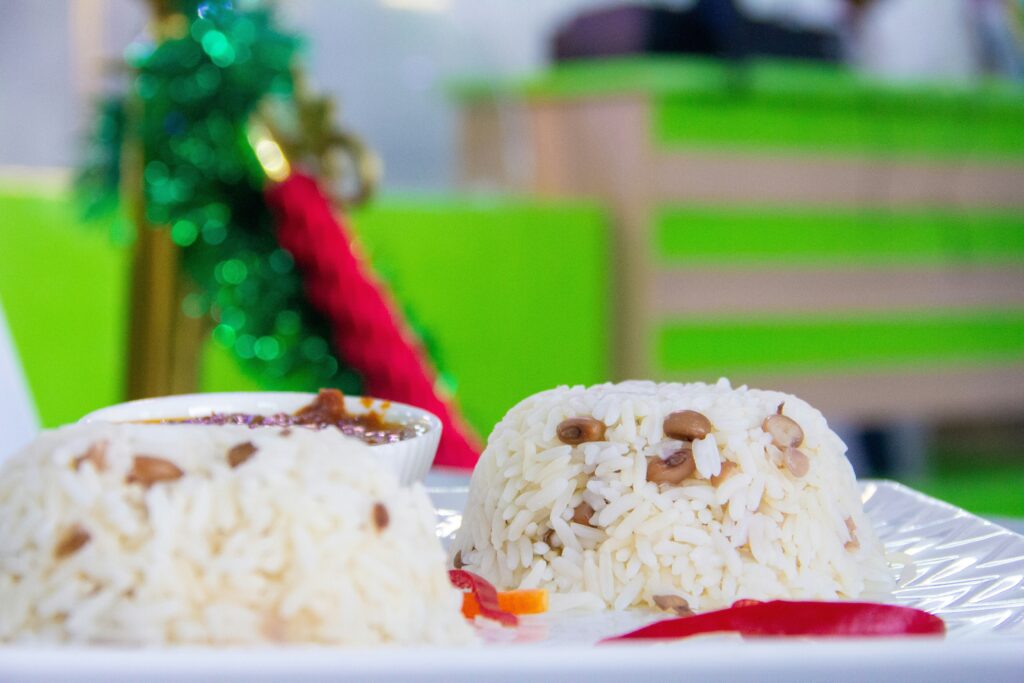
Pulao – There is some debate about the origins of this dish. According to some sources, it actually originated in the Indus Valley. There is mention of the dish Palanna (Pal+Anna) meaning Meat+Rice even in the Mahabharata in a literary work within the epic by Draupadi. There are other mentions in several texts as well, including the Chandi Mangal. What is probable is that this dish travelled from India to Persia and back to India with the Mughals. Like the Kalia, it reached Kolkata with Wajid Ali Shah. The most popular of Bengali pulaos is the Basanti Pulao, a sweet, golden, saffron-infused pulao made with Gobindobhog rice. Other popular options are Shada (White) Pulao, Chingri (Prawn) Pulao, Badshahi Pulao (more nuts and fragrant additives), Dhakai Pulao (less sweet, more spice), Akhni Pulao (paanch phoron flavoured, wetter), etc.
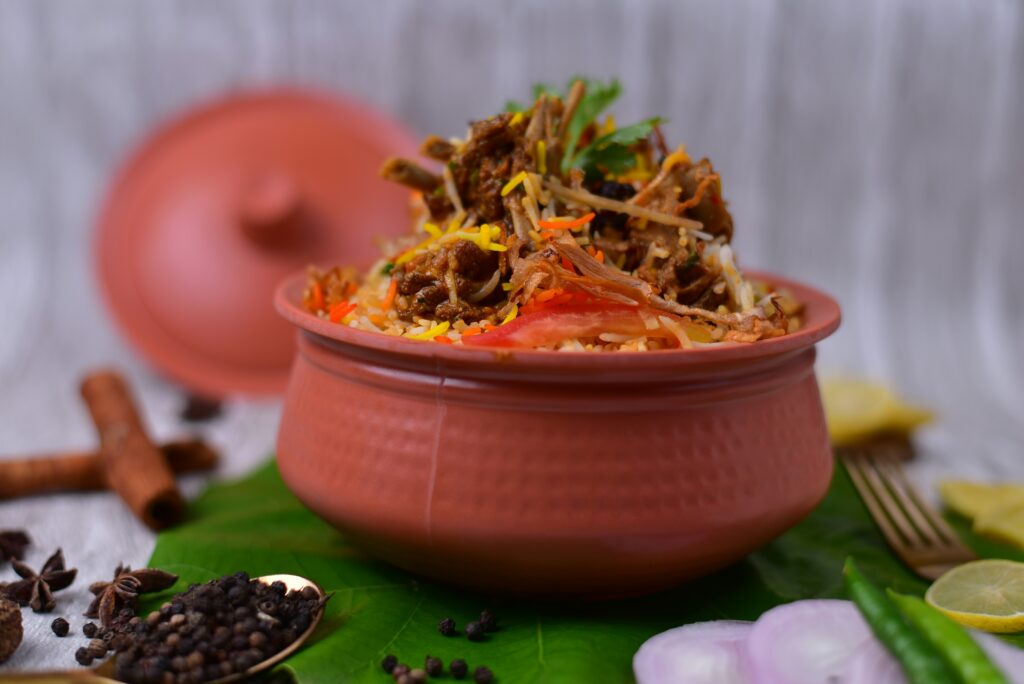
Biryani – This is one of the most well-known dishes of this country, and every cuisine probably has a version of its own. The Bengali version evolved from the Awadhi version and notably contains large chunks of potato and whole hard-boiled eggs. It is also milder in taste than other regional varieties, including the use of whole spices like nutmeg, mace, cinnamon, and cardamom, as well as Kewra water or Rose water.
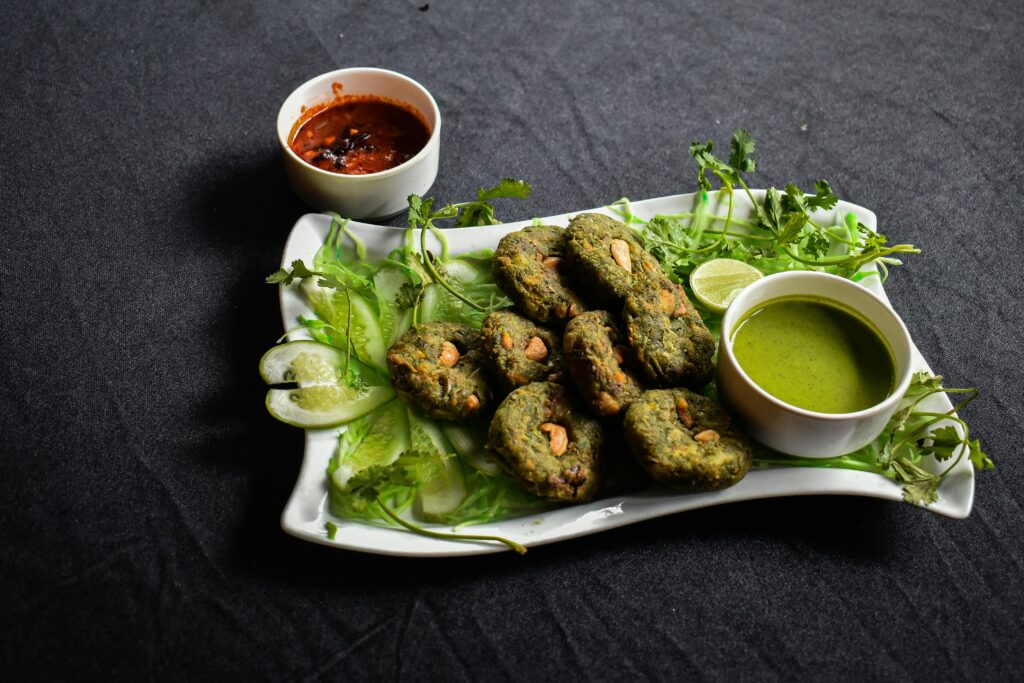
Chaap – The Bengali Chaap is a Mughlai dish made with chicken legs or mutton. The meat is marinated in a mix of yoghurt, cashews, poppy seed paste, and various spices for several hours and then slow cooked on a low heat using the Dum Pukht technique. It is scented with Kewra water, Meetha Attar, and saffron for a regal fragrance. It has a rich, fat-heavy gravy. Chaap is rarely eaten on its own; it is generally paired with Biryani or Rumali Roti.
Kebab – Surprising as it might seem, Bengali cuisine hosts its own range of kebabs, which are unique in texture and taste despite being derived from Mughlai and Awadhi cuisine. There is the Sutli Kebab (named for the cotton thread that is tied to hold minced meat together when cooking), the Bihari Kebab (beef or mutton kebab marinated in mustard oil and raw papaya), the Chelow Kebab (an Iranian-inspired dish served with buttered saffron rice and a poached egg), the Galouti Kebab (cousin to the famous Lucknow Galouti Kebab), the Kathi Kebab (kebabs made on wooden skewers, predecessors to the Kathi Roll), and the Handi Kebab (meat is cooked in an earthen pot rather than over open fire). An interesting Bengali twist is the use of fish for making kebabs.
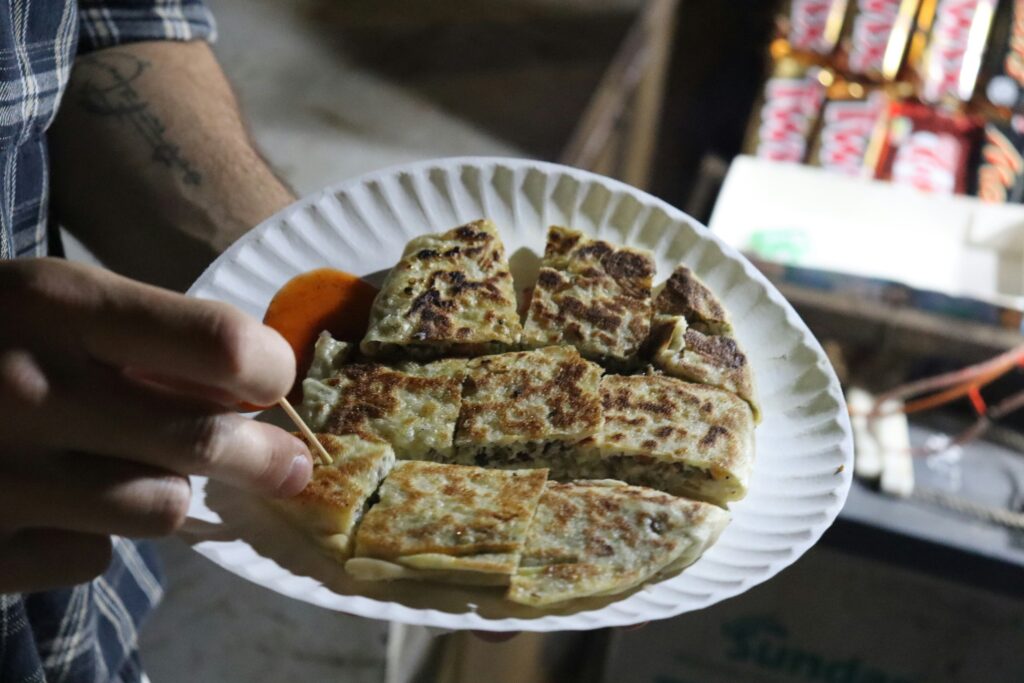
Mughlai Paratha – The Mughlai Paratha is a uniquely inspired dish with a misleading name. Though born through the influence of Mughal cuisine, it is a wholly indigenous Bengali dish that evolved in the old eateries of Kolkata. It is a stuffed and folded rectangular paratha that is crisp and juicy. The filling is a mixture of beaten eggs, chopped onions, green chillies, and ginger and spices, often with minced chicken or mutton serving as the highlight of the filling. Usually served with a dry spiced potato curry (sometimes Aloor Dum, sometimes a nameless concoction) and Kasundi (Bengali mustard sauce), it is a true representative of Mughal-Bengali fusion cuisine.
Highly popular, these dishes are favourites for special occasions rather than for daily eating. Though, for Bengalis, eating itself can often become a special occasion meriting the best of food! Some astute readers might have noticed the title of this post comes from a song in Satyajit Ray’s Goopy Gyne Bagha Byne. The two summon mounds of food to stop a war, and the menu includes these delicacies. Starving soldiers forget about fighting and decide to fill their bellies instead. And who could blame them for choosing finger-licking yumminess over the stupidity and brutality of war? Now, if only someone could summon such deliciousness down from the sky in the distant origin-place of these amazing dishes!
#AtoZChallenge
#BlogchatterA2Z
#Kolkata
#cityofkaali
#bengalimughlaicuisine
This post is a part of Blogchatter A2Z Challenge 2026

Leave a Reply