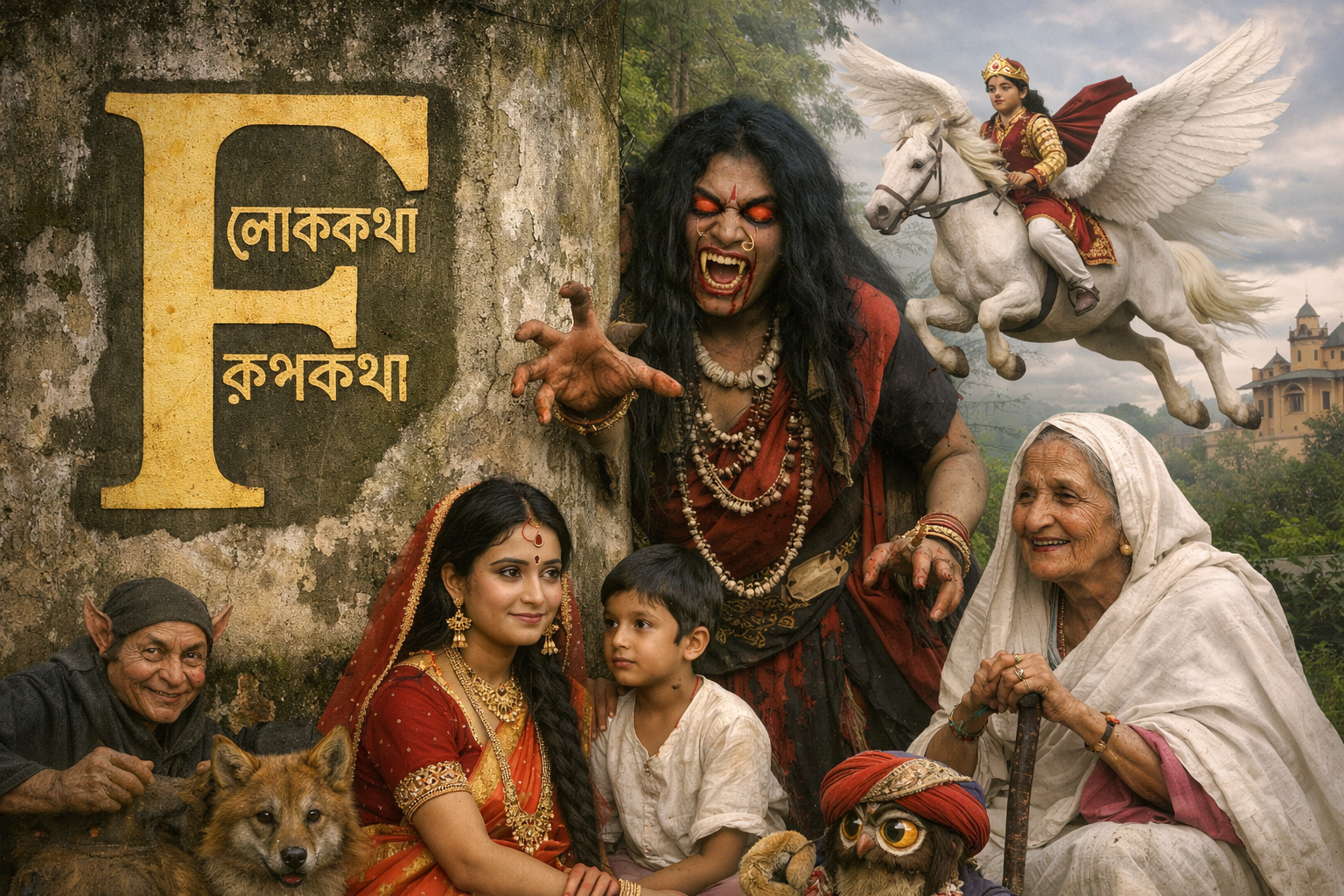
Author: Writa Bhattacharjee

  • F is for Folk and Fairy Tales

    F is for Folk and Fairy Tales

    Hi folks!

    Today I’ll share with you one of my favourite things in the world: the folk and fairy tales of Bengal that I grew up with. Given how much I love to talk about these, if I’m not careful, this post runs the risk of turning into a PhD thesis!!!

    Before I go on to specific tales, let me tell you a little bit about why I love them so much. There is a strange relatability in these stories despite their obviously fictional nature. They are also rooted in the lifestyles of our agrarian past, which despite the juggernaut of urbanisation, somehow holds a special place in all our hearts. At least, it does in mine. And then there’s the nostalgia too! The memory of my grandmother reading these stories in her infamous monotone that immediately put me to sleep in the afternoons. These were also some of the earliest works I read in Bengali once I started reading on my own. And I won’t even go into the intellectual reasons I find these stories fascinating!
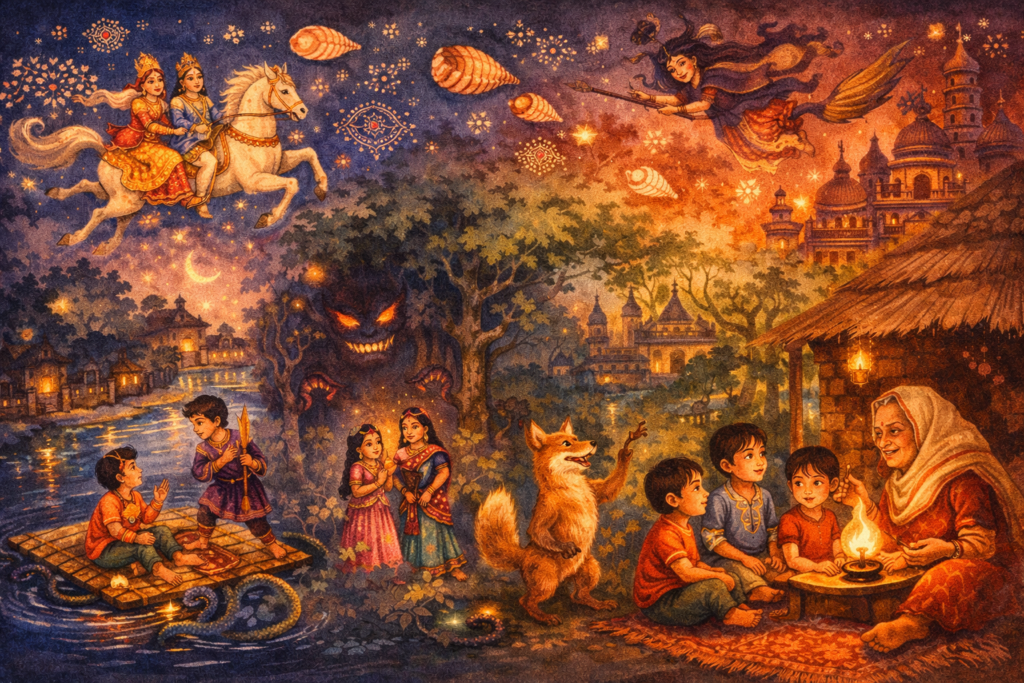
    Made with ChatGPT

    Ok, so on to the stories before I get all tangled up and go off at a tangent. The ones I started with were, probably quite predictably, the tales of the Thakurmar Jhuli. These were stories collated into an anthology by Dakshinaranjan Mitra Majumdar. It wasn’t the only anthology of folk and fairy tales he composed, but it is the best known. Interestingly, the original introduction to the book was written by none other than Rabindranath Tagore himself who lauded the attempt to keep alive Bengal’s folk literature in the face of European fairy tales being the only such literature available for children to read.

    Among the stories of the Thakurmar Jhuli (1907), the best known are perhaps Buddhu-Bhutum and Lalkamal-Neelkamal. I’ve long since lost count of the number of times I listened to the audio-drama cassettes of these two as a child and later on too. In fact, I unashamedly confess that I still listen to them online nowadays. Some of my other favourites from the Thakurmar Jhuli are Arun Barun O Kiranmala, Saatbhai Champa, Daalimkumar, and Sheyal Pandit. I always liked the stories with rakkhosh-khokkosh a lot more than the ones with the talking animals.

    Majumdar moshai also collated some other volumes of the stories he gathered from across Bengal on his travels: Thakurdadar Jhuli (1909), Thandir Thale (1909), and Dadamashayer Thale (1913). While not as well-known as his first volume, these too contain stories from Bengal’s folk traditions of children’s stories. Interestingly, this was not the first attempt at collating Bengal’s folk tales. In 1883, the Rev Lal Behari Dey had published a book titled Folk Tales of Bengal in English. It contained many of the same stories that Majumdar moshai later included in his compilations in Bengali. And in 1920, Francis B Bradley-Birt published a translated collection of over 30 such stories in his Bengal Fairy Tales.

    I was borderline obsessed with disinherited royal heirs, disguised rakkhoshis, Patalpuri rescues, and winged horses that only carried true princes. It’s no wonder these elements have found their way into my writing, especially the epic fantasy series I was writing before City of Kaali. The obsession with Patalpuri and rakkhoshes has, however, made a smooth transit into this series as well.
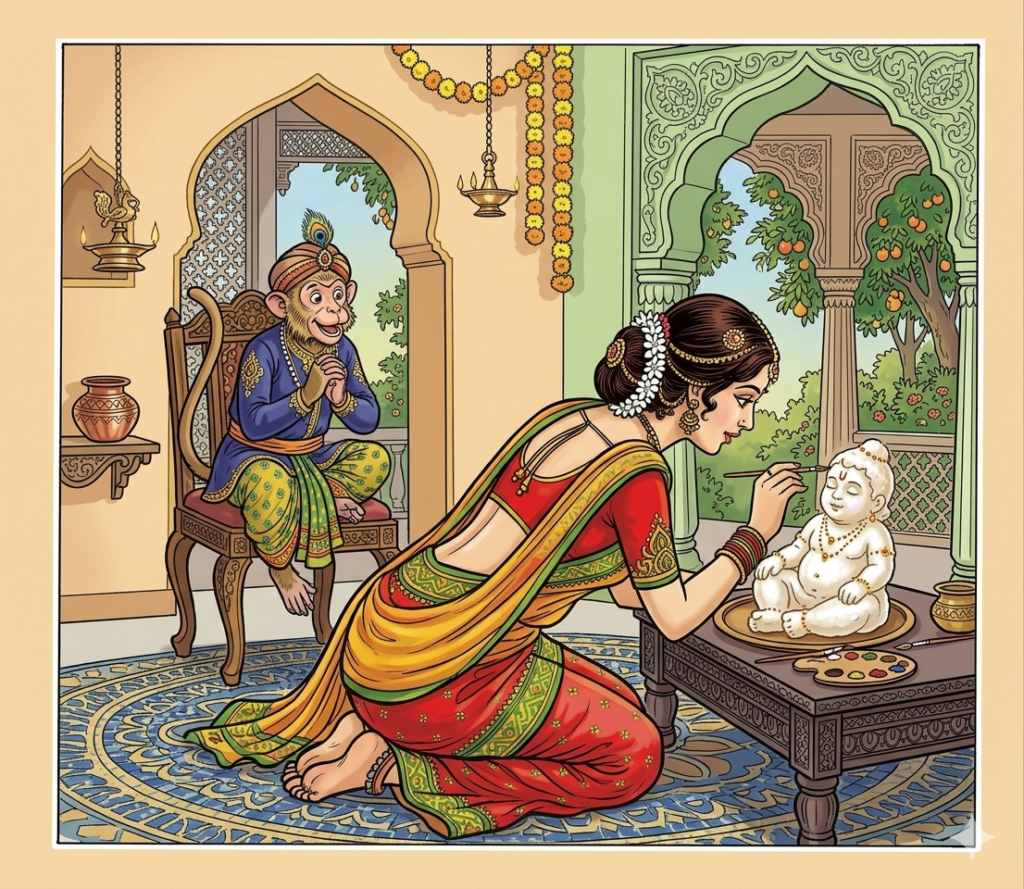
    Made with Gemini

    Moving away from the collations, we have Abanindranath Tagore’s Kshirer Putul, an original story with many elements in common with the tales from oral traditions. The highlight of the story is a talking monkey who is determined to bring about a return in the fortunes of his foster mother, the abandoned queen who, like in many of these tales, is childless. His Buro Angla, the tales of a thumb-sized boy’s adventures, is another popular book.

    Upendrakishore Ray Chowdhury’s Goopy Gyne Bagha Byne is an original fairy tale full of magic and adventure. The story was later expanded and adapted into a world-renowned film by his grandson, the incomparable Satyajit Ray. His Ghyanghashur is also one of my favourite Bengali fairy stories. In the fashion of European stories, the third son of a poor farmer succeeds where others, including princes and his own brothers fail, because of his kindness and resourcefulness.
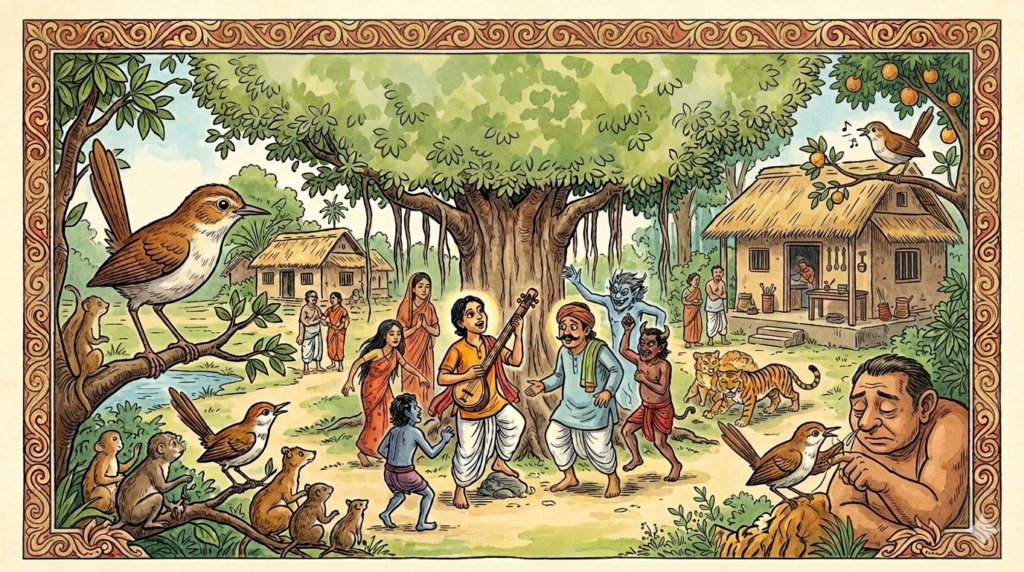
    Made with Gemini

    Tuntunir Boi by him was another original collection, this time of animal fables, quite in line with the talking animal stories of earlier traditions but often with a sharp political undertone. I absolutely love the story Tuntuni O Raja where a king becomes obsessed with destroying a tailor bird. Long before Tom and Jerry or Mousehunt, this tale established the trope of a powerful antagonist being thwarted by an apparently powerless protagonist. I recently reread the story, and found it to still be relevant to our times as a testament to the arrogance and corruption of unchallenged power.

    In later years, Sukumar Ray, Leela Majumdar, and Sukhalata Rao contributed further to this genre, bringing an element of modern storytelling blended with the traditional tropes and traditions. Their works extended to more than just folk and fairy tales, so I am not going to go into details here. Among recent works, too, many authors have published anthologies containing either retellings, derivations, or original stories based on the folk traditions.

    What are some of your favourite folk and fairy tales from your culture? Share them with me in the comments below. I would love to read them too!

    #AtoZChallenge

    #BlogchatterA2Z

    #Kolkata

    #cityofkaali

    #Bengalifolktales

    #Bengalifairytales

    This post is a part of BlogchatterA2Z Challenge 2026

  • E is for Esplanade

    E is for Esplanade

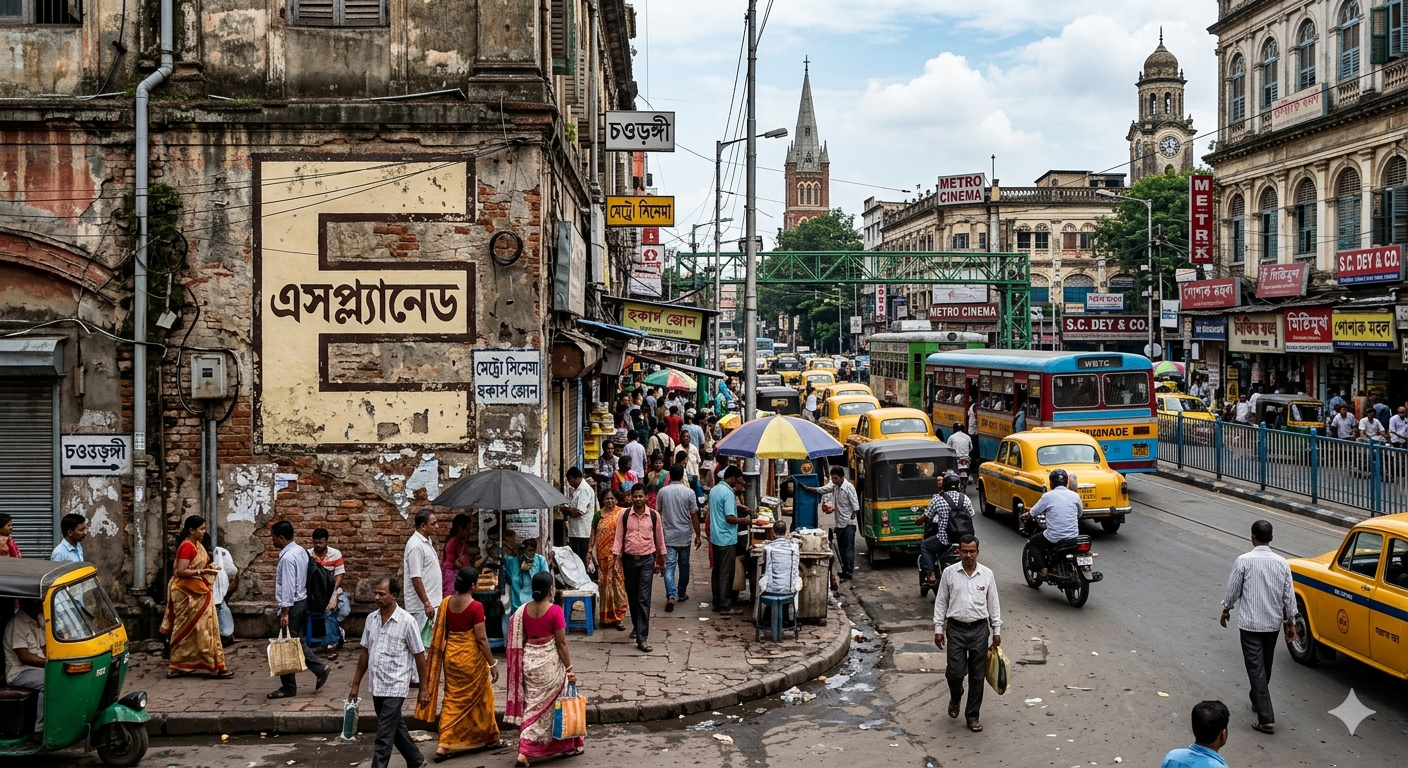
    One of my favourite places to visit in Kolkata has always been the vibrant Esplanade area. It is such an eclectic mix of chaos, history, and commerce that it will take your breath away. If you don’t fall down from exhaustion of exploring everything, you will be quite overwhelmed by the sensory overload: teeming crowds, the ringing of tram bells, the aroma of street food, and the sight of massive architectural marvels from a bygone era. It isn’t just a place: it’s a whole vibe!

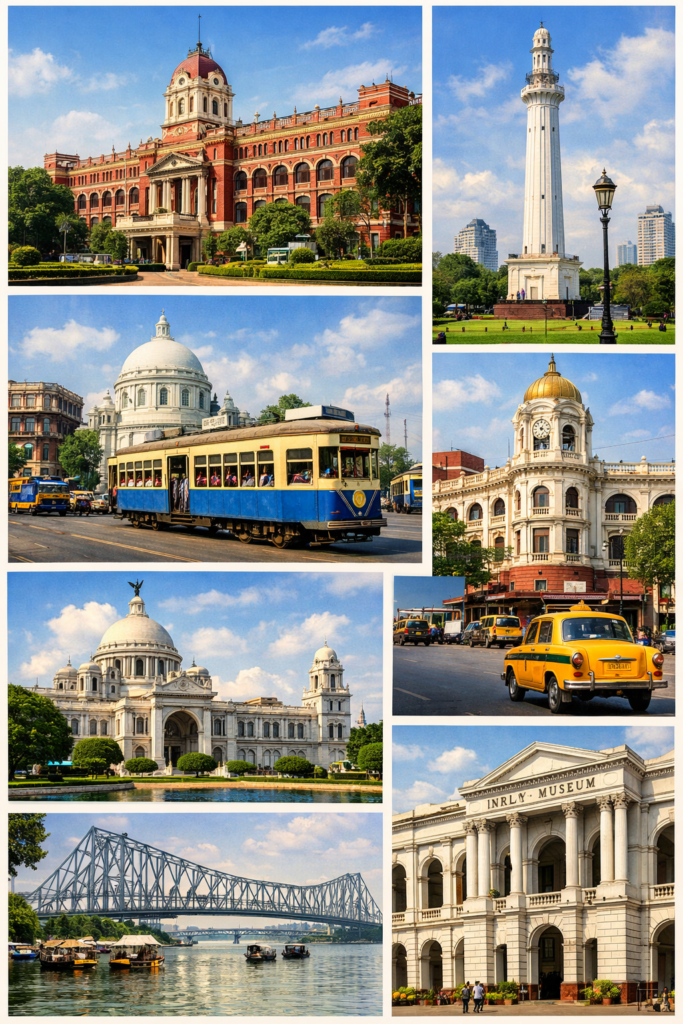
    Let’s talk about the beautiful colonial buildings of the area first. There is the majestic Raj Bhavan, of course, the Governor’s residence, whose architecture was inspired by Kedleston Hall, which was the seat of the Curzon family in England. Then there is the grand, white Metropolitan Building, which used to be the premier department store of Whiteway, Laidlaw & Co. at one time. The flamboyant Art Nouveau residences with their green shuttered windows, known as the Esplanade Mansions, are also a sight to see.

    Made with ChatGPT

    Another notable architectural landmark is the Shahid Minar, a 48-metre-high memorial pillar, which was previously known as the Ochterlony Monument. Even the Tipu Sultan Mosque with its 16 domes and 4 turrets is in this locality. And while you are there, don’t forget to take in the sprawling Maidan, which has hosted perhaps every important political rally in Bengal, and the numerous statues that dot the landscape. And just a stone’s throw is the magnificent Indian Museum where you can while the whole day away looking at the marvellous displays.

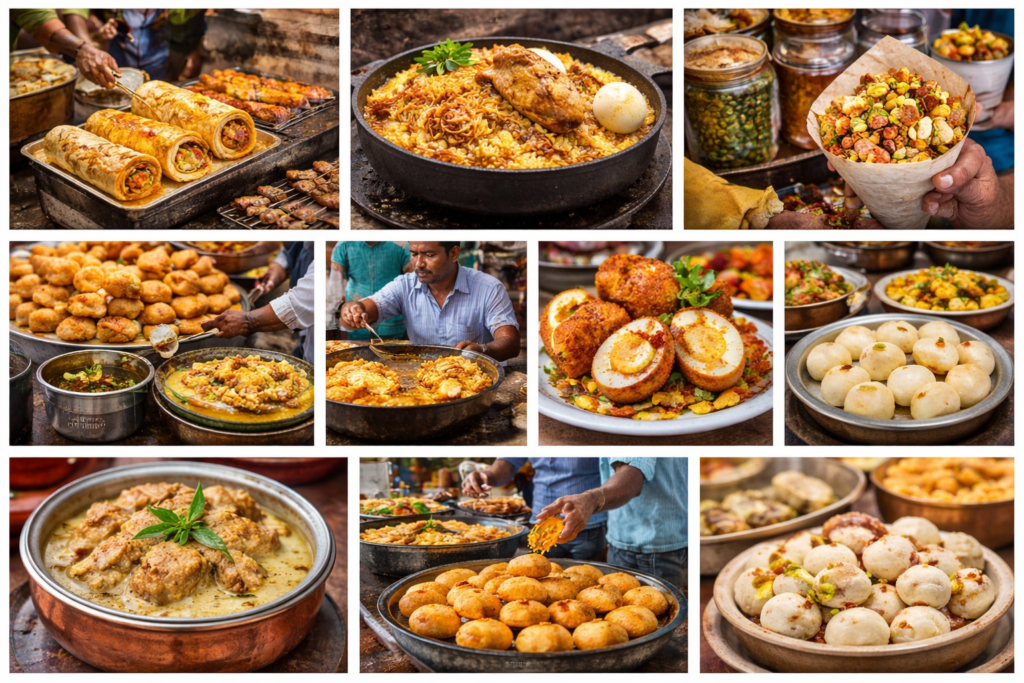
    Once you’ve had your fill of gazing at the beautiful heritage buildings, you can refill your energy with the luscious food sold by roadside vendors and historic eateries. There’s phuchka, jhaalmuri, or telebhaja if street food tickles your tastebuds. Or you can enjoy a juicy Kathi roll at Nizam’s. If Anglo-Indian snacks are more your speed, you can head over to Anandi Cabin for cutlet, kabiraji, or moghlai paratha. Want a more upmarket place? There are cafes, restaurants, and bars too. Pocket not willing to support that? Still no problem. You can head over to Dacres Lane (James Kickey Sarani) for affordable and delicious street food like mutton stew and fish fry.

    Made with ChatGPT

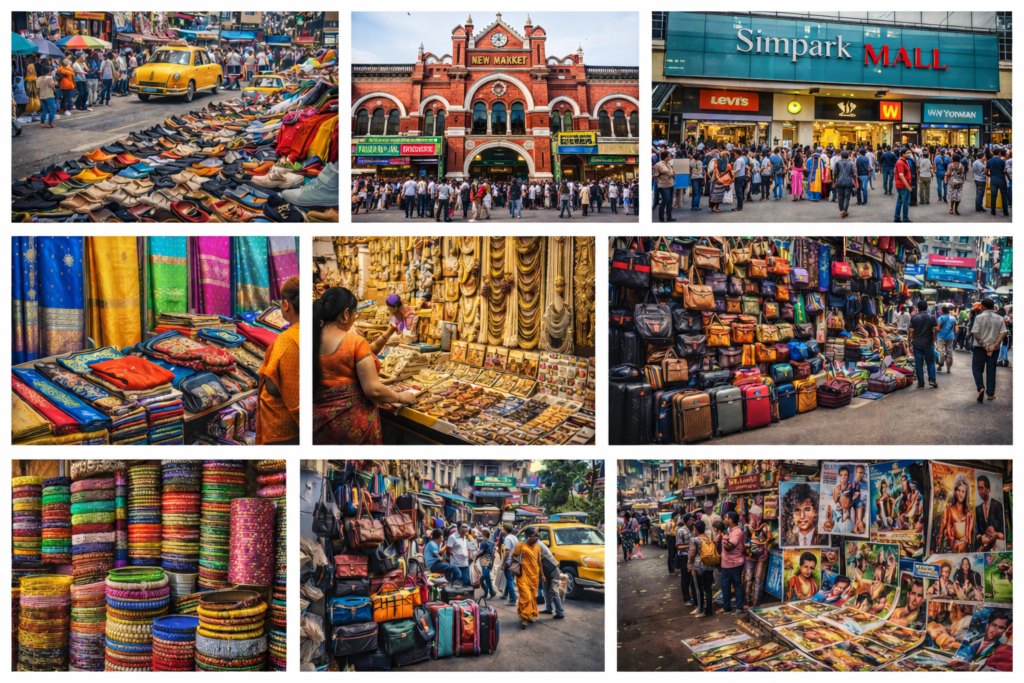
    Once you have re-energised yourself, it’s time for some shopping! Again, you have plenty of choice. You can bargain to your heart’s content with the hawkers occupying the footpaths or choose one of the shops that prominently display “No Bargain” signs, sometimes quite futilely. If you want to combine your shopping with historical interest, you can head over to the iconic New Market (earlier known as Hogg Market), a Gothic British-era building that houses over 2000 stalls. There are, of course, modern malls and shopping arcades too.

    Made with CHatGPT

    With your heart, mind, and stomach full, it’s time to head back. Here, too, you get options for travel. There are the ubiquitous city buses, of course, which you can catch from the chaotic Dharmatala hub. But you can take a tram too from the Tram Hub if you’re in the mood for a more relaxed journey. If that’s not your preference, you can head over to the Esplanade Metro Station to catch a metro either on the Blue (North-South) line or Green (East-West) line.

    Now, where does it fit into Manik’s life in my series City of Kaali? Being someone who has spent a significant part of his century-and-a-half-old life in Kolkata, he has been witness to the evolution of Esplanade area into the hub of activity, heritage, and human emotion that it is today. As for what exactly he goes to Esplanade for, you will have to read the books to find out. In the meantime, if you’ve ever been there, why not drop a line in the comments about your own experiences?

    #AtoZChallenge

    #BlogchatterA2Z

    #Kolkata

    #cityofkaali

    #Esplanade

    This post is a part of BlogchatterA2Z Challenge 2026
  • D is for Detectives of Bengali Fiction

    D is for Detectives of Bengali Fiction

    Hi folks!

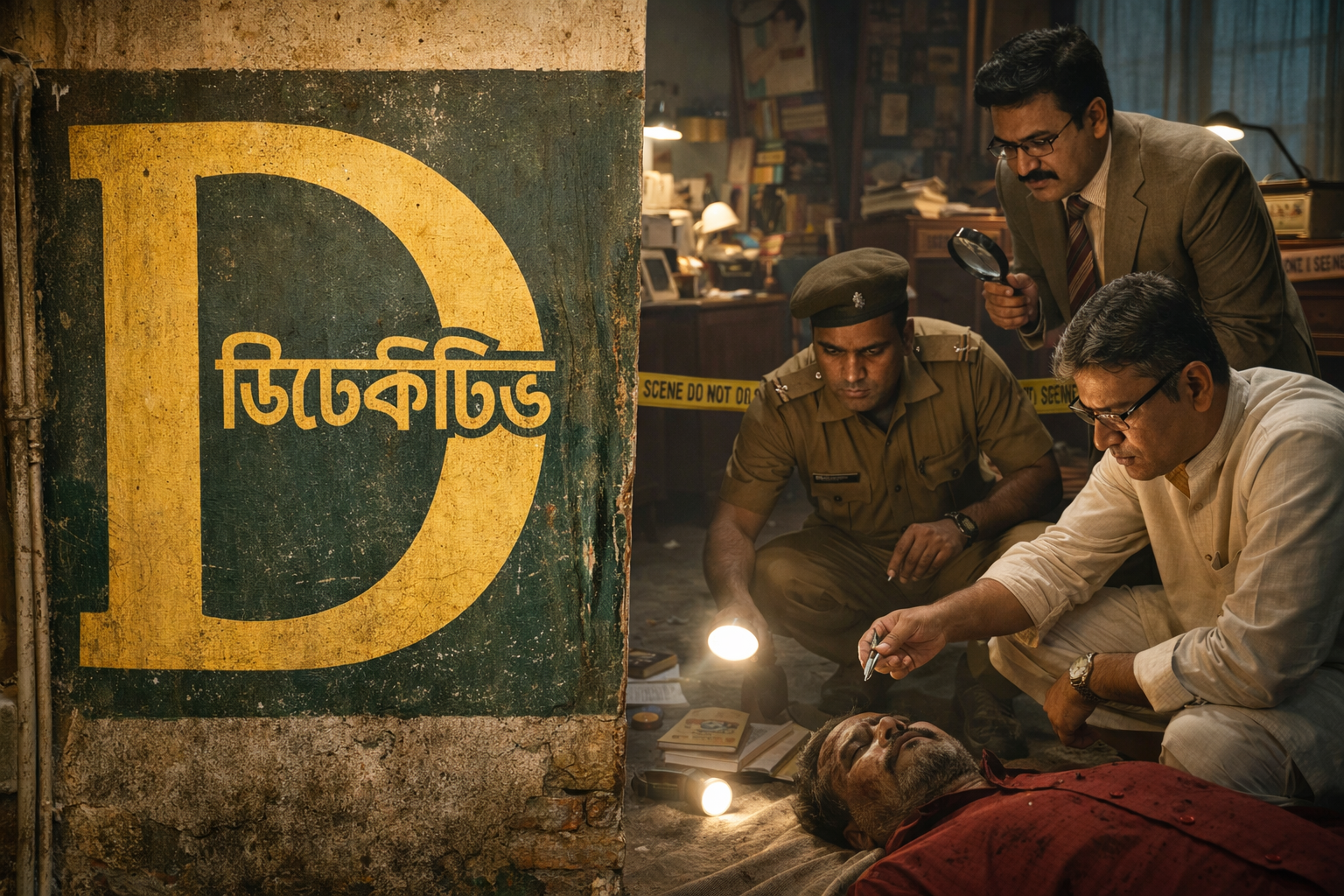
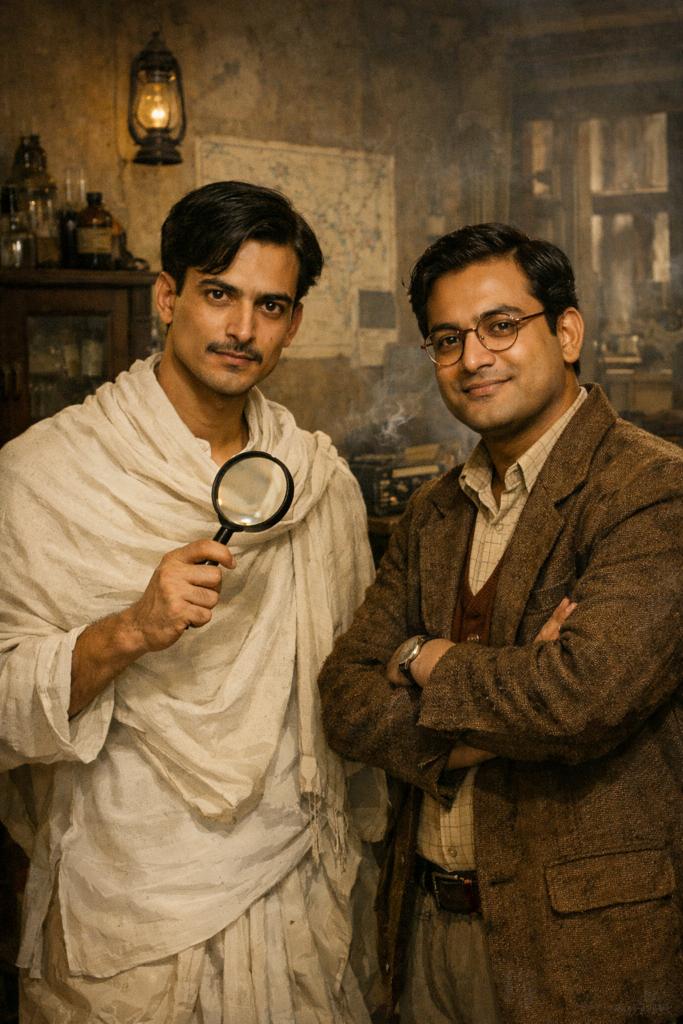
    Going by our reading habits, we Bengalis would appear to be obsessed with murder! You would be hard put to find a reader of Bengali fiction who hasn’t or doesn’t love detective stories. More interestingly, you would be hard put to find a writer of Bengali fiction who hasn’t tried their hand at writing detective stories. From Nalini Das to Leela Majumdar and from Shirshendu Mukhopadhyay to Rabindranath Tagore, everyone has written about a detective or two.

    Before I dive deeper into the topic, I have a confession. My original idea for this A2Z Challenge was this very topic. Unfortunately, though perhaps not unpredictably, I couldn’t find names for every letter of the alphabet. Which was exceedingly frustrating because, according to another post I came across, a survey conducted a few years ago found over 90 fictional detectives in Bengali literature. That number must have increased by now, yet, I couldn’t find fictional detectives whose names started with Q or Z or even N!

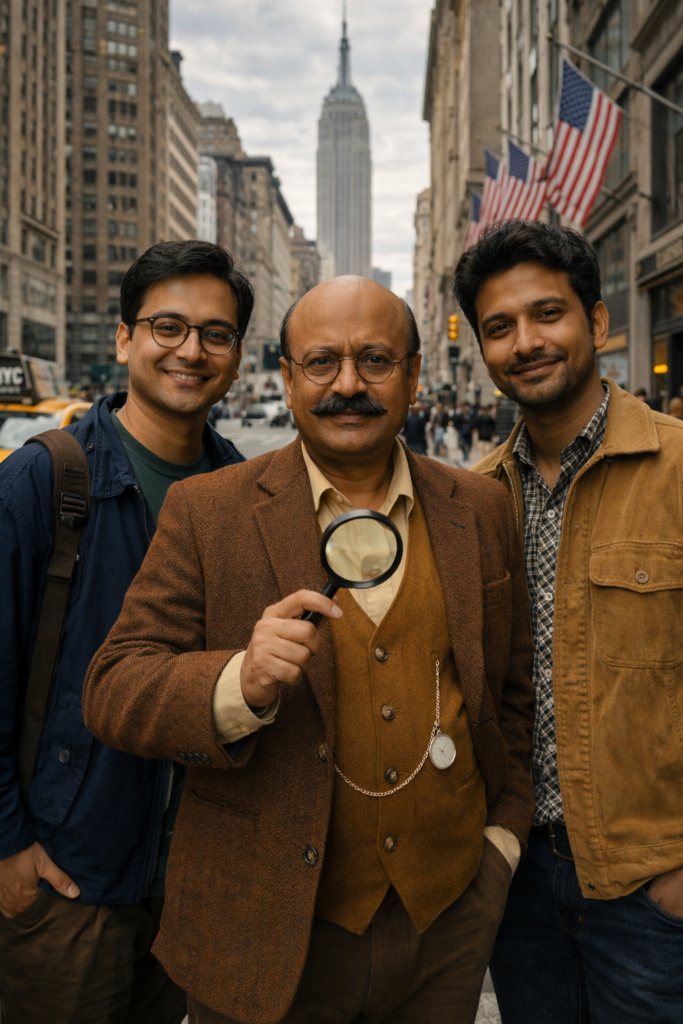
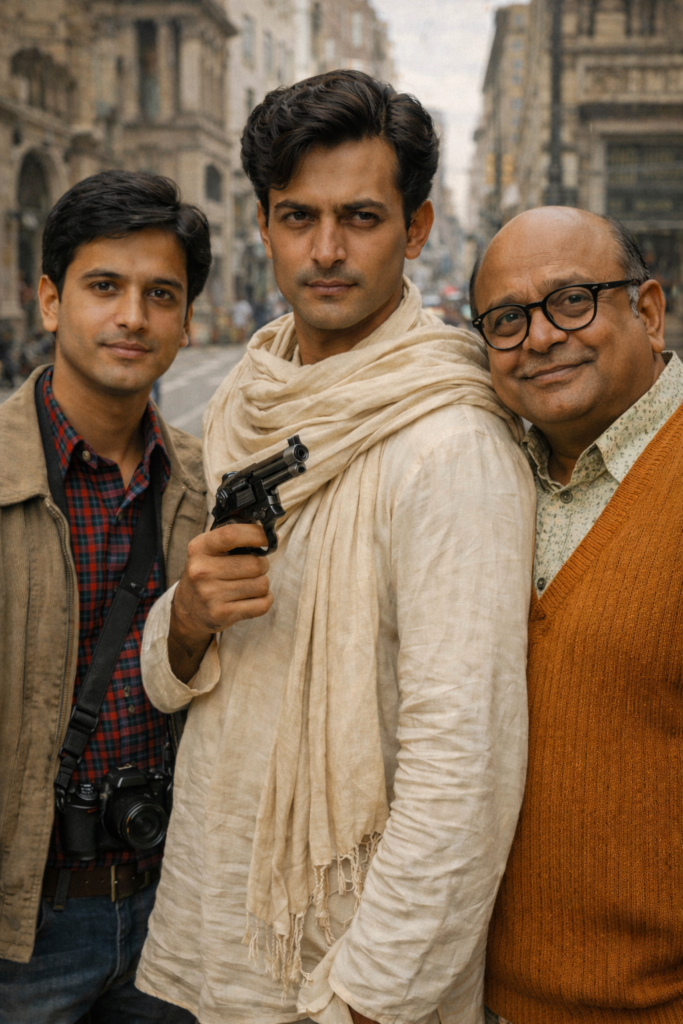
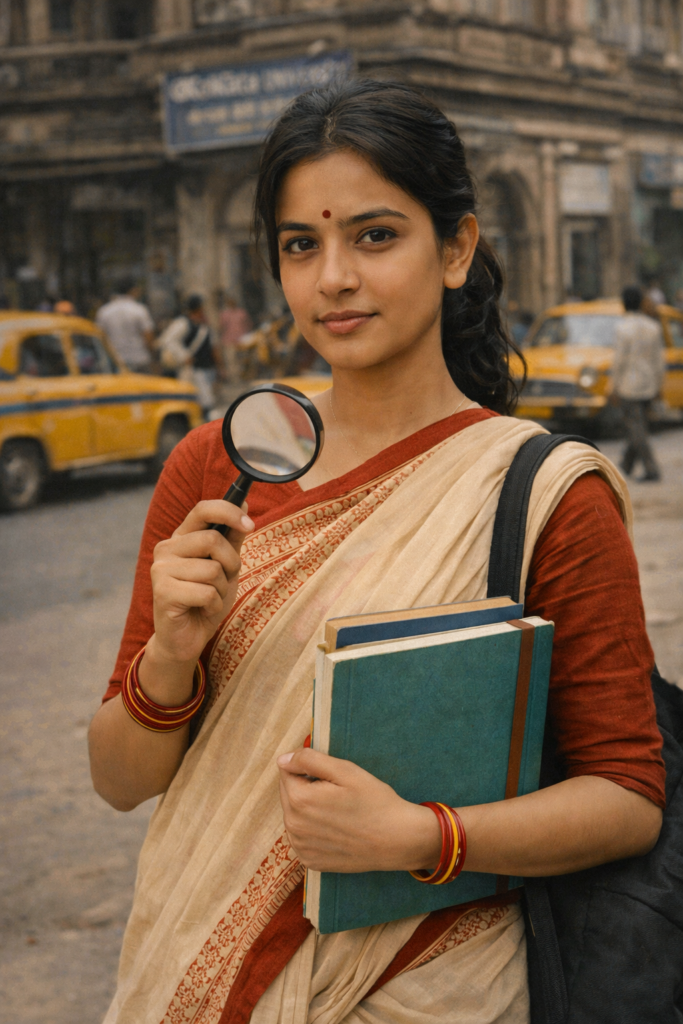
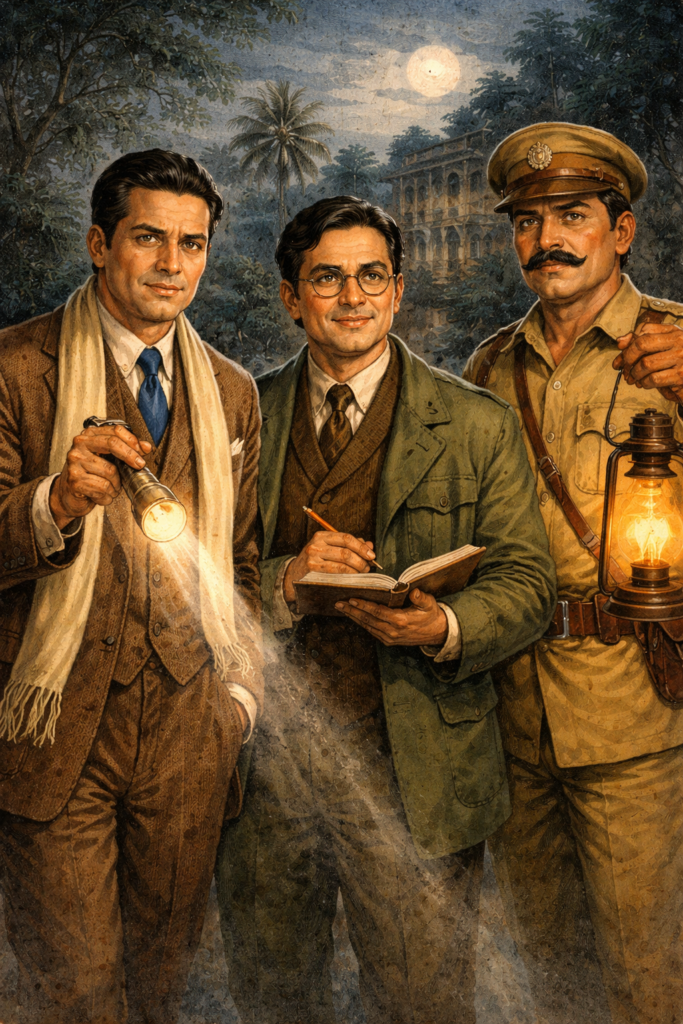
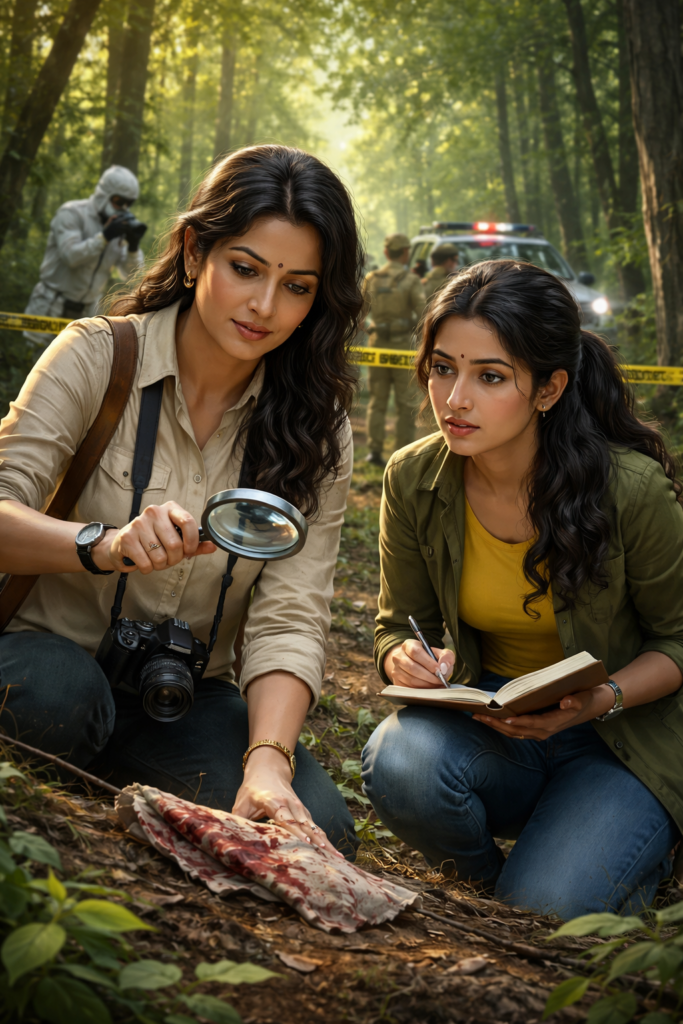
    What I did find after scouring the internet, though, was a list of 20-25 of the most popular Bengali fictional detectives. Given that discussing all of them here will turn this post into a thesis, I’m going to talk about a dozen of them briefly. Maybe I’ll manage to do more detailed posting on this subject in the future, but until then, here’s my dirty dozen list of Bengali fiction’s most wanted—detectives, that is—in alphabetical order.

    Made with ChatGPT

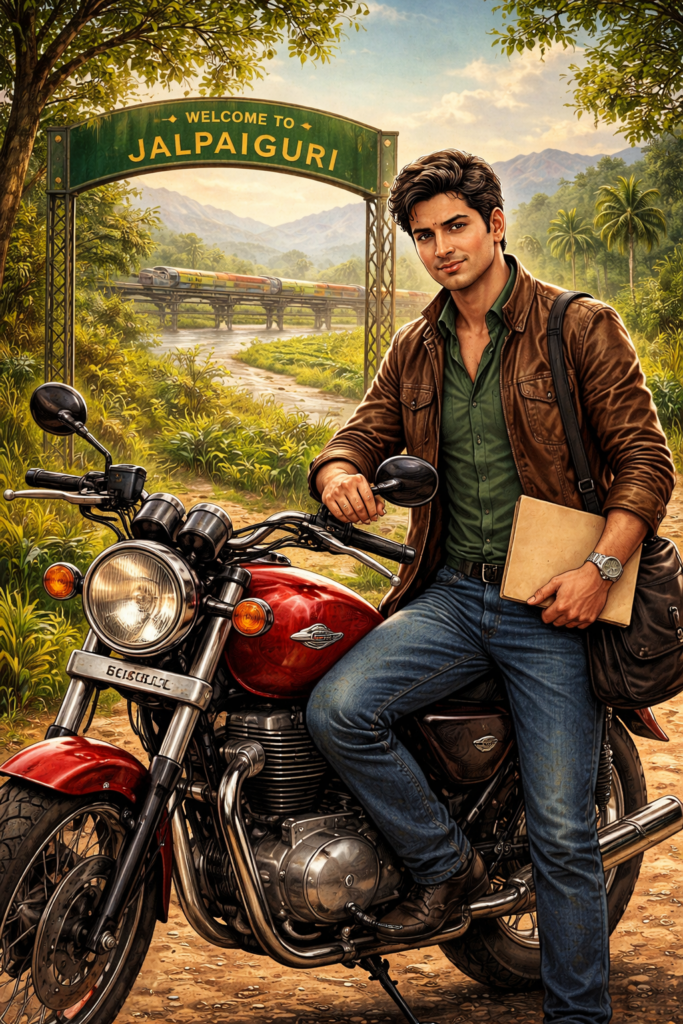
    Arjun Roy – Created in 1983 by Sahitya Academy Award winner Samaresh Majumdar, Arjun is a young detective from the small town of Jalpaiguri. He is known for his down-to-earth and adventurous personality. He is also uniquely relatable, especially in his relationship with his mother and neighbours. In the 44-book series (last one published in 2019), he starts off as an assistant to his mentor, retired cop Amal Shome, but comes into his own as a detective later in the series. Several of his adventures have been adapted for TV, films, radio, and other platforms.

    Made with ChatGPT

    Byomkesh Bakshi – Probably one of the best known of Bengali fictional detectives, Byomkesh Bakshi was created by iconic author Saradindu Bandopadhyay in 1932. Known for his brilliant intellect and insistence on being considered a Satyanweshi (seeker of truth) rather than a detective or investigator, Byomkesh is accompanied by his close friend and chronicler Ajit Bandopadhyay. Unusually among fictional detectives, Byomkesh marries, has a son, ages, and makes other realistic life-choices over the 32-story series (last one in 1970, incomplete). There have been many adaptations of the stories in Bengali and Hindi, and even in Malayalam, including by renowned filmmakers like Satyajit Ray and Basu Chatterjee. In an episode of the hugely popular series The Big Bang Theory, Sherlock Holmes is called the “English Byomkesh Bakshi” in a twist from usual colonial norms.

    Made with ChatGPT

    Darogar Daptar – Written by Priyonath Mukhopadhyay, this was a series of true crime stories based on the author’s own experiences as a Daroga. These stories, published over two decades from 1892 to 1910 are one of the earliest instances of detective fiction found in Bengali literature. Immensely popular both at the time of publishing and later, this series contains stories of kidnappers, murderers, counterfeiters, dacoits, thieves, bodies, dismemberment, and a whole range of shocks and thrills!

    Made with ChatGPT

    Eken Babu – Though originally created in 1991, Eken Babu (real name Ekendra Sen) has gained huge popularity in recent years, thanks to the TV and movie adaptations of the books. In the books, Eken Babu is a brilliant police detective who looks like an ordinary Bengali man with plain looks and a comical manner. He is trained in criminology from the USA and solves crimes in his unique and atypical manner. He is accompanied by his friends Bapi and Promotho (who is also the chronicler) in the 33-story series that captures the life of expat Bengalis in New York beautifully.

    Made with ChatGPT

    Feluda – Created by the legendary Satyajit Ray in 1965, Feluda (real name Pradosh Chandra Mitter) is likely the best known of fictional detectives for young readers. Accompanied by his chronicler and cousin, Tapesh, and their close friend, hugely successful crime potboiler writer Lalmohan Ganguly aka Jatayu, he solves tricky crimes throughout India and even abroad. Feluda is avowedly inspired by Sherlock Holmes. He uses acute observation skills and clever deductions (often humorously called his Magajastra or Brain-weapon) as well as disguises and sometimes martial arts to catch criminals. Despite being “clean” as a result of being written for a young audience, these 35 novels and stories are massively popular among all age groups. Many of the stories have been adapted for films, television, and other media. Ray himself adapted two of the stories into films.

    Made with ChatGPT

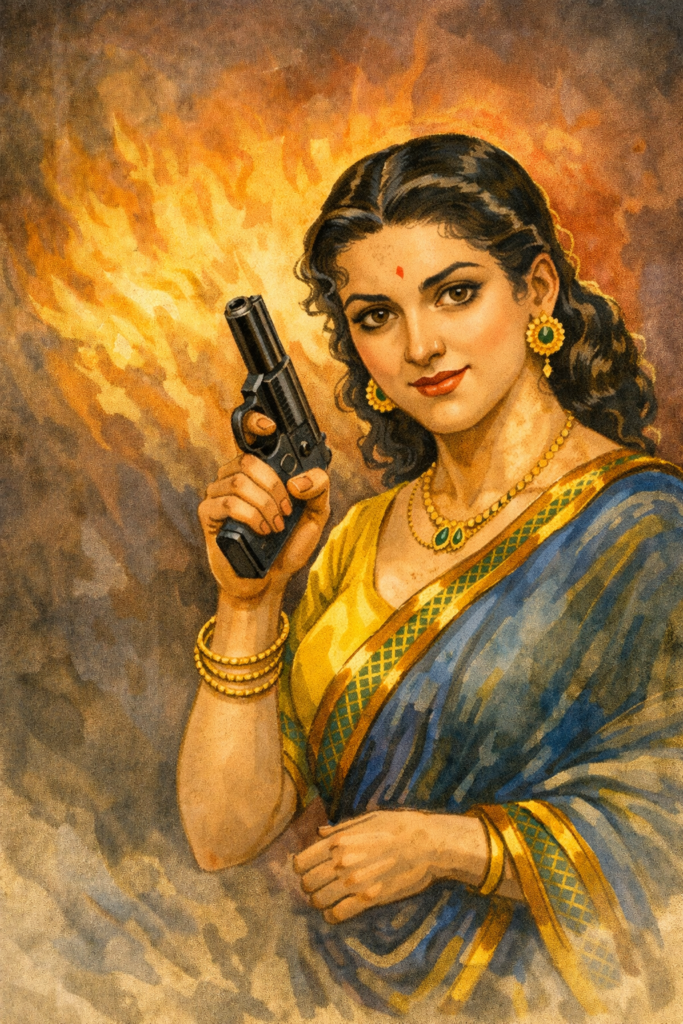
    Gargi – Detective Gargi Banerjee, created by Sahitya Akademi Awardee Tapan Bandopadhyay in the 90s, is a student of mathematics at Calcutta University and an amateur detective. She solves murders as well as thefts of historically significant valuables using her sharp intellect and clever deductions. She is often helped by her husband Sayan Choudhuri after exonerating him from a crime for which he was framed. Some of the 30+ books have been adapted into films and audio series.

    Made with ChatGPT

    Jayanta-Manik – Arguably the first genuinely superhit Bengali fictional detective series, the Jayanta and Manik stories were written by prolific and legendary author Hemedra Kumar Roy. Starting in the 1930s, these books caught the public imagination due to their rootedness in Bengali society, culture, and ethos. Among the pair, Jayanta takes the lead though both are physically fit, patriotic, and intelligent amateur detectives who use latest scientific and forensic developments to solve mysteries. The stories also feature Inspector Sundar Babu, a rather comical character.

    Made with ChatGPT

    Krishna – Written by the pioneering author Prabhabati Debi Saraswti, the Detective Krishna books were a milestone in their own right. Possibly the first series in Bengali showcasing a female detective, especially one created by a female author (who was a contemporary and dear friend of Rabindranath Tagore as well as a noted activist for women’s development), Krishna’s adventures were a remarkable call to awaken women’s self-belief and confidence. Krishna Choudhury, a young, urban, bhadramohila detective, stormed onto the scene in 1952. Over 11 books, she faces down orthodoxy, misogyny, and chauvinism as much as murderers, kidnappers, dacoits, and other criminals.

    Made with ChatGPT

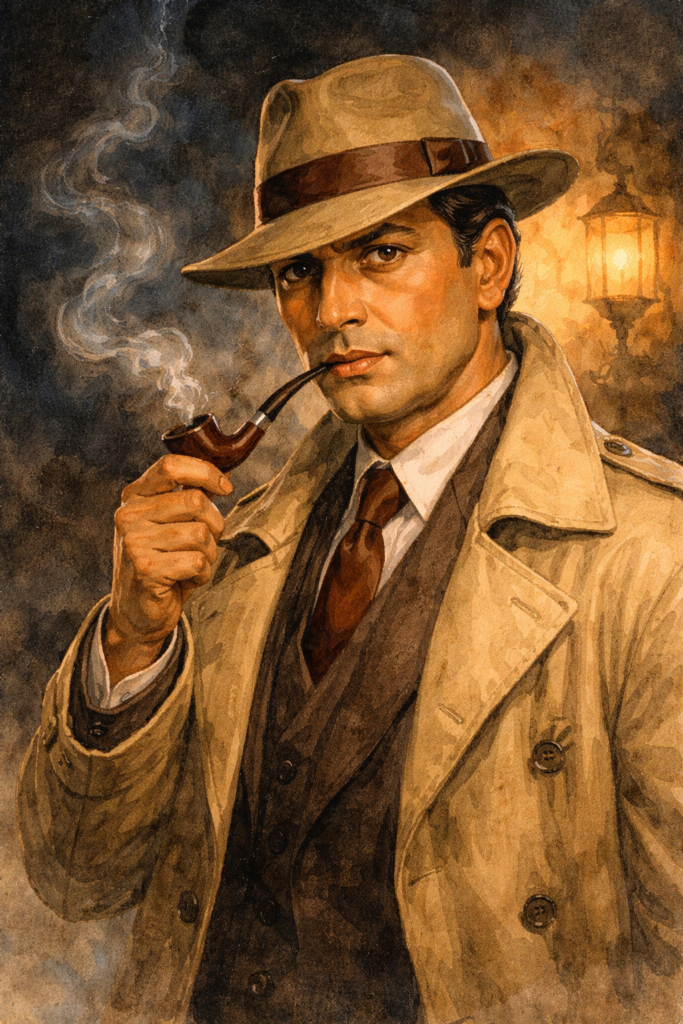
    Kiriti – Another fictional detective who caught the popular imagination when launched, Kirit Roy was the creation of author Nihar Ranjan Gupta. Starting in 1957, Kiriti solves all manners of crimes in more than 100 novels and stories, accompanied by his friend and assistant, Subrata Roy, and his wife, Krishna Mehta, a Parsi lady whom he marries after meeting her during the course of an investigation. Kiriti is a tall, handsome, stylish, aristocratic, and eccentric professional detective who smokes a pipe and whose clients include posh and high-profile people. Several of his stories have also been adapted.

    Made with ChatGPT

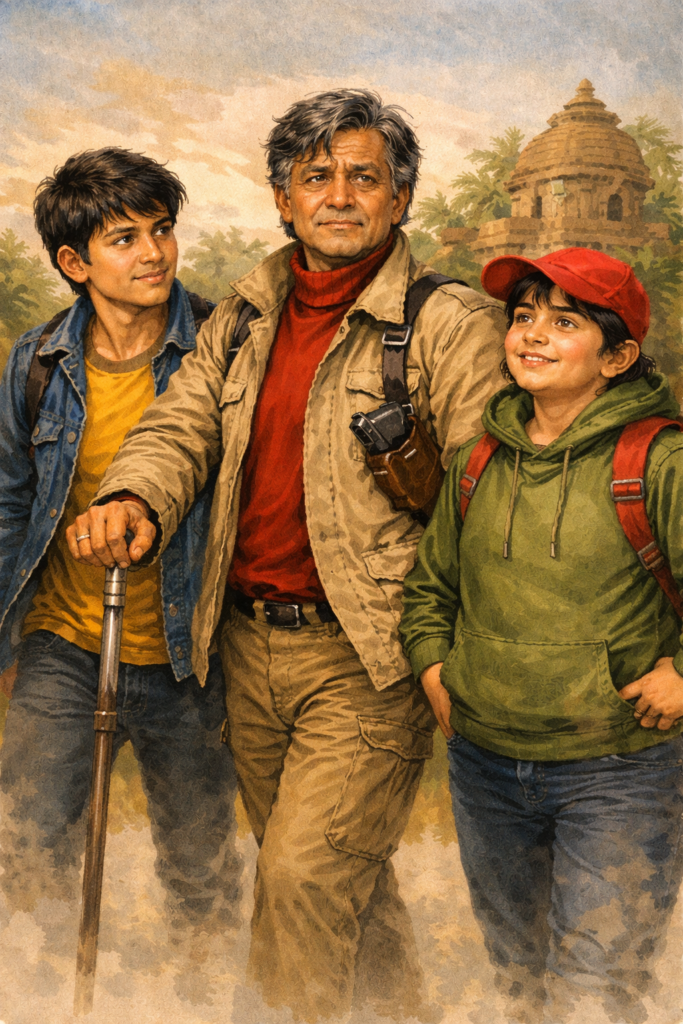
    Kakababu – Kakababu (real name Raja Roychoudhury) is an adventurer and detective who solves mysteries with his nephew Shantu and his friend Jojo. He is a former Director of the Archaeological Survey of India, and lost a leg in an accident in Afghanistan. Unique in the whole gamut of fictional detectives because of his disability, Kakababu is indomitable and much sought after for solving dangerous crimes, including international ones. This immensely popular young adult series was created by Sahitya Akademi Award winning author Sunil Gangopadhyay in 1971. Several of the 42 novels of the series have been adapted into films and television series.

    Made with CHatGPT

    Mitin Mashi – One of the most famous of contemporary Bengali fictional detectives, Mitin Mashi aka Pragyaparamita Mukherjee, is a professional investigator. Created by renowned author Suchitra Bhattacharya, Mitin Mashi’s stories are unique in belonging to two categories. Fourteen of them are written for a young audience, but there are six books written for adult readers. Mitin lives in Kolkata with her husband, Parthapratim Mukherjee, son, Bumbum, and niece, Oindrila aka Tupur, who is also her assistant. Several of the stories see her travelling to different places on India to solve difficult and dangerous crimes using her intellect and initiative. Three of the books have been adapted into movies.

    Made with ChatGPT

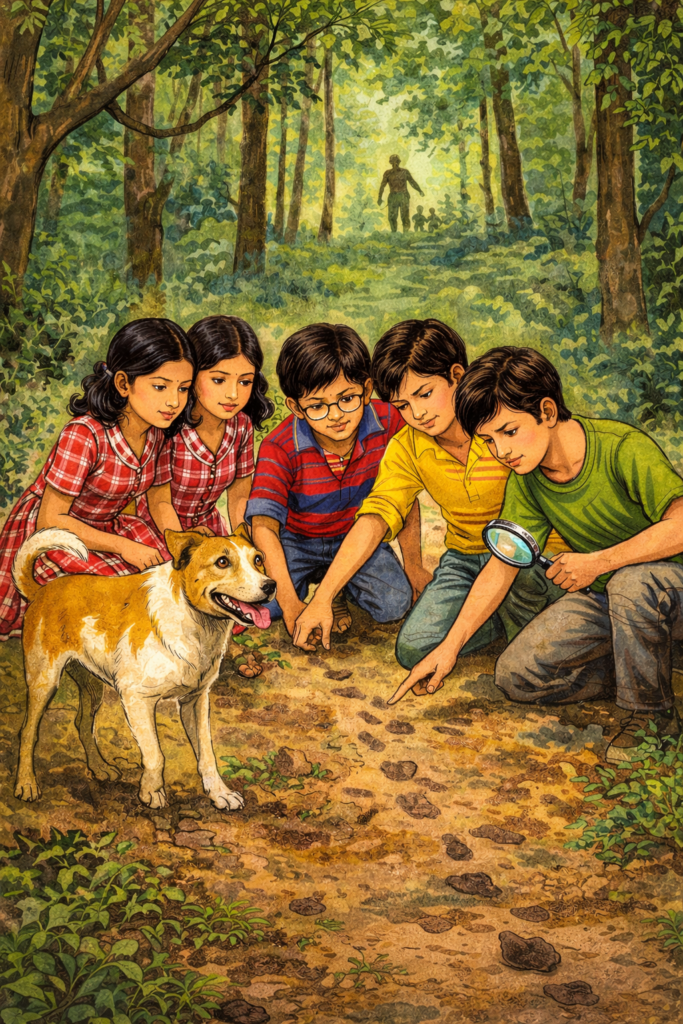
    Pandab Goenda – The final name on this list is not of an individual detective but rather a group of young amateur detectives. A hugely popular series for young readers created by Shashthipada Chattopadhyay, Pandab Goenda is the collective name for Bablu, Bilu, Bachchu, Bichchhu, Bhombal, and their indie dog Panchu. Loosely inspired by the Famous Five books, this series is very much Bengali in both its characterisation and tone. Starting in the late 70s, the series has over 30 books in which these fearless and intelligent young kids travel across India on adventures, fighting all kinds of goons and criminals.

    As mentioned at the beginning, there are numerous other detectives romping through the pages of Bengali fiction, sometimes in standalone stories or novels and sometimes in series. Some of them have held on to popularity over decades, while others have fallen into obscurity. Some of the more popular books are available as translations, though most are not. No need to worry, though, as this grand tradition has been taken up my several Bengali origin authors writing in English, whose works retain the Bangaliyana unique to these books while being much more accessible to the general reading public.

    Manik Choudhury, though not a detective in the same way as those mentioned above, is nevertheless an investigator. He follows in the footsteps of his illustrious predecessors in using his intellectual acumen to solve mysteries, often finding himself caught in a tight spot, where physical acumen comes in handy. Though the mysteries are rather less human-oriented than those solved by the fictional detectives discussed in this post, the heart of the stories in City of Kaali is very much the evergreen tradition of Bengali detective fiction.

    Have you read any of these books? If you have, what did you think? If you haven’t, which of these would you like to pick up? Let me know in the comments.

    #AtoZChallenge

    #BlogchatterA2Z

    #Kolkata

    #cityofkaali

    #bengalifictiondetectives

    This post is a part of BlogchatterA2Z Challenge 2026
  • C is for College Street

    C is for College Street

    Hi folks!

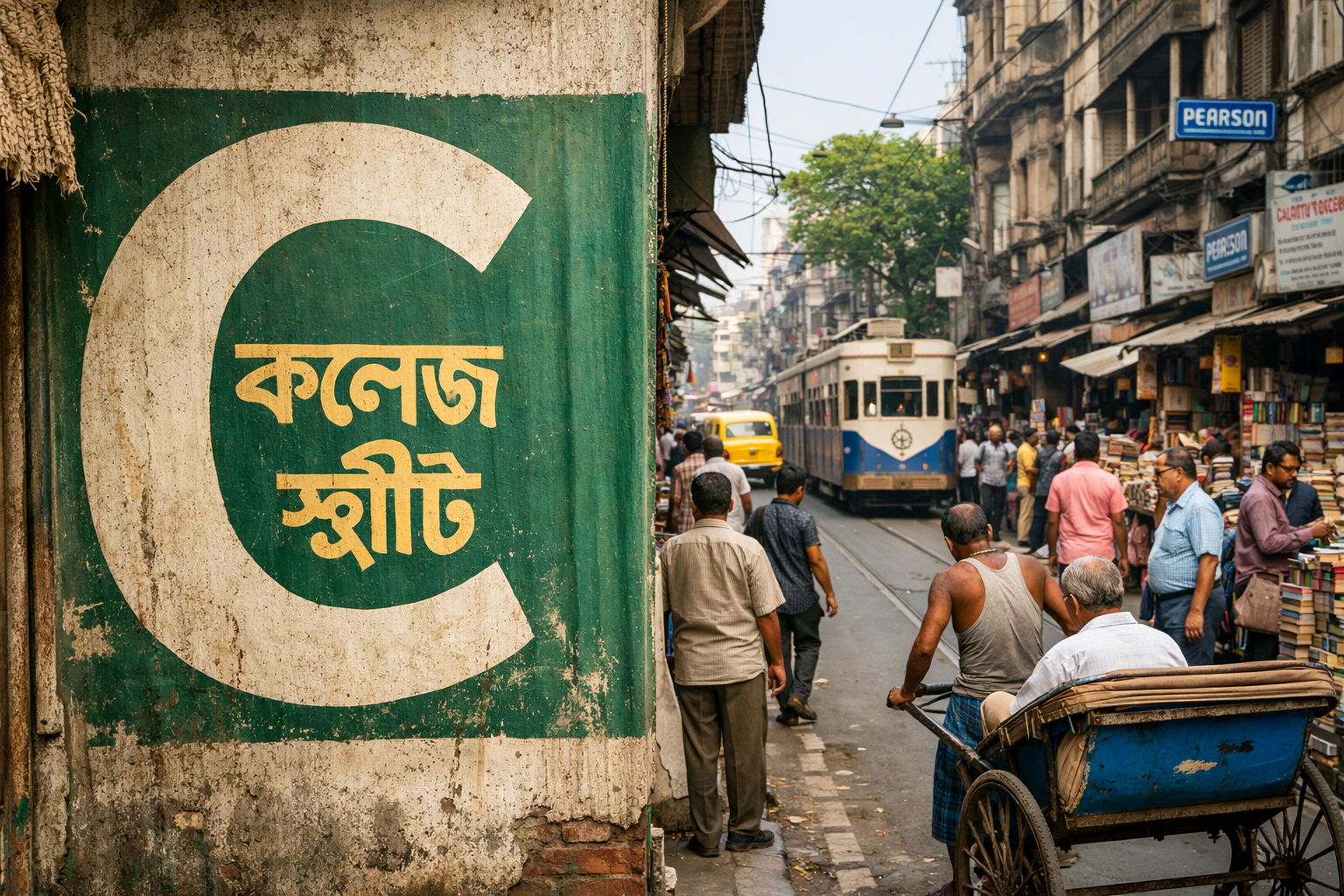
    Today I’m going to take you on a trip to one of my favourite places in Kolkata. College Street, which is also called Boi Para or Book Colony. Any book lover who has lived in Kolkata or been there will invariably gravitate towards this stretch of road that has been recognised as one of the famous landmarks of India.

    Photo by Anirbaan Sarkar on Unsplash

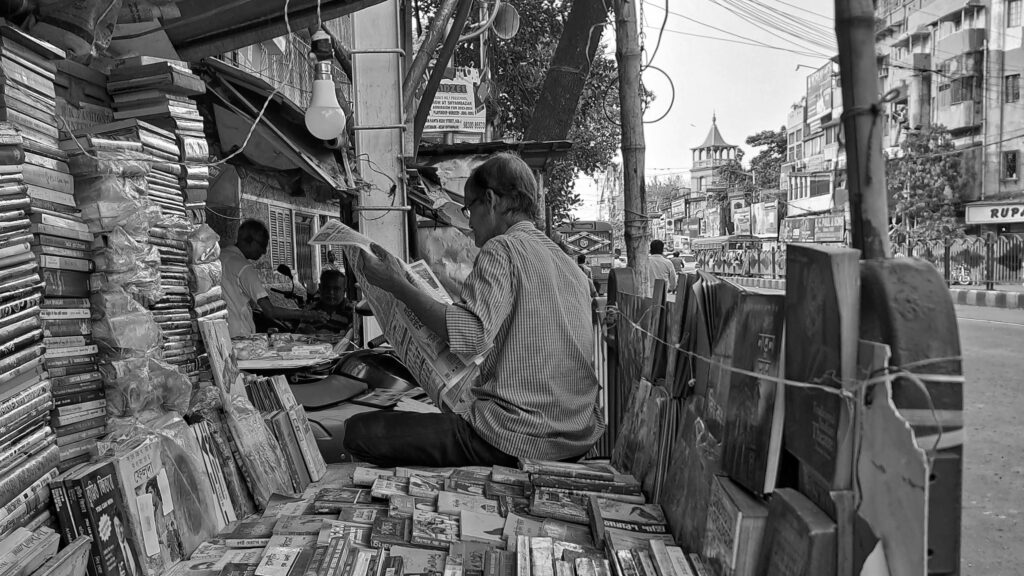
    The primary attraction of College Street is, of course, the books. It is India’s and Asia’s largest book market. Also, the second-largest second-hand book market in the world! So, you can easily imagine what a bibliophile’s heart experiences on a visit to this mecca of booklovers. One feels almost like Aladdin in the Cave of Wonders with books and bookstores almost spilling onto the road left, right, and centre!

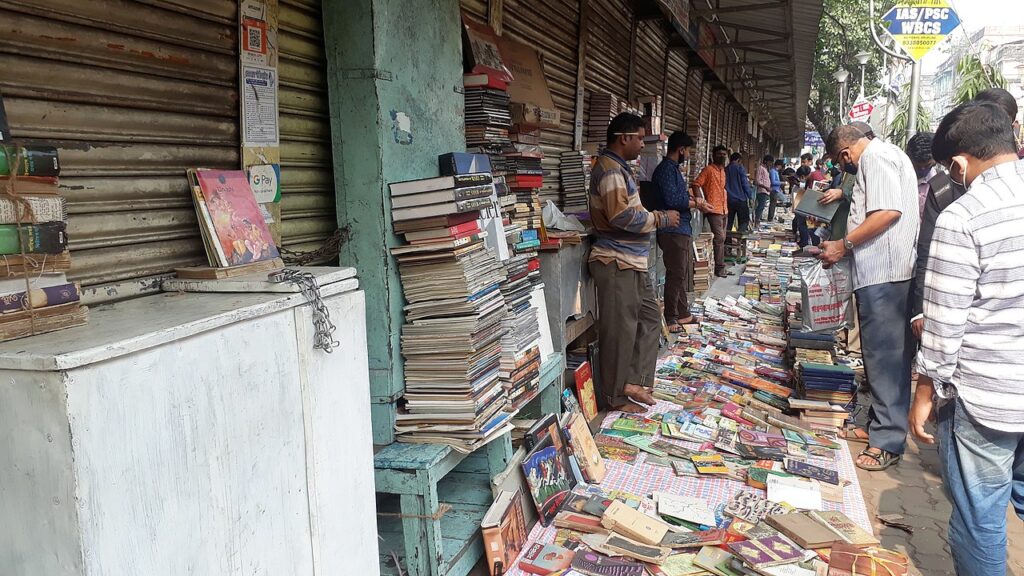
    Pinakpani, CC BY-SA 4.0 https://creativecommons.org/licenses/by-sa/4.0, via Wikimedia Commons

    What’s interesting is that books are sold not just from actual brick and mortar stores. The footpaths play host to dozens of wooden cubby-hole shops so stuffed with books, it’s a miracle they don’t collapse under the weight. There are also transitory vendors who sell right on the footpaths. Of course, between them, they make it almost impossible to walk on the pavements, but one visits College Street for the books not the pavements, so that’s all right.

    And what don’t you find there if you just have the patient and tenacity to look! Rare books being sold at throwaway prices, first editions discarded carelessly, books that are now out of print, books in foreign languages…the list goes on. I remember my first visit to College Street. My mother had taken me there in search of the Vyakaran Kaumudi, a book of Sanskrit Grammar by Shri Ishwar Chandra Vidyasagar. Yes, THAT Vidyasagar. We couldn’t find it in any regular bookstore. Ultimately, it was one of the footpath-dwelling vendors who produced a well-loved copy from among a pile of other second-hand books.

    Photo by Writa Bhattacharjee

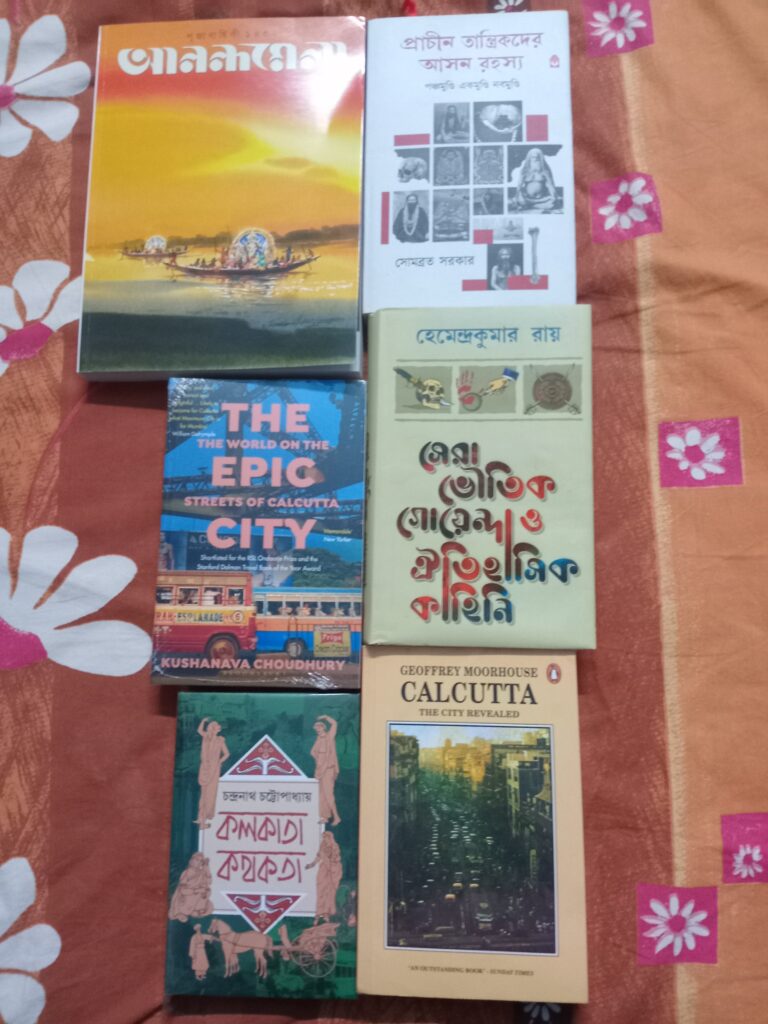
    There are, of course, freshly minted books as well. Textbooks and reference books, novels and poetry, bestsellers and unknown gems, travel guides and coffee table books, new releases and all-time hits, books on Kolkata and books about the world, popular subjects and obscure topics—you name it, you got it here. Here’s a picture of my haul during my last visit. As you can see, it’s a pretty eclectic mix. And this was from a single bookstore on a day when almost all of College Street was closed.

    juggadery, CC BY 2.0 https://creativecommons.org/licenses/by/2.0, via Wikimedia Commons

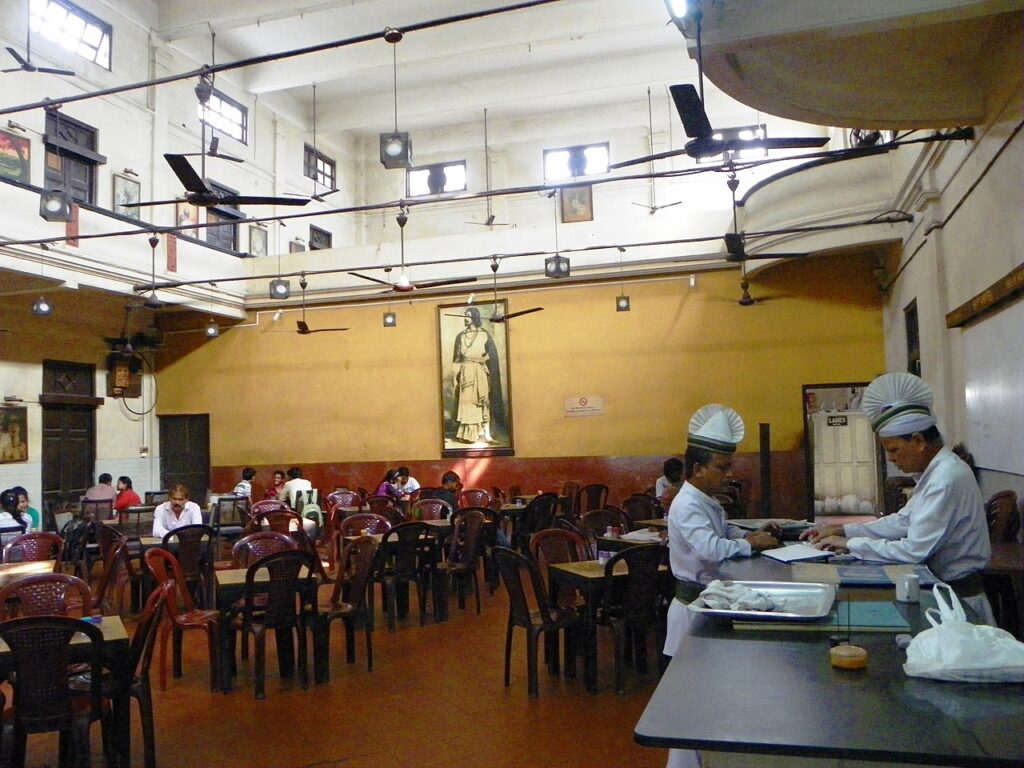
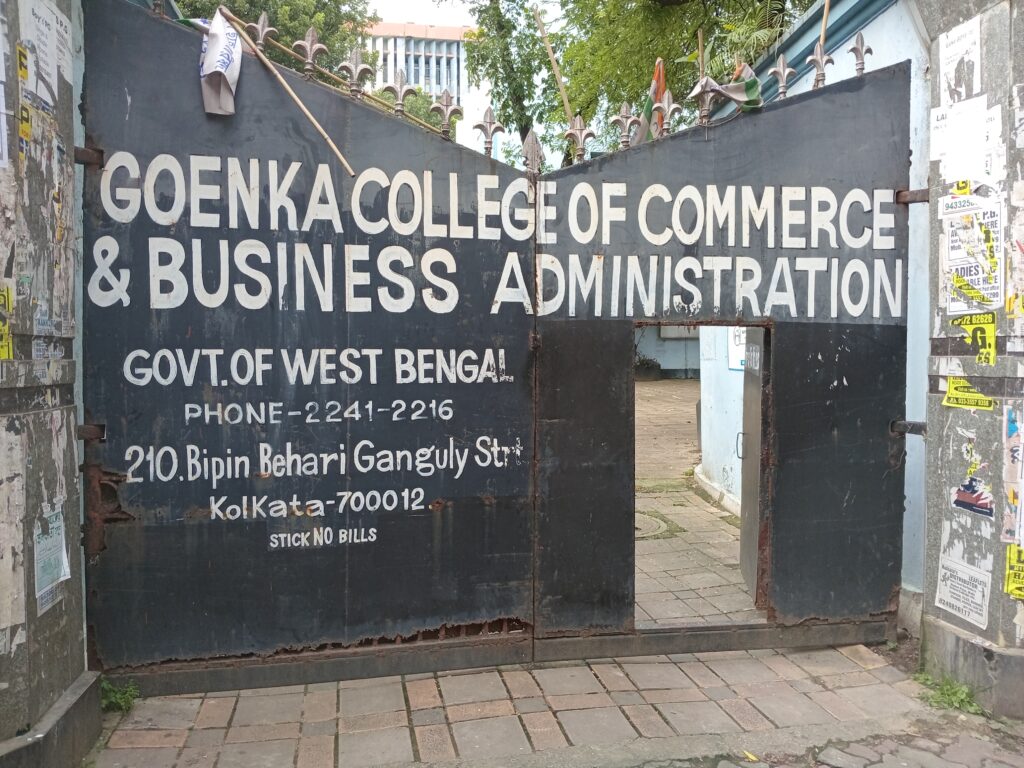
    Interestingly, the store from where I got these books was in the same lane that houses the famous Coffee House that I mentioned in my A for Adda post. It is not the only major landmark of the area, though. The College Square Park (whose new name is Vidyasagar Udyan) and Swimming Pool are also on this very street. I visited those in the company of my husband once. We travelled by Metro Rail to M G Road station and walked the rest of the way, taking a shortcut through the Calcutta Medical College, whose main entrance is on College Street. He was quite familiar with the locality since his own alma mater, the Goenka College of Commerce and Business Administration, is nearby. Ironically, we didn’t visit it during that visit. I only visited it on my last trip there.

    Photo by Writa Bhattacharjee

    There are many other prominent educational institutions on College Street, many of them established in the 19th century. Most famous of them is probably Presidency University (earlier Presidency College and even earlier Hindoo College) established in 1817. The abovementioned Medical College and Hospital, established in 1835, which was the first college of European medicine in Asia. The University of Calcutta, established in 1857, the first secular multidisciplinary university in South Asia. Bethune College (est. 1879), City College (est. 1881), Surendranath College (est. 1882), IISWBM (est. 1953), Hare School (est. 1818) are some other reputable institutions of Kolkata that reside on or near this 1-1.5 km stretch of road.

    One of the prominent non-educational landmarks of College Street is Paramount, a traditional sherbet shop that is over a century old. Then there’s the Thanthania Kalibari, one of the oldest Kali Temples in Kolkata (est. in 1703, even before the city of Calcutta was born), where Goddess Kali is worshipped as Maa Siddheshwari. The Boi Chitra Gallery and the Ashutosh Museum of Indian Art are a couple of places art lovers can check out.

    Photo by Writa Bhattacharjee

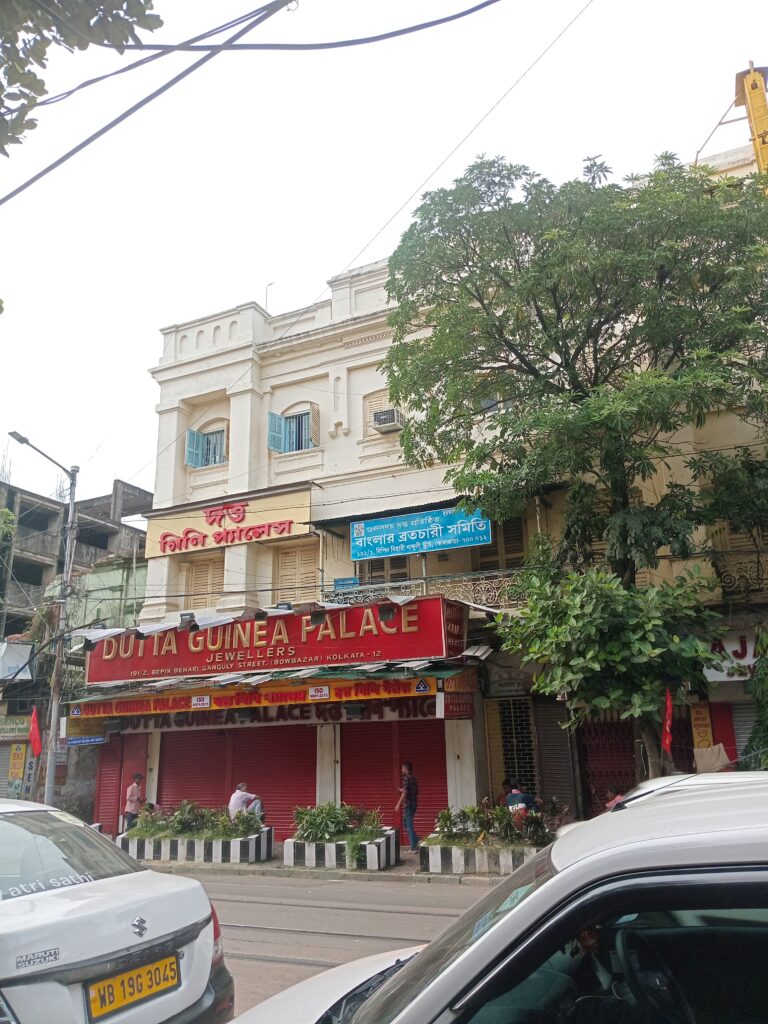
    Some other landmarks nearby include the Jorasanko Thakur Bari, the ancestral home of Rabindranath Tagore that is now a museum and the Marble Palace, which is a private museum originally built as a mansion in the 19th century. Both the Kolkata Police Museum and Police Headquarters (popularly known as Lal Bazar after the neighbourhood where it is) are also near College Street. Even the Writers’ Building, which served as the centre of British power in Bengal for over 200 years, and operates as the state secretariat since independence, is not very far from College Street. Two of Kolkata’s best-known markets are also a stone’s throw away – Bow Bazar, known for its jewellery stores, and Bara Bazar, known as a wholesale market where you can get anything under the sun.

    Photo by Writa Bhattacharjee

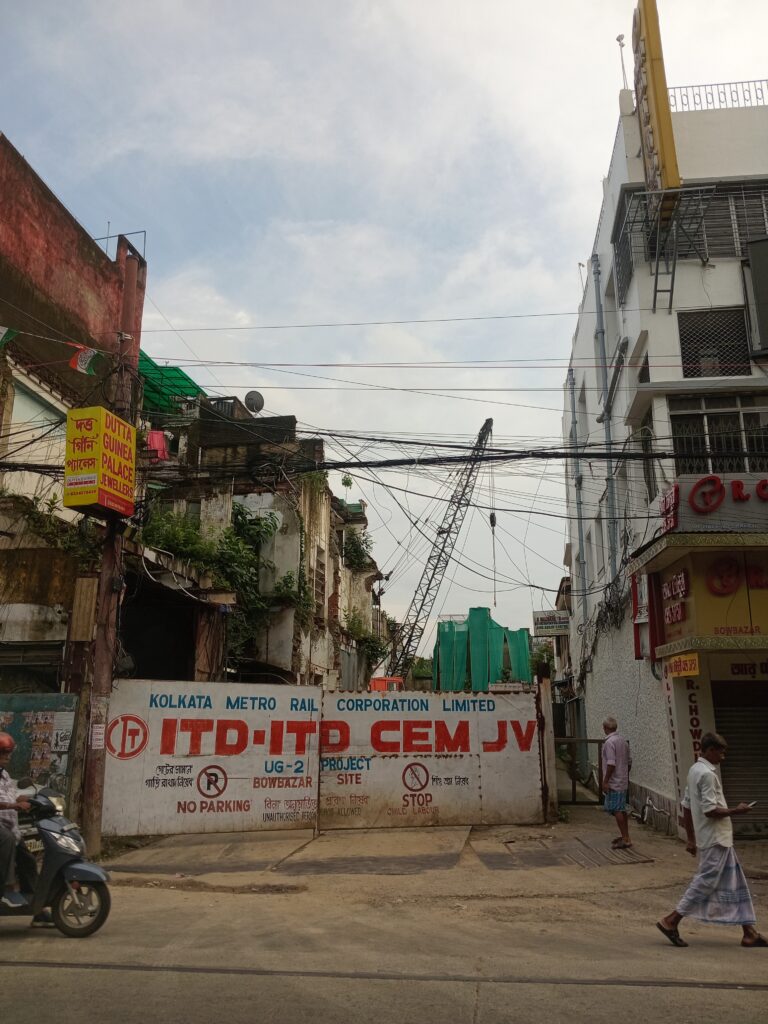
    Of course, no mention of the locality would be complete without the mention of the infamous Baiji Para or red-light district in Bow Bazar. Officially known as Gour Dey Lane, this locality was frequented during the British era (and later) by babus wishing to spend time with the Baijis or “dancing girls”. There are many centuries-old houses here that served as abodes for generations of these ladies of the night until recently when a large number of families were evacuated due to work on the Metro Rail for fear of subsidence. Now the lane is a construction site for the KMRCL.

    If you’ve read Ageless Feud, you would have come across some of these landmarks already. Manik’s visit to Bara Bazar is a major turning point of the story, for instance. The Marble palace is another landmark mentioned in the book. You will come across several more of the places mentioned here in Fair Game, Book Two of City of Kaali, including but not limited to the Coffee House and Lal Bazar. How do they figure into the mystery Manik is caught up in? That you will have to find out by reading the book when it’s out later this year!

    Which of the places mentioned in this post are you curious to find out more about? Which of them do you guess will feature in the series? Let me know your guesses in the comments and keep watching this space for more stuff about Kolkata, the City of Kaali (pun fully intended)!

    #AtoZChallenge

    #BlogchatterA2Z

    #Kolkata

    #cityofkaali

    #collegestreetkolkata

    This post is a part of Blogchatter A2Z Challenge 2026
  • B is for Baro Mashe Tero Parbon

    B is for Baro Mashe Tero Parbon

    Hi folks!

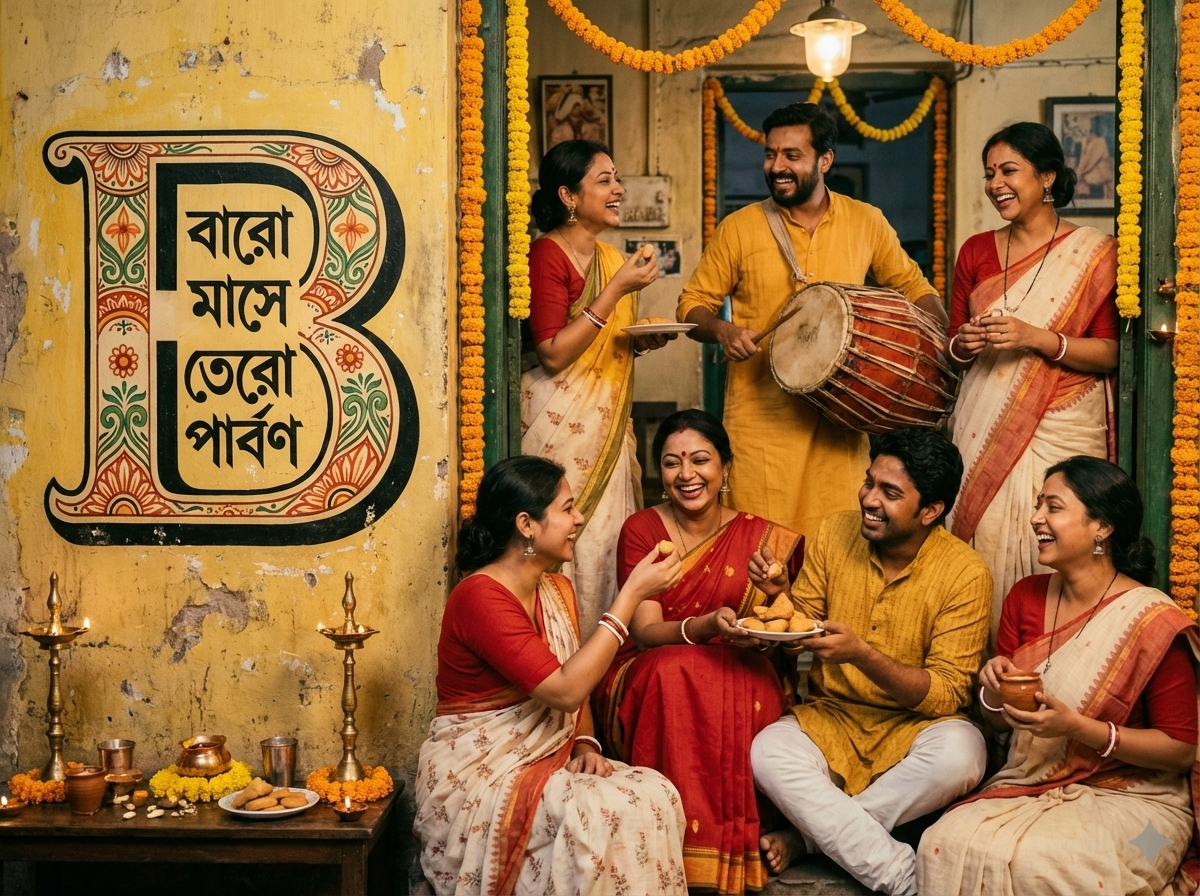
    Growing up, I often heard the expression “baro mashe tero parbon” in the context of Bengali festivals. Meaning “thirteen festivals in twelve months”, it is used metaphorically to refer to the large number of festivals that Bengalis celebrate. Imagine my surprise when I recently found out that the expression is not just metaphorical but refers to thirteen actual festivals!

    Surprisingly, an internet search didn’t provide a whole lot of clarity because most sites mentioning these thirteen festivals added and subtracted two or three. That is not surprising, since these festivals are rooted in rural traditions, and with growing urbanisation, several have lost their original significance in people’s lives. To confuse matters more, we Bengalis really do have an overabundance of festivities, so it is quite easy to mix up one’s list of festivals.

    I was almost on the verge of asking our family priest (yes, there’s one, thanks to my dad) when I came across an old rhyme summarising the thirteen festivals by month. I don’t feel it is necessary to include it here as some of the information is archaic and no longer relevant. You can find the rhyme and its explanation in this video if you’re interested: https://www.youtube.com/watch?v=dyF3OrpoAko

    Now, let’s get on with the task of discovering what these thirteen festivals really are. Below, I’ll enumerate them by month with brief descriptions.

    Created with Nano Banana on Gemini

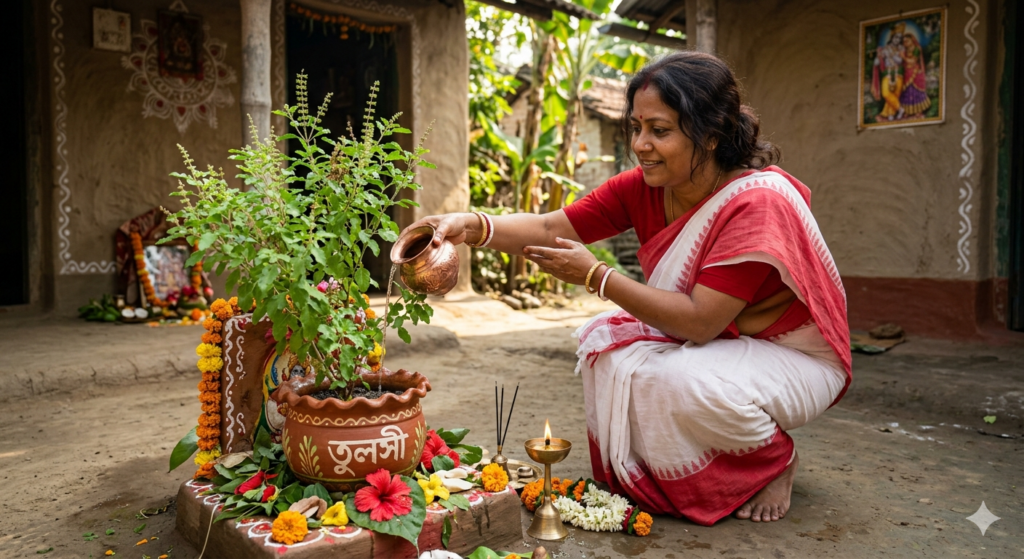
    Boishakh (April-May)Boishakh is the first month of the Bengali calendar. One would expect Poila Boishakh/ Naboborsho (Bengali New Year) to be the festival for this month. Oddly enough, it is not! The festival for Boishakh is actually Tulsi Jhara, a month-long celebration that is surprisingly modern in its manifestation. A water pot is hung above a Tulsi (Holy Basil) plant, from which water drips onto the plant. Considering the change in seasons, this is an excellent way to water a plant to ensure that the increasing heat doesn’t harm it. The plant is also worshipped every morning and evening with offerings of flowers, sandal, and water.

    Photo by Babi Putu on Unsplash

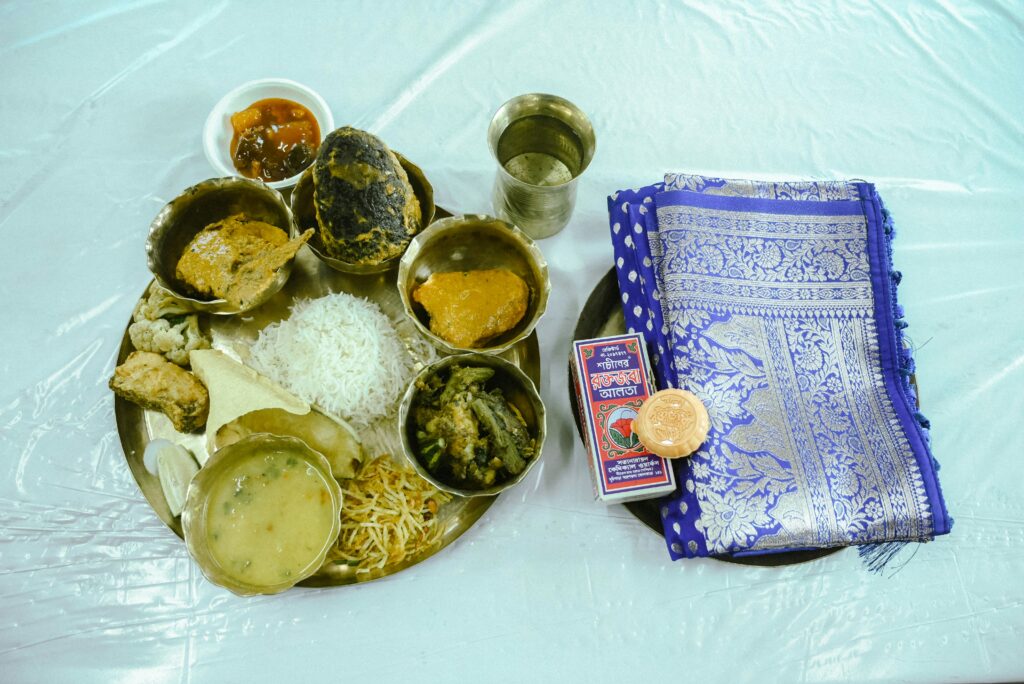
    Joishtho (May-June) – The festival for Joishtho is one of the most popular ones in a Bengali household: Jamai Shashthi. This observance is both for gaining and protection of children. Even though in Kolkata, the focus of the festival is the Jamai or son-in-law, in many Bengali communities, all children and children-in-law are equally prayed for. Growing up, tying of a “protection thread” on the wrist, reading of the story of Ma Shashthi and her black cat, and a special feast were the highlights of this festival for me. It is one of the most opulent of Bengali festivals with grand feasts and the exchange of lavish gifts.

    Photo by Dibakar Roy on Unsplash

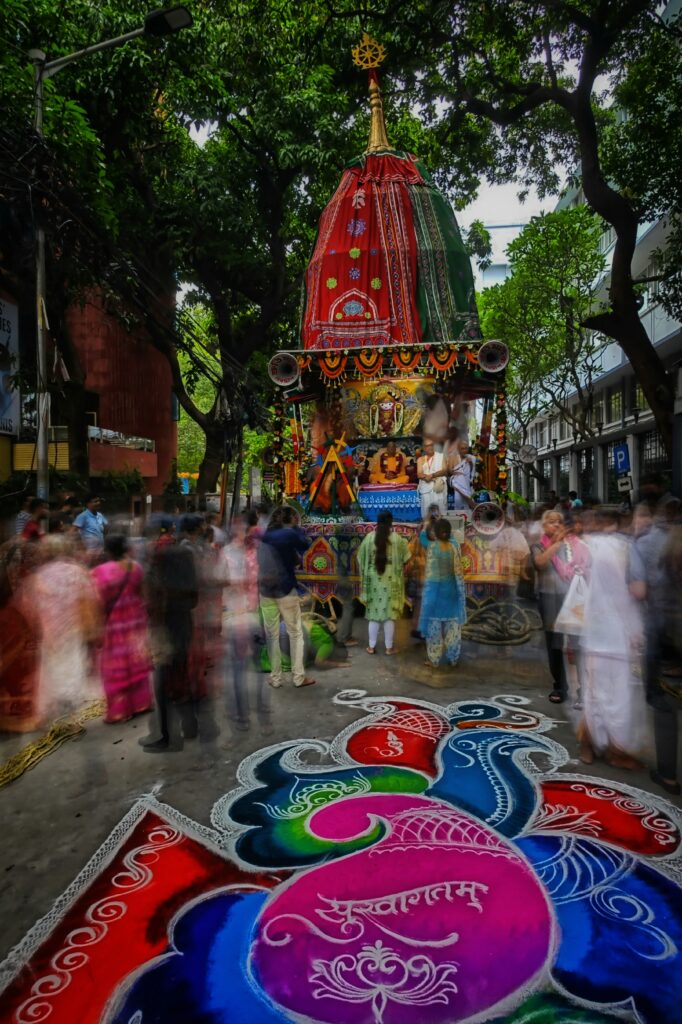
    Asharh (June-July) – The festival for Asharh is Rath Jatra. It is popular throughout eastern India, though Puri is its principal centre. Devotees pull the chariots of Lord Shri Krishna, Lord Balaram, and Devi Subhadra through the streets in a massive procession. The legend behind the modern-day Rath Jatra denotes it as the journey of the deities to their aunt’s house. However, our scriptures mention a far older tradition attached to a different legend. So entrenched is this festival in Bengali culture that it has given birth to the saying “Rath dekha aar kala becha”, a reference to achieving two goals through one task! A major mela also takes place on the occasion.

    Photo by Bhaumik Kaji on Unsplash

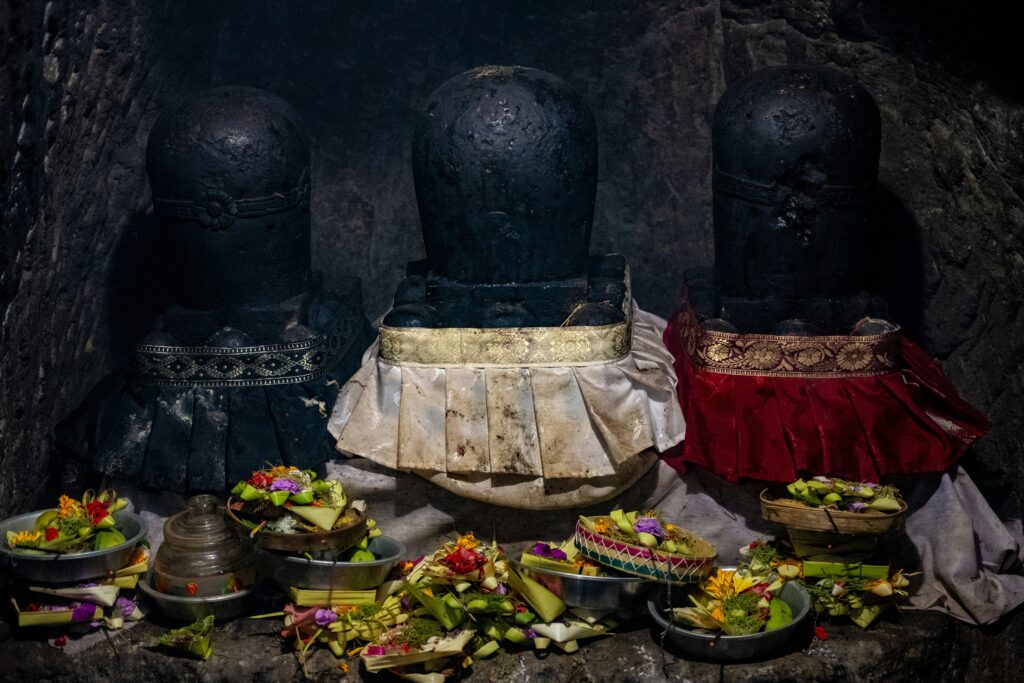
    Srabon (July-August) – The month of Srabon doesn’t have a fixed festival day. Rather the entire month is dedicated to the worship of Lord Shiva. It is believed that practicing observances related to the worship of Lord Shiva throughout the month removes all obstacles and challenges and brings prosperity. Some mistakenly believe that the festival for Srabon is Jhulan Jatra because it takes place in the same month. However, despite being an important festival, Jhulan does not find a place in the list of tero parbon.

    Created with Nano Banana on Gemini

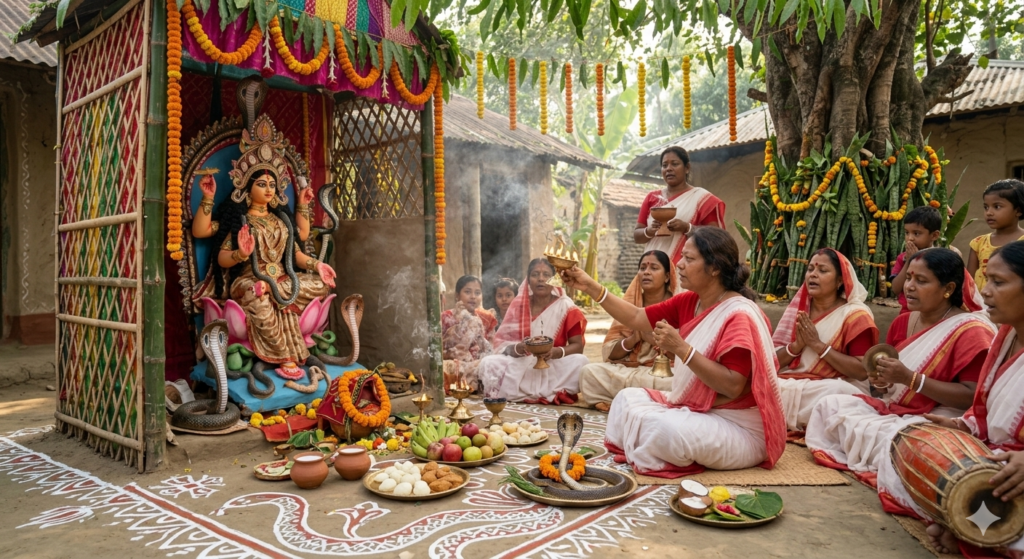
    Bhadro (August-September) – Despite three other major festivals falling in the same month, the list of thirteen includes a festival that is inherently rural in nature: Manasa Puja. Though the Goddess of Serpents is worshipped on different days throughout the monsoon months according to different traditions, the rhyme specifically mentions it as the festival for Bhadro. It makes sense too as snakes have always been a serious concern in rural areas, especially during the rainy season. Which major festivals of this month surprisingly miss out on inclusion in the list? Janmashtami, Ganesh Chaturthi, and Vishwakarma Puja.

    Photo by Priom on Unsplash

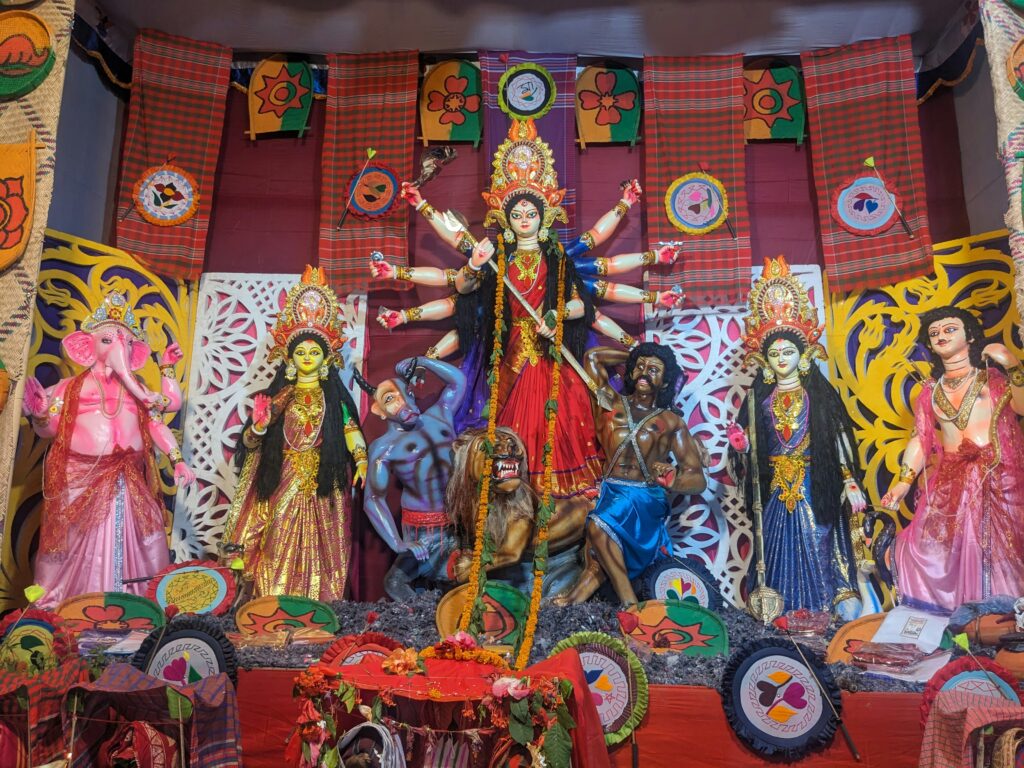
    Ashwin (September-October) – The celebration for Ashwin is one that is famous worldwide. Type the word “Bengali” and you’ll get hundreds of images of our biggest festival: Durga Puja. Though it technically starts from the day of Mahalaya—with the evergreen baritone of Birendra Krishna Bhadra rousing us from sleep at dawn year after year through the decades—the primary festivities take place from Shashthi to Dashami. Dhak, dhuno, glorious traditional clothing, cultural programmes, a smorgasbord of delectable foodstuffs…this festival is a dazzling feast for the senses. Kolkata is, of course, transformed into a magical land during these days. The scale of the celebration is so superlative that it needs a post (or two or three) of its own! The Poornima (full moon) after Durga Puja is celebrated as Kojagari Lokkhi Puja, which also doesn’t make it to the list of thirteen parbons despite being an important Bengali festival.

    Photo by Gopinath Mohanta on Unsplash

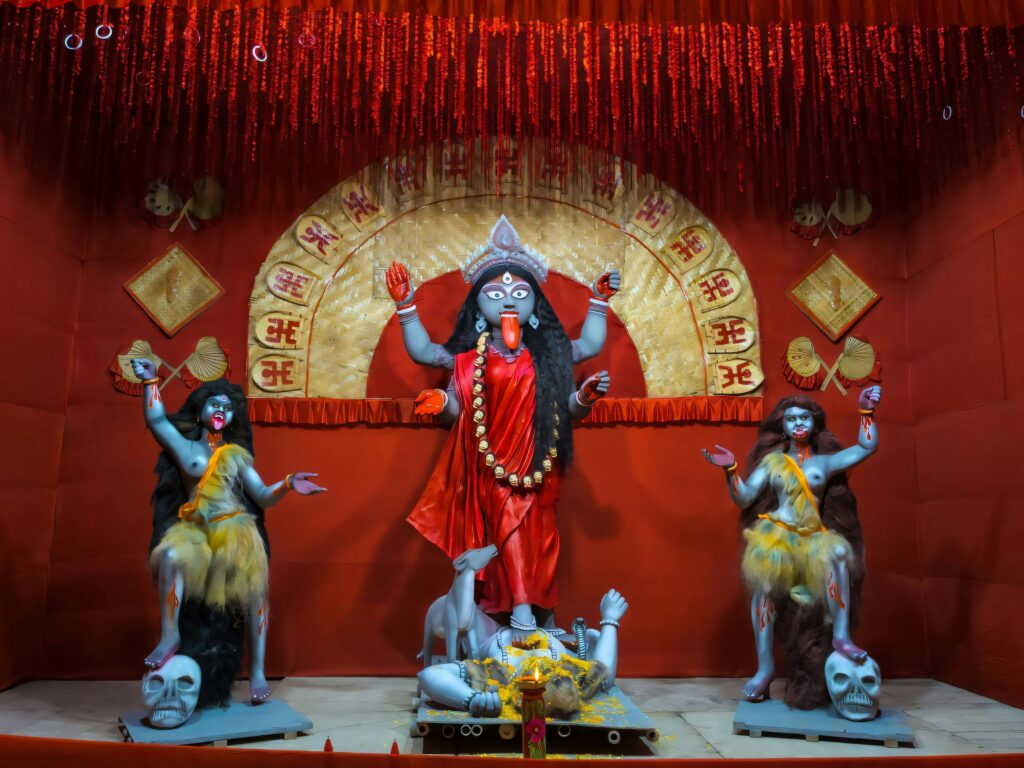
    Kartik (October-November) – This is the month that gets two parbons, and no prizes for guessing which ones! The first one is, of course, Kali Puja. Taking place half a lunar cycle after Lokkhi Puja, Kali Puja takes place late at night on Amavasya (new moon). This intensely mystical festival is concurrent with Deepavali, though the latter is not one of the tero parbon.

    Created with Nano Banana on Gemini

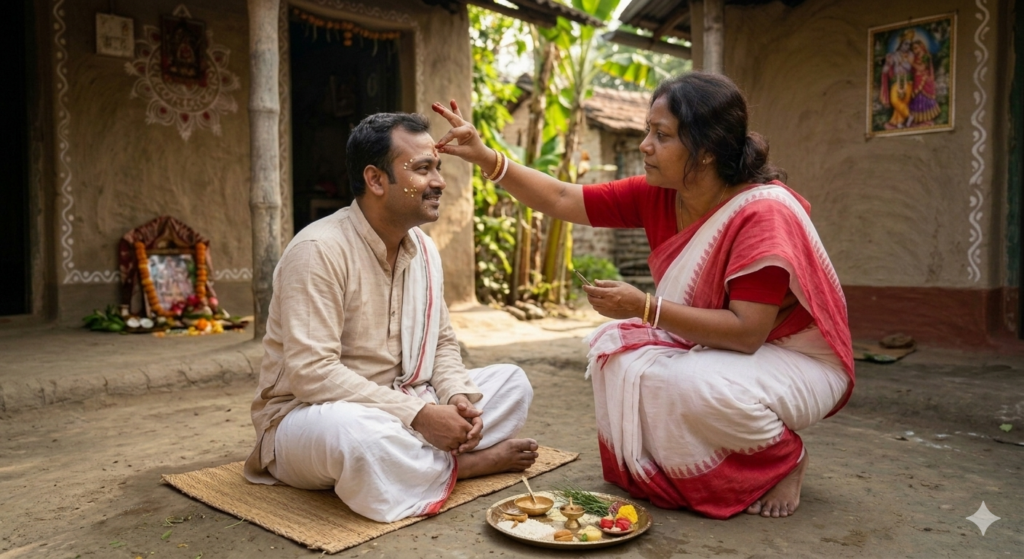
    The eighth parbon takes places just two days after Kali Puja. Bhai Phonta (also known as Bhai Dooj or Bhratri Dwitiya in some places) is a celebration of the bond of brother and sister. Putting the sandalwood phonta on my brother’s temple, reciting the chant of protection, and then arguing about touching his feet (since he’s only two years older), and exchanging gifts are all such fond memories of my childhood!

    Photo by Sreehari Devadas on Unsplash

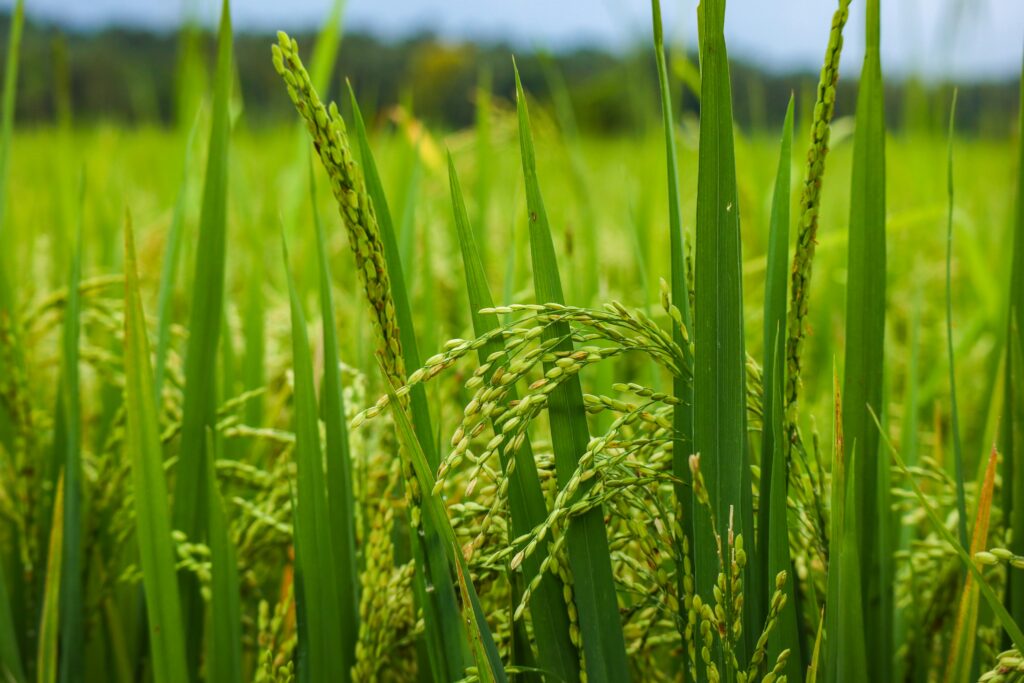
    Ogrohayon (November-December) – The festival for Ogrohayon is so deeply rooted in Bengal’s agrarian and rural past that many might not even have heard of it. Nabanna, meaning naba (new) + anna (grain), is a folk festival to mark the germination of the new rice crop grain heads or panicles. The festival is accompanied by prayers for greater crop yield, rain, cattle, children, and other hallmarks of rural prosperity.

    Photo by Prchi Palwe on Unsplash

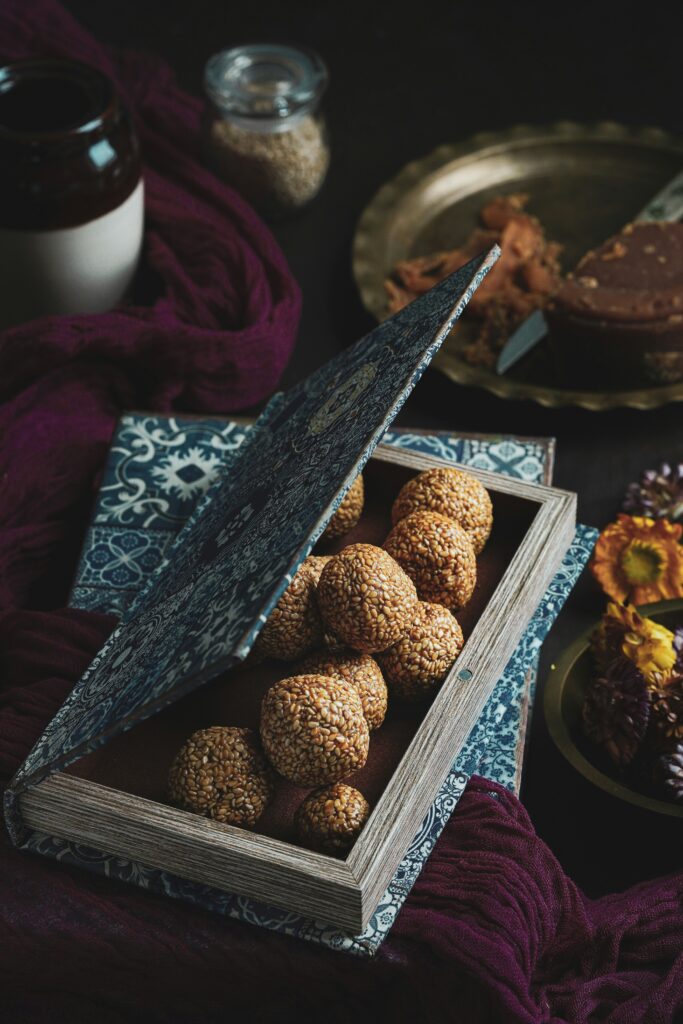
    Poush (December-January) – Though the previous festival has a connection to this one, it is not a connection that is noticed by many. Poush Sankranti, also called Makar Sankranti, is both a harvest festival and a celebration to mark the transition of seasons from winter to spring. Several similar festivals occur across India at the same time, and newly harvested rice crops play a central role in many of them. For Bengalis, this is the festival of delicious pithe, puli, and patishapta—sweets made from rice, jaggery, coconut, sesame seeds, and various milk products. This is the ultimate festival for those with a sweet tooth!

    Photo by AJOY DAS on Unsplash

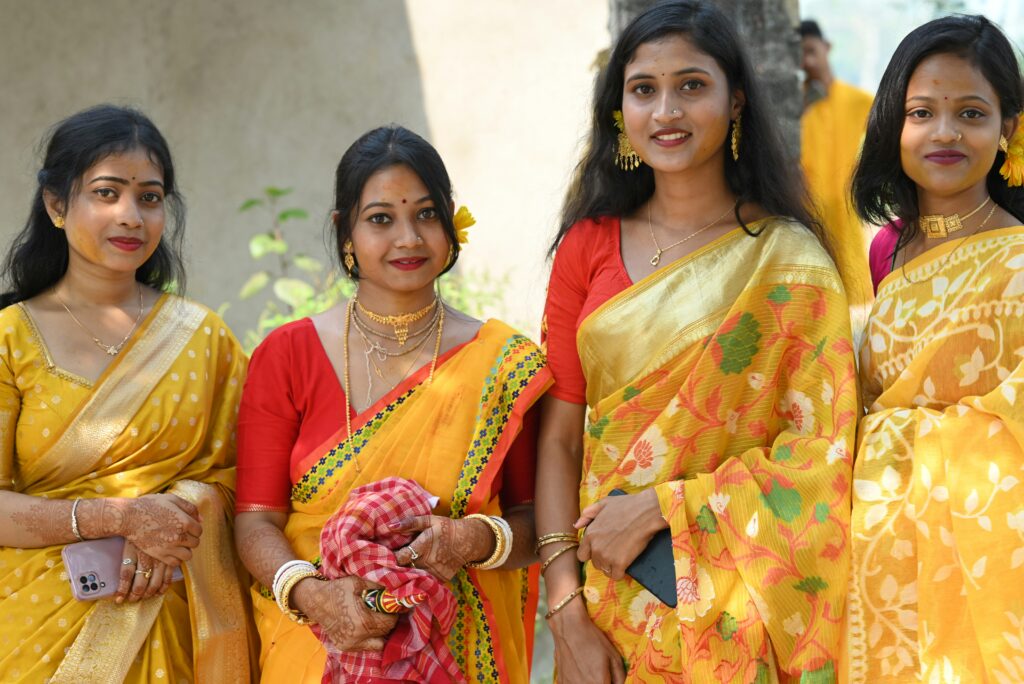
    Magh (January-February)Magh is the month for Saraswati Puja. It is also known as Vasant Panchami in many parts of India, and is considered the official beginning of spring. This is also the day of hatey khori for Bengalis, the day when education formally begins for children. Some of my fondest childhood memories of this festival are of setting up and decorating the puja pandal the night before, waking up early to bathe and wear a yellow saree, keeping school books and notebooks in the pandal, fasting until the puja got over and we had all said our prayers, pandal hopping with friends eating the same prasad at every pandal yet believing it to taste different at every spot, and writing the word “Saraswati” in Bengali 108 times in the evening under my grandmother’s guidance.

    Photo by Dibakar Roy on Unsplash

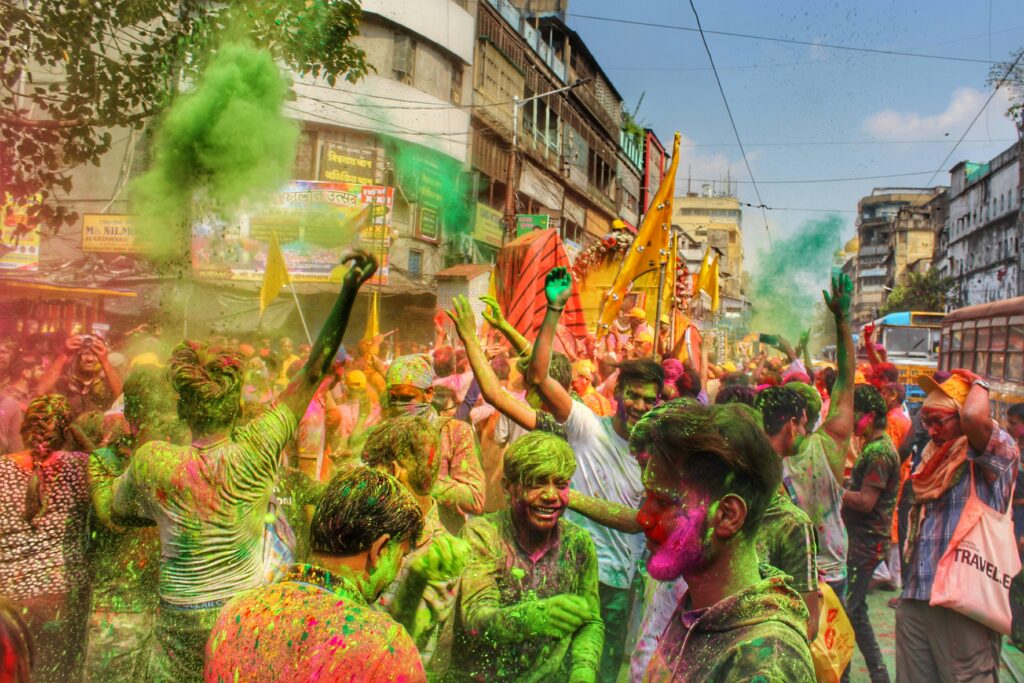
    Phalgun (February-March) – The festival for Phalgun is one of the biggest celebrations not just for Bengalis but for all Indians: Holi. It is called Dol Poornima or Dol Jatra in Bengali and is celebrated in much the same fashion as in the rest of the country: playing with gulal colours as a reminder of the tradition of Lord Shri Krishna playing with colours with the gopis in Vrindavan.

    Photo by Matt Dany on Unsplash

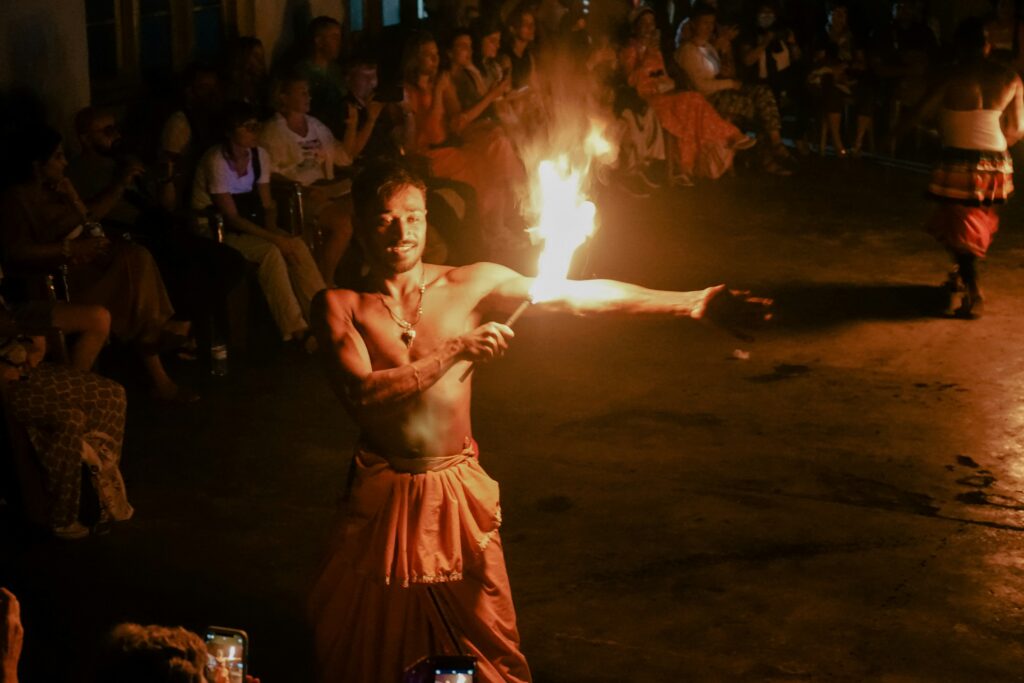
    Chaitro (March-April) – The final festival on the list of the tero parbon is one that is again rooted in Bengal’s rural heritage. Dedicated to Lord Shiva and Kali, Charak Puja is one of the most unique, and possibly the most intense, of festivals of Bengal. It is also part of the week-long Gajan festival that marks the end of the Bengali calendar year. Some of the rituals associated with this festival are crocodile worship, walking on hot coals, fire dancing, piercing the body with metallic hooks or rods, and other austerities, usually by large numbers of sanyasis or bhaktos. It is also accompanied by a vibrant folk fair.

    So, this post has turned out to be rather longer than I thought it would be. Quickly cutting to the chase now. How are all these festivals related to my series City of Kaali? Well, the connection with Kali Puja is needless to say. But given that Manik Choudhury, my protagonist, is a 150+ year-old one-time zamindar, I think you can guess what many of these festivals—especially the rurally rooted ones—have meant to him across the years. Even in the present, some of these celebrations will feature in his life. How they will affect him is for me to know and you to find out as the series progresses!

    #AtoZChallenge

    #BlogchatterA2Z

    #Kolkata

    #cityofkaali

    #festivalsofbengal

    This post is a part of Blogchatter A2Z Challenge 2026.

  • A is for Adda

    A is for Adda

    Hi folks!

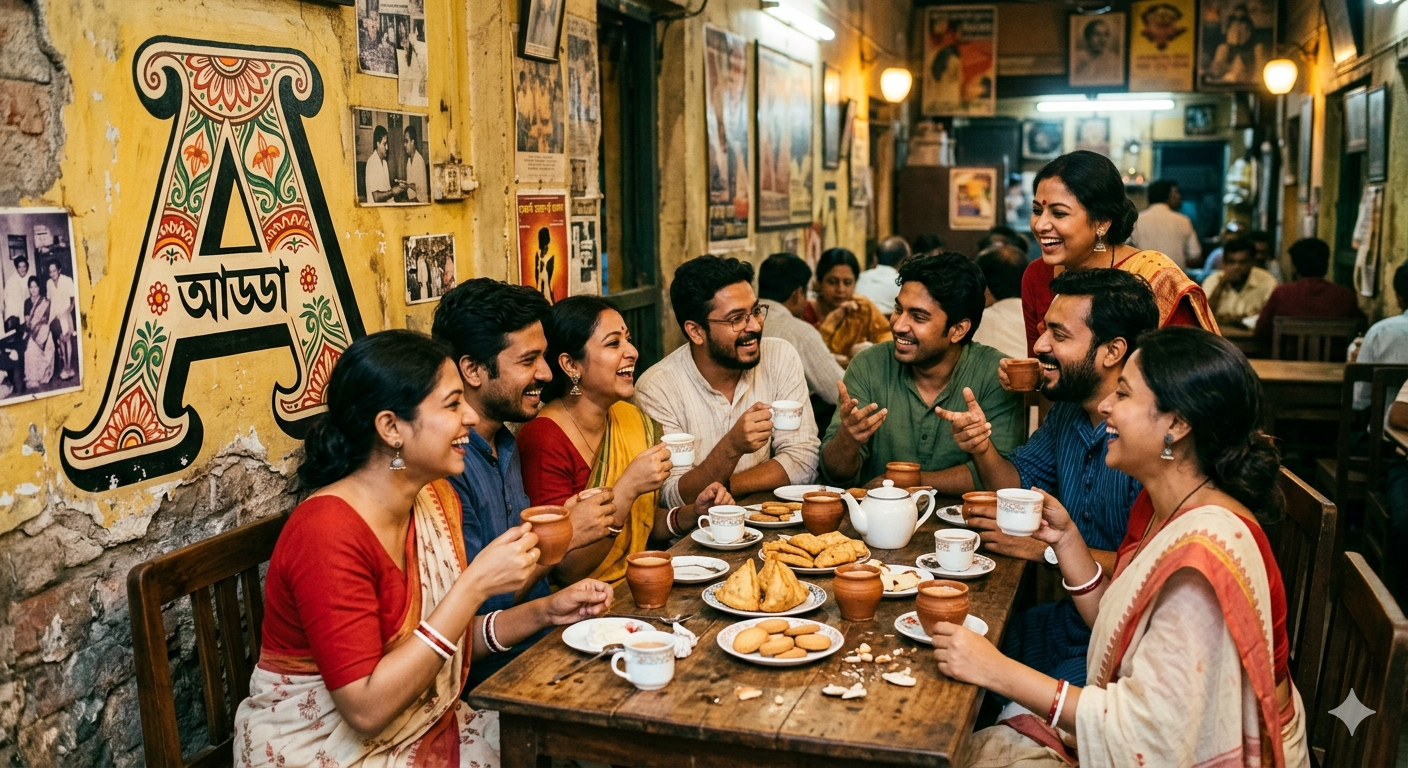
    Many of you might be familiar with the word “Adda”. It’s used in several Sanskrit-descended Indian languages in the sense of a place of gathering. According to Google Baba, even Kannada contains this word, though it’s used to mean cross or crossroad. But to Bengalis, Adda is not a place or even an activity. Adda is emotion. Adda is a cultural phenomenon. Adda is soul sustenance.

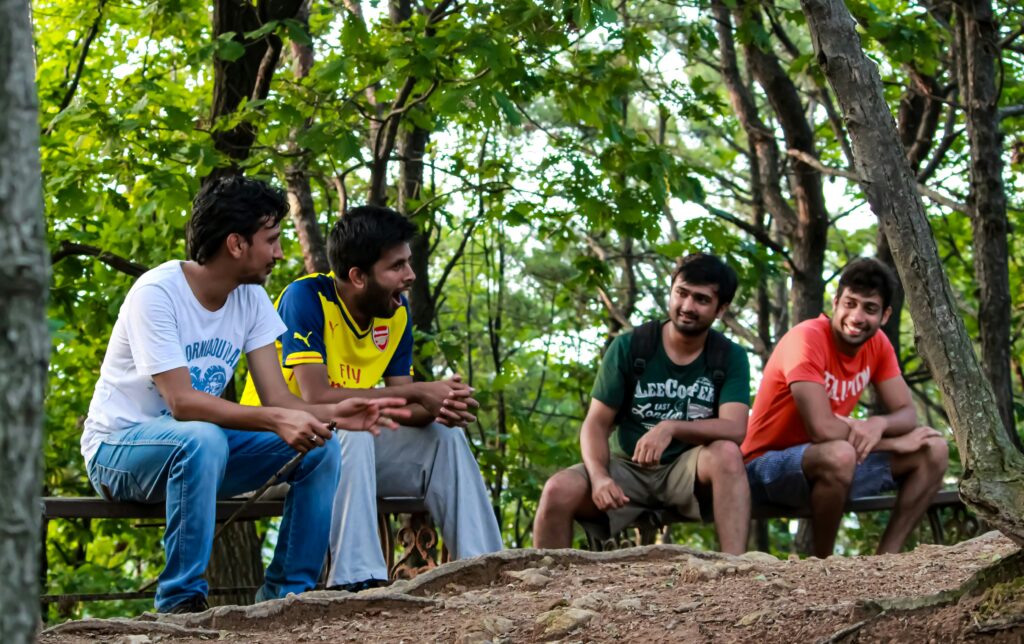
    Technically, in Bengali, Adda refers to a gathering of people for the purposes of conversation. Not a meeting, not a purposeful discussion, and not even idle gossip. Rather, a gathering whose sole purpose is relaxed conversation. Though, “relaxed” often flies out the window as soon as hotly debated topics emerge.

    An adda requires a minimum of two people to be present, though there is no upper limit. If the gathering is very large, the adda might break up into multiple smaller addas. The chaos and cacophony in such cases—quite paradoxically, might I add—increases exponentially instead of becoming manageably scaled-down.

    Adda also has no fixed duration, though on metaphorical paper (which is usually an answer to the question of “How long will you be gone?” by a family member), it ranges between half an hour to an hour. Adda-addled time tends to behave very mysteriously, sometimes stretching like the most elastic of mozzarellas and sometimes flying past like the Shanghai Maglev.

    Photo by Sourav Debnath on Unsplash

    Addas can be fixed, regular assemblies. For instance, daily evening gatherings of elderly ladies after their walks to discuss maids and daughters-in-law. Or card addas in the local train during morning commutes where witty comments matter more than actual tactics. Or a nightly heated debate of neighbourhood youth on politics, romance, movies, and global warming.

    Sometimes addas are occasional. Such as when old friends find themselves in the same city after many years, and the pull of nostalgia is too strong to resist. Or when relatives who haven’t seen each other for decades congregate for a wedding. Tasks related to the main purpose of the visit are relegated to the wayside as catchup and ribbing take centre stage.

    But the most interesting addas are often the impromptu ones, the ones that spring up among strangers in the most unexpected places. At Puja Pandals between elderly gentlemen recalling their youth. Or during a metro rail journey when two young ladies find themselves reading the same book. Or among parents who find themselves stuck in interminable queues during admission season.

    Photo by Polly Sadler on Unsplash

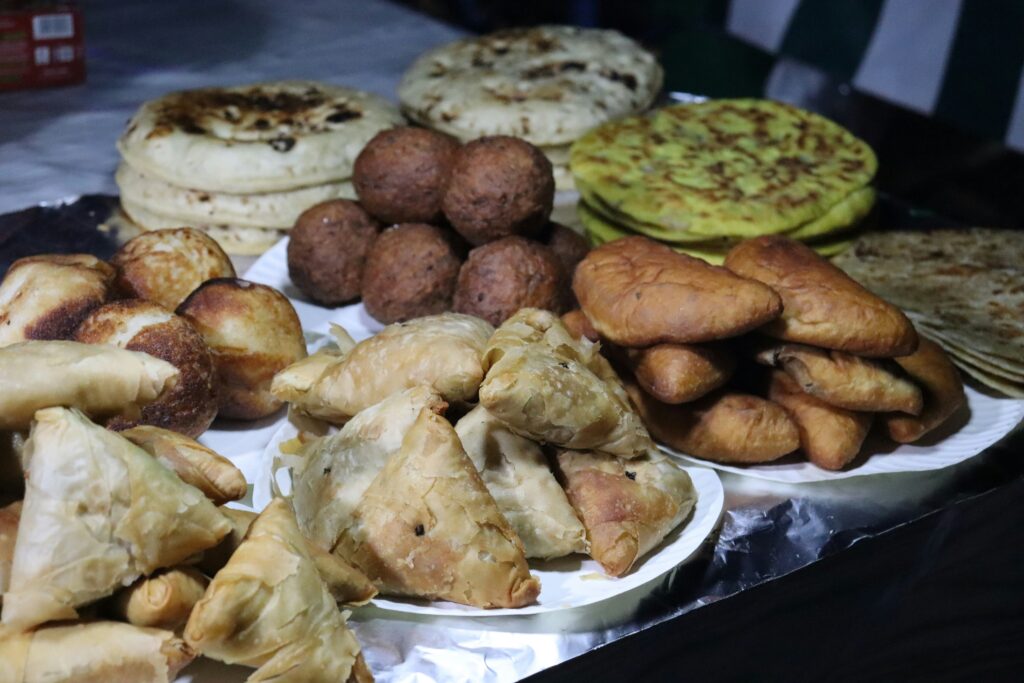
    Adda is, of course, to be lubricated by sweet tea or coffee and deep-fried umami snacks. The food may not be the point of the gathering, but it can often turn out to be the highlight, determining where and when the rendezvous should take place. Singara, kochuri, nimki, telebhaja, chanachur, chop, cutlet, and kobiraji are age-old comrades of adda. With the inexorable march of modernity, newer snacks like pizza, burgers, nachos, chips, and sandwich have also managed to jostle open a space for themselves on the communal table.

    For me, personally, the earliest introduction to adda were visits to and from friends of my parents. I still have no clue what prompted them to mandate my presence at these gatherings that were duller than ditchwater to me. I strongly suspect those early exposures to this sociocultural phenomenon—instead of having the desired effect of teaching me social skills—consigned me to lifelong introversion.

    As I’ve grown older, I’ve come to appreciate the joys and hidden benefits (sometimes hidden deeper than a pirate’s treasure) of this quirky facet of Bengali life. Enjoying both planned and unplanned addas of my own, I now understand why adda matters to the Bengali soul so much, and why it is a tradition we are hanging on to tooth and nail even in this age of internet and social media.

    Photo by Abhishek Choudhary on Unsplash

    Because adda is a safe space where you can be unabashedly yourself. Where you can give and take in equal measure and leave everything on the floor to begin anew at the next gathering. Where you can connect with minds, hearts, and spirits that share the same corner of the universe as yours, no matter how big or small that corner might be. Where you can relive the impulse that first led humans to start living in groups.

    It is unique in its deliberate aimlessness, its animated posturing, its joyful spontaneity, its surprisingly covert—and sometimes overt—aggressiveness, and its persistent break from constant purposefulness. In a word, it is essentially Bengali.

    One of the most poignant depictions of adda is in the very, very famous song by the late Manna Dey – coffee houser sei addata (Album: Hits of Manna Dey Volume 2, Lyrics: Gauriprasanna Mazumdar, Music: Suparna Kanti Ghosh). As the legend presses all the nostalgic buttons while narrating the tale of seven friends who used to meet regularly at the Coffee House for adda, the relatability of their lives and fates resonates within us too.

    When I was younger, I used to joke that most of them ended up with unsatisfactory endings because they spent too much time at their adda instead of focusing on studies and career! Needless to say, I don’t actually believe that any more even though I might still spout that joke from time to time!

    Photo by T2 Graphy on Unsplash

    And now, coming to the final bit, the one where I tell you how all this is connected to my series City of Kaali, as promised in my theme reveal. Adda has two connections to the series. First in the lack of this very Bengali essential of daily life. If you know what it means for a Bengali, especially a Bengali of Kolkata—or have figured it out from my ramblings above—you’ll begin to understand something important about Manik, my protagonist. What it is I won’t spell out for you since I respect your intelligence enough to trust you to figure it out.

    Second, there is a character in Ageless Feud who is named for one of the seven friends from Manna Dey’s song. Not just the character but his profession too is inspired by the iconic song. While there were claims of art imitating life regarding this character—a claim that was soundly repudiated by the author of the song—in my case, it is a case of art inspiring art. And no, I’m not going to tell you the name of this potentially recurring character either. To find that out, you’ll need to read my book and listen to this marvel of music that will draw you into the magic of Adda whether you want or not!

    #BlogchatterA2Z

    #AtoZChallenge

    #Kolkata

    #cityofkaali

    #adda

    “This post belongs to Featured Category BlogchatterA2Z.”

  • A to Z Challenge 2026: Theme Reveal

    A to Z Challenge 2026: Theme Reveal

    Hi everyone! Totally terrified new blogger here about to plunge into what promises to be a thrilling challenge: Blogchatter’s A to Z challenge 2026!

    Never having done anything like this in my life, I’m both excited and nervous about this. What I’m sure about, though, is what I want to write about. And that’s the place where my series City of Kaali is set.

    The name of the series is a bit of a giveaway, of course. Yet, it is not Kolkata as tourists see it that I want to write about. It’s Kolkata as I see it while writing City of Kaali. It is a Kolkata both of today and of the stories I grew up reading, real and also romanticised, the one I discover walking down random streets and talking to fascinating people.

    And so, without further ado, here’s the theme for my very first A to Z challenge: Kolkata Kaleidoscope, the City of Kaali version.

    What am I planning to include in this blog, and how is it unique? Well, the plan is to include 26 topics ranging from authors to food to history to daily life that you can encounter in my series. Some of these are already included in Book One: Ageless Feud. Others will present themselves in subsequent books.
    I confess, I have something of an ulterior motive in doing this. It’s part of my world-building exercise for the series. And doing it this way makes for a more systematic process than random notes and photographs on my phone!

    So, join me on this journey of discovery, and be ready for some surprises along the way! Share some guesses in the comments, and let’s see how many you folks get right.

    #AtoZChallenge #themereveal #kolkata #cityofkaali

    This post is a part of Blogchatter A2Z Challenge 2026